English

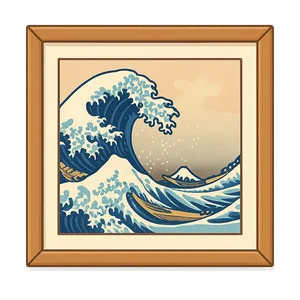
Thirty-six Views of Mount Fuji
A series of ukiyo-e woodblock prints by the Japanese artist Katsushika Hokusai…
Reads at Grades 3–5 Listens at Grades 1–5
Print & create
Answer keys·No prep·Free with an account
28 worksheets · answer keys · full story · quiz · Ages 8-10 · CEFR B1
Plus adds 208,000+ more stories in 27 languages, audio for every one, and printables for all of them.
Just want Thirty-six Views of Mount Fuji?
Have you ever looked at a great, snow-capped mountain and felt a sense of wonder? Sometimes it stands quiet and peaceful against a pink morning sky. Other times, a giant, curling wave full of energy and power might rise in front of it. I show that mountain through all the seasons—dusted with winter snow, covered in green during the summer, or glowing in a fiery sunset. I am not just one picture, but many pictures woven together. I am a journey, a collection of moments seen through the eyes of fishermen, travelers, and farmers living their daily lives. Can you imagine seeing the same place look so different from one day to the next? I am Thirty-six Views of Mount Fuji, and I have a story to tell about my creator and the beautiful country I call home.
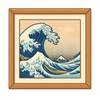
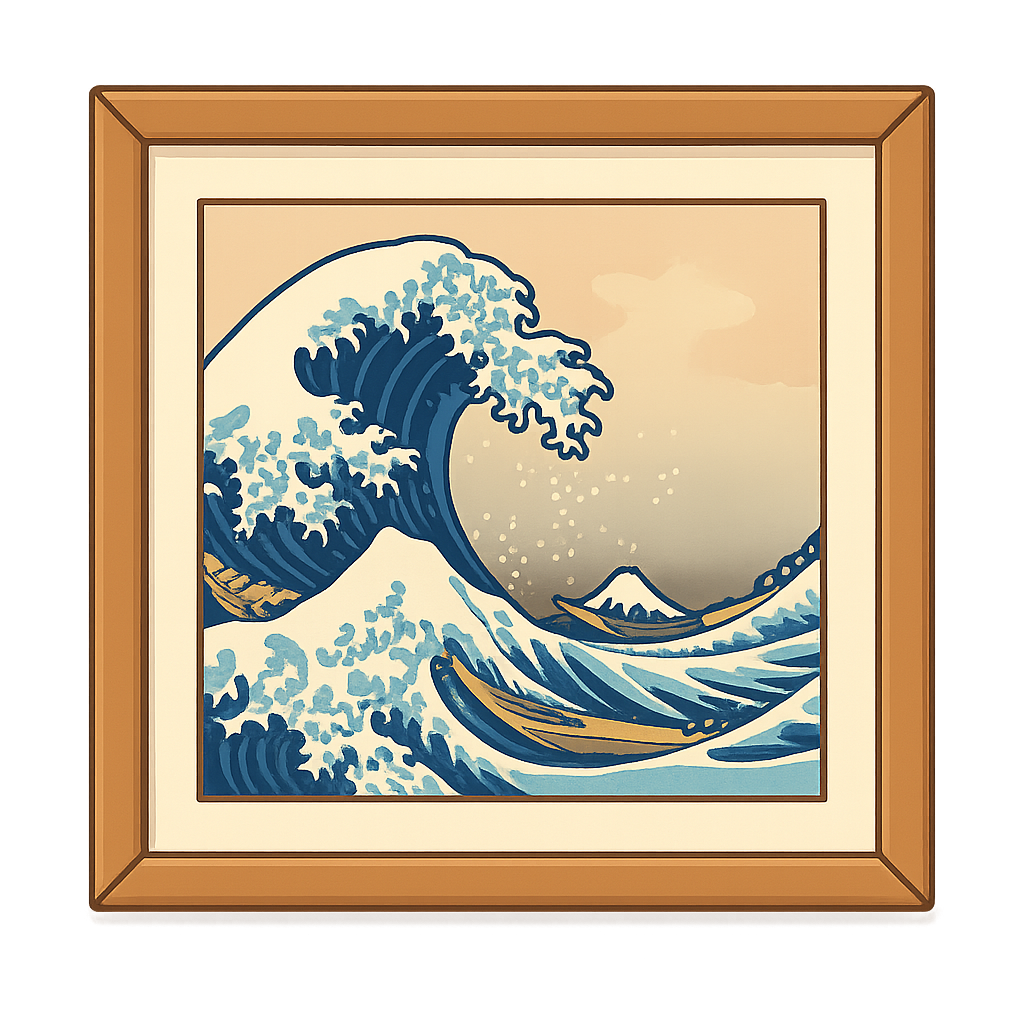
My story begins with a very talented and determined artist named Katsushika Hokusai. When he decided to create me around the year 1830, he was already over seventy years old. Imagine starting your most famous project when you are a grandfather. He lived in a bustling city called Edo, which we now know as Tokyo, Japan. Hokusai wanted to show everyone the beauty of Mount Fuji, a volcano that was sacred and special to the people of Japan. He saw it from his window every day and knew it had countless moods and faces. He didn't just paint me with a brush and canvas. I was made using a special technique called ukiyo-e, which means 'pictures of the floating world.' It’s a kind of woodblock printing. For each of my pictures, Hokusai first drew a detailed design on paper. Then, skilled carvers would take his drawing and carefully carve the lines into a block of wood. They had to make a different block for every single color. It was such careful work. To make the final print, they would press paper onto the inked blocks, one color at a time, until the entire picture came to life. One of my secrets was a brand new color, a brilliant Prussian blue imported from Europe, that made my skies and waters pop like never before. Hokusai didn't just show the mountain; he showed life happening all around it, like in my most famous view, 'The Great Wave off Kanagawa,' where brave fishermen in tiny boats face a mighty, towering ocean wave, with Fuji watching peacefully in the distance.
A Story of a Mountain, a Wave, and a Master Artist
Have you ever looked at a great, snow-capped mountain and felt a sense of wonder? Sometimes it stands quiet and peaceful against a pink morning sky. Other times, a giant, curling wave full of energy and power might rise in front of it. I show that mountain through all the seasons—dusted with winter snow, covered in green during the summer, or glowing in a fiery sunset. I am not just one picture, but many pictures woven together. I am a journey, a collection of moments seen through the eyes of fishermen, travelers, and farmers living their daily lives. Can you imagine seeing the same place look so different from one day to the next? I am Thirty-six Views of Mount Fuji, and I have a story to tell about my creator and the beautiful country I call home.
My story begins with a very talented and determined artist named Katsushika Hokusai. When he decided to create me around the year 1830, he was already over seventy years old. Imagine starting your most famous project when you are a grandfather. He lived in a bustling city called Edo, which we now know as Tokyo, Japan. Hokusai wanted to show everyone the beauty of Mount Fuji, a volcano that was sacred and special to the people of Japan. He saw it from his window every day and knew it had countless moods and faces. He didn't just paint me with a brush and canvas. I was made using a special technique called ukiyo-e, which means 'pictures of the floating world.' It’s a kind of woodblock printing. For each of my pictures, Hokusai first drew a detailed design on paper. Then, skilled carvers would take his drawing and carefully carve the lines into a block of wood. They had to make a different block for every single color. It was such careful work. To make the final print, they would press paper onto the inked blocks, one color at a time, until the entire picture came to life. One of my secrets was a brand new color, a brilliant Prussian blue imported from Europe, that made my skies and waters pop like never before. Hokusai didn't just show the mountain; he showed life happening all around it, like in my most famous view, 'The Great Wave off Kanagawa,' where brave fishermen in tiny boats face a mighty, towering ocean wave, with Fuji watching peacefully in the distance.
When I was first created during Japan's Edo period, people loved me. My prints were not very expensive, so everyday people like merchants and shopkeepers could buy them to decorate their homes. I was so popular that Hokusai decided to make ten extra views, so my little secret is that I'm actually forty-six pictures, not thirty-six. For many years, I stayed in Japan, showing people the beauty of their own country. But later, in the 19th century, my prints traveled on ships across the ocean to Europe. Artists there, like Vincent van Gogh and Claude Monet, had never seen anything like me. They were amazed by my bold lines, bright colors, and the way I captured a single, dramatic moment in time. I showed them a new way to see the world, and it inspired them to create their own famous art. Today, you can find copies of my pictures in museums all over the globe, from Tokyo to Paris to New York. I remind people that the same thing can look different and beautiful in countless ways, depending on where you stand and when you look. I hope I inspire you to look closely at the world around you and see the art and wonder in everyday life.
Wow facts
About
A series of ukiyo-e woodblock prints by the Japanese artist Katsushika Hokusai, depicting Mount Fuji from different locations and in various seasons.
Take a Quiz
Question 1 of 5
The story says Hokusai was a 'determined' artist. What does the word 'determined' mean in this sentence?
Explore next





Want to do even more?
Go beyond exploring. Unlock tools that turn every story into real learning.

Storypie Plus for families
Full stories, quizzes, and printables. Nights and car rides, sorted.
- Unlimited audio stories
- Create Mode: your child stars in the story
- Offline downloads
- Printable worksheets & coloring pages

Why Storypie for Schools
Students engaged. Prep in seconds. Evenings back to you.
- Worksheets & Quizzes
- Classroom Management
- Formative Assessment
- Custom Curriculum & Lesson Plans
- 27 Languages

Why Storypie for Homeschool
Curriculum done. They'll ask for more. Hours back in your day.
- Worksheet Generator
- First-Person Audio Stories
- Built-in Comprehension Quizzes
- Custom Curriculum & Lesson Plans
- Print & Go Activities