English

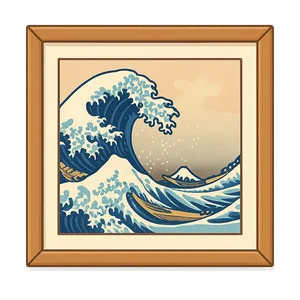
Thirty-six Views of Mount Fuji
A series of ukiyo-e woodblock prints by the Japanese artist Katsushika Hokusai…
Reads at Grades 6–8 Listens at Grades 4–8
Print & create
Answer keys·No prep·Free with an account
28 worksheets · answer keys · full story · quiz · Ages 10-12 · CEFR B2
Plus adds 208,000+ more stories in 27 languages, audio for every one, and printables for all of them.
Just want Thirty-six Views of Mount Fuji?
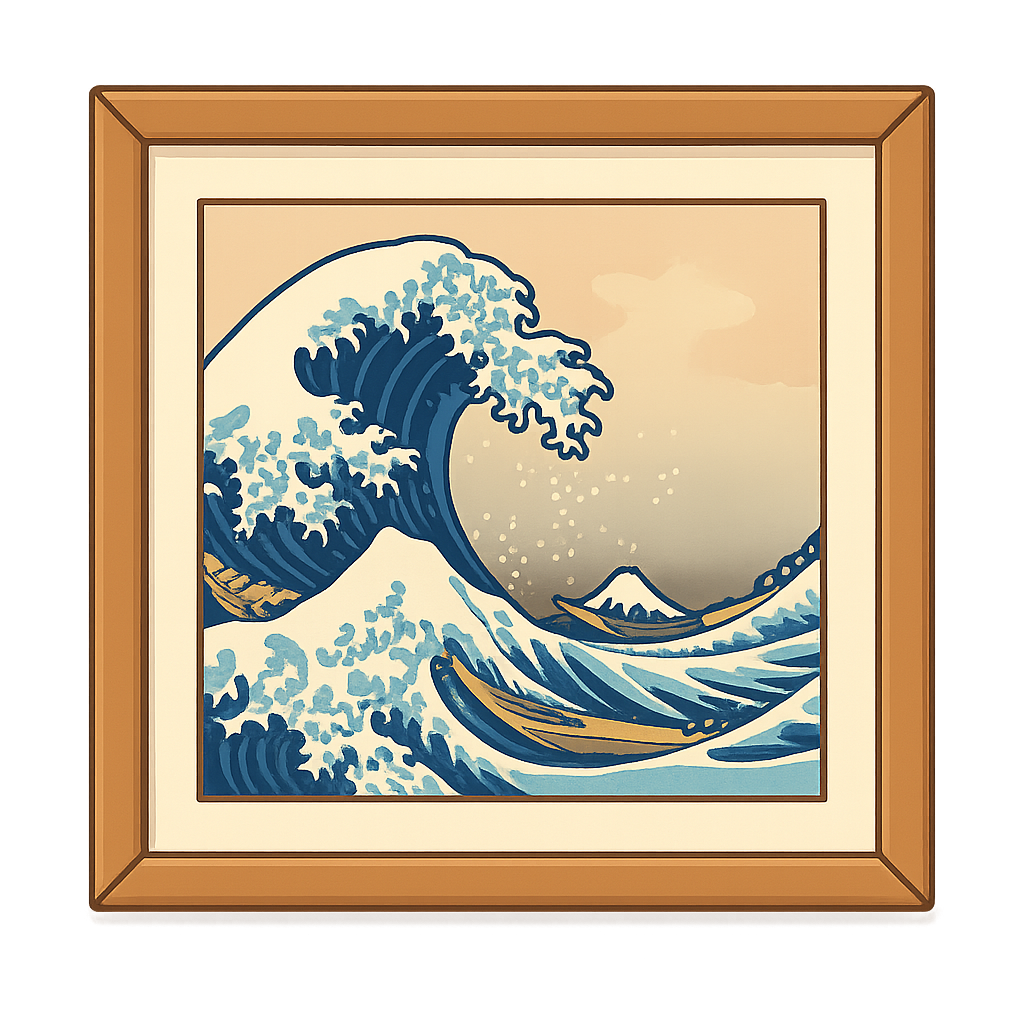
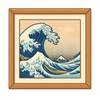
In one moment, I am a terrifying monster. A great, claw-like wave of deepest blue and white foam rises from the sea, about to crash down upon three small boats filled with brave fishermen. Far in the distance, a quiet, snow-capped mountain watches, small but perfectly calm. In the next moment, I am peace itself. That same mountain is reflected in the still, clear waters of a lake, its perfect triangular shape mirrored on the surface while a lone fisherman poles his simple boat. Then, I am the hustle and bustle of life in a busy town. People hurry along a street lined with shops, their colorful clothes a blur of motion, but behind the rooftops, the mountain stands serene and constant. I can be a quiet field, a bridge over a river, or a traveler resting by the road. In every scene, through every season, the sacred peak is there, sometimes huge and powerful, other times small and distant. It is the one thing that never changes. I am not one picture, but many, each a different window looking out onto the same world. Together, we are the Thirty-six Views of Mount Fuji.
I was born from the mind and brush of an artist who, even in his seventies, was filled with boundless energy and passion. He lived in the bustling city of Edo, Japan, which you now know as Tokyo. His name was Katsushika Hokusai, and he lovingly called himself “Gakyō Rōjin Manji,” which means “the old man mad about drawing.” Around the year 1831, he began to dream of me. He wanted to capture the soul of Japan by showing its most sacred mountain, Fuji, from every possible angle, in every kind of weather, and during every season. But Hokusai did not create me alone. He was the visionary, but bringing me to life was a team effort, a masterful dance of artistry and skill. This process is called ukiyo-e, which means “pictures of the floating world.” First, Hokusai would paint a delicate and detailed design on paper. This master drawing was then handed over to expert woodcarvers. Their job required incredible precision. For every single color you see in my images, they would carve a separate block of cherry wood, carefully chiseling away the parts that would remain white, leaving only the raised lines and shapes that would hold the ink. It was painstaking work. After the carvers, the printers took over. They would mix the inks, including a brilliant, new, and imported color called Prussian blue that made my skies and waters incredibly deep and vivid. Then, they would carefully apply the ink to a block, lay a sheet of damp paper on top, and rub it with a special pad called a baren. They had to repeat this for every single color block, lining them up perfectly to create the final, complete picture. I was not created for wealthy lords or samurai. I was made for everyday people—merchants, craftspeople, and town dwellers—so they could afford to own beautiful art and see their beloved country’s most famous peak in ways they had never imagined.
The Forty-six Views of Mount Fuji
In one moment, I am a terrifying monster. A great, claw-like wave of deepest blue and white foam rises from the sea, about to crash down upon three small boats filled with brave fishermen. Far in the distance, a quiet, snow-capped mountain watches, small but perfectly calm. In the next moment, I am peace itself. That same mountain is reflected in the still, clear waters of a lake, its perfect triangular shape mirrored on the surface while a lone fisherman poles his simple boat. Then, I am the hustle and bustle of life in a busy town. People hurry along a street lined with shops, their colorful clothes a blur of motion, but behind the rooftops, the mountain stands serene and constant. I can be a quiet field, a bridge over a river, or a traveler resting by the road. In every scene, through every season, the sacred peak is there, sometimes huge and powerful, other times small and distant. It is the one thing that never changes. I am not one picture, but many, each a different window looking out onto the same world. Together, we are the Thirty-six Views of Mount Fuji.
I was born from the mind and brush of an artist who, even in his seventies, was filled with boundless energy and passion. He lived in the bustling city of Edo, Japan, which you now know as Tokyo. His name was Katsushika Hokusai, and he lovingly called himself “Gakyō Rōjin Manji,” which means “the old man mad about drawing.” Around the year 1831, he began to dream of me. He wanted to capture the soul of Japan by showing its most sacred mountain, Fuji, from every possible angle, in every kind of weather, and during every season. But Hokusai did not create me alone. He was the visionary, but bringing me to life was a team effort, a masterful dance of artistry and skill. This process is called ukiyo-e, which means “pictures of the floating world.” First, Hokusai would paint a delicate and detailed design on paper. This master drawing was then handed over to expert woodcarvers. Their job required incredible precision. For every single color you see in my images, they would carve a separate block of cherry wood, carefully chiseling away the parts that would remain white, leaving only the raised lines and shapes that would hold the ink. It was painstaking work. After the carvers, the printers took over. They would mix the inks, including a brilliant, new, and imported color called Prussian blue that made my skies and waters incredibly deep and vivid. Then, they would carefully apply the ink to a block, lay a sheet of damp paper on top, and rub it with a special pad called a baren. They had to repeat this for every single color block, lining them up perfectly to create the final, complete picture. I was not created for wealthy lords or samurai. I was made for everyday people—merchants, craftspeople, and town dwellers—so they could afford to own beautiful art and see their beloved country’s most famous peak in ways they had never imagined.
For a few decades, I was a treasure known mostly within Japan. But in the 1850s, Japan began to open its ports to trade with the rest of the world, and I embarked on a journey across the sea. By the 1860s and 1870s, copies of me began arriving in Europe, especially in Paris, France. For the artists there, I was a revelation. Painters like Claude Monet, Edgar Degas, and Vincent van Gogh, who were trying to break free from old, rigid rules of art, were completely captivated. They had never seen anything like me before. They were amazed by my bold designs, my unusual perspectives—like looking at a scene through a barrel-maker's hoop—and my large, flat areas of bright, clean color. This fascination with Japanese art became a powerful movement called “Japonisme.” These famous artists collected prints like me, studied my lines, and learned from my compositions. You can see my influence in their work. Van Gogh copied some of my scenes to understand them better, and Monet even decorated his dining room with Japanese woodblock prints. My most famous image, “The Great Wave off Kanagawa,” became a global icon. It showed the immense power of nature and the resilient spirit of the people facing it, a theme that everyone, everywhere, could understand. I wasn't just a picture of Japan anymore; I was a bridge between cultures, changing the way the world saw art.
I hold a little secret. Although my name is the Thirty-six Views of Mount Fuji, I was so popular when I was first published that Hokusai and his publisher decided to add ten more prints to the series. So, I am actually forty-six different views. Today, you don’t have to travel to Japan to see me. Complete sets and individual prints of me live in museums and collections all over the world, from the Tokyo National Museum to the Metropolitan Museum of Art in New York and the British Museum in London. I am a window into the Japan of the 19th century, but I am also a timeless lesson in perspective. I show that the very same thing—whether it’s a mountain, a difficult problem, or a new idea—can look completely different depending on where you stand and how you choose to look at it. I am a reminder from an old man mad about drawing to always keep your eyes open to the world around you. There is always another view to discover, another angle to explore, and each one is filled with its own unique beauty and wonder.
Wow facts
About
A series of ukiyo-e woodblock prints by the Japanese artist Katsushika Hokusai, depicting Mount Fuji from different locations and in various seasons.
Take a Quiz
Question 1 of 5
In your own words, describe the main steps of the ukiyo-e process used to create the prints.
Explore next





Want to do even more?
Go beyond exploring. Unlock tools that turn every story into real learning.

Storypie Plus for families
Full stories, quizzes, and printables. Nights and car rides, sorted.
- Unlimited audio stories
- Create Mode: your child stars in the story
- Offline downloads
- Printable worksheets & coloring pages

Why Storypie for Schools
Students engaged. Prep in seconds. Evenings back to you.
- Worksheets & Quizzes
- Classroom Management
- Formative Assessment
- Custom Curriculum & Lesson Plans
- 27 Languages

Why Storypie for Homeschool
Curriculum done. They'll ask for more. Hours back in your day.
- Worksheet Generator
- First-Person Audio Stories
- Built-in Comprehension Quizzes
- Custom Curriculum & Lesson Plans
- Print & Go Activities