English

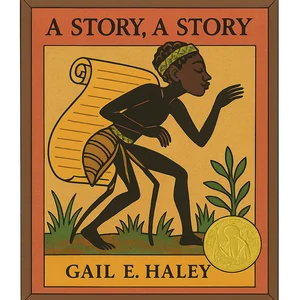
A Story, A Story (book)
A 1970 children's picture book written and illustrated by Gail E.
Reads at Grades 6–8 Listens at Grades 4–8
Print & create
Answer keys·No prep·Free with an account
28 worksheets · answer keys · full story · quiz · Ages 10-12 · CEFR B2
Plus adds 279,000+ more stories in 27 languages, audio for every one, and printables for all of them.
Just want A Story, A Story (book)?
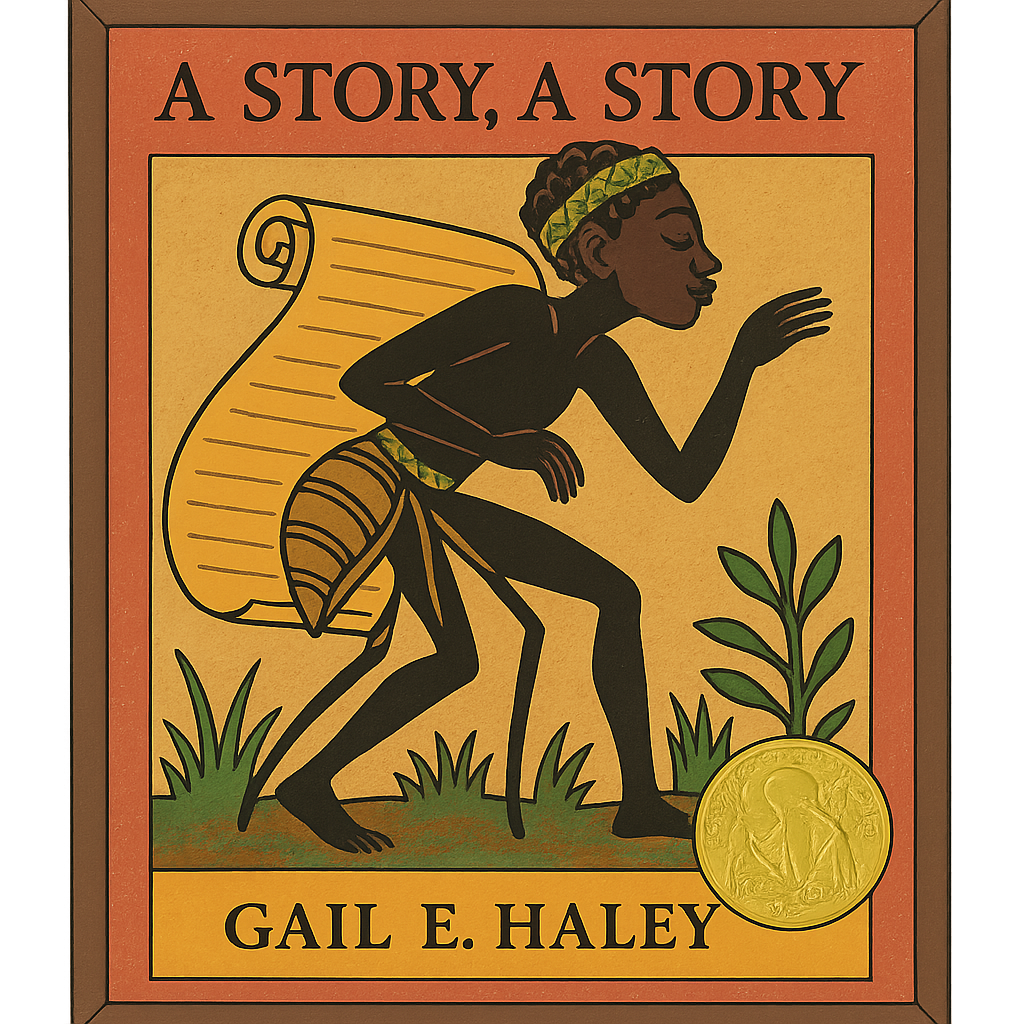
Before I had a cover or pages, I was just an idea, a whisper carried on the wind from West Africa. I am a story that is as old as the Ashanti people, a tale about a time when the world was silent because all stories were owned by one being. They were locked away in a golden box, kept safe by the powerful sky-god, Nyame. Imagine that. A world without tales of adventure, mystery, or laughter. The people on Earth knew the stories existed, but they could not reach them. They were called 'sky-god stories,' and they belonged to him alone. But one small creature, an old man with a spindly body and thin legs, decided that stories were not meant to be kept in a box. He was clever and cunning, and his name was Anansi the Spider. He believed stories should be shared, scattered like seeds for everyone to enjoy. He spun a single, silver thread of silk all the way up to the heavens to ask Nyame for his treasure. It was a quest that seemed impossible, a challenge that would require more than strength. It would require a brilliant mind. I am the book called A Story, A Story, and I hold the tale of how Anansi set all stories free for the world.
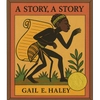
My physical form came into being much later, in a studio in the United States in the year 1970. My maker was an artist and author named Gail E. Haley. She didn't just write down the words of Anansi’s quest; she gave me a soul through her art. She chose a very special and demanding technique called woodcut printing to create my illustrations. Imagine her, carefully carving into a solid block of wood for every single image you see on my pages. With sharp tools, she would cut away the parts of the wood that would remain white, leaving only the lines and shapes of Anansi, the leopard, and the sky-god raised. This wasn't a quick sketch with a pencil. Each line was a permanent decision carved in wood. Once a block was ready, she would roll thick, vibrant ink across its surface. Then, she would lay a sheet of paper on top and apply immense pressure, transferring the ink from the wood to the page. This process gave my pictures their bold, powerful lines and rich, textured feel. It was a method that connected my creation to ancient printing traditions, giving me a sense of timelessness. Gail E. Haley knew the story I held came from a rich culture, so she spent a great deal of time researching West African art. She studied the geometric patterns found in textiles, the expressive forms of masks, and the designs of traditional Ashanti carvings to make sure my world felt authentic and respectful. Her hands didn't just make a book; they built a visual bridge to the Ashanti culture that first dreamed Anansi into being.
A Story, A Story
Before I had a cover or pages, I was just an idea, a whisper carried on the wind from West Africa. I am a story that is as old as the Ashanti people, a tale about a time when the world was silent because all stories were owned by one being. They were locked away in a golden box, kept safe by the powerful sky-god, Nyame. Imagine that. A world without tales of adventure, mystery, or laughter. The people on Earth knew the stories existed, but they could not reach them. They were called 'sky-god stories,' and they belonged to him alone. But one small creature, an old man with a spindly body and thin legs, decided that stories were not meant to be kept in a box. He was clever and cunning, and his name was Anansi the Spider. He believed stories should be shared, scattered like seeds for everyone to enjoy. He spun a single, silver thread of silk all the way up to the heavens to ask Nyame for his treasure. It was a quest that seemed impossible, a challenge that would require more than strength. It would require a brilliant mind. I am the book called A Story, A Story, and I hold the tale of how Anansi set all stories free for the world.
My physical form came into being much later, in a studio in the United States in the year 1970. My maker was an artist and author named Gail E. Haley. She didn't just write down the words of Anansi’s quest; she gave me a soul through her art. She chose a very special and demanding technique called woodcut printing to create my illustrations. Imagine her, carefully carving into a solid block of wood for every single image you see on my pages. With sharp tools, she would cut away the parts of the wood that would remain white, leaving only the lines and shapes of Anansi, the leopard, and the sky-god raised. This wasn't a quick sketch with a pencil. Each line was a permanent decision carved in wood. Once a block was ready, she would roll thick, vibrant ink across its surface. Then, she would lay a sheet of paper on top and apply immense pressure, transferring the ink from the wood to the page. This process gave my pictures their bold, powerful lines and rich, textured feel. It was a method that connected my creation to ancient printing traditions, giving me a sense of timelessness. Gail E. Haley knew the story I held came from a rich culture, so she spent a great deal of time researching West African art. She studied the geometric patterns found in textiles, the expressive forms of masks, and the designs of traditional Ashanti carvings to make sure my world felt authentic and respectful. Her hands didn't just make a book; they built a visual bridge to the Ashanti culture that first dreamed Anansi into being.
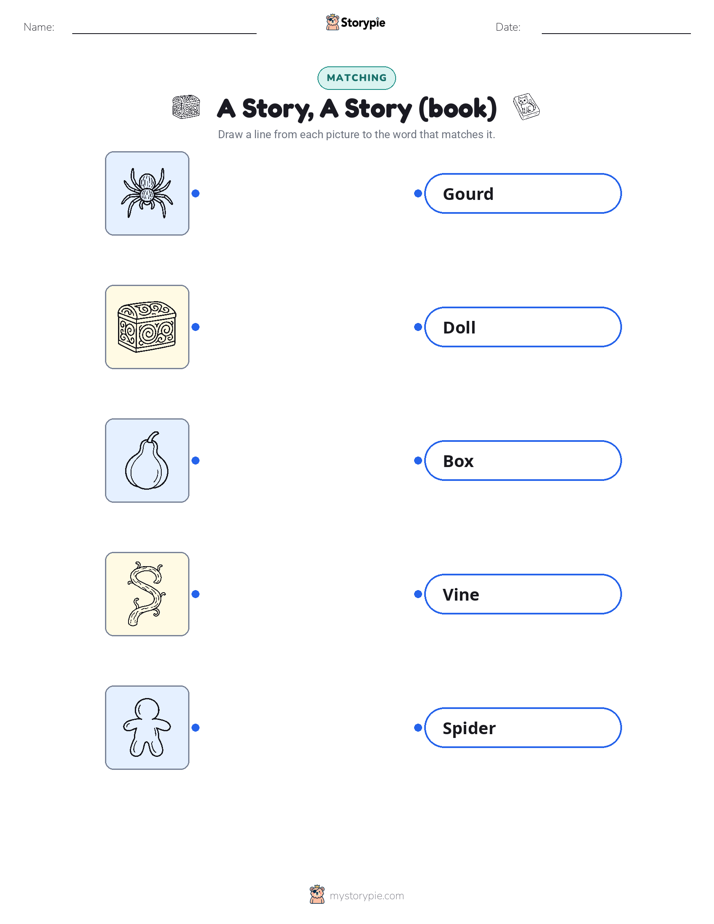
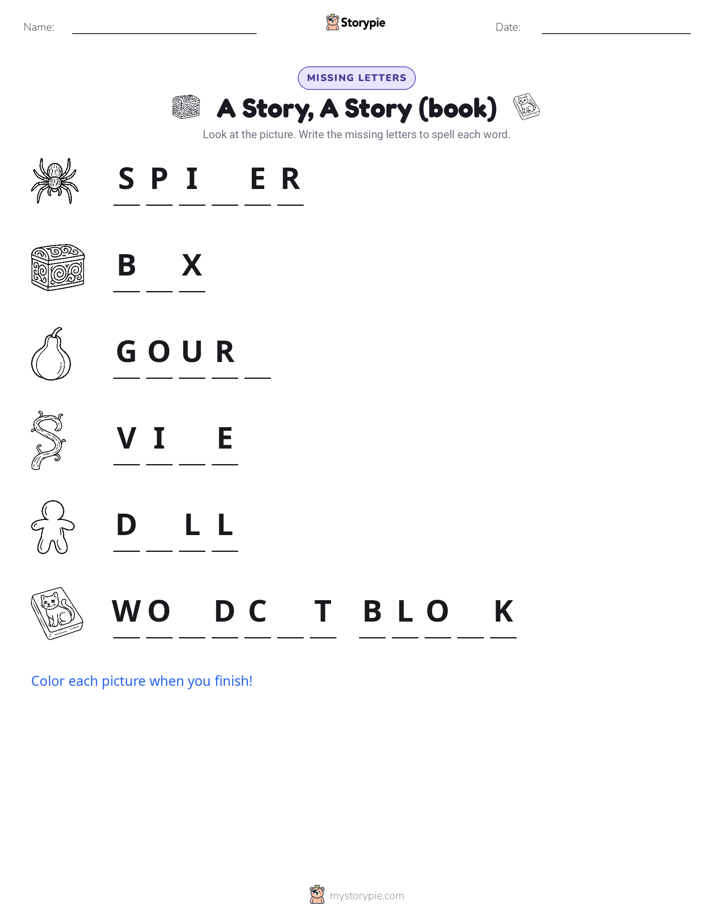
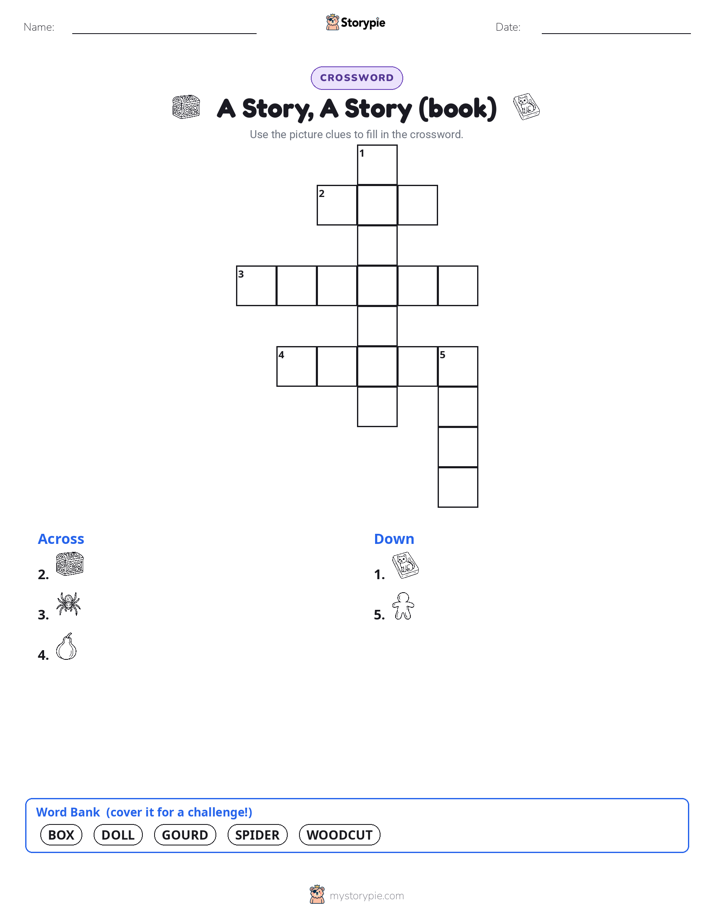
Inside my covers, the great quest unfolds. When Anansi reached the sky and asked Nyame for the golden box of stories, the sky-god laughed. He demanded an impossible price. To earn the stories, Anansi had to bring him three fearsome creatures: Mmoboro, the hornet swarm that stings like fire; Onini, the great python that can crush a man; and Osebo, the leopard of the terrible teeth. Anyone else would have given up, but Anansi was a trickster, and his mind was his greatest weapon. For the hornets, he filled a gourd with water, cut a leaf for an umbrella, and tricked the swarm into thinking a great rain was coming. He offered them shelter inside his gourd, then quickly plugged the hole. For the python, he started a clever argument about whether Onini was truly longer than the nearby bamboo pole. To prove his length, the proud python stretched himself out along the pole, and Anansi quickly tied him up with a vine. Finally, for the leopard, he dug a deep pit and covered it. When Osebo fell in, Anansi offered to help him out using a 'tree' made of a sticky gum-doll. The leopard’s paws got stuck, and he was captured. Anansi presented all three to the astonished Nyame, who declared that from that day forward, all stories would no longer be his. They would be known as 'Spider Stories,' belonging to Anansi and, through him, to everyone.
Once my pages were printed and bound in 1970, I began my own journey into the world. I traveled from printing presses to bookstores and libraries, finally landing in the hands of children. It was a quiet joy to feel my cover opened and to share Anansi’s cleverness with a new reader. Then, in the year 1971, something truly wonderful happened. I was given a great honor: the Caldecott Medal. This isn't just any award. It's given each year to the artist of the 'most distinguished American picture book for children.' A shiny gold seal, a picture of a man on a galloping horse, was placed upon my cover. That medal was a testament to Gail E. Haley’s incredible artistry and the power of her woodcuts. It signaled to parents, teachers, and librarians everywhere that the story I held was special. Because of that honor, I was able to travel even farther, reaching children in schools and homes all across the country and beyond, ensuring Anansi's legacy would continue to spread.
My purpose has always been more than just ink on paper. I am a bridge, connecting readers today to the ancient oral traditions and folklore of the Ashanti people in Africa. Within my pages lies a timeless lesson: that cleverness, wit, and determination can overcome even the most intimidating challenges. Anansi proves that you don't have to be the biggest or the strongest to make a difference. I exist to remind the world that stories belong to everyone and that they are meant to be shared. They are the threads that connect us across time and cultures. Every time a reader opens my cover and follows Anansi on his quest, they help his stories fly free once more, becoming a part of a tradition that has no end.
Wow facts
About
A 1970 children's picture book written and illustrated by Gail E. Haley, which retells the West African tale of how Anansi the Spider-Man brought stories to the world. It is celebrated for its woodcut illustrations and won the Caldecott Medal in 1971.
Take a Quiz
Question 1 of 5
In your own words, describe the three tasks Anansi had to complete to win the stories from Nyame.
Explore next




Want to do even more?
Go beyond exploring. Unlock tools that turn every story into real learning.

Storypie Plus for families
Full stories, quizzes, and printables. Nights and car rides, sorted.
- Unlimited audio stories
- Create Mode: your child stars in the story
- Offline downloads
- Printable worksheets & coloring pages

Why Storypie for Schools
Students engaged. Prep in seconds. Evenings back to you.
- Worksheets & Quizzes
- Classroom Management
- Formative Assessment
- Custom Curriculum & Lesson Plans
- 27 Languages

Why Storypie for Homeschool
Curriculum done. They'll ask for more. Hours back in your day.
- Worksheet Generator
- First-Person Audio Stories
- Built-in Comprehension Quizzes
- Custom Curriculum & Lesson Plans
- Print & Go Activities