English

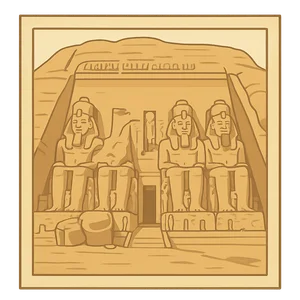
Abu Simbel Temples
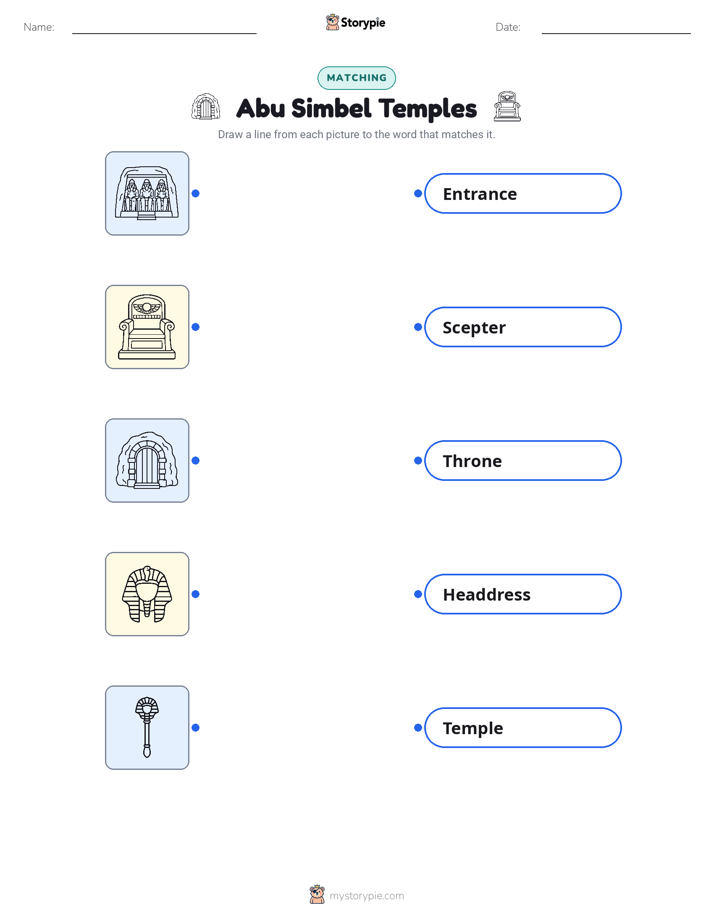
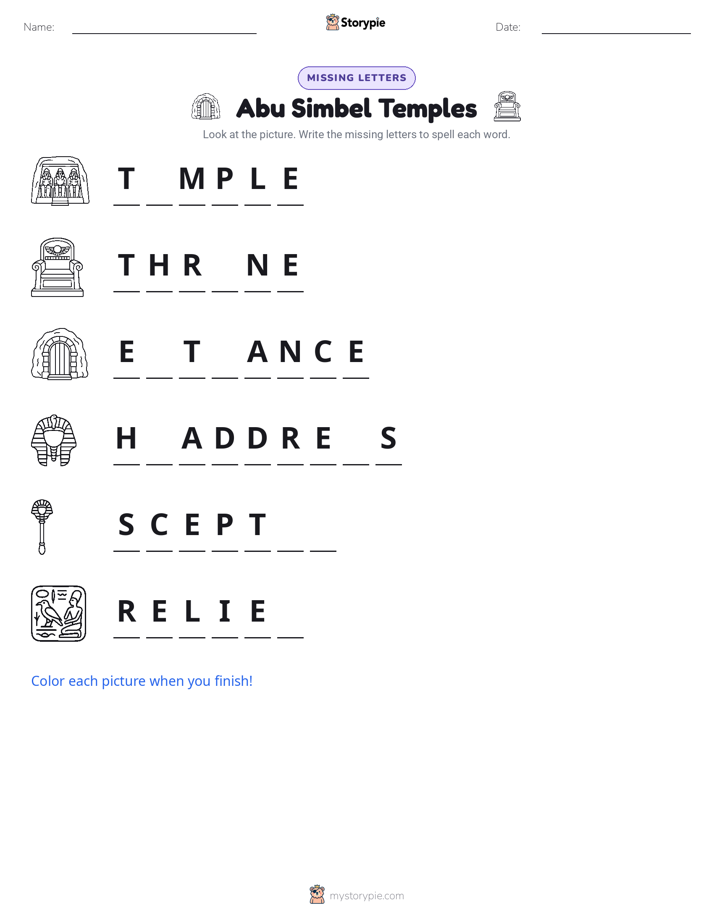
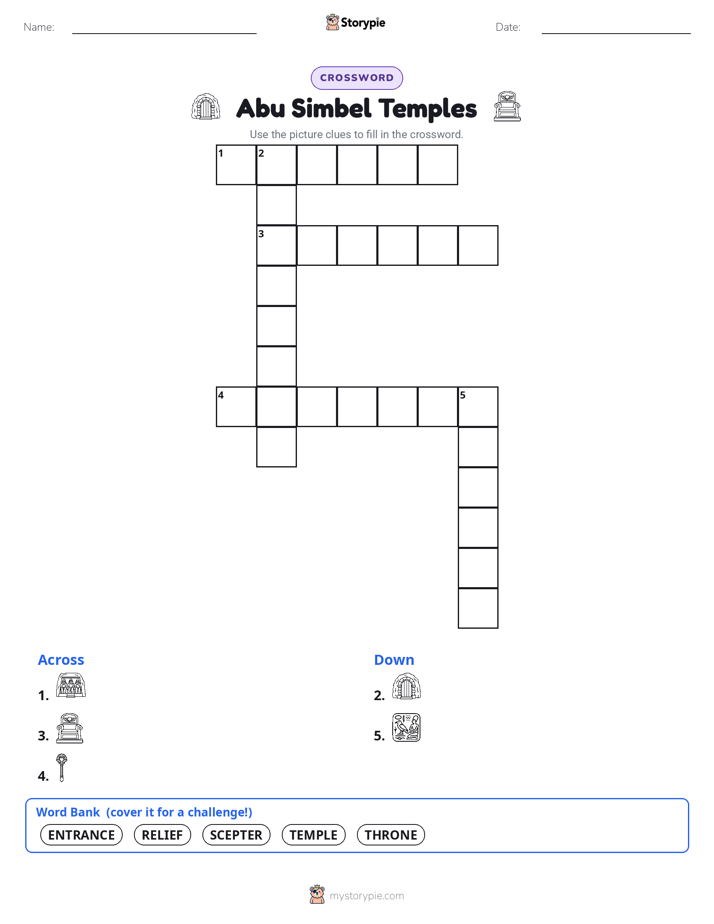
A pair of massive rock-cut temples in southern Egypt, built by Pharaoh Ramesses II in the 13th century BCE.
Reads at Grades 6–8 Listens at Grades 4–8
Print & create
Answer keys·No prep·Free with an account
28 worksheets · answer keys · full story · quiz · Ages 10-12 · CEFR B2
Plus adds 244,000+ more stories in 27 languages, audio for every one, and printables for all of them.
Just want Abu Simbel Temples?
A Voice from the Mountain
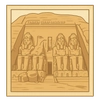
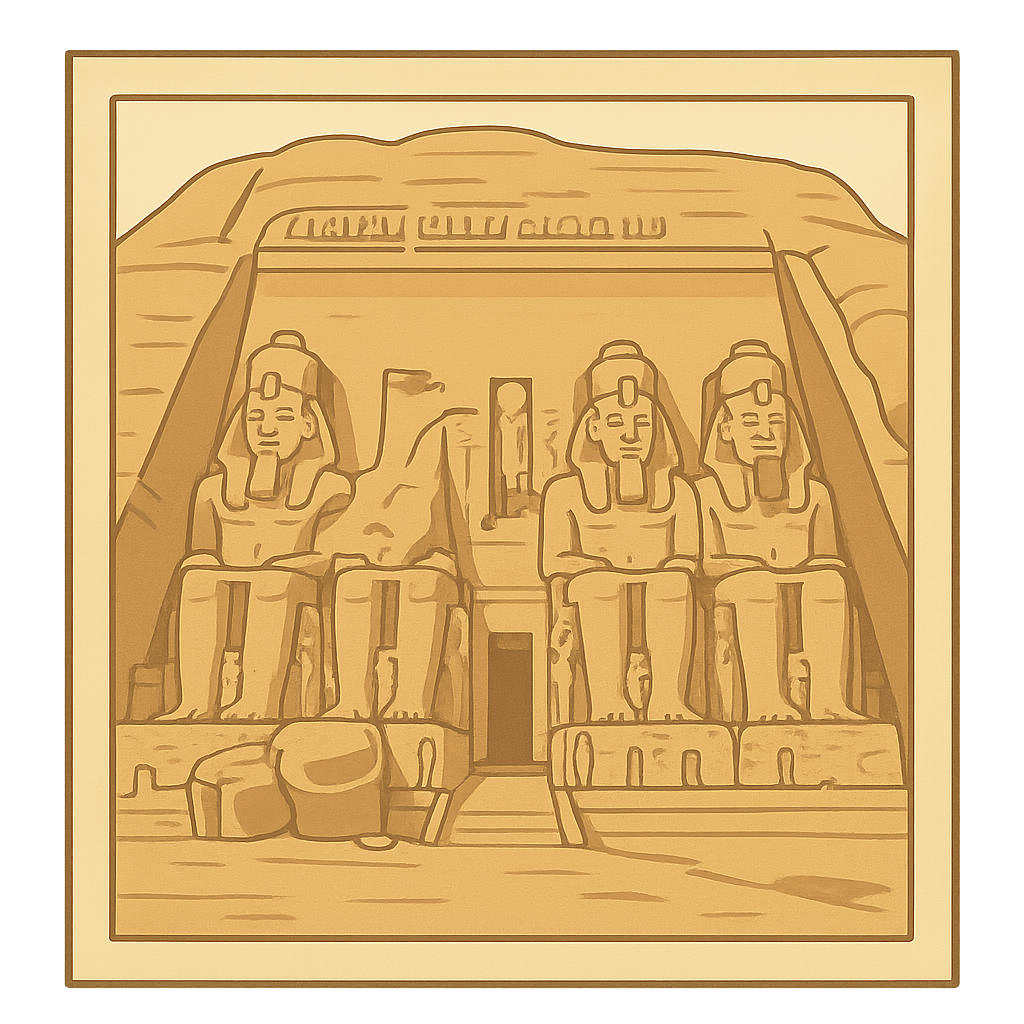
For over three thousand years, I have felt the sun’s warmth on my stone face, a face carved not of separate blocks, but from the living rock of a mountain. I sit on the western bank of the Nile River, in a land the ancients called Nubia. Before me, the river flows north, a ribbon of life through the desert. My gaze is fixed, eternal. Guarding my main entrance are four colossal figures, each over 20 meters tall, seated on thrones with an air of serene power. Their faces are identical, all depicting the same man, a king of unimaginable ambition and influence. For centuries, travelers who found me wondered at my scale and purpose. I was a mystery born from the earth itself. I am not one, but two temples, hewn from a sandstone cliff to stand for eternity as a testament to power and devotion. My name is Abu Simbel.
A Pharaoh's Command
My story begins around the year 1264 BCE with a command from one of history’s most famous rulers: the great Pharaoh Ramesses II. He was a warrior, a builder, and a master of propaganda. He commanded my creation to commemorate his victory in the Battle of Kadesh and, more importantly, to project the undeniable power of Egypt deep into the lands of Nubia. He wanted everyone who sailed the Nile to be awestruck. I am made of two parts. My larger self, the Great Temple, was dedicated to the most powerful gods of Egypt—Amun-Re, Ra-Horakhty, and Ptah—and also to Ramesses himself, presented as a living god on Earth. A short distance away stands my smaller, graceful companion, a temple dedicated to the goddess Hathor and to Ramesses’s most beloved wife, Queen Nefertari. It was a rare and beautiful tribute; the statues of the queen at its entrance are the same height as those of her husband. But my greatest secret lies within my very design. The ancient architects aligned me with the sun itself. This was a work of astronomical and engineering genius. Twice a year, around February 22nd and October 22nd, a single beam of sunlight penetrates 65 meters into the darkness of my innermost chamber. There, it illuminates the statues of Amun-Re, Ra-Horakhty, and Ramesses, bringing them to life in the dawn light. The god of the underworld, Ptah, is the only one who remains forever in the shadows.
I Am Abu Simbel, A Mountain That Moved
A Voice from the Mountain
For over three thousand years, I have felt the sun’s warmth on my stone face, a face carved not of separate blocks, but from the living rock of a mountain. I sit on the western bank of the Nile River, in a land the ancients called Nubia. Before me, the river flows north, a ribbon of life through the desert. My gaze is fixed, eternal. Guarding my main entrance are four colossal figures, each over 20 meters tall, seated on thrones with an air of serene power. Their faces are identical, all depicting the same man, a king of unimaginable ambition and influence. For centuries, travelers who found me wondered at my scale and purpose. I was a mystery born from the earth itself. I am not one, but two temples, hewn from a sandstone cliff to stand for eternity as a testament to power and devotion. My name is Abu Simbel.
A Pharaoh's Command
My story begins around the year 1264 BCE with a command from one of history’s most famous rulers: the great Pharaoh Ramesses II. He was a warrior, a builder, and a master of propaganda. He commanded my creation to commemorate his victory in the Battle of Kadesh and, more importantly, to project the undeniable power of Egypt deep into the lands of Nubia. He wanted everyone who sailed the Nile to be awestruck. I am made of two parts. My larger self, the Great Temple, was dedicated to the most powerful gods of Egypt—Amun-Re, Ra-Horakhty, and Ptah—and also to Ramesses himself, presented as a living god on Earth. A short distance away stands my smaller, graceful companion, a temple dedicated to the goddess Hathor and to Ramesses’s most beloved wife, Queen Nefertari. It was a rare and beautiful tribute; the statues of the queen at its entrance are the same height as those of her husband. But my greatest secret lies within my very design. The ancient architects aligned me with the sun itself. This was a work of astronomical and engineering genius. Twice a year, around February 22nd and October 22nd, a single beam of sunlight penetrates 65 meters into the darkness of my innermost chamber. There, it illuminates the statues of Amun-Re, Ra-Horakhty, and Ramesses, bringing them to life in the dawn light. The god of the underworld, Ptah, is the only one who remains forever in the shadows.
A Long Sleep and a New Dawn
Empires rise and fall, and even the memory of the greatest pharaohs can fade into the dust. After the Egyptian empire weakened, the desert winds began their patient work. For more than two thousand years, I slept beneath a mountain of golden sand that crept up my statues, covered my entrance, and buried me completely. I was a silent giant, forgotten by the world, my grand halls empty and still. My reawakening began in the year 1813. A Swiss explorer named Jean-Louis Burckhardt was traveling through Nubia when he saw something impossible peeking from the top of a massive dune: the carved face and headdress of one of my colossal statues. He knew he had stumbled upon something extraordinary, but the sand was too deep for him to enter. It took four more years of effort. On August 1st, 1817, an Italian adventurer named Giovanni Belzoni and his team finally managed to dig away the suffocating sand and clear my main entrance. For the first time in millennia, human eyes once again looked upon the painted reliefs and towering columns of my interior.
A Modern Miracle
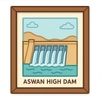
My second life was almost my last. In the 1960s, Egypt began constructing the Aswan High Dam to control the Nile's flooding and generate electricity. This project of progress created a great danger for me. The vast reservoir it would create, Lake Nasser, was destined to rise and submerge me completely beneath its waters. The world was horrified at the thought of losing such a treasure. An unprecedented call to action went out, led by UNESCO. An international campaign was launched, and dozens of countries contributed money and expertise to save me. Between 1964 and 1968, engineers performed a modern miracle. They carefully cut my temples and the cliff face from which I was carved into 1,042 massive blocks, some weighing up to 30 tons each. Every piece was numbered, lifted, and painstakingly reassembled 65 meters higher and 200 meters back from the river. I was placed within a specially constructed hollow dome that mimics the shape of my original mountain. Today, I stand safe from the water, a testament not only to an ancient pharaoh's power but also to the modern world's shared commitment to preserving human history. I am a bridge across time, connecting the ambition of the past with the cooperation of the present.
Wow facts
About
A pair of massive rock-cut temples in southern Egypt, built by Pharaoh Ramesses II in the 13th century BCE. They are famous for their giant statues and a remarkable modern relocation to save them from rising waters.
Take a Quiz
Question 1 of 5
Based on the story, what can you infer about Ramesses II's motivations for building the Abu Simbel temples?
Explore next



Want to do even more?
Go beyond exploring. Unlock tools that turn every story into real learning.

Storypie Plus for families
Full stories, quizzes, and printables. Nights and car rides, sorted.
- Unlimited audio stories
- Create Mode: your child stars in the story
- Offline downloads
- Printable worksheets & coloring pages

Why Storypie for Schools
Students engaged. Prep in seconds. Evenings back to you.
- Worksheets & Quizzes
- Classroom Management
- Formative Assessment
- Custom Curriculum & Lesson Plans
- 27 Languages

Why Storypie for Homeschool
Curriculum done. They'll ask for more. Hours back in your day.
- Worksheet Generator
- First-Person Audio Stories
- Built-in Comprehension Quizzes
- Custom Curriculum & Lesson Plans
- Print & Go Activities