English

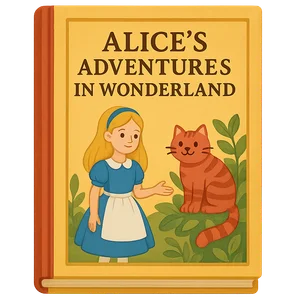
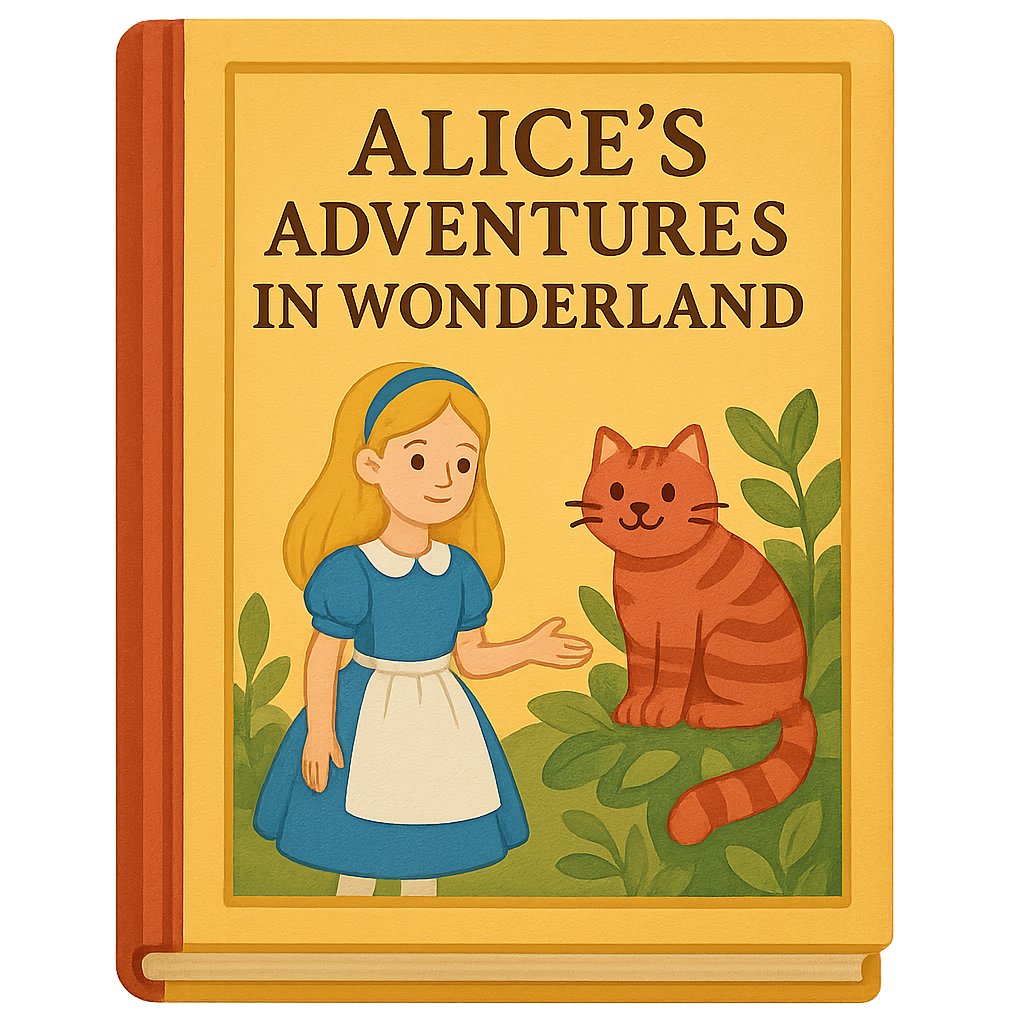
Alice's Adventures in Wonderland
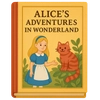
An 1865 novel by Lewis Carroll about a girl named Alice who falls through a rabbit hole into a fantasy world…
Reads at Grades 6–8 Listens at Grades 4–8
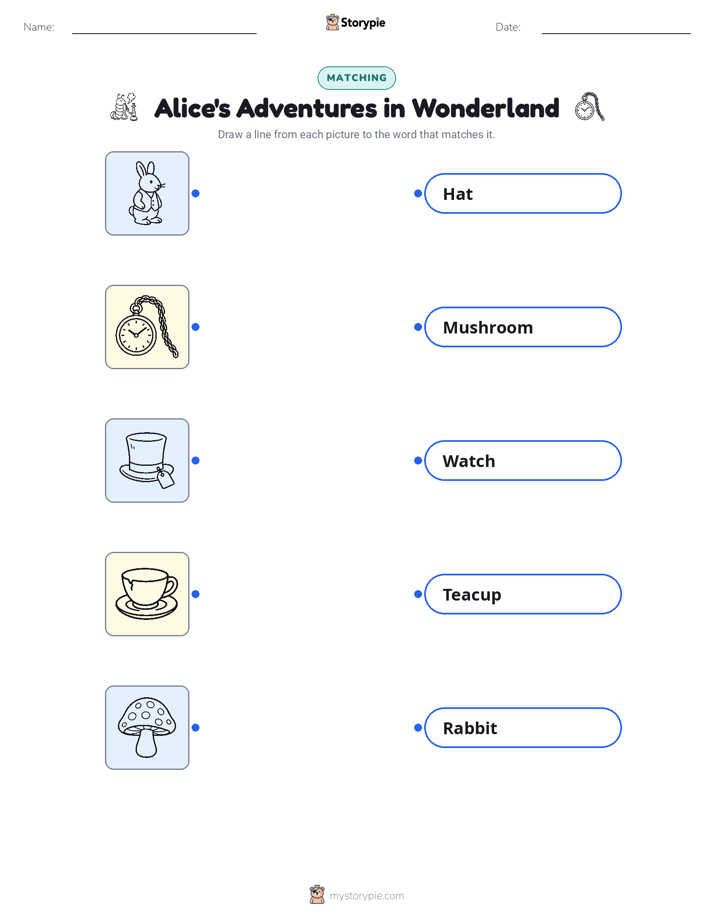
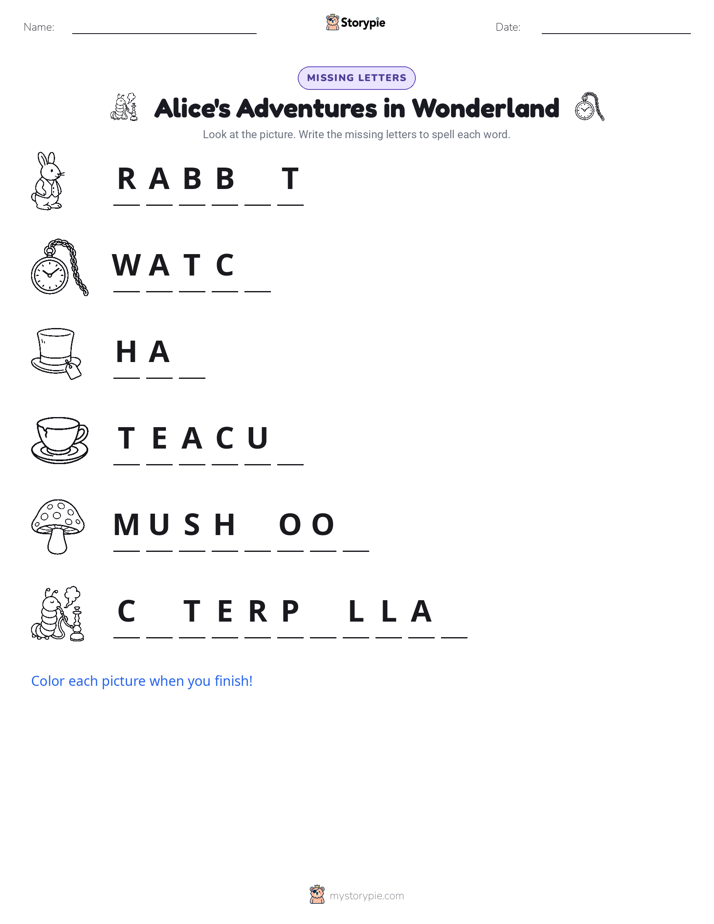
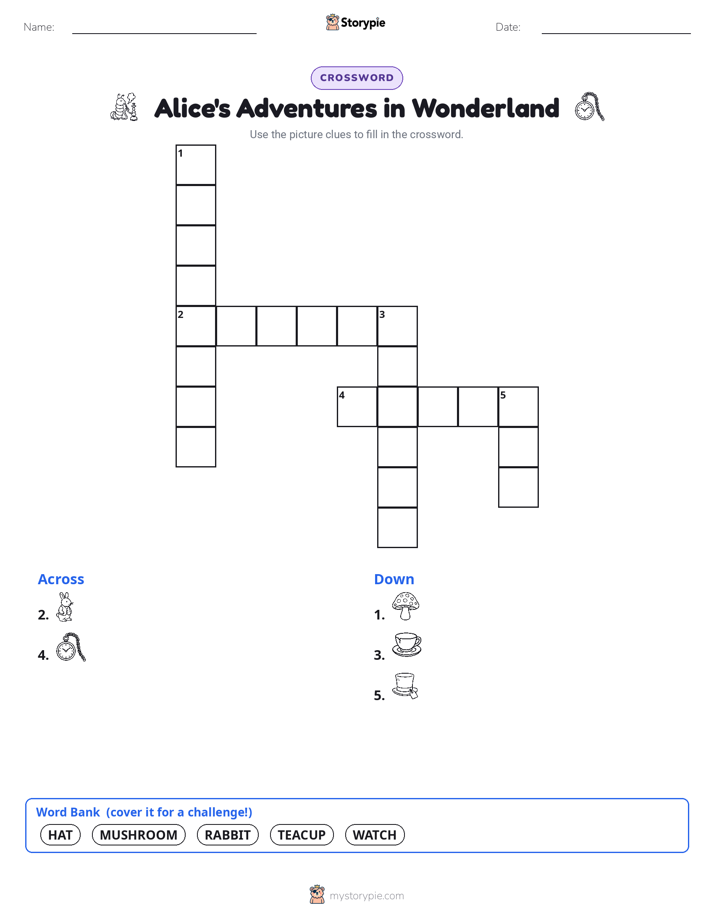
Print & create
Answer keys·No prep·Free with an account
28 worksheets · answer keys · full story · quiz · Ages 10-12 · CEFR B2
Plus adds 244,000+ more stories in 27 languages, audio for every one, and printables for all of them.
Just want Alice's Adventures in Wonderland?
My life began not between covers of paper and ink, but as a collection of words shimmering in the air on a boat trip down the River Thames. Picture a perfect English summer day, the kind that feels slow and golden, where the sun warms your skin and dragonflies dance over the water. It was July 4th, 1862, in Oxford. The only sounds were the gentle splash of oars dipping into the river and the murmur of voices. On that rowboat were a man named Charles Lutwidge Dodgson and his friend, along with the three young daughters of the college dean: Lorina, Edith, and especially a bright, curious ten-year-old named Alice Liddell. To pass the time on the long, hot journey, Alice begged Mr. Dodgson for a story 'with plenty of nonsense in it.' Mr. Dodgson, a quiet mathematics lecturer who was much more comfortable with logic and numbers, opened a door in his mind to a world of pure imagination. He began to spin a tale of a girl named Alice who followed a smartly dressed White Rabbit down a rabbit-hole into a bizarre and wonderful land. He invented characters on the spot—a Dodo, a Lory, an Eaglet, all named after the people in the boat. Before I had pages, I was a voice, a shared dream on a lazy afternoon. I am the story he told that day, a gift of fantasy for a little girl. I am Alice's Adventures in Wonderland.
The magic of that golden afternoon could have faded like a dream, but Alice Liddell would not let me disappear. She loved my strange world so much that she insisted, 'Oh, Mr. Dodgson, I wish you would write out Alice's adventures for me!.' Though he was a busy man, he could not refuse her. And so, my journey from a floating tale to a physical object began. On November 13th, 1862, Mr. Dodgson started the painstaking process of capturing my whimsical chaos with pen and ink. It must have been a curious sight: a man who taught logic and algebra spending his evenings writing about mad tea parties and talking caterpillars. He carefully wrote out my story by hand, even drawing his own simple but charming pictures to go with the words. This first version of me was called 'Alice's Adventures Under Ground.' It took him over a year and a half, but in November of 1864, he presented this precious, one-of-a-kind manuscript to the real Alice as a special Christmas gift. But my story was too big to belong to just one person. Friends and fellow writers encouraged Mr. Dodgson to share me with the world. He agreed, but he knew my world needed a professional artist to truly bring it to life. He chose a very famous and respected political cartoonist from the magazine Punch, a man named John Tenniel. Tenniel was a perfectionist, and together, he and Mr. Dodgson worked to get every detail right. Tenniel’s incredible skill gave a face to my characters—he drew the frantic White Rabbit in his waistcoat, anxiously checking his pocket watch, and he captured the mysterious, slowly vanishing grin of the Cheshire Cat. His detailed, slightly surreal illustrations became as much a part of me as the words themselves.
The Story of Alice's Adventures in Wonderland
My life began not between covers of paper and ink, but as a collection of words shimmering in the air on a boat trip down the River Thames. Picture a perfect English summer day, the kind that feels slow and golden, where the sun warms your skin and dragonflies dance over the water. It was July 4th, 1862, in Oxford. The only sounds were the gentle splash of oars dipping into the river and the murmur of voices. On that rowboat were a man named Charles Lutwidge Dodgson and his friend, along with the three young daughters of the college dean: Lorina, Edith, and especially a bright, curious ten-year-old named Alice Liddell. To pass the time on the long, hot journey, Alice begged Mr. Dodgson for a story 'with plenty of nonsense in it.' Mr. Dodgson, a quiet mathematics lecturer who was much more comfortable with logic and numbers, opened a door in his mind to a world of pure imagination. He began to spin a tale of a girl named Alice who followed a smartly dressed White Rabbit down a rabbit-hole into a bizarre and wonderful land. He invented characters on the spot—a Dodo, a Lory, an Eaglet, all named after the people in the boat. Before I had pages, I was a voice, a shared dream on a lazy afternoon. I am the story he told that day, a gift of fantasy for a little girl. I am Alice's Adventures in Wonderland.
The magic of that golden afternoon could have faded like a dream, but Alice Liddell would not let me disappear. She loved my strange world so much that she insisted, 'Oh, Mr. Dodgson, I wish you would write out Alice's adventures for me!.' Though he was a busy man, he could not refuse her. And so, my journey from a floating tale to a physical object began. On November 13th, 1862, Mr. Dodgson started the painstaking process of capturing my whimsical chaos with pen and ink. It must have been a curious sight: a man who taught logic and algebra spending his evenings writing about mad tea parties and talking caterpillars. He carefully wrote out my story by hand, even drawing his own simple but charming pictures to go with the words. This first version of me was called 'Alice's Adventures Under Ground.' It took him over a year and a half, but in November of 1864, he presented this precious, one-of-a-kind manuscript to the real Alice as a special Christmas gift. But my story was too big to belong to just one person. Friends and fellow writers encouraged Mr. Dodgson to share me with the world. He agreed, but he knew my world needed a professional artist to truly bring it to life. He chose a very famous and respected political cartoonist from the magazine Punch, a man named John Tenniel. Tenniel was a perfectionist, and together, he and Mr. Dodgson worked to get every detail right. Tenniel’s incredible skill gave a face to my characters—he drew the frantic White Rabbit in his waistcoat, anxiously checking his pocket watch, and he captured the mysterious, slowly vanishing grin of the Cheshire Cat. His detailed, slightly surreal illustrations became as much a part of me as the words themselves.
After all the writing, editing, and illustrating, my moment finally arrived. In the summer of 1865, I was officially published by Macmillan and Co., making my debut in bookshops under my new, grander title: 'Alice's Adventures in Wonderland.' To protect his academic reputation, Charles Dodgson published me under his pen name, Lewis Carroll. In the Victorian era, books for children were usually quite serious and stern. They were filled with moral lessons, designed to teach young readers how to be proper, obedient, and well-behaved. Then I came along. I was a complete shock to this system. I wasn't about teaching lessons; I was about celebrating nonsense. My pages contained a world where nothing behaved as it should. Readers discovered a Mad Hatter and a March Hare trapped in a perpetual tea party, forever celebrating an 'un-birthday.' They met a grumpy, hookah-smoking Caterpillar who offered confusing advice from atop a mushroom, and a terrifying Queen of Hearts whose only solution to any problem was to shout, 'Off with their heads!.' At first, many adults were bewildered. They read my illogical riddles and nonsensical poems and didn't know what to make of me. Was I just foolishness?. But children understood me immediately. They recognized the feeling of being in a world run by adults with rules that made no sense. They loved my playful spirit and my refusal to be ordinary. I gave them permission to be curious, to ask 'Why?' and 'What if?' and to see the world not just as it was, but as it could be in their wildest dreams. I was not a manual for behavior; I was an adventure for the mind.
For over a century and a half, my journey down the rabbit-hole has continued, far beyond what Mr. Dodgson could have ever imagined. From that first printing in 1865, I have traveled across the globe, learning to speak more than 170 languages so that children from Japan to Brazil could follow Alice on her adventures. My characters refused to stay quietly on my pages. The Mad Hatter, the Cheshire Cat, and the Queen of Hearts have leaped into countless movies, plays, ballets, and songs. Artists have been inspired to paint their own versions of my mad tea party, and philosophers have pondered the logic within my nonsense. I have become more than just a story told on a summer day. I am a symbol of the power of imagination. I am an invitation to look at the world differently, to question authority, and to find the wonder in the unexpected. I remind every reader that logic is a wonderful tool, but it is not the only way to understand the universe. The spirit of that golden afternoon on the river lives on every time someone dares to be curious, to embrace the absurd, and to believe that the impossible might just be waiting for them, right around the corner or down the next rabbit-hole.
Wow facts
About
An 1865 novel by Lewis Carroll about a girl named Alice who falls through a rabbit hole into a fantasy world populated by peculiar, anthropomorphic creatures.
Take a Quiz
Question 1 of 5
According to the story, where did the idea for 'Alice's Adventures in Wonderland' first come to life?
Explore next




Want to do even more?
Go beyond exploring. Unlock tools that turn every story into real learning.

Storypie Plus for families
Full stories, quizzes, and printables. Nights and car rides, sorted.
- Unlimited audio stories
- Create Mode: your child stars in the story
- Offline downloads
- Printable worksheets & coloring pages

Why Storypie for Schools
Students engaged. Prep in seconds. Evenings back to you.
- Worksheets & Quizzes
- Classroom Management
- Formative Assessment
- Custom Curriculum & Lesson Plans
- 27 Languages

Why Storypie for Homeschool
Curriculum done. They'll ask for more. Hours back in your day.
- Worksheet Generator
- First-Person Audio Stories
- Built-in Comprehension Quizzes
- Custom Curriculum & Lesson Plans
- Print & Go Activities