English

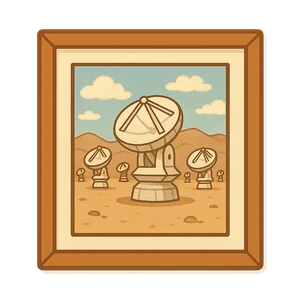
Atacama Large Millimeter/submillimeter Array
The Atacama Large Millimeter/submillimeter Array (ALMA) is a state-of-the-art radio telescope in the Atacama…
Reads at Grades 6–8 Listens at Grades 4–8
Print & create
Answer keys·No prep·Free with an account
28 worksheets · answer keys · full story · quiz · Ages 10-12 · CEFR B2
Plus adds 164,000+ more stories in 27 languages, audio for every one, and printables for all of them.
Just want Atacama Large Millimeter/submillimeter Array?
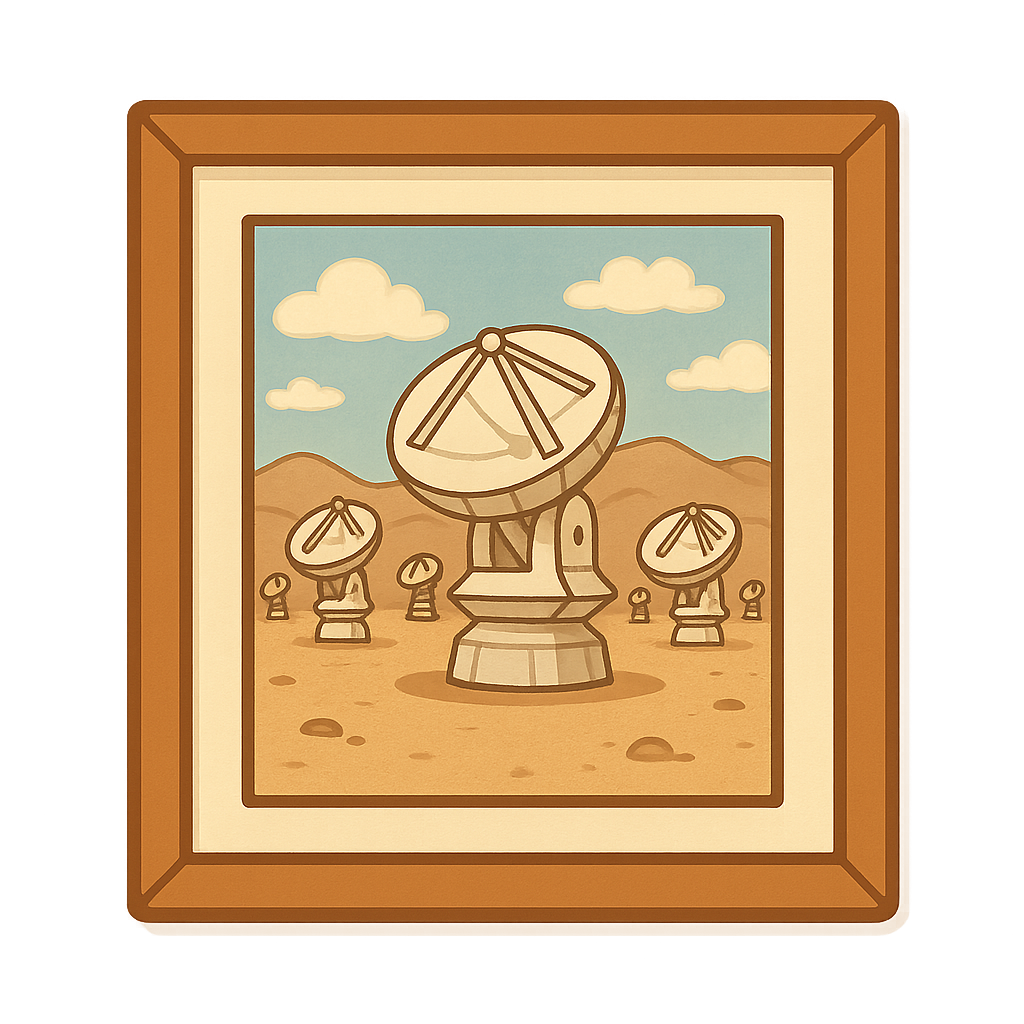
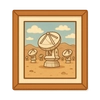
High up in the mountains, under a sky so clear it looks like spilled ink and diamonds, I listen. The air around me is thin, cold, and so dry it feels like it could crackle. This is the Atacama Desert in Chile, one of the highest and driest places on Earth. I am not just one thing, but many, spread across a vast, silent plateau. I am a collection of sixty-six giant, gleaming white dishes, all pointed toward the heavens, listening to the secrets of the cosmos. I feel the wind whistle past my metal skin and the brilliant sun warm me by day, but I truly come alive at night when the universe reveals its faintest glows. My name is the Atacama Large Millimeter/submillimeter Array, but you can call me ALMA. I am the world's most powerful eye on the universe.
I wasn't born from a single idea, but from a dream shared by scientists all over the world. People in Europe, North America, and East Asia, working with our wonderful hosts in Chile, decided they needed a new way to see the cosmos. They wanted to see the cold, dark, and dusty places where stars and planets are born, things invisible to ordinary telescopes that see only visible light. In the early 2000s, they agreed to build me here, 5,000 meters above sea level. The air is so thin and dry that the faint whispers from space, in the form of millimeter and submillimeter waves, can reach me without being blocked by the water vapor that clouds the view at lower altitudes. My very first antenna arrived on the Chajnantor Plateau in 2007. Over the next several years, my family grew to 66 antennas. Getting us all up here was a grand adventure. Two enormous, custom-built transporters, affectionately named Otto and Lore, carried each of my antenna dishes, one by one, up the steep mountain roads. They are incredibly strong and precise, and they can even move me around the plateau, changing my configuration so I can zoom in on tiny details or take a wide-angle picture of the sky. I was officially brought to life on March 13th, 2013, when all my parts began working together as one giant, powerful telescope.
I Am ALMA, an Eye on the Cosmos
High up in the mountains, under a sky so clear it looks like spilled ink and diamonds, I listen. The air around me is thin, cold, and so dry it feels like it could crackle. This is the Atacama Desert in Chile, one of the highest and driest places on Earth. I am not just one thing, but many, spread across a vast, silent plateau. I am a collection of sixty-six giant, gleaming white dishes, all pointed toward the heavens, listening to the secrets of the cosmos. I feel the wind whistle past my metal skin and the brilliant sun warm me by day, but I truly come alive at night when the universe reveals its faintest glows. My name is the Atacama Large Millimeter/submillimeter Array, but you can call me ALMA. I am the world's most powerful eye on the universe.
I wasn't born from a single idea, but from a dream shared by scientists all over the world. People in Europe, North America, and East Asia, working with our wonderful hosts in Chile, decided they needed a new way to see the cosmos. They wanted to see the cold, dark, and dusty places where stars and planets are born, things invisible to ordinary telescopes that see only visible light. In the early 2000s, they agreed to build me here, 5,000 meters above sea level. The air is so thin and dry that the faint whispers from space, in the form of millimeter and submillimeter waves, can reach me without being blocked by the water vapor that clouds the view at lower altitudes. My very first antenna arrived on the Chajnantor Plateau in 2007. Over the next several years, my family grew to 66 antennas. Getting us all up here was a grand adventure. Two enormous, custom-built transporters, affectionately named Otto and Lore, carried each of my antenna dishes, one by one, up the steep mountain roads. They are incredibly strong and precise, and they can even move me around the plateau, changing my configuration so I can zoom in on tiny details or take a wide-angle picture of the sky. I was officially brought to life on March 13th, 2013, when all my parts began working together as one giant, powerful telescope.
My ears, my antennas, don't hear sound, and my eyes don't see the light you see with your own eyes. I detect something different: millimeter and submillimeter waves. Think of it as a kind of light that is invisible to humans, but it carries incredible secrets about the universe's coldest objects. This special light allows me to peer through the thick, dark clouds of cosmic dust that block the view of other telescopes. I can see straight into the nurseries where stars are being born. My first official scientific observations began in 2011, even before I was fully complete. One of my most famous discoveries happened in 2014 when I took a picture of a young star named HL Tauri. My image was so clear and detailed that it showed dark rings in the dusty disk swirling around the star. This was the first direct evidence ever captured of baby planets forming and carving out their orbits. It was a breathtaking moment for astronomers everywhere. I have also found complex molecules, the very building blocks of life, floating in the vast clouds between stars. I have even looked back in time to see the faint light from some of the universe's very first galaxies, helping scientists understand how everything began. I am a time machine and a cosmic detective, all in one.
Today, I am still here on this high plateau, listening to the universe's unfolding story. Scientists from all over the globe use the data I collect to make new discoveries every single year. My existence is proof that when people from different countries and cultures work together, we can achieve things that seem impossible. I was built by human curiosity, by the deep and ancient need to understand our place in the cosmos. Every image I capture, every signal I receive, is a piece of a magnificent puzzle that belongs to everyone on Earth. I am more than just metal and electronics; I am a promise. A promise that if you keep looking up, keep asking questions, and keep dreaming, the universe will always have wonders to share with you. I am your eye on the cosmos, and I am always open.
Wow facts
About
The Atacama Large Millimeter/submillimeter Array (ALMA) is a state-of-the-art radio telescope in the Atacama Desert of Chile. Comprising 66 high-precision antennas, it observes the universe at millimeter and submillimeter wavelengths to study the birth of stars, planetary systems, and the earliest galaxies.
Take a Quiz
Question 1 of 5
In your own words, what is ALMA's main purpose as described in the story?
Explore next




Want to do even more?
Go beyond exploring. Unlock tools that turn every story into real learning.

Storypie Plus for families
Full stories, quizzes, and printables. Nights and car rides, sorted.
- Unlimited audio stories
- Create Mode: your child stars in the story
- Offline downloads
- Printable worksheets & coloring pages

Why Storypie for Schools
Students engaged. Prep in seconds. Evenings back to you.
- Worksheets & Quizzes
- Classroom Management
- Formative Assessment
- Custom Curriculum & Lesson Plans
- 27 Languages

Why Storypie for Homeschool
Curriculum done. They'll ask for more. Hours back in your day.
- Worksheet Generator
- First-Person Audio Stories
- Built-in Comprehension Quizzes
- Custom Curriculum & Lesson Plans
- Print & Go Activities