English

Atacama Large Millimeter/submillimeter Array
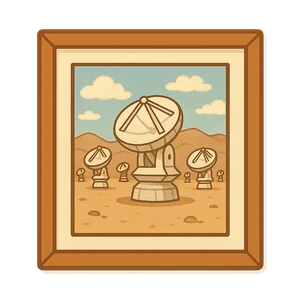
The Atacama Large Millimeter/submillimeter Array (ALMA) is a state-of-the-art radio telescope in the Atacama…
Reads at Grades 3–5 Listens at Grades 1–5
Print & create
Answer keys·No prep·Free with an account
28 worksheets · answer keys · full story · quiz · Ages 8-10 · CEFR B1
Plus adds 164,000+ more stories in 27 languages, audio for every one, and printables for all of them.
Just want Atacama Large Millimeter/submillimeter Array?
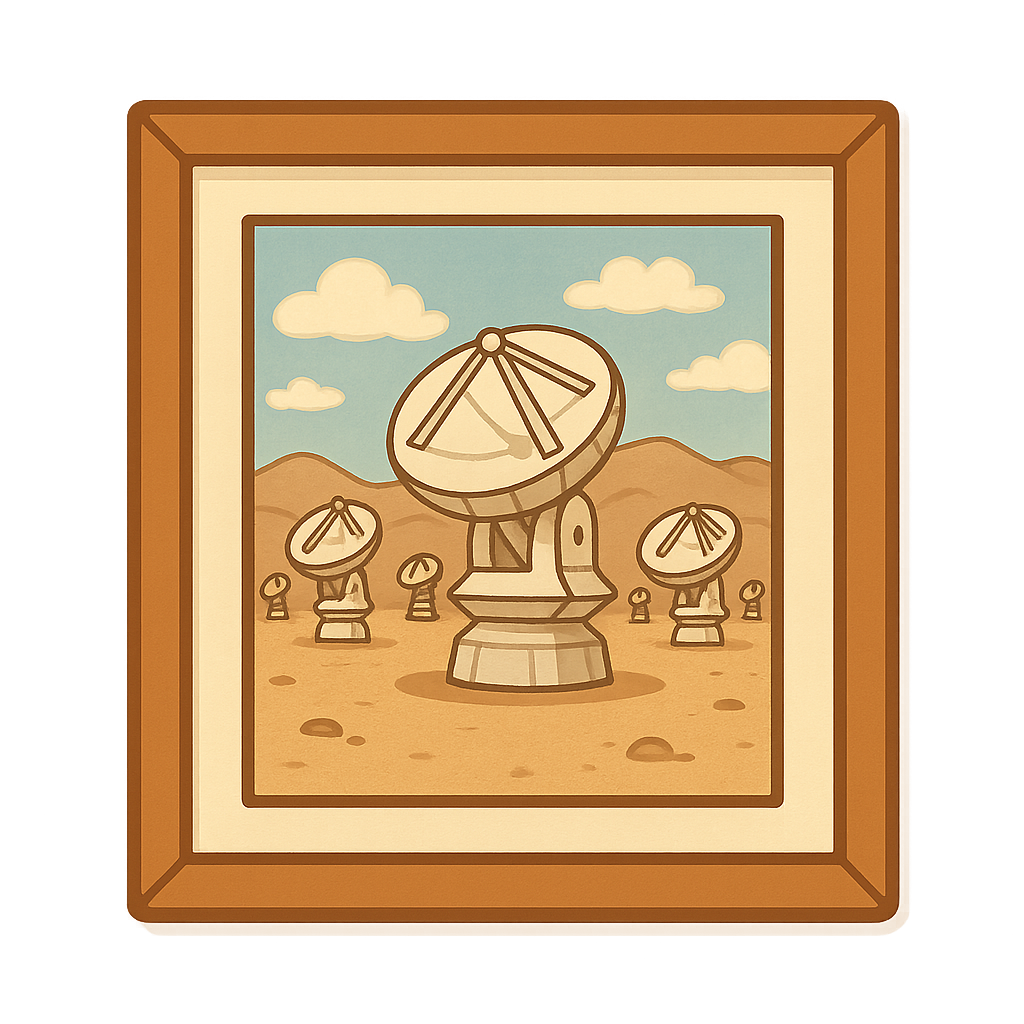
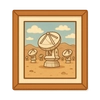
Can you feel it. The air is thin and cold up here, high in the mountains. I am not just one thing, but many, scattered across a flat, dusty plateau under a sky bursting with stars. The air in the Atacama Desert in Chile is so dry and clear that it feels like you could reach out and touch the Milky Way. My sixty-six giant, dish-shaped faces are all turned upward, listening. But I don't listen for sounds that your ears can hear. I listen for a special kind of light that our eyes can't see—the invisible whispers of newborn stars and ancient galaxies far, far away. I am the Atacama Large Millimeter/submillimeter Array, but my friends all call me ALMA.
I wasn't built by one person or even one country. You could say I am a huge family project. Scientists and engineers from countries all over Europe, North America, and East Asia worked together with the nation of Chile to bring me to life. They had a dream to build the most powerful telescope of my kind on Earth, but they faced a giant challenge. How do you build 66 super-sensitive antennas, each one as wide as a school bus, and place them 5,000 meters (that's 16,400 feet) above sea level. Can you imagine trying to build something in a place with half as much air to breathe as you have. Starting in the early 2000s, they carefully constructed my parts and then used enormous yellow transporters, like giant flatbed trucks with 28 wheels, to carry each one of my precious antennas up the steep mountain road. On September 30th, 2011, I opened a few of my eyes for the first time for early observations. Then, on March 13th, 2013, my full family of antennas was officially ready to explore the universe together. By working as one big team, my creators gave the world a new window to the cosmos.
The Atacama Large Millimeter/submillimeter Array: A Story
Can you feel it. The air is thin and cold up here, high in the mountains. I am not just one thing, but many, scattered across a flat, dusty plateau under a sky bursting with stars. The air in the Atacama Desert in Chile is so dry and clear that it feels like you could reach out and touch the Milky Way. My sixty-six giant, dish-shaped faces are all turned upward, listening. But I don't listen for sounds that your ears can hear. I listen for a special kind of light that our eyes can't see—the invisible whispers of newborn stars and ancient galaxies far, far away. I am the Atacama Large Millimeter/submillimeter Array, but my friends all call me ALMA.
I wasn't built by one person or even one country. You could say I am a huge family project. Scientists and engineers from countries all over Europe, North America, and East Asia worked together with the nation of Chile to bring me to life. They had a dream to build the most powerful telescope of my kind on Earth, but they faced a giant challenge. How do you build 66 super-sensitive antennas, each one as wide as a school bus, and place them 5,000 meters (that's 16,400 feet) above sea level. Can you imagine trying to build something in a place with half as much air to breathe as you have. Starting in the early 2000s, they carefully constructed my parts and then used enormous yellow transporters, like giant flatbed trucks with 28 wheels, to carry each one of my precious antennas up the steep mountain road. On September 30th, 2011, I opened a few of my eyes for the first time for early observations. Then, on March 13th, 2013, my full family of antennas was officially ready to explore the universe together. By working as one big team, my creators gave the world a new window to the cosmos.
So, what do I listen for with my 66 ears. I listen to the coldest, darkest, and dustiest parts of space. While regular telescopes see the bright, hot light of grown-up stars, I see the faint, chilly glow from clouds of cosmic dust and cold gas where new stars and planets are just beginning to form. All 66 of my antennas work as one team, a single giant eye. My creators can arrange them close together to see a wide patch of sky, or they can spread them far apart—up to 16 kilometers (10 miles). Spreading out lets me zoom in on tiny details. This teamwork makes my vision so sharp it's like being able to see a golf ball in New York City all the way from Los Angeles. I've shown scientists how planets are born from swirling disks of gas and dust around young stars. And I even helped do something no one had ever done before. In 2019, I was part of the team that took the first-ever picture of a black hole's shadow.
Today, I am still up here, listening patiently from my quiet mountaintop and sharing the secrets of the universe with everyone on Earth. I am proof that when people from all over the world work together, we can achieve incredible things and start to answer our biggest questions, like "Where did we come from.". I am more than just metal and wires; I am a symbol of human curiosity and our desire to explore. I stand here on my high, dry plateau, reminding you to look up at the night sky and wonder. The universe is telling its story, and I am here to help you listen.
Wow facts
About
The Atacama Large Millimeter/submillimeter Array (ALMA) is a state-of-the-art radio telescope in the Atacama Desert of Chile. Comprising 66 high-precision antennas, it observes the universe at millimeter and submillimeter wavelengths to study the birth of stars, planetary systems, and the earliest galaxies.
Take a Quiz
Question 1 of 5
The story says ALMA is like a 'family project.' What does this mean?
Explore next





Want to do even more?
Go beyond exploring. Unlock tools that turn every story into real learning.

Storypie Plus for families
Full stories, quizzes, and printables. Nights and car rides, sorted.
- Unlimited audio stories
- Create Mode: your child stars in the story
- Offline downloads
- Printable worksheets & coloring pages

Why Storypie for Schools
Students engaged. Prep in seconds. Evenings back to you.
- Worksheets & Quizzes
- Classroom Management
- Formative Assessment
- Custom Curriculum & Lesson Plans
- 27 Languages

Why Storypie for Homeschool
Curriculum done. They'll ask for more. Hours back in your day.
- Worksheet Generator
- First-Person Audio Stories
- Built-in Comprehension Quizzes
- Custom Curriculum & Lesson Plans
- Print & Go Activities