English

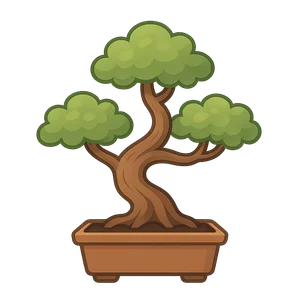
Bonsai
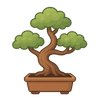
Bonsai is the Japanese art form of growing and cultivating miniature trees in containers…
Reads at Grades 6–8 Listens at Grades 4–8
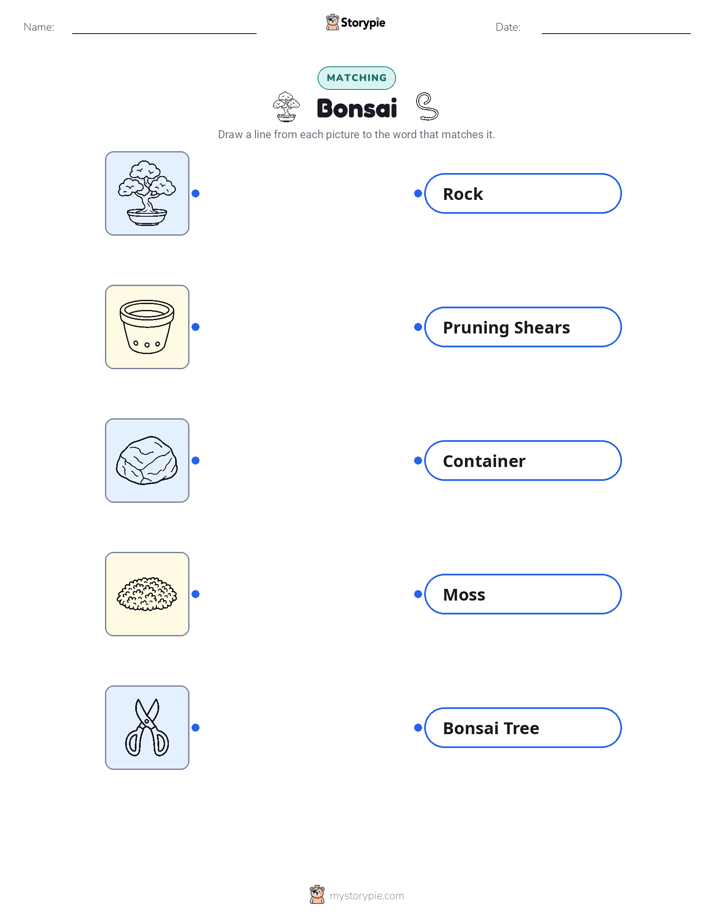
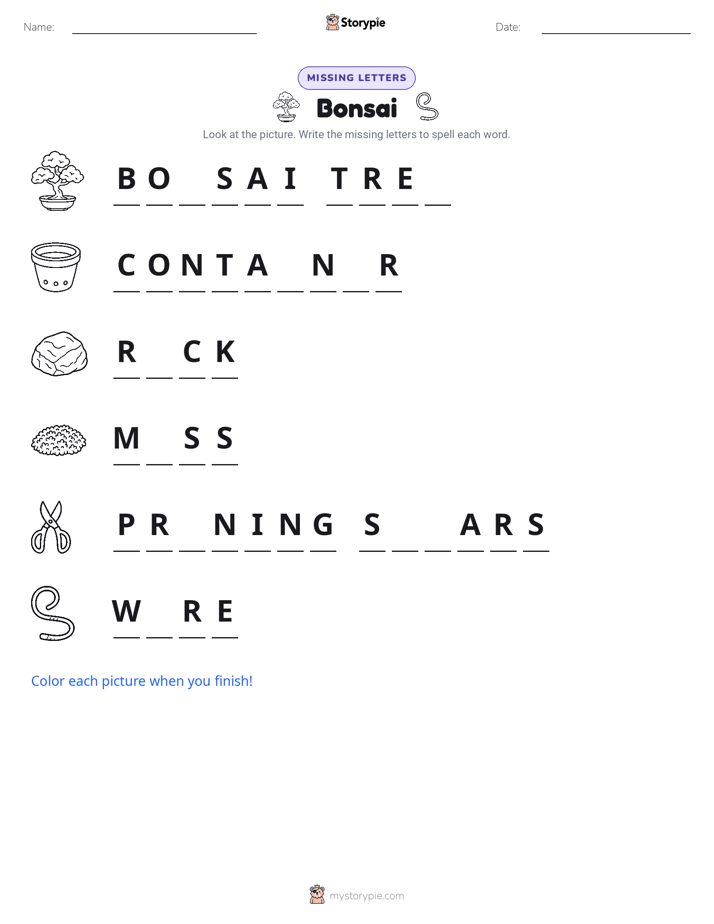
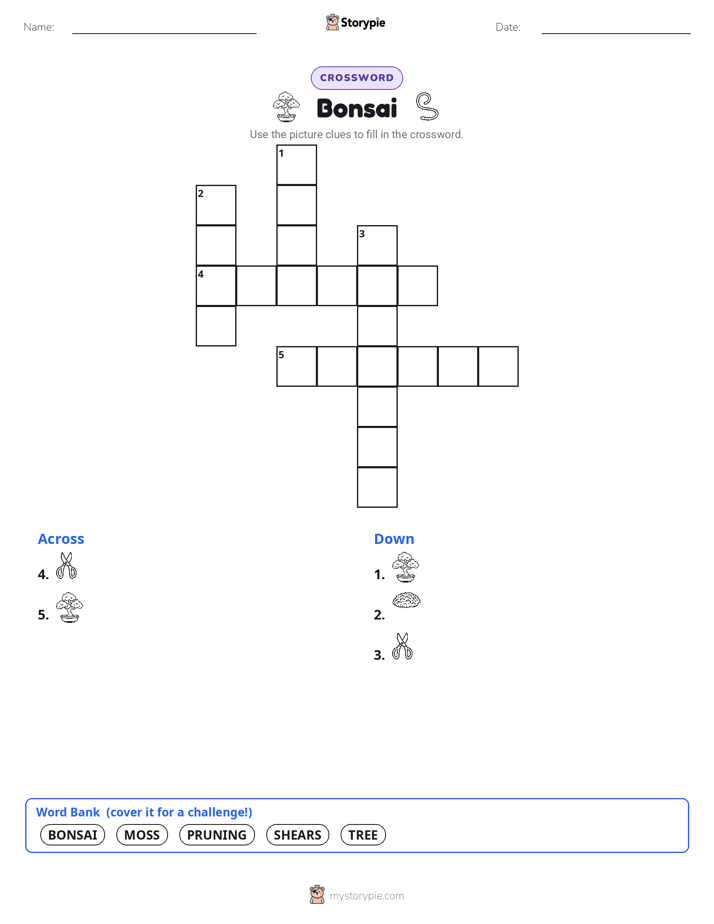
Print & create
Answer keys·No prep·Free with an account
28 worksheets · answer keys · full story · quiz · Ages 10-12 · CEFR B2
Plus adds 164,000+ more stories in 27 languages, audio for every one, and printables for all of them.
Just want Bonsai?
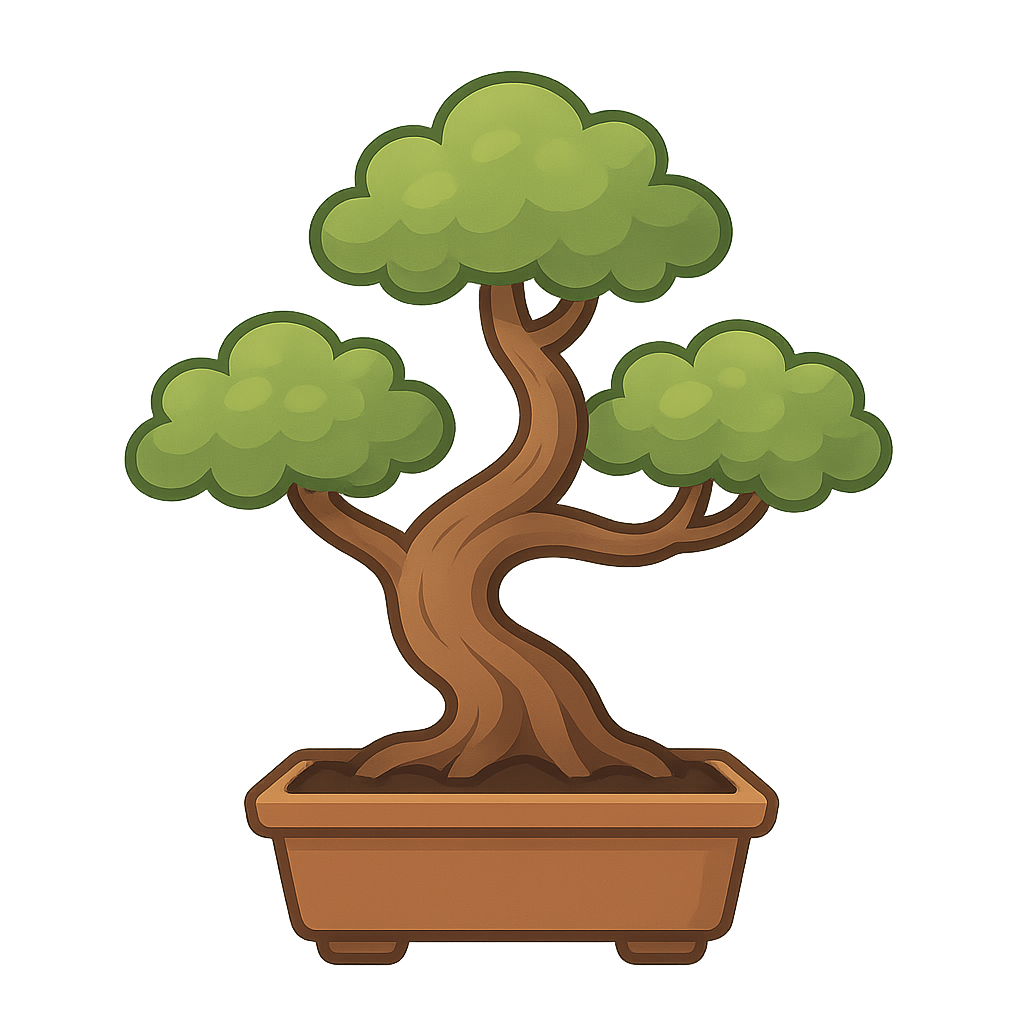
I feel the sun on my tiny leaves, the rough texture of my gnarled bark, and the gentle hands that prune my branches. I may be small enough to sit on a table, but I hold the wisdom of a forest giant, my rings telling a story of seasons passed and care received. Every twist in my trunk is a memory, every leaf a new breath. I am a living sculpture, a story told in wood and leaves, a bridge between the wild world and the quiet home. I am Bonsai.
My story begins over a thousand years ago, not with my current name, but as an art form called 'penjing' in China. During the great Tang Dynasty, which lasted from the year 618 to 907, artists and monks sought ways to capture the grand, untamed spirit of nature and bring it indoors. They didn't just want a plant in a pot; they wanted to create entire miniature landscapes. They would find me, a young tree with interesting potential, and place me in a shallow container, surrounding me with rocks and moss to represent vast mountains and lush forests. An early image of one of my ancestors was even discovered in a tomb painting from the year 706, proving how long my kind has been cherished. For these early creators, I was more than a decoration. I was a focus for quiet thought, a daily reminder of the power and beauty of the wilderness, and a living piece of art that required devotion.
My journey continued when, during Japan's Kamakura period between 1185 and 1333, Zen Buddhist monks traveled to China. They were captivated by the art of penjing and brought its principles and techniques back with them. In Japan, the art form was refined with incredible focus and patience, and they gave me my new name: Bonsai, which translates to 'planted in a container.' The monks saw my cultivation as a form of meditation, a discipline of the mind. The techniques they perfected—the meticulous pruning of my branches, the careful wiring to guide my growth, the periodic repotting to refresh my roots—were not seen as harsh. Instead, they were a form of gentle guidance, a collaboration between human hands and nature's will. Over decades, and sometimes centuries, this dedicated care shapes my character, making me appear ancient, weathered, and full of grace. This process is inspired by the Japanese aesthetic of 'wabi-sabi,' which finds profound beauty in things that are simple, imperfect, and marked by the passage of time.
The Story of the Bonsai Tree
I feel the sun on my tiny leaves, the rough texture of my gnarled bark, and the gentle hands that prune my branches. I may be small enough to sit on a table, but I hold the wisdom of a forest giant, my rings telling a story of seasons passed and care received. Every twist in my trunk is a memory, every leaf a new breath. I am a living sculpture, a story told in wood and leaves, a bridge between the wild world and the quiet home. I am Bonsai.
My story begins over a thousand years ago, not with my current name, but as an art form called 'penjing' in China. During the great Tang Dynasty, which lasted from the year 618 to 907, artists and monks sought ways to capture the grand, untamed spirit of nature and bring it indoors. They didn't just want a plant in a pot; they wanted to create entire miniature landscapes. They would find me, a young tree with interesting potential, and place me in a shallow container, surrounding me with rocks and moss to represent vast mountains and lush forests. An early image of one of my ancestors was even discovered in a tomb painting from the year 706, proving how long my kind has been cherished. For these early creators, I was more than a decoration. I was a focus for quiet thought, a daily reminder of the power and beauty of the wilderness, and a living piece of art that required devotion.
My journey continued when, during Japan's Kamakura period between 1185 and 1333, Zen Buddhist monks traveled to China. They were captivated by the art of penjing and brought its principles and techniques back with them. In Japan, the art form was refined with incredible focus and patience, and they gave me my new name: Bonsai, which translates to 'planted in a container.' The monks saw my cultivation as a form of meditation, a discipline of the mind. The techniques they perfected—the meticulous pruning of my branches, the careful wiring to guide my growth, the periodic repotting to refresh my roots—were not seen as harsh. Instead, they were a form of gentle guidance, a collaboration between human hands and nature's will. Over decades, and sometimes centuries, this dedicated care shapes my character, making me appear ancient, weathered, and full of grace. This process is inspired by the Japanese aesthetic of 'wabi-sabi,' which finds profound beauty in things that are simple, imperfect, and marked by the passage of time.
For centuries, I was a cherished secret, an art form practiced and perfected almost exclusively within Japan. But in the late 19th century, I began a new journey across the oceans to see the world. My first major appearance on the global stage was at the Paris World Exhibition on May 1st, 1878, and again in 1889. People from Europe and America, who were used to seeing trees as towering giants in parks and forests, were utterly amazed. They had never seen a tree that was so small yet so ancient and majestic. I was a paradox, a living riddle that captured their imagination. My popularity truly began to spread after World War II. American soldiers who had been stationed in Japan returned home, bringing me with them as a symbol of the culture they had come to respect. From there, I began to put down new roots in gardens, nurseries, and homes all around the globe, no longer a secret but a shared passion.
Today, I am a global symbol of peace, patience, and the deep, essential connection between people and the natural world. I am not a passive object; I am a living partner with my caretaker. I teach them to slow down, to observe the subtle changes of each new day, and to find joy in a process that cannot be rushed. Because I can live for hundreds of years, I am often passed down through generations, becoming a living family heirloom that carries the stories and care of those who came before. I am a bridge to the past and a seed of hope for the future. I stand as proof that with time, dedication, and a gentle hand, something very small can grow into a powerful and enduring story of beauty and resilience.
Wow facts
About
Bonsai is the Japanese art form of growing and cultivating miniature trees in containers, a practice that evolved from the earlier Chinese art of penjing.
Take a Quiz
Question 1 of 5
Retell the Bonsai's journey from its origins in China to its global popularity, mentioning at least three key historical periods or events.
Explore next




Want to do even more?
Go beyond exploring. Unlock tools that turn every story into real learning.

Storypie Plus for families
Full stories, quizzes, and printables. Nights and car rides, sorted.
- Unlimited audio stories
- Create Mode: your child stars in the story
- Offline downloads
- Printable worksheets & coloring pages

Why Storypie for Schools
Students engaged. Prep in seconds. Evenings back to you.
- Worksheets & Quizzes
- Classroom Management
- Formative Assessment
- Custom Curriculum & Lesson Plans
- 27 Languages

Why Storypie for Homeschool
Curriculum done. They'll ask for more. Hours back in your day.
- Worksheet Generator
- First-Person Audio Stories
- Built-in Comprehension Quizzes
- Custom Curriculum & Lesson Plans
- Print & Go Activities