English

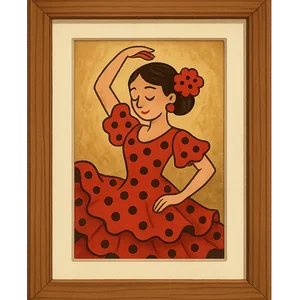
Flamenco
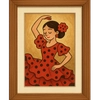
Flamenco is a professionalized art-form based on the various folkloric music traditions of southern Spain in…
Reads at Grades 6–8 Listens at Grades 4–8
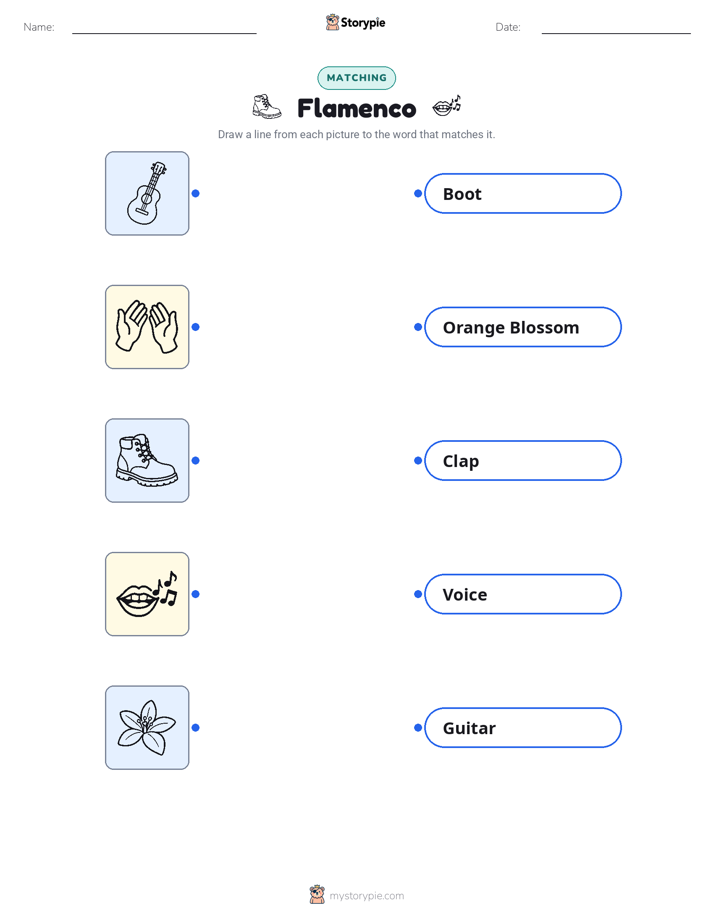
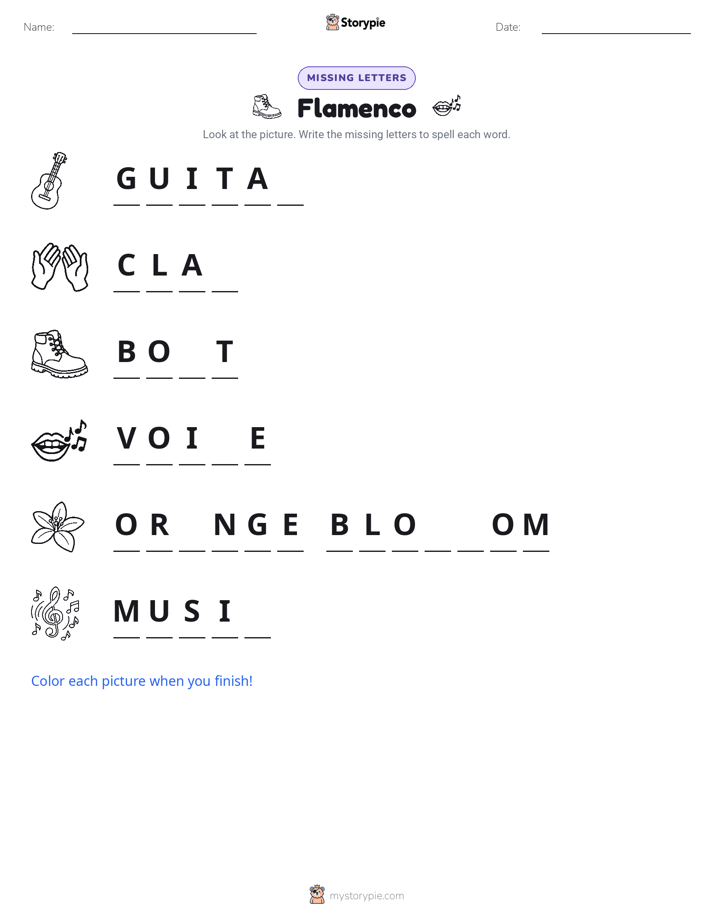
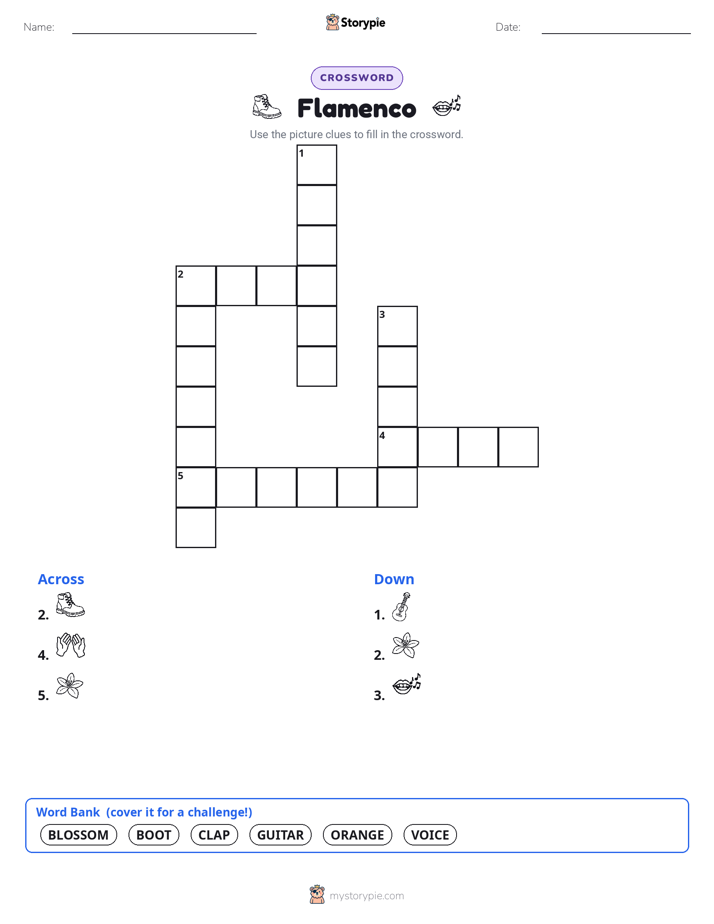
Print & create
Answer keys·No prep·Free with an account
28 worksheets · answer keys · full story · quiz · Ages 10-12 · CEFR B2
Plus adds 244,000+ more stories in 27 languages, audio for every one, and printables for all of them.
Just want Flamenco?
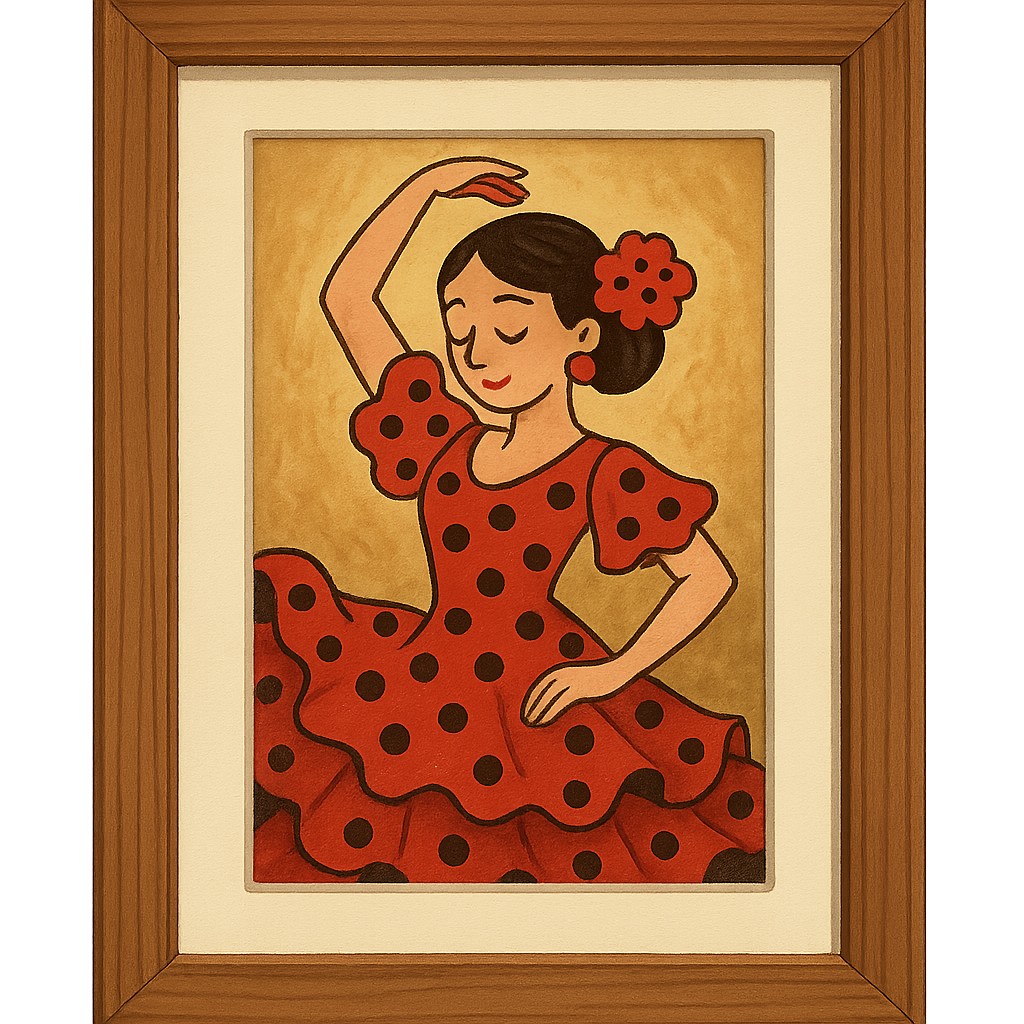
Imagine the warm air of a Spanish afternoon, thick with the scent of orange blossoms. A single guitar begins to play, its notes weaving a story of longing. Suddenly, a sharp, precise clap cuts through the quiet, then another, building a rhythm that feels like a racing heart. A boot stamps hard on a wooden floor, a sound like a declaration, a challenge. Then a voice begins to sing, not with polished perfection, but with a raw, guttural power that holds centuries of feeling. It tells of great love, deep sorrow, and fierce pride. That cry in the sunlight, that percussive beat, that soulful melody—that is me. I am the sound of a heart beating out its story. I am Flamenco.
I was born in the sun-drenched fields and dusty courtyards of Andalusia in southern Spain, but I have the blood of many lands. My soul was shaped most profoundly by the Romani people, whom you might know as Gitanos. When they arrived in Spain during the 15th century, they brought with them a history of wandering and a deep well of emotion, which they poured into their music and dance. But their traditions met others already living in the Andalusian soil. I carry the ancient folk melodies of the region, the complex and intricate rhythms of the Moorish people who ruled here for centuries, and the soulful, prayer-like chants of the Sephardic Jewish communities. For a long, long time, I had no name. I was a private language, a secret shared in family gatherings away from the eyes of the world. I was a way for people to hold onto their identity and express their deepest feelings when they had no other voice. It wasn't until around the year 1774 that writers began to use the word 'flamenco' to describe me.
I Am Flamenco
Imagine the warm air of a Spanish afternoon, thick with the scent of orange blossoms. A single guitar begins to play, its notes weaving a story of longing. Suddenly, a sharp, precise clap cuts through the quiet, then another, building a rhythm that feels like a racing heart. A boot stamps hard on a wooden floor, a sound like a declaration, a challenge. Then a voice begins to sing, not with polished perfection, but with a raw, guttural power that holds centuries of feeling. It tells of great love, deep sorrow, and fierce pride. That cry in the sunlight, that percussive beat, that soulful melody—that is me. I am the sound of a heart beating out its story. I am Flamenco.
I was born in the sun-drenched fields and dusty courtyards of Andalusia in southern Spain, but I have the blood of many lands. My soul was shaped most profoundly by the Romani people, whom you might know as Gitanos. When they arrived in Spain during the 15th century, they brought with them a history of wandering and a deep well of emotion, which they poured into their music and dance. But their traditions met others already living in the Andalusian soil. I carry the ancient folk melodies of the region, the complex and intricate rhythms of the Moorish people who ruled here for centuries, and the soulful, prayer-like chants of the Sephardic Jewish communities. For a long, long time, I had no name. I was a private language, a secret shared in family gatherings away from the eyes of the world. I was a way for people to hold onto their identity and express their deepest feelings when they had no other voice. It wasn't until around the year 1774 that writers began to use the word 'flamenco' to describe me.
For most of my early life, I lived in the privacy of homes. But that all changed during what people now call my 'Golden Age,' a period that lasted from about 1869 to 1910. I stepped out of the courtyard and onto the stage. All across Spain, special venues called 'cafés cantantes,' or singing cafés, opened their doors. For the first time, people from all walks of life could pay to see and hear me. On small wooden stages, my artists—the singers, or 'cantaores,' the dancers, or 'bailaores,' and the guitarists, or 'tocaores'—would perform. It was in these cafés that my different styles, or 'palos,' were truly defined. There was the joyful and bright Alegrías, which celebrated life, and the profound and serious Soleá, which spoke of solitude and pain. The guitar, which had once been used simply to accompany the singer, began to step into the spotlight. Gifted tocaores showed the world that the guitar had its own story to tell, and it became a central part of my voice. I was no longer just a folk tradition; I had become a professional art form, celebrated and debated all across the country.
As the 20th century dawned, I faced new challenges and new opportunities. Some worried that my raw, authentic spirit was being lost as I became more popular. In 1922, a group of brilliant artists and thinkers, including the poet Federico García Lorca and the composer Manuel de Falla, organized the 'Concurso de Cante Jondo' in Granada. It was a festival designed to find and celebrate my deepest, most ancient form—the 'deep song.' They wanted to remind the world that I was not just entertainment, but a profound art form with a rich history. Their efforts helped preserve my soul. In the decades that followed, legendary artists carried me across the globe. The incredible dancer Carmen Amaya, with her lightning-fast footwork, stunned audiences from Buenos Aires to New York. Later, the revolutionary guitarist Paco de Lucía reimagined what the flamenco guitar could do, blending my rhythms with jazz and other world music. Thanks to them and so many others, my voice reached every corner of the world, and on November 16th, 2010, I received a great honor. UNESCO declared me an Intangible Cultural Heritage of Humanity, a treasure belonging to the whole world.
Even with all this history, I am not a relic in a museum. I am alive, breathing, and changing every single day. My heartbeat is the rhythm you hear in the feet of a young dancer practicing in a studio in Seville, and my soul is in the hands of a guitarist in Tokyo inventing a new melody. I am still a powerful way for people to connect with their most intense emotions and share them without needing a single word. I am sorrow, I am joy, I am struggle, and I am hope. I connect people across cultures and across centuries. So the next time you hear a lone guitar or the crackle of rhythmic clapping, listen closely. You are hearing my story. Feel my rhythm, and you will understand that passion is a language everyone can speak.
Wow facts
About
Flamenco is a professionalized art-form based on the various folkloric music traditions of southern Spain in the autonomous community of Andalusia, Extremadura and Murcia.
Take a Quiz
Question 1 of 5
In your own words, retell Flamenco's journey from a private tradition to a globally recognized art form.
Explore next



Want to do even more?
Go beyond exploring. Unlock tools that turn every story into real learning.

Storypie Plus for families
Full stories, quizzes, and printables. Nights and car rides, sorted.
- Unlimited audio stories
- Create Mode: your child stars in the story
- Offline downloads
- Printable worksheets & coloring pages

Why Storypie for Schools
Students engaged. Prep in seconds. Evenings back to you.
- Worksheets & Quizzes
- Classroom Management
- Formative Assessment
- Custom Curriculum & Lesson Plans
- 27 Languages

Why Storypie for Homeschool
Curriculum done. They'll ask for more. Hours back in your day.
- Worksheet Generator
- First-Person Audio Stories
- Built-in Comprehension Quizzes
- Custom Curriculum & Lesson Plans
- Print & Go Activities