English

Flamenco
Flamenco is a professionalized art-form based on the various folkloric music traditions of southern Spain in…
Reads at Grades 3–5 Listens at Grades 1–5
Print & create
Answer keys·No prep·Free with an account
28 worksheets · answer keys · full story · quiz · Ages 8-10 · CEFR B1
Plus adds 244,000+ more stories in 27 languages, audio for every one, and printables for all of them.
Just want Flamenco?
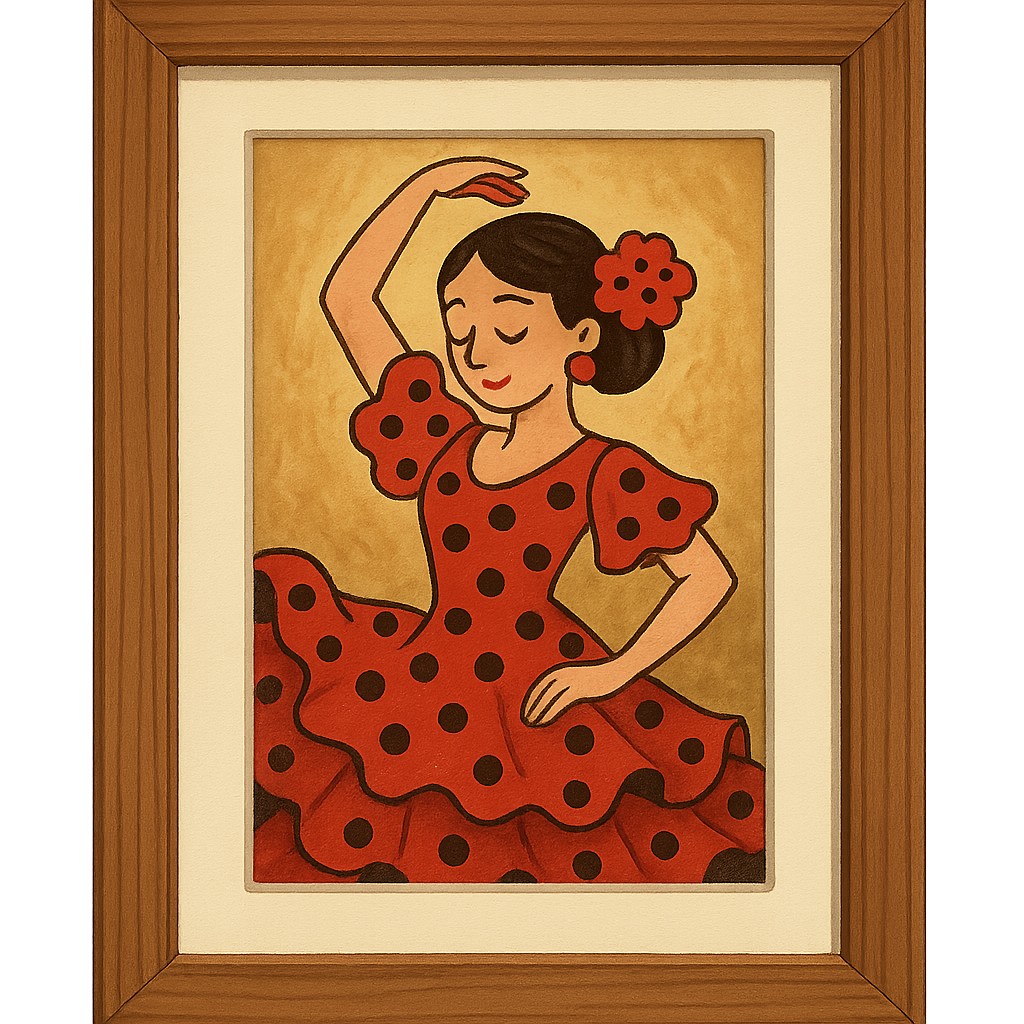
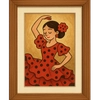
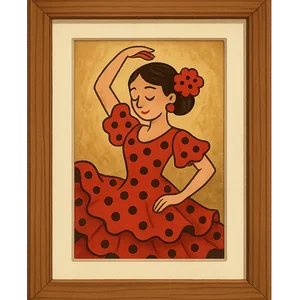
Listen. Can you hear it. A sharp crack of a leather shoe hitting a wooden floor, like a whip snapping through the air. Then another, and another, faster and faster, making a rhythm that beats like a heart on fire. Can you hear the sound of hands clapping, not just in applause, but in a complicated pattern, a secret code of beats called 'palmas'. Above it all, a singer’s voice rises, full of a deep, soulful ache that tells a story of love, loss, and longing without you needing to understand a single word. Now, look. A blur of red and black, a dress with layers of ruffles spinning so fast it looks like a blooming flower caught in a whirlwind. This is a world of passion, pride, and feelings so big they can’t be held inside. I am more than a dance, more than a song. I am the story of a people's heart. I am Flamenco.
My story begins long ago, under the warm sun of southern Spain, in a region called Andalusia. I wasn't born in a single day. Instead, I am like a beautiful, old family tree with roots stretching back to the 15th century and drawing strength from many different cultures. My most important ancestors were the Romani people, or Gitanos, who traveled to Spain bringing their own powerful music and traditions. But they weren't alone. In Andalusia, they met the Moors, with their haunting melodies from North Africa, and the Sephardic Jews, with their ancient, prayer-like songs. All of their sounds and feelings mixed with the folk music of the local Andalusian people. For hundreds of years, I grew in private, in the courtyards and homes of these communities. I was a secret language of emotion. When people were facing hard times and couldn't speak freely about their struggles, their sadness, their joy, or their love, they used me. They sang their pain, they danced their defiance, and they clapped their unbreakable spirit. I wasn't for an audience; I was for survival. I was a way to remember who you were and to feel connected to your family and your history.
The Heartbeat of Spain: My Story as Flamenco
Listen. Can you hear it. A sharp crack of a leather shoe hitting a wooden floor, like a whip snapping through the air. Then another, and another, faster and faster, making a rhythm that beats like a heart on fire. Can you hear the sound of hands clapping, not just in applause, but in a complicated pattern, a secret code of beats called 'palmas'. Above it all, a singer’s voice rises, full of a deep, soulful ache that tells a story of love, loss, and longing without you needing to understand a single word. Now, look. A blur of red and black, a dress with layers of ruffles spinning so fast it looks like a blooming flower caught in a whirlwind. This is a world of passion, pride, and feelings so big they can’t be held inside. I am more than a dance, more than a song. I am the story of a people's heart. I am Flamenco.
My story begins long ago, under the warm sun of southern Spain, in a region called Andalusia. I wasn't born in a single day. Instead, I am like a beautiful, old family tree with roots stretching back to the 15th century and drawing strength from many different cultures. My most important ancestors were the Romani people, or Gitanos, who traveled to Spain bringing their own powerful music and traditions. But they weren't alone. In Andalusia, they met the Moors, with their haunting melodies from North Africa, and the Sephardic Jews, with their ancient, prayer-like songs. All of their sounds and feelings mixed with the folk music of the local Andalusian people. For hundreds of years, I grew in private, in the courtyards and homes of these communities. I was a secret language of emotion. When people were facing hard times and couldn't speak freely about their struggles, their sadness, their joy, or their love, they used me. They sang their pain, they danced their defiance, and they clapped their unbreakable spirit. I wasn't for an audience; I was for survival. I was a way to remember who you were and to feel connected to your family and your history.
For centuries, I was a secret shared among families. But then, people started to listen from beyond the courtyards. They were fascinated by my power. During what people now call my 'Golden Age,' from about 1869 to 1910, I stepped out of the shadows and onto the stage. I found a new home in special performance cafes called 'cafés cantantes'. It was here that my three main parts truly learned to have a conversation in front of an audience. First, there is the 'cante', the song. The singer's voice is the soul of the performance, pouring out every drop of emotion. Next is the 'toque', the guitar playing. The guitarist isn't just playing a tune; they are responding to the singer, supporting their cries and echoing their joy. Finally, there is the 'baile', the dance. The dancer is a storyteller who uses their whole body. Their arms curve and twist, their hands speak a language of their own, and their feet. ah, their feet. The powerful, rhythmic stomping, called the 'zapateado', turns the dancer into a musician, their shoes becoming the drum that drives the heartbeat of the performance. When the song, the guitar, and the dance all connect perfectly, a moment of pure magic can happen. It is a feeling so intense it gives you goosebumps. In Spain, they call this 'duende'. It is a mysterious, powerful force that grabs everyone in the room and reminds them what it feels like to be truly, deeply alive.
My journey didn't stop at the borders of Spain. Like a story whispered on the wind, I traveled across oceans and continents, finding new stages and new audiences all over the world. People who didn't speak Spanish could still understand my language of feeling. They felt the passion in the dancer's stomp and the sorrow in the singer's cry. My voice grew stronger and reached farther than my creators could have ever dreamed. Then, on November 16th, 2010, something wonderful happened. I was officially recognized by a group called UNESCO as a precious part of the world's culture, an 'Intangible Cultural Heritage of Humanity'. That's a fancy way of saying that I am a treasure that belongs to everyone and must be protected. I am not just a memory from the past. I am a living, breathing art form. I am still performed in Spain and around the globe today, connecting people and reminding them that our biggest feelings—our joy, our pain, our strength—can be shared, understood, and celebrated through a song, a strum, or a dance. I connect hearts across time.
Wow facts
About
Flamenco is a professionalized art-form based on the various folkloric music traditions of southern Spain in the autonomous community of Andalusia, Extremadura and Murcia.
Take a Quiz
Question 1 of 5
In the story, Flamenco says it was 'a private language of emotion' for people who 'couldn't speak them freely.' What does this tell you about the lives of the people who created Flamenco?
Explore next



Want to do even more?
Go beyond exploring. Unlock tools that turn every story into real learning.

Storypie Plus for families
Full stories, quizzes, and printables. Nights and car rides, sorted.
- Unlimited audio stories
- Create Mode: your child stars in the story
- Offline downloads
- Printable worksheets & coloring pages

Why Storypie for Schools
Students engaged. Prep in seconds. Evenings back to you.
- Worksheets & Quizzes
- Classroom Management
- Formative Assessment
- Custom Curriculum & Lesson Plans
- 27 Languages

Why Storypie for Homeschool
Curriculum done. They'll ask for more. Hours back in your day.
- Worksheet Generator
- First-Person Audio Stories
- Built-in Comprehension Quizzes
- Custom Curriculum & Lesson Plans
- Print & Go Activities