English

Gamelan
Gamelan is a traditional ensemble music of Indonesia, primarily from the islands of Java and Bali…
Reads at Grades 6–8 Listens at Grades 4–8
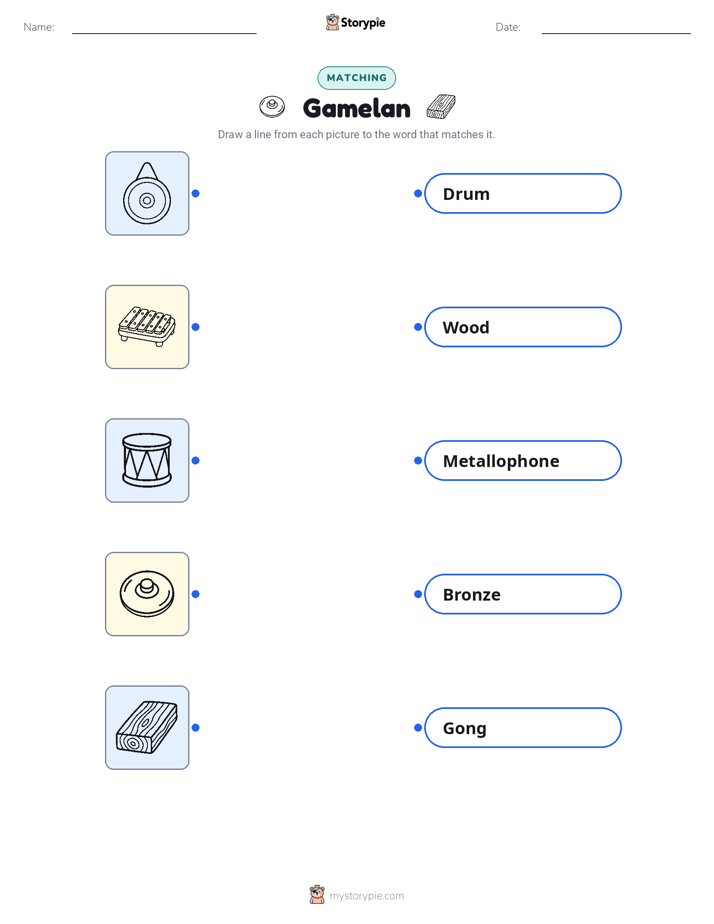
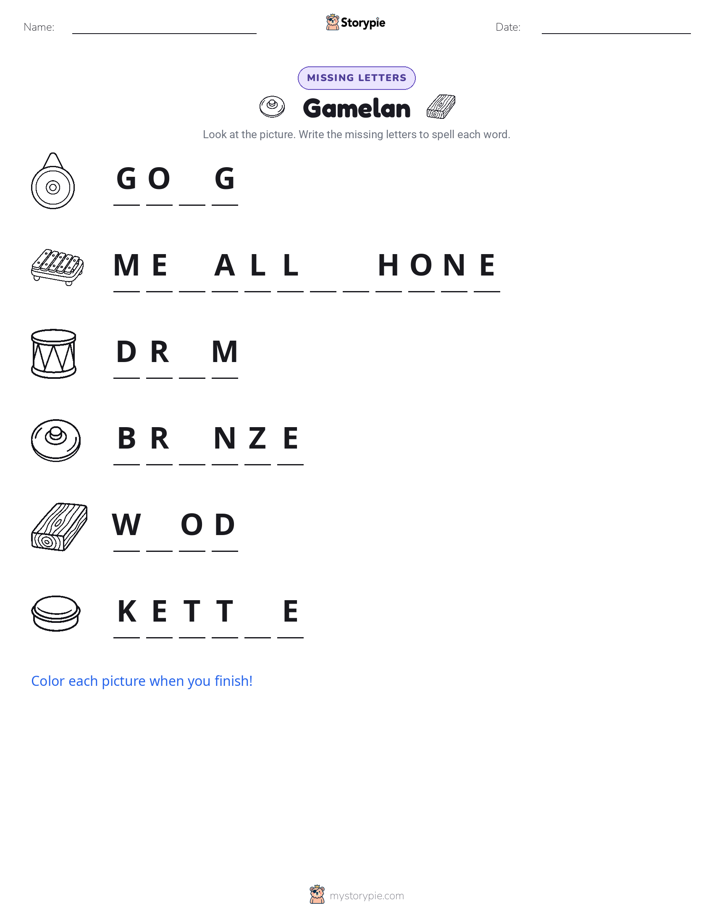
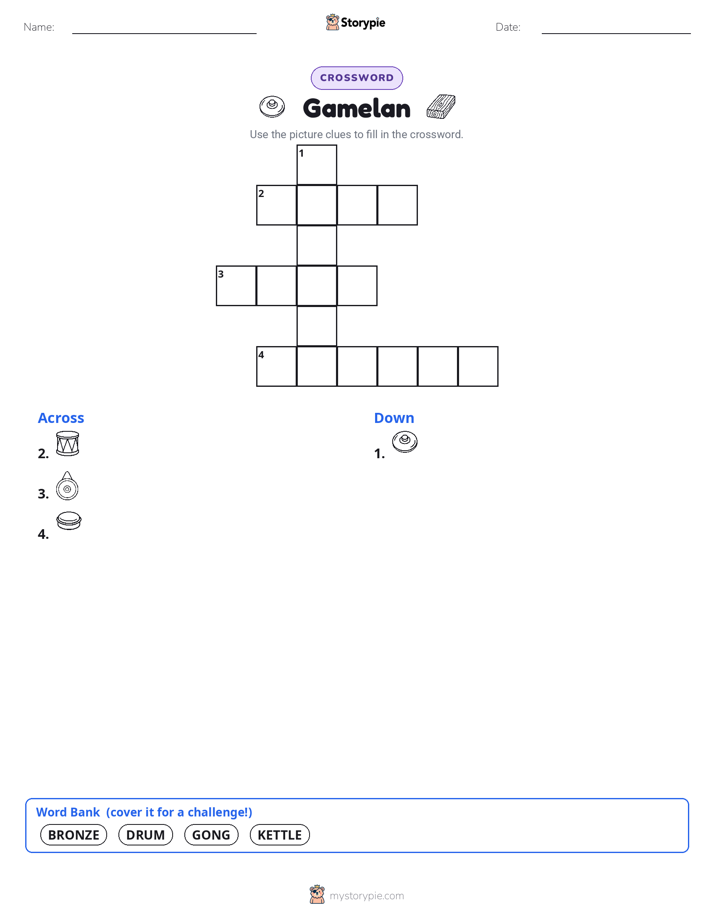
Print & create
Answer keys·No prep·Free with an account
28 worksheets · answer keys · full story · quiz · Ages 10-12 · CEFR B2
Plus adds 164,000+ more stories in 27 languages, audio for every one, and printables for all of them.
Just want Gamelan?
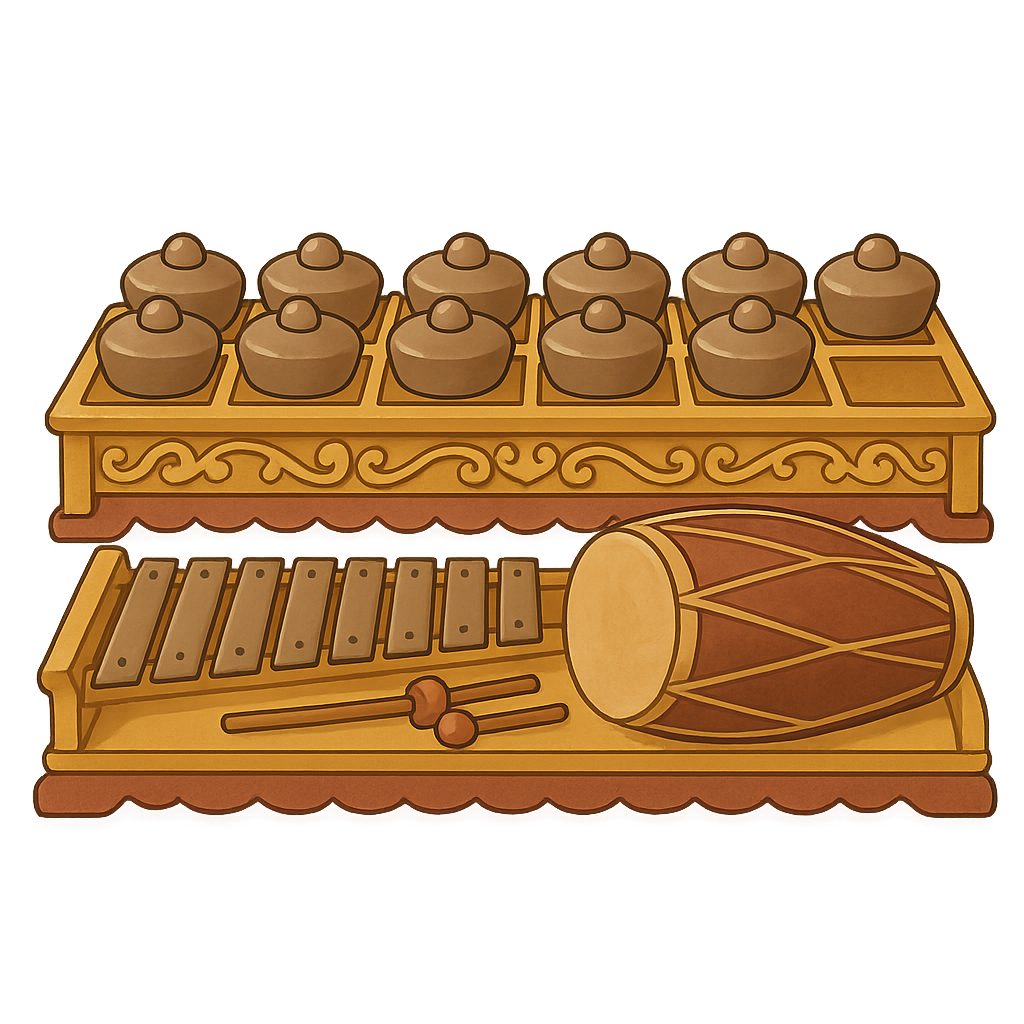
I am not one voice, but many. I am a river of shimmering, ringing tones that rise from bronze and wood, a sound that feels like the warm, humid air of an island evening. My voice is the deep, resonant clang of a giant gong that feels like a heartbeat, and the delicate, watery notes of metallophones that sound like raindrops falling on a quiet pond. Long before you might learn my name, you can feel my spirit. I am a collective soul, a conversation told through melody and rhythm, not with words. I am the sound of community, of ancient stories, and of sacred ceremony. You can hear the history of a people in my harmonies, the joy of festivals in my interlocking patterns, and the reverence of prayer in my sustained tones. I am Gamelan.
My story begins long, long ago, on the beautiful, volcanic islands of Java and Bali in what is now Indonesia. While my exact birthdate is lost to time, my oldest ancestors were immortalized in stone. You can see them in the intricate carvings on the great temple of Borobudur, which was built way back in the 9th century. I was not invented by a single person in a moment of inspiration. Instead, I grew over hundreds of years from the hands and hearts of countless artisans. These skilled smiths, respected members of their communities, would mine metal from the earth and forge it with fire, often chanting prayers as they hammered my bronze keys and gongs into shape. They believed that each part of me—every gong, kettle, and keyed instrument—possessed a spirit. Tuning me was a sacred act, a delicate process of ensuring that all my separate parts could sing together in a perfect, buzzing harmony that Western ears might find unusual. I was born from the earth, the fire, and the collective skill of an entire community.
The Gamelan's Song
I am not one voice, but many. I am a river of shimmering, ringing tones that rise from bronze and wood, a sound that feels like the warm, humid air of an island evening. My voice is the deep, resonant clang of a giant gong that feels like a heartbeat, and the delicate, watery notes of metallophones that sound like raindrops falling on a quiet pond. Long before you might learn my name, you can feel my spirit. I am a collective soul, a conversation told through melody and rhythm, not with words. I am the sound of community, of ancient stories, and of sacred ceremony. You can hear the history of a people in my harmonies, the joy of festivals in my interlocking patterns, and the reverence of prayer in my sustained tones. I am Gamelan.
My story begins long, long ago, on the beautiful, volcanic islands of Java and Bali in what is now Indonesia. While my exact birthdate is lost to time, my oldest ancestors were immortalized in stone. You can see them in the intricate carvings on the great temple of Borobudur, which was built way back in the 9th century. I was not invented by a single person in a moment of inspiration. Instead, I grew over hundreds of years from the hands and hearts of countless artisans. These skilled smiths, respected members of their communities, would mine metal from the earth and forge it with fire, often chanting prayers as they hammered my bronze keys and gongs into shape. They believed that each part of me—every gong, kettle, and keyed instrument—possessed a spirit. Tuning me was a sacred act, a delicate process of ensuring that all my separate parts could sing together in a perfect, buzzing harmony that Western ears might find unusual. I was born from the earth, the fire, and the collective skill of an entire community.
For centuries, I was the pulse of life on my home islands. In the grand royal courts, known as 'kratons,' my majestic sounds would announce the arrival of sultans and accompany elegant dancers whose graceful movements told ancient tales of gods and heroes. Perhaps my most important job was to be the voice of the 'wayang kulit,' the magical shadow puppet plays that lasted all night. The puppeteer, called the 'dalang,' is a master storyteller who would bring characters from the great Hindu epics, like the Ramayana and Mahabharata, to life on a simple screen. I was the orchestra for this drama. I provided the thunderous music for their battles, the gentle melodies for their moments of love, and the mysterious harmonies for their journeys into the forest. But I did not only belong to royalty. In the villages, I called people together for religious festivals, weddings, and harvest celebrations. My rhythms would weave the community into a single, joyful tapestry, a living expression of their shared culture and beliefs.
For a long time, my voice was a secret kept by my island home, a sound heard only by those who lived there. That all changed when I traveled across the ocean. On May 6th, 1889, I was presented at the great Exposition Universelle in Paris, France. People from all over the world, who were used to orchestras of strings and horns, heard my strange and beautiful harmonies for the very first time. A French composer named Claude Debussy was in the crowd, and he sat and listened for hours, completely mesmerized. My interlocking patterns, my unique scales, and my cyclical nature opened up a whole new universe of sound for him and other Western musicians. I showed them that music could be built differently, like a shimmering web of interconnected sounds rather than a straight line moving from a beginning to an end. From that moment, my journey truly began. My children—new Gamelan ensembles—started appearing in universities and concert halls across the globe, studied and loved by people who had never set foot in Indonesia.
Today, my voice is heard all around the world, from Bali to Boston, but my spirit remains the same. To play me is to learn how to listen—not just to your own instrument, but to every other sound around you. You must learn how to fit your part into a greater whole, to support the melody, to anticipate the change in rhythm. There is no single star or soloist in a Gamelan ensemble; every musician is absolutely essential to creating the shimmering, breathing sound that is my signature. I am a living reminder that we are all connected and that the most beautiful things, like music, are often made when we work together in harmony. I carry the ancient stories of Indonesia in my bronze heart, and every time I am played, I invite new people into a timeless conversation of cooperation and community, connecting the past to the present and one culture to another.
Wow facts
About
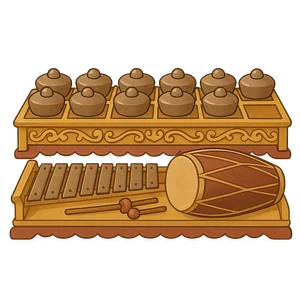
Gamelan is a traditional ensemble music of Indonesia, primarily from the islands of Java and Bali, composed mainly of percussive instruments like metallophones, gongs, and drums.
Take a Quiz
Question 1 of 5
Retell the story of how the Gamelan's music traveled from Indonesia to Europe and what effect it had. Include the key date and person mentioned.
Explore next




Want to do even more?
Go beyond exploring. Unlock tools that turn every story into real learning.

Storypie Plus for families
Full stories, quizzes, and printables. Nights and car rides, sorted.
- Unlimited audio stories
- Create Mode: your child stars in the story
- Offline downloads
- Printable worksheets & coloring pages

Why Storypie for Schools
Students engaged. Prep in seconds. Evenings back to you.
- Worksheets & Quizzes
- Classroom Management
- Formative Assessment
- Custom Curriculum & Lesson Plans
- 27 Languages

Why Storypie for Homeschool
Curriculum done. They'll ask for more. Hours back in your day.
- Worksheet Generator
- First-Person Audio Stories
- Built-in Comprehension Quizzes
- Custom Curriculum & Lesson Plans
- Print & Go Activities