English

Go (Game)
Go is an ancient abstract strategy board game for two players…
Reads at Grades 6–8 Listens at Grades 4–8
Print & create
Answer keys·No prep·Free with an account
28 worksheets · answer keys · full story · quiz · Ages 10-12 · CEFR B2
Plus adds 208,000+ more stories in 27 languages, audio for every one, and printables for all of them.
Just want Go (Game)?
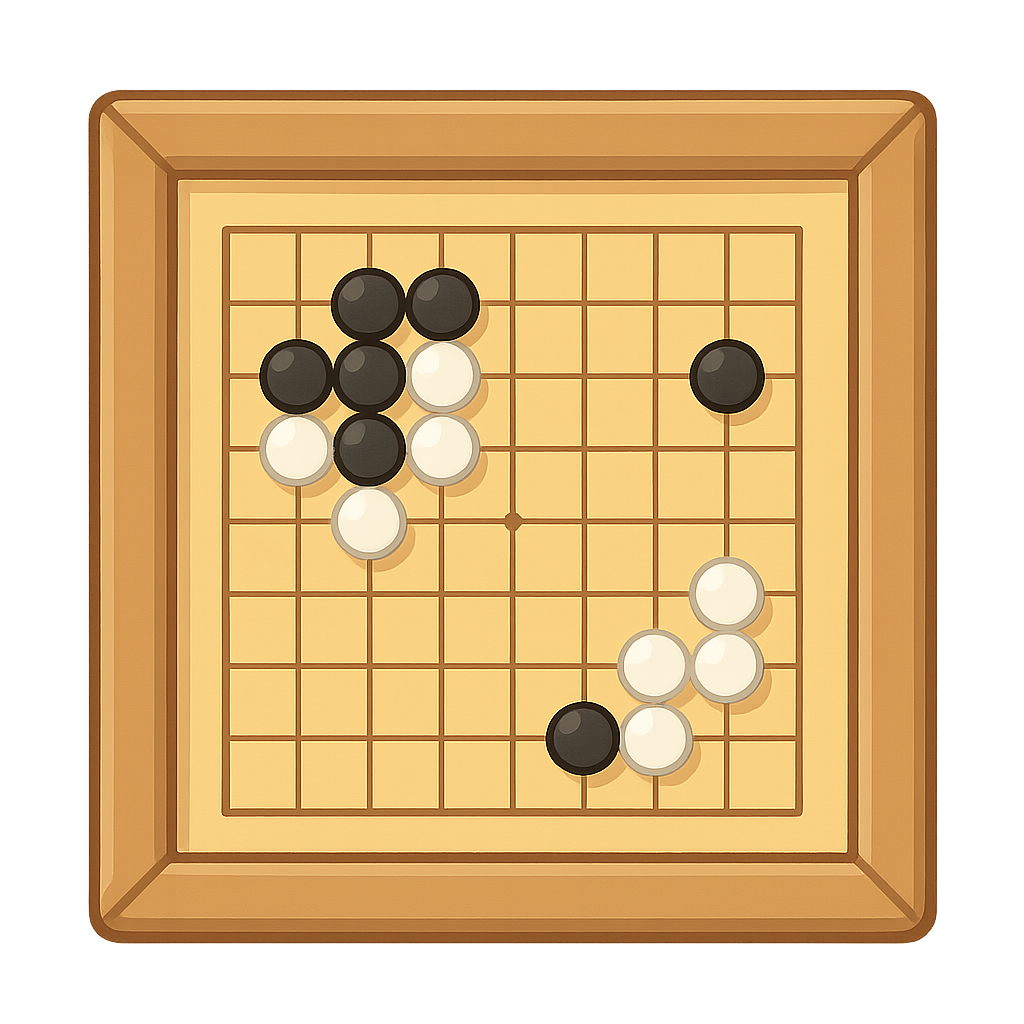
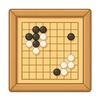
Imagine the cool, smooth touch of polished stones, one as dark as a starless night, the other as white as a seashell. Picture a simple wooden board, marked with a grid of nineteen lines crossing nineteen lines, smelling faintly of aged wood. In the quiet room, there is no sound but the gentle click of a stone being placed on an intersection. This is the moment a universe of possibilities is born. I am a silent conversation between two minds, a landscape where players build territories, connect their groups, and surround their opponent like stars forming constellations. I am the game of Go, but in my home of ancient China, my name is Weiqi, which means 'the surrounding game'. I am not about capturing pieces, but about creating influence and shaping the board with patience and foresight. Every game played on my grid is unique, a story that has never been told before and will never be told again.
My story begins in whispers and legends. One tale says I was created over 4,000 years ago, around 2000 BCE, by the wise Emperor Yao. He hoped I would teach his impulsive son the virtues of discipline, balance, and concentration. While that is a beautiful story, historians know for certain that I was being played by the 4th century BCE, as the philosopher Confucius even mentioned me in his writings. By the time of the Tang Dynasty, from 618 to 907 CE, I had become one of the Four Arts of the Chinese Scholar, a required skill for any truly cultured person, alongside painting, music, and calligraphy. My nature is wonderfully simple: a grid, and a supply of black and white stones. The goal is to surround more territory than your opponent. Yet, from these simple rules, a staggering complexity emerges. There are more possible games that can be played on my board than there are atoms in the observable universe, making my strategic depths far greater than even chess.
A Universe on a Board: The Story of Go
Imagine the cool, smooth touch of polished stones, one as dark as a starless night, the other as white as a seashell. Picture a simple wooden board, marked with a grid of nineteen lines crossing nineteen lines, smelling faintly of aged wood. In the quiet room, there is no sound but the gentle click of a stone being placed on an intersection. This is the moment a universe of possibilities is born. I am a silent conversation between two minds, a landscape where players build territories, connect their groups, and surround their opponent like stars forming constellations. I am the game of Go, but in my home of ancient China, my name is Weiqi, which means 'the surrounding game'. I am not about capturing pieces, but about creating influence and shaping the board with patience and foresight. Every game played on my grid is unique, a story that has never been told before and will never be told again.
My story begins in whispers and legends. One tale says I was created over 4,000 years ago, around 2000 BCE, by the wise Emperor Yao. He hoped I would teach his impulsive son the virtues of discipline, balance, and concentration. While that is a beautiful story, historians know for certain that I was being played by the 4th century BCE, as the philosopher Confucius even mentioned me in his writings. By the time of the Tang Dynasty, from 618 to 907 CE, I had become one of the Four Arts of the Chinese Scholar, a required skill for any truly cultured person, alongside painting, music, and calligraphy. My nature is wonderfully simple: a grid, and a supply of black and white stones. The goal is to surround more territory than your opponent. Yet, from these simple rules, a staggering complexity emerges. There are more possible games that can be played on my board than there are atoms in the observable universe, making my strategic depths far greater than even chess.
For centuries, I was a treasure of China, but like all great ideas, I was destined to travel. Around the 5th century CE, I made my way to the Korean peninsula, where I was embraced with passion and given a new name: Baduk. There, my strategies were studied intently, and I became a beloved national pastime. By the 7th century CE, I had crossed the sea to Japan, where I became known as Igo. It was in Japan that my art was perhaps perfected. During the long and peaceful Edo period, from 1603 to 1868, I was adopted by the samurai and nobility. They saw my lessons in strategy, patience, and finding balance between attack and defense as essential training for the mind of a warrior and a leader. Great schools were established solely to study my depths, and the best players were revered as true masters. I was no longer just a game; I was a respected path to enlightenment and discipline.
I have watched generations of human minds grapple with my mysteries, and for thousands of years, my infinite complexity was thought to be beyond the reach of any machine. Computers could master chess, but my intuitive, pattern-based nature seemed uniquely human. That all changed in March of 2016. In Seoul, South Korea, a new kind of challenger appeared: an artificial intelligence created by DeepMind called AlphaGo. Its opponent was Lee Sedol, a legendary South Korean player, one of the greatest human masters of all time. The world watched, breathless, as this five-game match unfolded. AlphaGo made moves that were creative, strange, and utterly brilliant—moves no human had ever considered. It played with a style that seemed to come from another dimension. Though the machine ultimately won the match, it didn't defeat me. Instead, it revealed that after four millennia, I still held new secrets, inspiring human players everywhere to explore my possibilities in ways they had never dreamed of.
Today, my simple grid connects people across the globe and across the centuries. When you place a stone on my board, you are taking part in a tradition shared by ancient Chinese scholars, disciplined Japanese samurai, and the most advanced thinkers of the modern age. I am more than a game of black and white stones. I am a bridge through time, a quiet space for the mind to grow, and a beautiful reminder that from the simplest beginnings, infinite wonders can arise. The game is never truly over; it is always waiting to begin again.
Wow facts
About
Go is an ancient abstract strategy board game for two players, in which the aim is to surround more territory than the opponent. It originated in China more than 2,500 years ago.
Take a Quiz
Question 1 of 5
Which of the following best summarizes the main events of the story in the correct order?
Explore next



Want to do even more?
Go beyond exploring. Unlock tools that turn every story into real learning.

Storypie Plus for families
Full stories, quizzes, and printables. Nights and car rides, sorted.
- Unlimited audio stories
- Create Mode: your child stars in the story
- Offline downloads
- Printable worksheets & coloring pages

Why Storypie for Schools
Students engaged. Prep in seconds. Evenings back to you.
- Worksheets & Quizzes
- Classroom Management
- Formative Assessment
- Custom Curriculum & Lesson Plans
- 27 Languages

Why Storypie for Homeschool
Curriculum done. They'll ask for more. Hours back in your day.
- Worksheet Generator
- First-Person Audio Stories
- Built-in Comprehension Quizzes
- Custom Curriculum & Lesson Plans
- Print & Go Activities