English

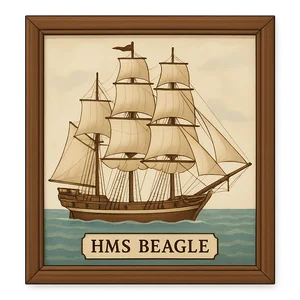
HMS Beagle
A Cherokee-class brig-sloop of the Royal Navy…
Reads at Grades 6–8 Listens at Grades 4–8
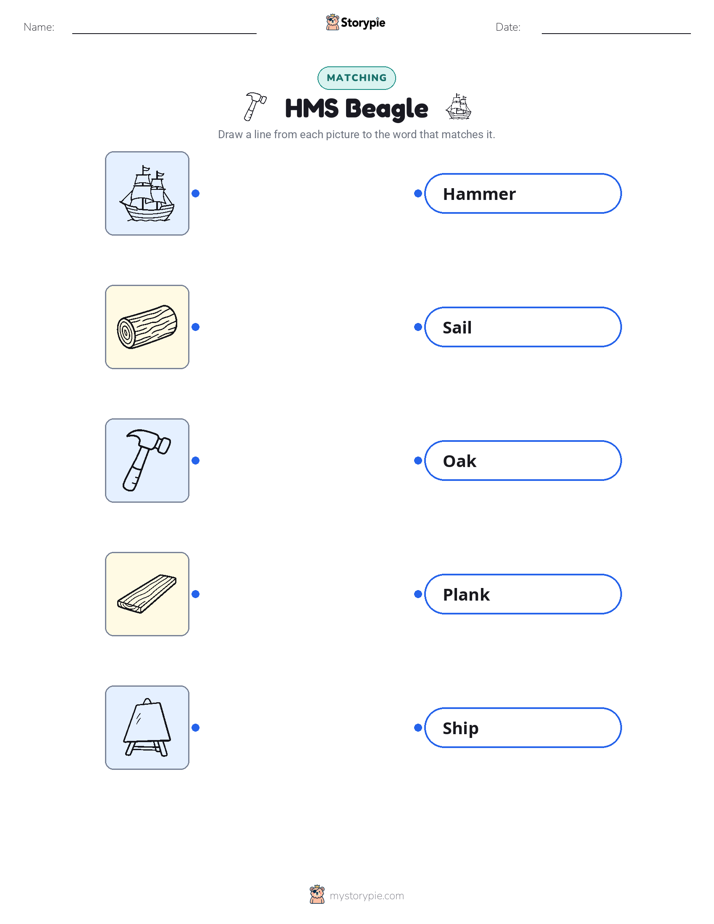
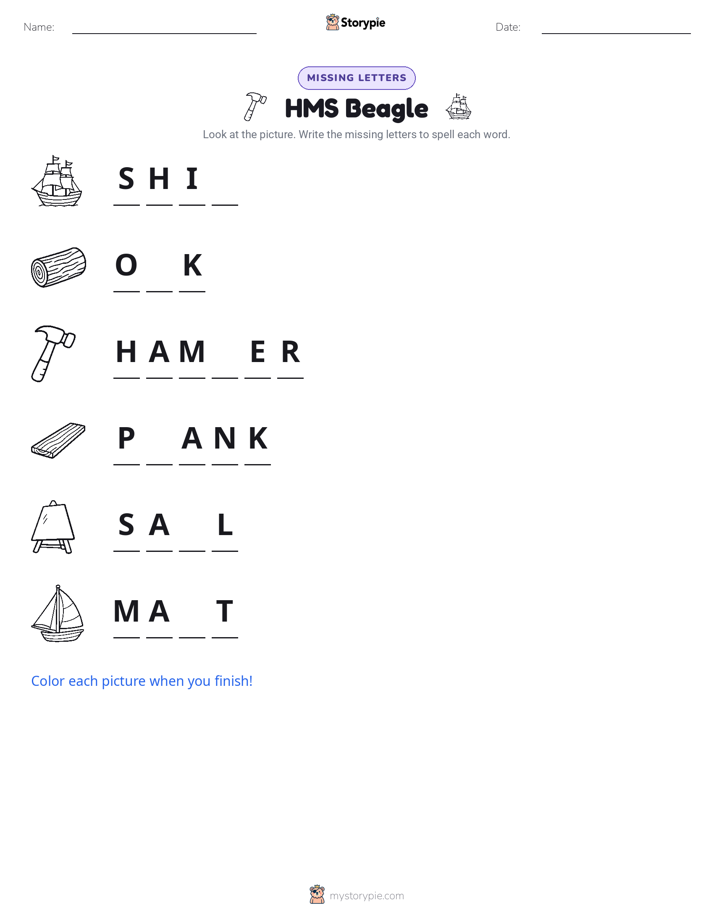
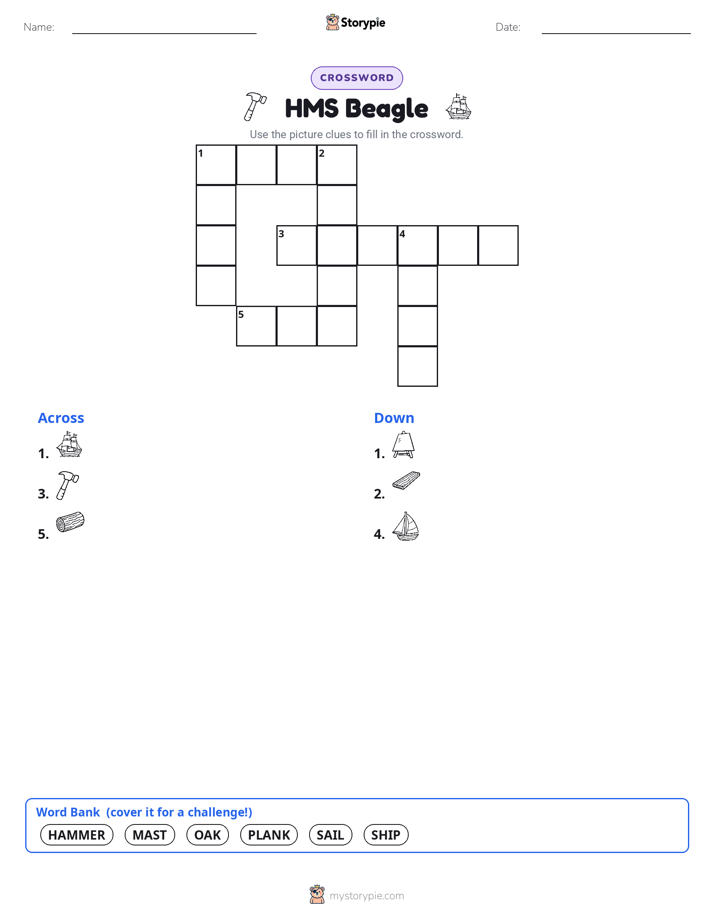
Print & create
Answer keys·No prep·Free with an account
28 worksheets · answer keys · full story · quiz · Ages 10-12 · CEFR B2
Plus adds 164,000+ more stories in 27 languages, audio for every one, and printables for all of them.
Just want HMS Beagle?
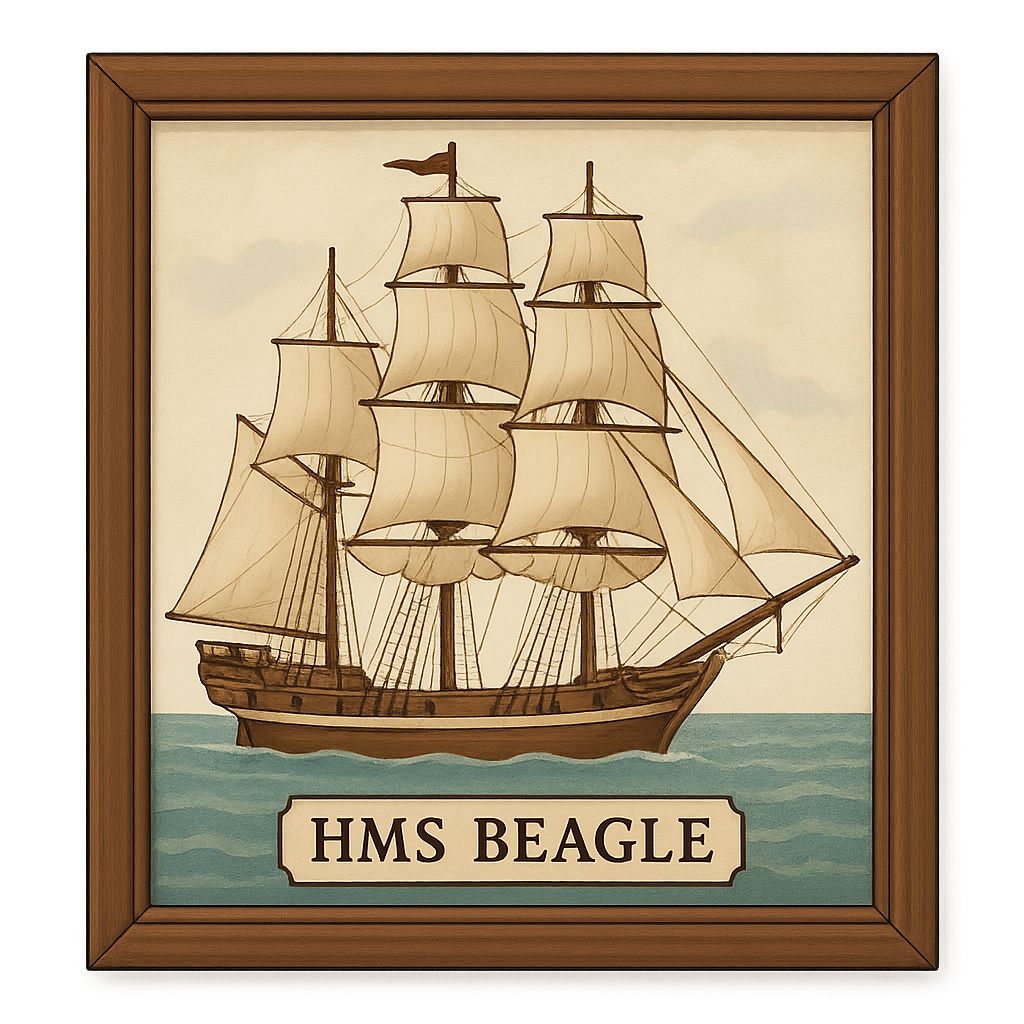
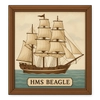
Before I ever touched the sea, I was a collection of sounds and smells in the Woolwich Dockyard on the River Thames. I remember the sharp, clean scent of fresh-cut oak and the constant clang of hammers against metal, shaping my frame. Hundreds of men worked to piece me together, fitting my sturdy ribs and laying my strong wooden planks. I could feel the strength building within me, a deep-seated longing for something more than the muddy riverbank. I dreamed of the vast, open ocean, of wind in my sails and salty spray on my decks. That dream became my reality on May 11th, 1820, when the ropes were cut and I slid gracefully into the water for the first time. The cold river felt like a promise of the adventures to come. I am a ship of the British Royal Navy, a Cherokee-class 10-gun brig-sloop, and my name is HMS Beagle.
My first few years were unremarkable, spent on patrol in calm waters. But my true destiny was not to be a simple naval vessel. In 1825, a new plan was made for me. I was chosen for a grander purpose: to become a survey ship, a floating mapmaker tasked with charting the unknown coastlines of the world. My transformation was significant. Workers added an extra mast, a new deck to provide more room for charts and instruments, and cabins for a different kind of crew. I was no longer built for battle, but for discovery. For my second great voyage, a new captain was appointed, a young and intensely determined man named Robert FitzRoy. He was a brilliant surveyor and meteorologist who demanded precision in everything. But he also decided he wanted a companion for the long journey, a gentleman scientist who could study the geology and nature of the lands we would visit. Just before we were set to leave, a curious 22-year-old man named Charles Darwin came aboard. He was not a sailor, but a naturalist, and he joined our crew just before we set sail from Plymouth on December 27th, 1831, his eyes alight with the promise of seeing the world.
The Ship That Carried an Idea
Before I ever touched the sea, I was a collection of sounds and smells in the Woolwich Dockyard on the River Thames. I remember the sharp, clean scent of fresh-cut oak and the constant clang of hammers against metal, shaping my frame. Hundreds of men worked to piece me together, fitting my sturdy ribs and laying my strong wooden planks. I could feel the strength building within me, a deep-seated longing for something more than the muddy riverbank. I dreamed of the vast, open ocean, of wind in my sails and salty spray on my decks. That dream became my reality on May 11th, 1820, when the ropes were cut and I slid gracefully into the water for the first time. The cold river felt like a promise of the adventures to come. I am a ship of the British Royal Navy, a Cherokee-class 10-gun brig-sloop, and my name is HMS Beagle.
My first few years were unremarkable, spent on patrol in calm waters. But my true destiny was not to be a simple naval vessel. In 1825, a new plan was made for me. I was chosen for a grander purpose: to become a survey ship, a floating mapmaker tasked with charting the unknown coastlines of the world. My transformation was significant. Workers added an extra mast, a new deck to provide more room for charts and instruments, and cabins for a different kind of crew. I was no longer built for battle, but for discovery. For my second great voyage, a new captain was appointed, a young and intensely determined man named Robert FitzRoy. He was a brilliant surveyor and meteorologist who demanded precision in everything. But he also decided he wanted a companion for the long journey, a gentleman scientist who could study the geology and nature of the lands we would visit. Just before we were set to leave, a curious 22-year-old man named Charles Darwin came aboard. He was not a sailor, but a naturalist, and he joined our crew just before we set sail from Plymouth on December 27th, 1831, his eyes alight with the promise of seeing the world.
For nearly five years, I was his home as we circumnavigated the globe. The journey was more incredible than my shipyard dreams. I felt the thrill of cutting through the deep blue waves of the Atlantic Ocean, carrying my crew toward the vibrant, buzzing life of the Brazilian rainforests. I smelled the damp earth and heard the calls of exotic birds. My timbers groaned as Captain FitzRoy expertly navigated me through the treacherous, icy waters around Tierra del Fuego at the very tip of South America, a place of fierce winds and towering glaciers. It was a test of my strength and his skill. But the most memorable part of our journey began in September of 1835, when we reached a cluster of strange and wonderful volcanic islands called the Galápagos. From my decks, I watched Charles Darwin. His curiosity was boundless. He would spend his days ashore, marveling at the giant tortoises that moved like ancient stones and the dark marine iguanas that swam in the sea. He was particularly fascinated by the small, plain-looking birds, the finches, noticing how their beaks were slightly different from island to island. I became his laboratory and his library. In his small cabin, surrounded by books and carefully labeled specimens, he filled notebook after notebook with his observations, sketches, and questions. He was piecing together a puzzle that no one had ever solved before. When we finally turned for home and arrived in England on October 2nd, 1836, I knew I carried the most precious cargo: not gold or jewels, but the seeds of an idea that would change how humanity saw the world forever.
My great adventure was over, but my service was not. My later years were much quieter. From 1845, I was moored in the Rochford salt marshes, serving as a stationary watch vessel for the coastguard, my sailing days behind me. The tides came and went, and my sturdy oak frame slowly weathered. Finally, in 1870, my time came to an end, and my old timbers were sold and broken up. But a ship's true legacy is not in its wood and nails. My story was far from over. The real voyage, the one that continues today, began in Darwin's notebooks. The questions he pondered on my decks grew into a revolutionary theory. In 1859, he published his book, 'On the Origin of Species,' which was built upon the thousands of observations and specimens he collected while sailing with me. Though my physical form is gone, my spirit of discovery lives on. I am in every science classroom where students learn about evolution, in every museum exhibit that displays the wonders of the natural world, and in the heart of every explorer who looks at our incredible planet and asks, 'Why?'.
Wow facts
About
A Cherokee-class brig-sloop of the Royal Navy, most famous for its second survey voyage carrying naturalist Charles Darwin, whose observations led to the theory of evolution.
Take a Quiz
Question 1 of 5
Summarize the main purpose and outcome of the HMS Beagle's most famous voyage.
Explore next



Want to do even more?
Go beyond exploring. Unlock tools that turn every story into real learning.

Storypie Plus for families
Full stories, quizzes, and printables. Nights and car rides, sorted.
- Unlimited audio stories
- Create Mode: your child stars in the story
- Offline downloads
- Printable worksheets & coloring pages

Why Storypie for Schools
Students engaged. Prep in seconds. Evenings back to you.
- Worksheets & Quizzes
- Classroom Management
- Formative Assessment
- Custom Curriculum & Lesson Plans
- 27 Languages

Why Storypie for Homeschool
Curriculum done. They'll ask for more. Hours back in your day.
- Worksheet Generator
- First-Person Audio Stories
- Built-in Comprehension Quizzes
- Custom Curriculum & Lesson Plans
- Print & Go Activities