English

HMS Beagle
A Cherokee-class brig-sloop of the Royal Navy…
Reads at Grades 3–5 Listens at Grades 1–5
Print & create
Answer keys·No prep·Free with an account
28 worksheets · answer keys · full story · quiz · Ages 8-10 · CEFR B1
Plus adds 164,000+ more stories in 27 languages, audio for every one, and printables for all of them.
Just want HMS Beagle?
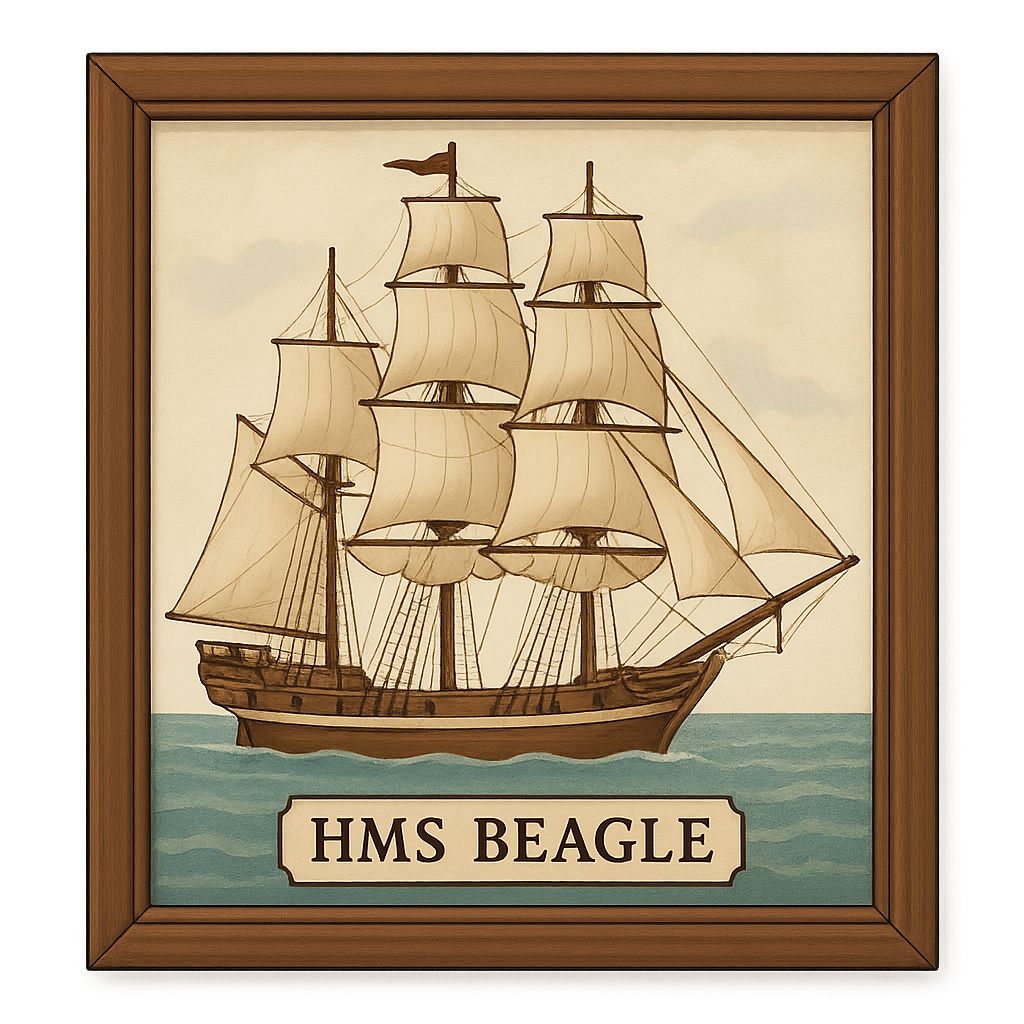
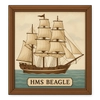
Can you feel the salty wind pushing against your face and taste the ocean spray on your lips? I can. For me, it was the feeling of home. I remember the constant creak of my wooden timbers and the powerful snap of my sails as they caught the wind. I wasn't built to be famous. I was built to be strong and sturdy, ready to face the biggest waves the sea could throw at me. For a long time, I floated without a special job, but I always knew I was meant for a grand adventure across the wide, blue world. I am a ship of discovery. My name is HMS Beagle.
I was born in a very busy place called the Woolwich Dockyard, right on the River Thames in England. My body was crafted from the strongest oak trees by skilled shipbuilders who knew just how to make a vessel tough enough for the Royal Navy. On May 11th, 1820, I finally felt the cool water for the first time as I slid from the dockyard into the river. I was what they called a Cherokee-class brig-sloop, which sounds fancy, but it just meant I was a smaller, quicker type of ship. My first big event wasn't a dangerous mission, but a fun celebration for a new king. My true destiny, however, began when workers refitted me, changing my decks and cabins to prepare me for long journeys of exploration. Between 1826 and 1830, I sailed all the way to South America on my first major voyage. My job was to help my crew map the coastlines, a very important task that created better charts to help other sailors navigate the tricky waters safely.
My most famous adventure, the one people still talk about, began on December 27th, 1831. My wonderful captain, Robert FitzRoy, was preparing for another long mapping trip to South America. This time, he decided to invite a young scientist, a naturalist named Charles Darwin, to come along and study the world we would see. For nearly five years, I became Darwin's home, his floating laboratory, and his window to an undiscovered world. Can you imagine living on a ship for that long? We sailed across the vast Atlantic Ocean, charting the coasts of South America, where Darwin found the fossils of giant, ancient creatures that no one had ever seen before. In 1835, we reached the amazing Galápagos Islands. There, Darwin was fascinated by the giant tortoises lumbering on the shore and the little birds, called finches, that were slightly different on each island. I carefully carried all of his precious samples—rocks, plants, insects, and animals—safely in my cabins. All the while, he filled notebook after notebook with his brilliant observations and questions. I wasn't just a ship carrying sailors anymore; I was a ship carrying questions that would completely change how people understood life on Earth.
The Voyage of the HMS Beagle
Can you feel the salty wind pushing against your face and taste the ocean spray on your lips? I can. For me, it was the feeling of home. I remember the constant creak of my wooden timbers and the powerful snap of my sails as they caught the wind. I wasn't built to be famous. I was built to be strong and sturdy, ready to face the biggest waves the sea could throw at me. For a long time, I floated without a special job, but I always knew I was meant for a grand adventure across the wide, blue world. I am a ship of discovery. My name is HMS Beagle.
I was born in a very busy place called the Woolwich Dockyard, right on the River Thames in England. My body was crafted from the strongest oak trees by skilled shipbuilders who knew just how to make a vessel tough enough for the Royal Navy. On May 11th, 1820, I finally felt the cool water for the first time as I slid from the dockyard into the river. I was what they called a Cherokee-class brig-sloop, which sounds fancy, but it just meant I was a smaller, quicker type of ship. My first big event wasn't a dangerous mission, but a fun celebration for a new king. My true destiny, however, began when workers refitted me, changing my decks and cabins to prepare me for long journeys of exploration. Between 1826 and 1830, I sailed all the way to South America on my first major voyage. My job was to help my crew map the coastlines, a very important task that created better charts to help other sailors navigate the tricky waters safely.
My most famous adventure, the one people still talk about, began on December 27th, 1831. My wonderful captain, Robert FitzRoy, was preparing for another long mapping trip to South America. This time, he decided to invite a young scientist, a naturalist named Charles Darwin, to come along and study the world we would see. For nearly five years, I became Darwin's home, his floating laboratory, and his window to an undiscovered world. Can you imagine living on a ship for that long? We sailed across the vast Atlantic Ocean, charting the coasts of South America, where Darwin found the fossils of giant, ancient creatures that no one had ever seen before. In 1835, we reached the amazing Galápagos Islands. There, Darwin was fascinated by the giant tortoises lumbering on the shore and the little birds, called finches, that were slightly different on each island. I carefully carried all of his precious samples—rocks, plants, insects, and animals—safely in my cabins. All the while, he filled notebook after notebook with his brilliant observations and questions. I wasn't just a ship carrying sailors anymore; I was a ship carrying questions that would completely change how people understood life on Earth.
Our grand voyage finally ended when we sailed back into an English harbor on October 2nd, 1836. After that, I had a few more adventures at sea, but my exploring days were coming to an end. Starting in 1845, I was given a new, quieter job as a watch vessel, staying in one place to guard the coast of England from smugglers. My strong oak body eventually grew old and tired from all my years on the water, and I was taken apart around the year 1870. But my story didn't end there. The incredible journey I took with Charles Darwin sparked one of the biggest and most important ideas in all of science: the theory of evolution by natural selection. I may be gone now, but my spirit of curiosity lives on in every scientist who explores the world. I am a reminder that even a small ship can help discover a whole new way of seeing life, and that every journey is a chance to wonder about the amazing world around us.
Wow facts
About
A Cherokee-class brig-sloop of the Royal Navy, most famous for its second survey voyage carrying naturalist Charles Darwin, whose observations led to the theory of evolution.
Take a Quiz
Question 1 of 5
Who was the young scientist who sailed on the HMS Beagle's most famous voyage, and what important idea did his discoveries lead to?
Explore next




Want to do even more?
Go beyond exploring. Unlock tools that turn every story into real learning.

Storypie Plus for families
Full stories, quizzes, and printables. Nights and car rides, sorted.
- Unlimited audio stories
- Create Mode: your child stars in the story
- Offline downloads
- Printable worksheets & coloring pages

Why Storypie for Schools
Students engaged. Prep in seconds. Evenings back to you.
- Worksheets & Quizzes
- Classroom Management
- Formative Assessment
- Custom Curriculum & Lesson Plans
- 27 Languages

Why Storypie for Homeschool
Curriculum done. They'll ask for more. Hours back in your day.
- Worksheet Generator
- First-Person Audio Stories
- Built-in Comprehension Quizzes
- Custom Curriculum & Lesson Plans
- Print & Go Activities