English

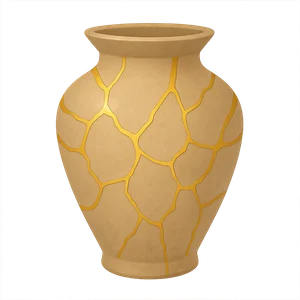
Kintsugi
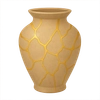
Kintsugi is the Japanese art of repairing broken pottery with lacquer dusted or mixed with powdered gold…
Reads at Grades 6–8 Listens at Grades 4–8
Print & create
Answer keys·No prep·Free with an account
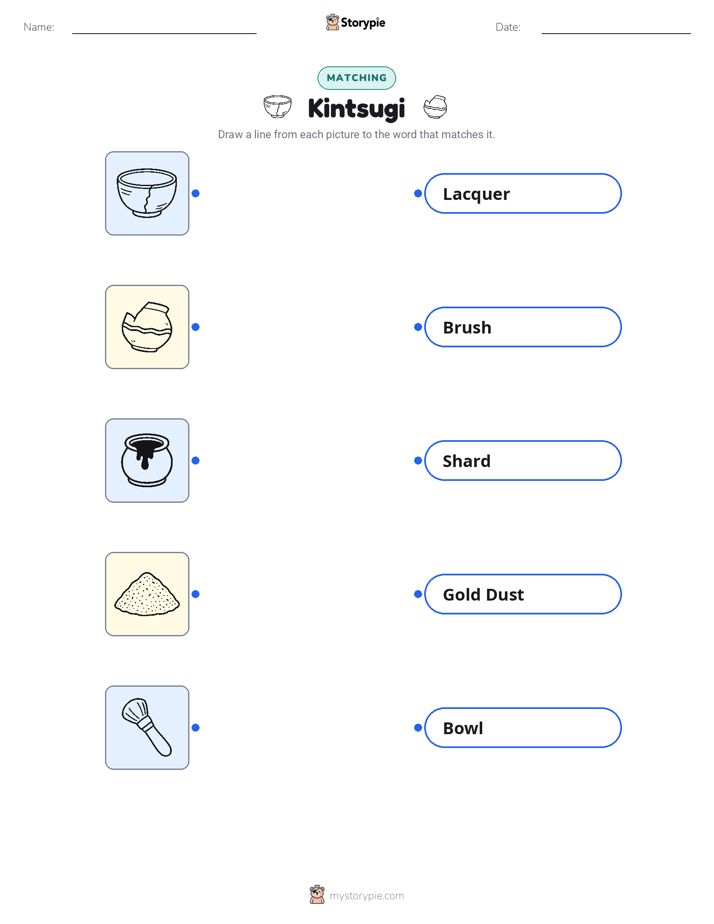
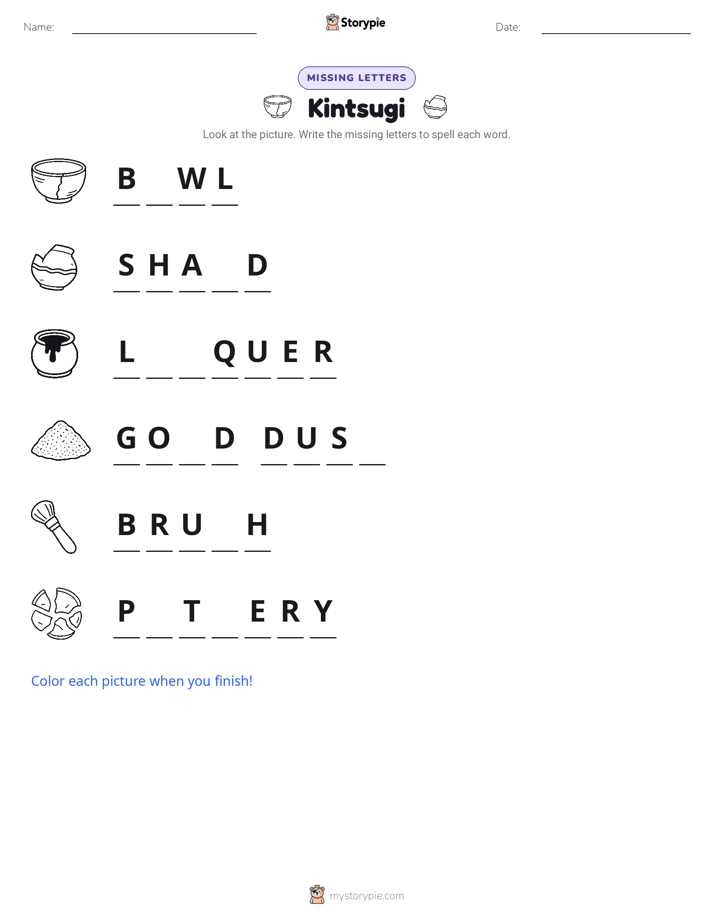
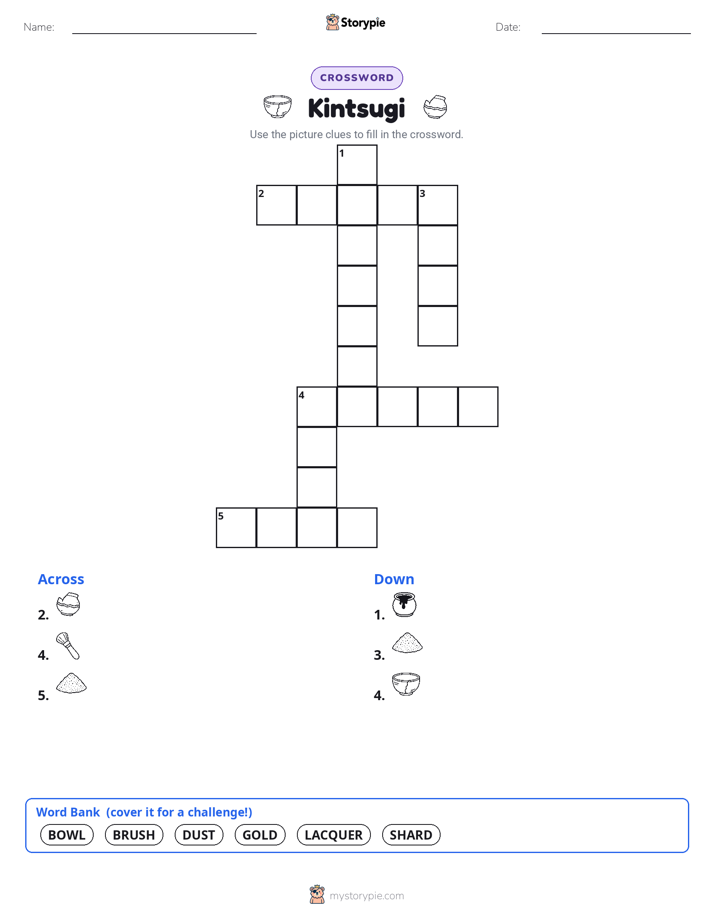
28 worksheets · answer keys · full story · quiz · Ages 10-12 · CEFR B2
Plus adds 244,000+ more stories in 27 languages, audio for every one, and printables for all of them.
Just want Kintsugi?
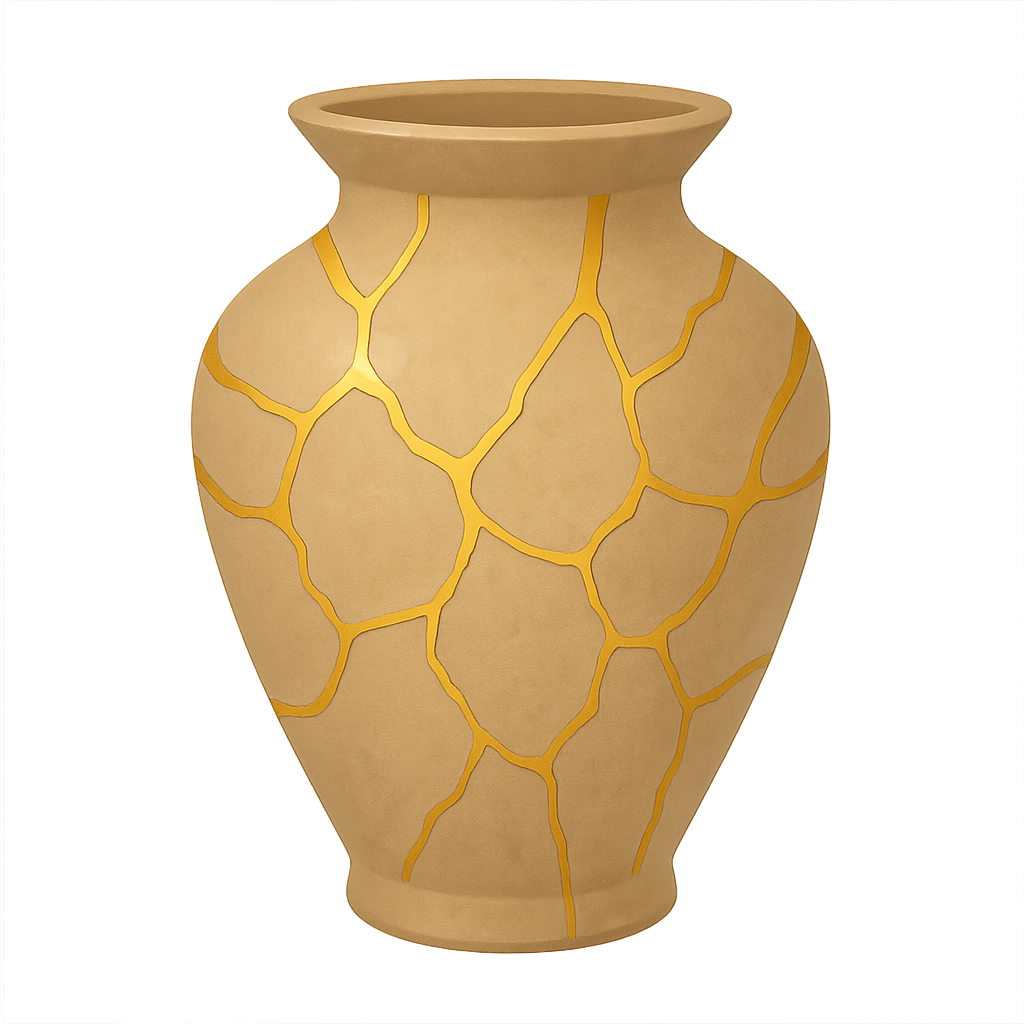
It began with a shattering sound, a sharp crack that split my world in two. One moment, I was whole, held securely. The next, I was falling, and then there was only the cold, hard floor and the quiet settling of my own pieces. I lay there, a puzzle of myself, feeling the empty spaces where I used to connect. It was not an ending, but a long, silent pause. Days, or perhaps weeks, passed before gentle hands began to gather my fragments. They were so careful, treating each shard with respect, as if remembering the shape I once held. Piece by piece, I was reassembled. A warm, sticky substance, like tree sap, was carefully traced along every sharp edge where the breaks had occurred. It felt like a healing balm, slowly joining my parts and holding me together. The lines of my breakage were still visible, dark and deep. But then came the most magical moment. A fine, shimmering dust, as bright as the sun, was delicately brushed over the sticky lines. As it settled, my scars were transformed. They were no longer signs of damage but glowing rivers of gold that flowed across my surface. They did not hide my history; they illuminated it. I am Kintsugi, the art of golden joinery, and I believe that things are more beautiful for having been broken.
My story as a celebrated art form began in the late 15th century, during a time of refined culture in Japan. It was all because of a powerful leader, the shogun Ashikaga Yoshimasa, who reigned during a period of artistic flourishing. The shogun had a favorite tea bowl, a simple yet elegant piece he had acquired from China, which he treasured above all others for its perfect form. One day, to his great dismay, the precious bowl was dropped and broke. Heartbroken, the shogun wanted it repaired by the most skilled hands possible. Following the custom of the time, he had the pieces sent all the way back to the master craftsmen in China. He waited patiently for its return, imagining it restored to its former glory. When the bowl finally arrived back in Japan, his hope turned to disappointment. The Chinese artisans had repaired it, but they had used large, ugly metal staples to clamp the pieces together. The bowl was functional again, but its delicate beauty was ruined by the crude, metallic scars. The shogun could not bear to look at it. He refused to accept that this was the only way. So, around the 1480s, he issued a challenge to his own Japanese craftsmen: find a better, more beautiful way to mend his beloved bowl. They rose to the occasion, driven by their leader's wish and their own artistic pride. Instead of metal, they turned to a material from their own land: urushi lacquer, a durable, waterproof sap from the lacquer tree. They painstakingly pieced the bowl together with this natural adhesive. Then, in a stroke of genius, they mixed the final layer of lacquer with powdered gold, transforming the lines of breakage into intricate, shining patterns. The result was astonishing. The bowl was not just repaired; it was reborn, more unique and precious than before. That was the moment I, Kintsugi, truly came to life.
The Golden Scar
It began with a shattering sound, a sharp crack that split my world in two. One moment, I was whole, held securely. The next, I was falling, and then there was only the cold, hard floor and the quiet settling of my own pieces. I lay there, a puzzle of myself, feeling the empty spaces where I used to connect. It was not an ending, but a long, silent pause. Days, or perhaps weeks, passed before gentle hands began to gather my fragments. They were so careful, treating each shard with respect, as if remembering the shape I once held. Piece by piece, I was reassembled. A warm, sticky substance, like tree sap, was carefully traced along every sharp edge where the breaks had occurred. It felt like a healing balm, slowly joining my parts and holding me together. The lines of my breakage were still visible, dark and deep. But then came the most magical moment. A fine, shimmering dust, as bright as the sun, was delicately brushed over the sticky lines. As it settled, my scars were transformed. They were no longer signs of damage but glowing rivers of gold that flowed across my surface. They did not hide my history; they illuminated it. I am Kintsugi, the art of golden joinery, and I believe that things are more beautiful for having been broken.
My story as a celebrated art form began in the late 15th century, during a time of refined culture in Japan. It was all because of a powerful leader, the shogun Ashikaga Yoshimasa, who reigned during a period of artistic flourishing. The shogun had a favorite tea bowl, a simple yet elegant piece he had acquired from China, which he treasured above all others for its perfect form. One day, to his great dismay, the precious bowl was dropped and broke. Heartbroken, the shogun wanted it repaired by the most skilled hands possible. Following the custom of the time, he had the pieces sent all the way back to the master craftsmen in China. He waited patiently for its return, imagining it restored to its former glory. When the bowl finally arrived back in Japan, his hope turned to disappointment. The Chinese artisans had repaired it, but they had used large, ugly metal staples to clamp the pieces together. The bowl was functional again, but its delicate beauty was ruined by the crude, metallic scars. The shogun could not bear to look at it. He refused to accept that this was the only way. So, around the 1480s, he issued a challenge to his own Japanese craftsmen: find a better, more beautiful way to mend his beloved bowl. They rose to the occasion, driven by their leader's wish and their own artistic pride. Instead of metal, they turned to a material from their own land: urushi lacquer, a durable, waterproof sap from the lacquer tree. They painstakingly pieced the bowl together with this natural adhesive. Then, in a stroke of genius, they mixed the final layer of lacquer with powdered gold, transforming the lines of breakage into intricate, shining patterns. The result was astonishing. The bowl was not just repaired; it was reborn, more unique and precious than before. That was the moment I, Kintsugi, truly came to life.
My golden lines are more than just a beautiful repair; they are the expression of a deep philosophy. To understand me, you must understand the Japanese idea of 'wabi-sabi'. This is a worldview centered on finding beauty in things that are imperfect, impermanent, and incomplete. It teaches that the signs of wear and age on an object are not flaws. Instead, they are marks of time and experience that tell a story, making the object more interesting and valuable. My purpose is not to hide the damage to a ceramic piece. I do the opposite. I celebrate the cracks, highlighting them with precious gold, making them the most important feature of the renewed object. Each golden line is a map of the object’s history, a testament to its survival and resilience. This connects to another important concept called 'mushin,' which can be translated as 'no mind'. It is a state of mind where one accepts change and flaw without judgment, remaining open to new possibilities. When a pot breaks, it is not seen as a failure or an end. Through my golden touch, that moment of destruction becomes an opportunity for transformation. The object is not just 'fixed,' it becomes something entirely new, with a new identity and a new kind of beauty. My existence proves that an object’s journey, including its moments of being broken, is precisely what makes it special. The history is not erased; it is honored in shimmering gold for all to see. I am a physical reminder that imperfection holds its own profound and unique elegance.
Today, my spirit has traveled far beyond the shores of Japan and the world of pottery. Artists, designers, writers, and thinkers from all over the world are inspired by my message of beautiful imperfection. I am no longer just a technique for mending ceramics; I have become a powerful metaphor for the human experience. People look at my golden seams and see a reflection of their own lives. They are reminded that their own struggles, their mistakes, and their emotional scars are not weaknesses that should be hidden away in shame. Instead, like the cracks in a bowl, these experiences are part of a unique personal history that has shaped them. My golden lines teach a lesson of hope and resilience. They are a constant reminder that healing can be a beautiful process, that our experiences make us stronger, and that our own unique history, even the broken parts, is precisely what makes us shine.
Wow facts
About
Kintsugi is the Japanese art of repairing broken pottery with lacquer dusted or mixed with powdered gold, silver, or platinum. It treats breakage and repair as part of the history of an object, rather than something to disguise.
Take a Quiz
Question 1 of 5
Summarize the main idea of the story in one or two sentences.
Explore next





Want to do even more?
Go beyond exploring. Unlock tools that turn every story into real learning.

Storypie Plus for families
Full stories, quizzes, and printables. Nights and car rides, sorted.
- Unlimited audio stories
- Create Mode: your child stars in the story
- Offline downloads
- Printable worksheets & coloring pages

Why Storypie for Schools
Students engaged. Prep in seconds. Evenings back to you.
- Worksheets & Quizzes
- Classroom Management
- Formative Assessment
- Custom Curriculum & Lesson Plans
- 27 Languages

Why Storypie for Homeschool
Curriculum done. They'll ask for more. Hours back in your day.
- Worksheet Generator
- First-Person Audio Stories
- Built-in Comprehension Quizzes
- Custom Curriculum & Lesson Plans
- Print & Go Activities