English

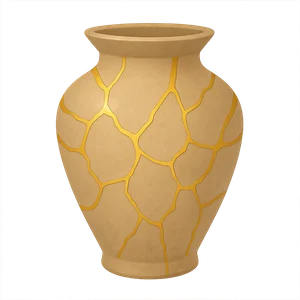
Kintsugi
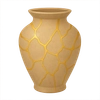
Kintsugi is the Japanese art of repairing broken pottery with lacquer dusted or mixed with powdered gold…
Reads at Grades 3–5 Listens at Grades 1–5
Print & create
Answer keys·No prep·Free with an account
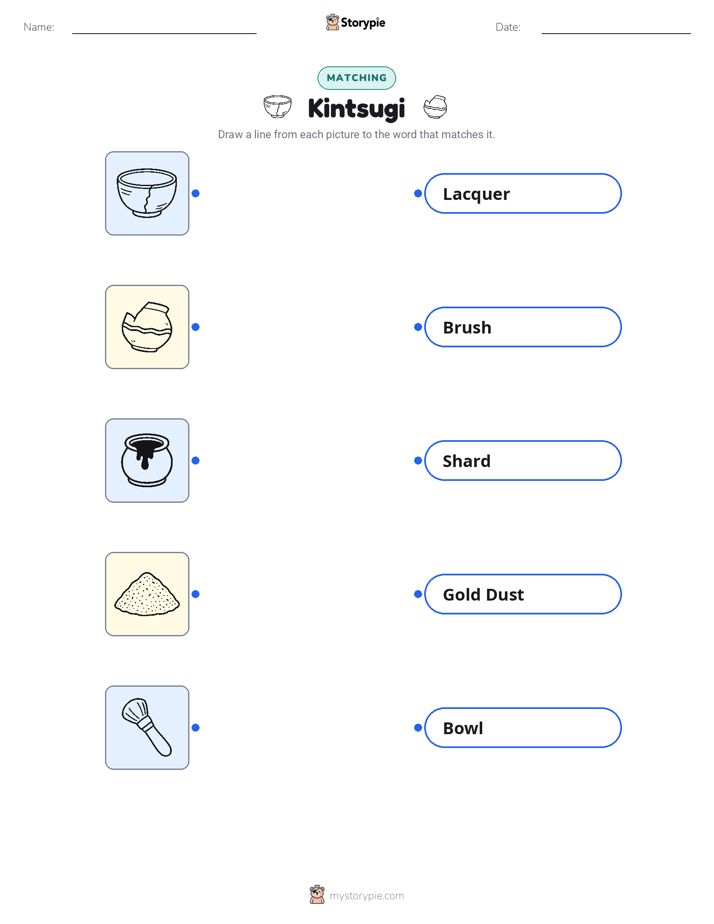
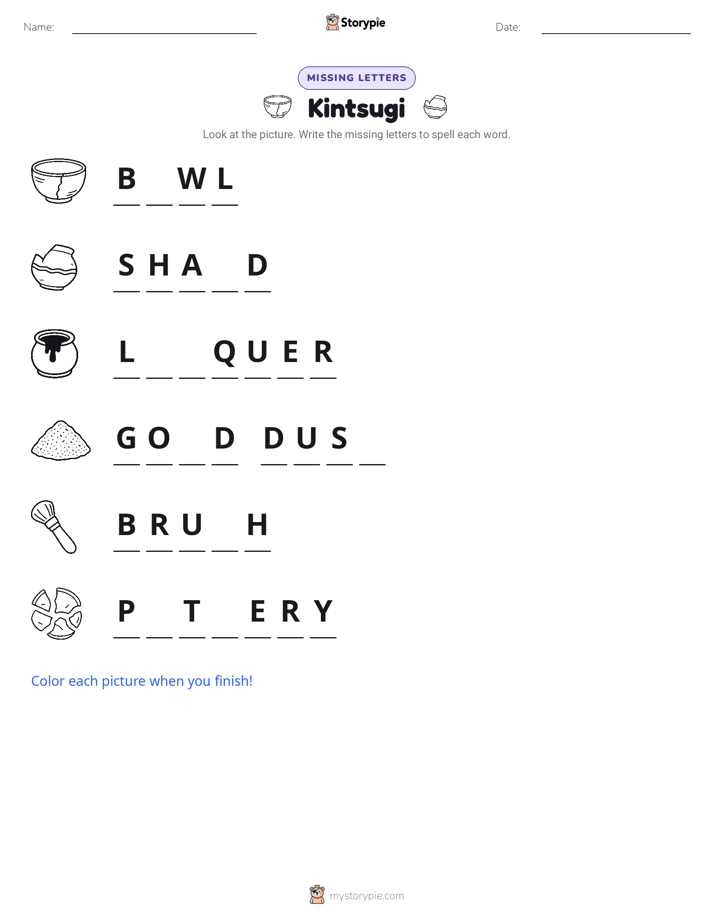
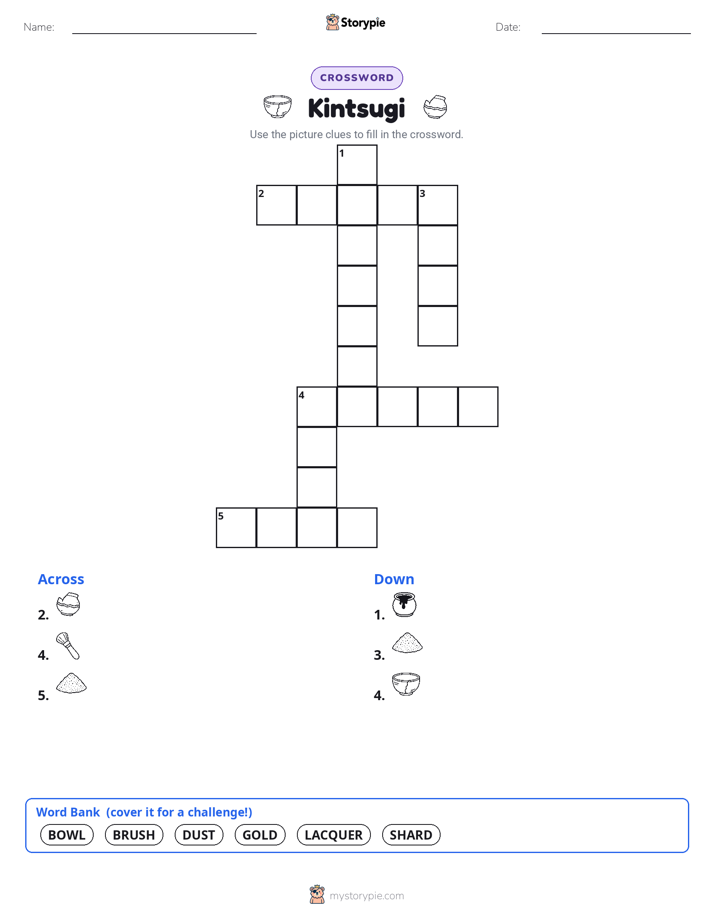
28 worksheets · answer keys · full story · quiz · Ages 8-10 · CEFR B1
Plus adds 244,000+ more stories in 27 languages, audio for every one, and printables for all of them.
Just want Kintsugi?
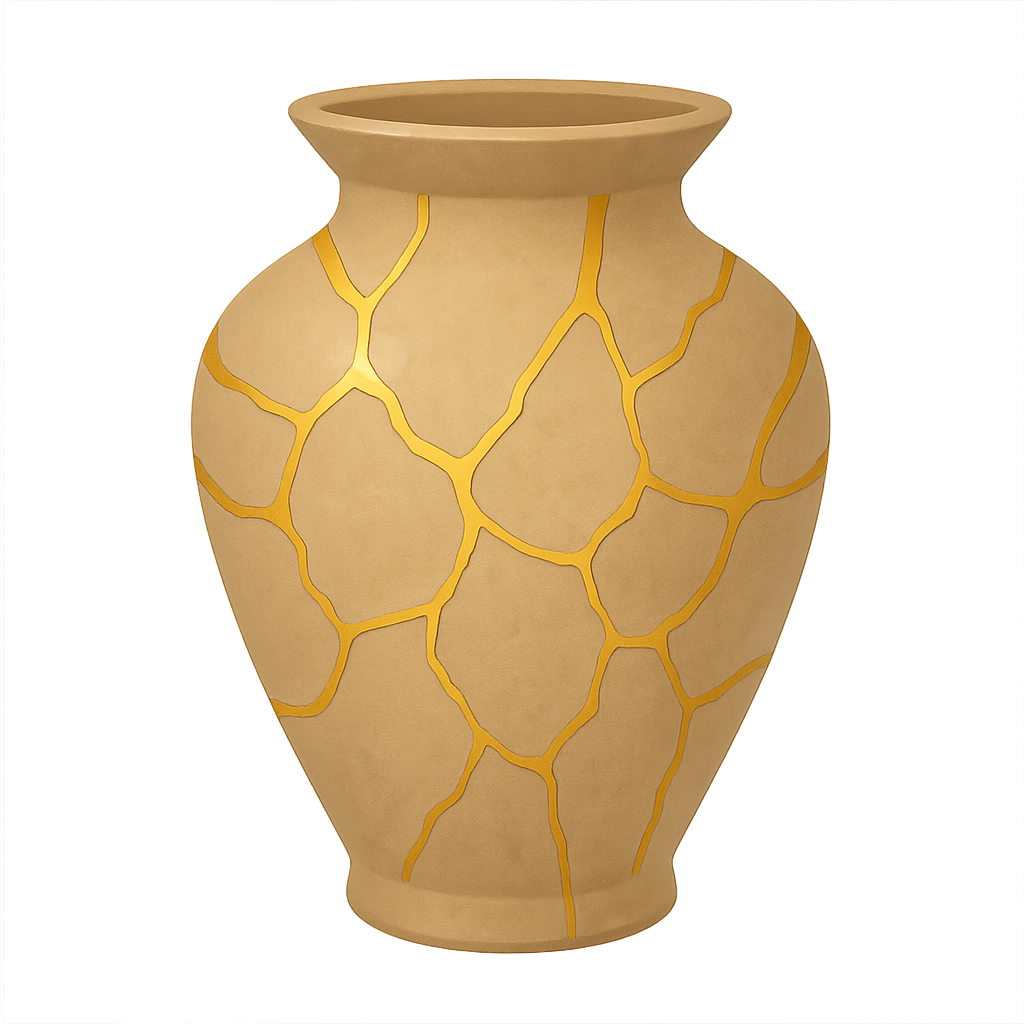
CRACK. The sound was sharp and final, like a lightning strike in a quiet room. One moment I was a smooth, perfect ceramic bowl, held in warm hands. The next, I was a scattered collection of sharp-edged pieces on the floor. My world had shattered. I thought my life was over. Who would want a bowl in a dozen pieces? I lay there, feeling useless and sad, waiting to be swept away and forgotten. But then, a pair of gentle hands began to gather my fragments, one by one. They were so careful, treating each broken piece like a treasure. Can you imagine the patience it took? My parts were slowly pieced together, like a puzzle of my own body. A warm, sticky substance, like golden honey, was painted carefully along every single crack. Then, something magical happened. A fine, shimmering powder was dusted over the sticky lines, and suddenly, my scars began to glow. I was whole again, but I wasn't the same. Rivers of gold now flowed where my breaks had been, and I was more stunning than ever before. I am Kintsugi, the art of golden repair, and my scars are my greatest treasure.
My story, the one that gave my golden lines their meaning, began a long, long time ago in Japan, during the 15th century. It all started with a very powerful leader, a shogun named Ashikaga Yoshimasa. He had a favorite celadon tea bowl, one he cherished very much. One day, it broke. The shogun was heartbroken, but he didn't want to throw it away. So, around the year 1480, he sent it all the way to China to be repaired by the experts there. He waited and waited, and when the bowl finally returned, he was horrified. The Chinese artisans had used thick, ugly metal staples to hold the pieces together. It looked clumsy and scarred, not beautiful. The shogun was so disappointed. He challenged his own Japanese craftspeople to find a better, more elegant way to mend his beloved pottery. They had to invent a new method. They experimented and discovered something wonderful. They used the natural sap from a special tree, the urushi tree, to create a strong lacquer. This lacquer would act as a powerful glue. They would carefully paint this lacquer into the cracks, and then, while it was still wet and sticky, they would sprinkle it with the finest gold powder. They didn't try to hide the damage. Instead, they made my breaks the most beautiful part of me, celebrating my history and everything I had been through.
The Bowl with the Golden Scars
CRACK. The sound was sharp and final, like a lightning strike in a quiet room. One moment I was a smooth, perfect ceramic bowl, held in warm hands. The next, I was a scattered collection of sharp-edged pieces on the floor. My world had shattered. I thought my life was over. Who would want a bowl in a dozen pieces? I lay there, feeling useless and sad, waiting to be swept away and forgotten. But then, a pair of gentle hands began to gather my fragments, one by one. They were so careful, treating each broken piece like a treasure. Can you imagine the patience it took? My parts were slowly pieced together, like a puzzle of my own body. A warm, sticky substance, like golden honey, was painted carefully along every single crack. Then, something magical happened. A fine, shimmering powder was dusted over the sticky lines, and suddenly, my scars began to glow. I was whole again, but I wasn't the same. Rivers of gold now flowed where my breaks had been, and I was more stunning than ever before. I am Kintsugi, the art of golden repair, and my scars are my greatest treasure.
My story, the one that gave my golden lines their meaning, began a long, long time ago in Japan, during the 15th century. It all started with a very powerful leader, a shogun named Ashikaga Yoshimasa. He had a favorite celadon tea bowl, one he cherished very much. One day, it broke. The shogun was heartbroken, but he didn't want to throw it away. So, around the year 1480, he sent it all the way to China to be repaired by the experts there. He waited and waited, and when the bowl finally returned, he was horrified. The Chinese artisans had used thick, ugly metal staples to hold the pieces together. It looked clumsy and scarred, not beautiful. The shogun was so disappointed. He challenged his own Japanese craftspeople to find a better, more elegant way to mend his beloved pottery. They had to invent a new method. They experimented and discovered something wonderful. They used the natural sap from a special tree, the urushi tree, to create a strong lacquer. This lacquer would act as a powerful glue. They would carefully paint this lacquer into the cracks, and then, while it was still wet and sticky, they would sprinkle it with the finest gold powder. They didn't try to hide the damage. Instead, they made my breaks the most beautiful part of me, celebrating my history and everything I had been through.
This amazing new way of mending wasn't just about fixing something that was broken. It was inspired by a deep Japanese idea called 'wabi-sabi'. 'Wabi-sabi' means finding beauty in things that are imperfect, that change over time, or that are incomplete. I, a Kintsugi bowl, am a perfect example of this wonderful idea. My golden lines don't pretend the break never happened. You can see exactly where I was hurt. Instead, my glowing scars tell a story of resilience. That means I was able to recover from a difficult experience and become strong again. I was broken, but I was put back together with love and care, and in the process, I became stronger and even more valuable. My journey teaches an important lesson that is still shared today, centuries after the shogun's first bowl was mended. Kintsugi shows us that our own 'cracks'—our mistakes, our challenges, and our hard times—are not things we should hide or be ashamed of. They are part of our unique story. Just like the golden rivers that flow across my surface, these experiences can become our greatest sources of strength and beauty, making us who we are.
Wow facts
About
Kintsugi is the Japanese art of repairing broken pottery with lacquer dusted or mixed with powdered gold, silver, or platinum. It treats breakage and repair as part of the history of an object, rather than something to disguise.
Take a Quiz
Question 1 of 5
In the story, the golden lines on the bowl are described as telling a story of 'resilience'. What does resilience mean in this context?
Explore next





Want to do even more?
Go beyond exploring. Unlock tools that turn every story into real learning.

Storypie Plus for families
Full stories, quizzes, and printables. Nights and car rides, sorted.
- Unlimited audio stories
- Create Mode: your child stars in the story
- Offline downloads
- Printable worksheets & coloring pages

Why Storypie for Schools
Students engaged. Prep in seconds. Evenings back to you.
- Worksheets & Quizzes
- Classroom Management
- Formative Assessment
- Custom Curriculum & Lesson Plans
- 27 Languages

Why Storypie for Homeschool
Curriculum done. They'll ask for more. Hours back in your day.
- Worksheet Generator
- First-Person Audio Stories
- Built-in Comprehension Quizzes
- Custom Curriculum & Lesson Plans
- Print & Go Activities