English

Madhubani Painting
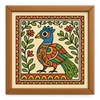
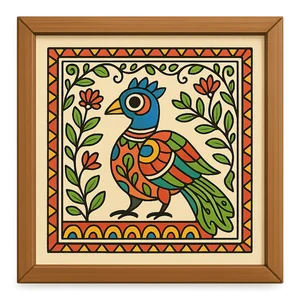
Madhubani painting, also known as Mithila art…
Reads at Grades 6–8 Listens at Grades 4–8
Print & create
Answer keys·No prep·Free with an account
28 worksheets · answer keys · full story · quiz · Ages 10-12 · CEFR B2
Plus adds 208,000+ more stories in 27 languages, audio for every one, and printables for all of them.
Just want Madhubani Painting?
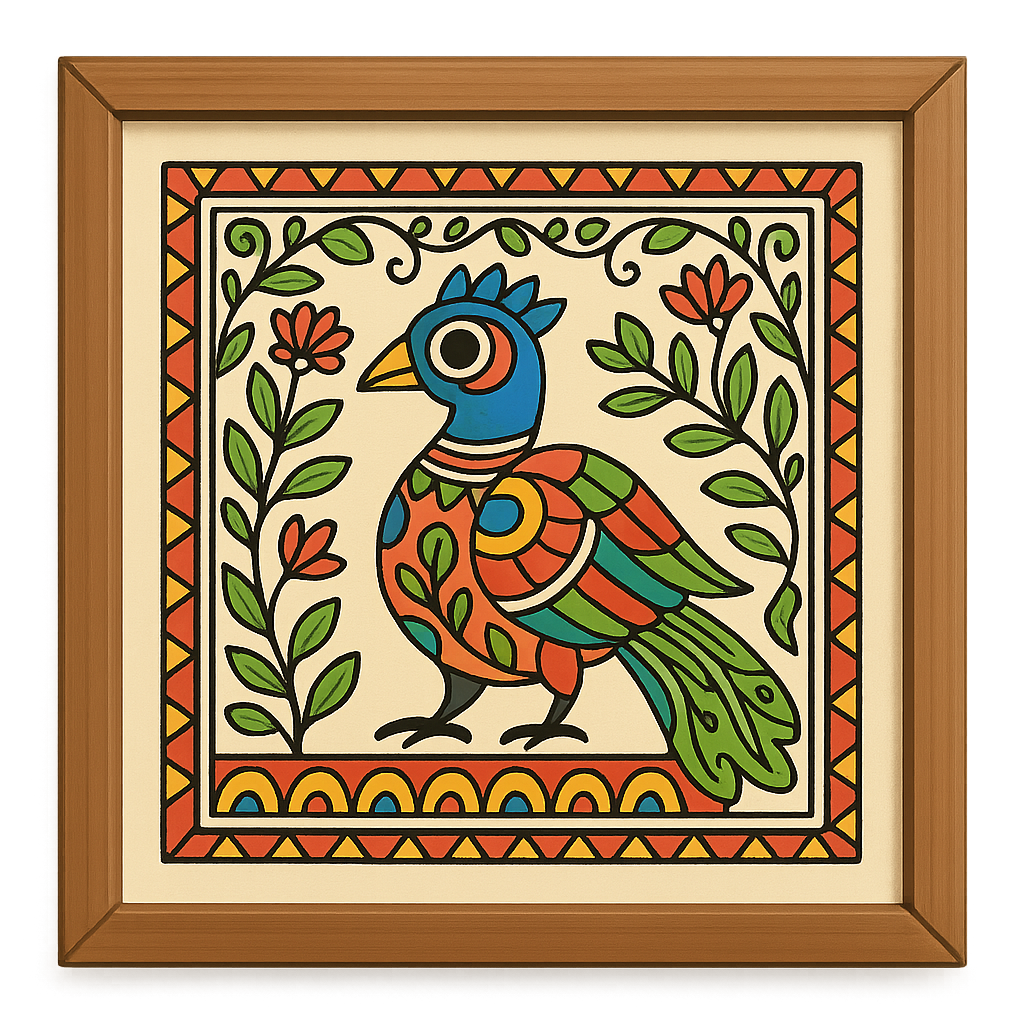
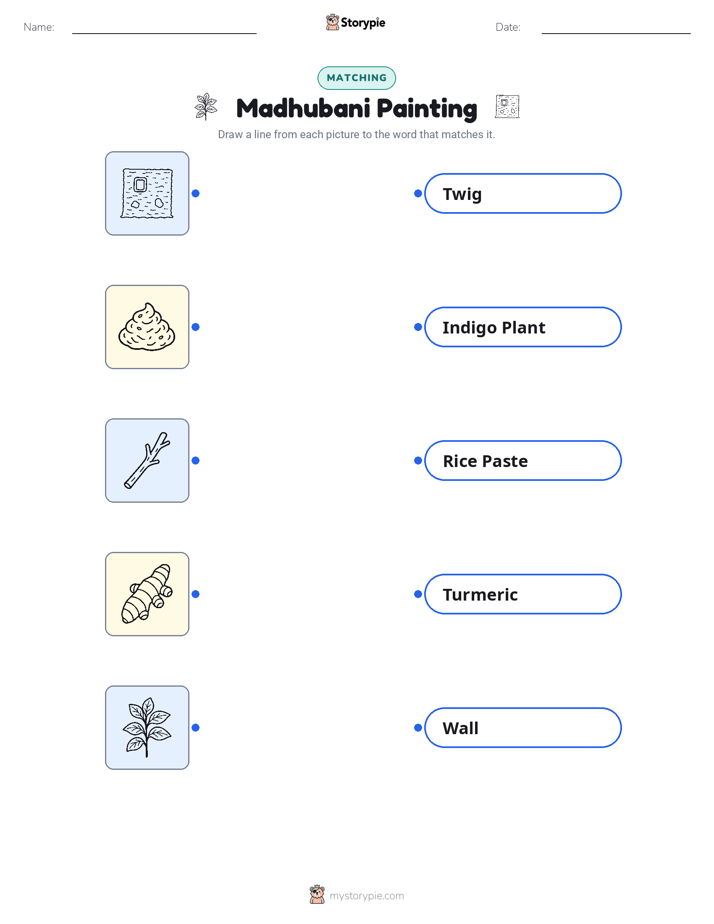
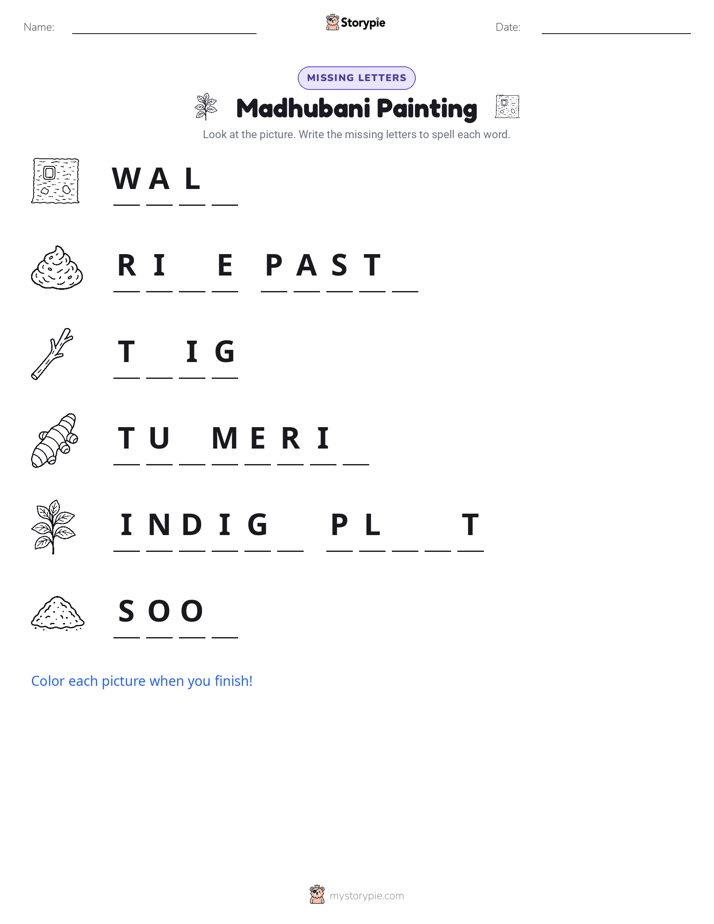
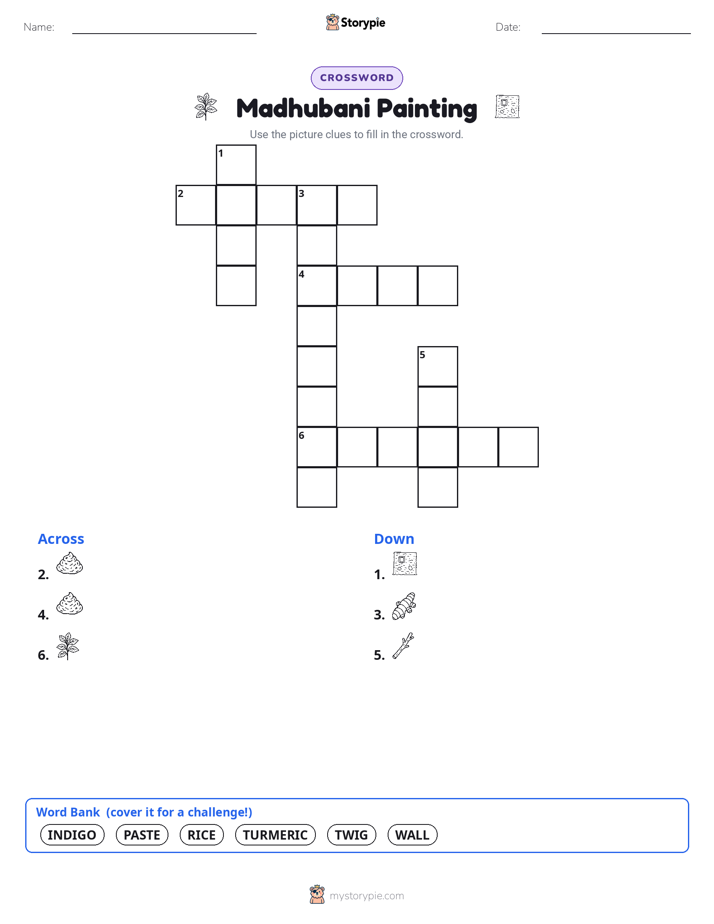
I came to life on a cool, earthen wall in a small village, brought into being by the gentle hands of women. The air smelled of wet clay mixed with cow dung, and I felt the smooth glide of rice paste forming my first lines. I was not made with fancy brushes, but with twigs, fingers, and handmade tools. My colors were born from the world around me: vibrant yellow from turmeric, deep blue from the indigo plant, and a bold black from soot. I started as a web of double lines, a frame for a story waiting to be told. My artists filled every tiny space with geometric shapes that danced and swirled, because in my world, emptiness is unheard of; it is seen as a space that must be filled with life. I am a Madhubani Painting, a colorful whisper from the heart of the Mithila region in Bihar, India.
My story begins so long ago that it feels like a myth. Legend says I was first created for a magnificent occasion—the wedding of the god Rama to the beautiful princess Sita, which took place in the ancient kingdom of Mithila thousands of years ago. Sita's father, King Janaka, wanted his entire kingdom to rejoice. He commanded the women of the court and the villages to decorate the walls and floors of their homes with beautiful paintings to celebrate the divine union. That was me. For centuries after that grand wedding, I was a cherished secret, an art form passed down from mothers to daughters through generations. I was their visual language, a way to celebrate births, weddings, and sacred festivals. I lived on the mud walls of their homes, a vibrant part of their daily lives, but completely unseen by the outside world.
The Painted Story of Mithila
I came to life on a cool, earthen wall in a small village, brought into being by the gentle hands of women. The air smelled of wet clay mixed with cow dung, and I felt the smooth glide of rice paste forming my first lines. I was not made with fancy brushes, but with twigs, fingers, and handmade tools. My colors were born from the world around me: vibrant yellow from turmeric, deep blue from the indigo plant, and a bold black from soot. I started as a web of double lines, a frame for a story waiting to be told. My artists filled every tiny space with geometric shapes that danced and swirled, because in my world, emptiness is unheard of; it is seen as a space that must be filled with life. I am a Madhubani Painting, a colorful whisper from the heart of the Mithila region in Bihar, India.
My story begins so long ago that it feels like a myth. Legend says I was first created for a magnificent occasion—the wedding of the god Rama to the beautiful princess Sita, which took place in the ancient kingdom of Mithila thousands of years ago. Sita's father, King Janaka, wanted his entire kingdom to rejoice. He commanded the women of the court and the villages to decorate the walls and floors of their homes with beautiful paintings to celebrate the divine union. That was me. For centuries after that grand wedding, I was a cherished secret, an art form passed down from mothers to daughters through generations. I was their visual language, a way to celebrate births, weddings, and sacred festivals. I lived on the mud walls of their homes, a vibrant part of their daily lives, but completely unseen by the outside world.
Every part of me has a deep and special meaning. My artists fill me with symbols that tell stories of life, nature, and faith, turning a simple wall into a sacred space. If you see a fish swimming through my patterns, it’s a wish for good luck, prosperity, and many children. A graceful peacock represents love and beauty, while a powerful snake coils to offer divine protection and wisdom. The sun and the moon are often painted side-by-side to wish for a long and healthy life, symbolizing the balance of the universe. My artists never leave any space empty; they fill it with flowers, birds, and intricate geometric patterns, showing a world bursting with life and energy. There are even different styles of painting. Some, called 'Bharni', are filled with bright, bold colors. Others, called 'Katchni', are made with thousands of tiny, delicate lines. Each style tells a different story about the community and the artist who brought me to life.
For most of my long life, I lived quietly on those mud walls, fading with the rains and being reborn with each new celebration. But in the 1960s, everything changed. A terrible drought struck the Mithila region between 1966 and 1968, and the people were struggling to survive. An official from the All India Handicrafts Board, named Bhaskar Kulkarni, was visiting the area and saw my beauty on the village walls. He had a brilliant idea. He encouraged the women to paint me on paper, something they had never done before. This way, I could travel far beyond the village and be sold, bringing much-needed money to their families. It was a pivotal moment in my history. For the first time, I left my village walls. Artists like Sita Devi, Ganga Devi, and Jagdamba Devi became my champions, painting my stories on paper and canvas. Their incredible talent earned them national awards and helped share me with people all over India and, eventually, the world.
Today, I am no longer a secret hidden on village walls. I travel across the globe, displayed in famous museums and cherished in homes. I appear on clothing, bags, and books, carrying my stories to new generations. But my heart remains in the villages of Mithila, where women still gather to paint my scenes, just as their ancestors did thousands of years ago. I am more than just a painting; I am a symbol of the creative power of women, a celebration of a rich culture, and proof that art can connect us across centuries and continents. I am a living tradition, a colorful thread that ties the ancient past to the vibrant present. When you look at my intricate lines and bright colors, remember that you are seeing a story of hope, faith, and imagination that has been lovingly passed down through generations, and continues to be told with joy and pride today.
Wow facts
About
Madhubani painting, also known as Mithila art, is a style of Indian folk art practiced in the Mithila region of India and Nepal. Characterized by intricate geometric patterns and vibrant natural colors, it traditionally depicts scenes from mythology and nature.
Take a Quiz
Question 1 of 5
What major event caused Madhubani paintings to be created on paper and shared with the world for the first time?
Explore next






Want to do even more?
Go beyond exploring. Unlock tools that turn every story into real learning.

Storypie Plus for families
Full stories, quizzes, and printables. Nights and car rides, sorted.
- Unlimited audio stories
- Create Mode: your child stars in the story
- Offline downloads
- Printable worksheets & coloring pages

Why Storypie for Schools
Students engaged. Prep in seconds. Evenings back to you.
- Worksheets & Quizzes
- Classroom Management
- Formative Assessment
- Custom Curriculum & Lesson Plans
- 27 Languages

Why Storypie for Homeschool
Curriculum done. They'll ask for more. Hours back in your day.
- Worksheet Generator
- First-Person Audio Stories
- Built-in Comprehension Quizzes
- Custom Curriculum & Lesson Plans
- Print & Go Activities