English

Madhubani Painting
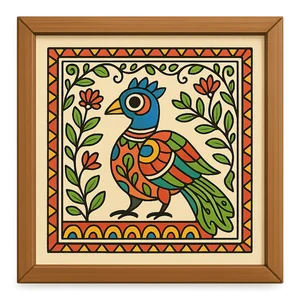
Madhubani painting, also known as Mithila art…
Reads at Grades K-2 Listens at K–3
Print & create
Answer keys·No prep·Free with an account
28 worksheets · answer keys · full story · quiz · Ages 6-8 · CEFR A2
Plus adds 208,000+ more stories in 27 languages, audio for every one, and printables for all of them.
Just want Madhubani Painting?
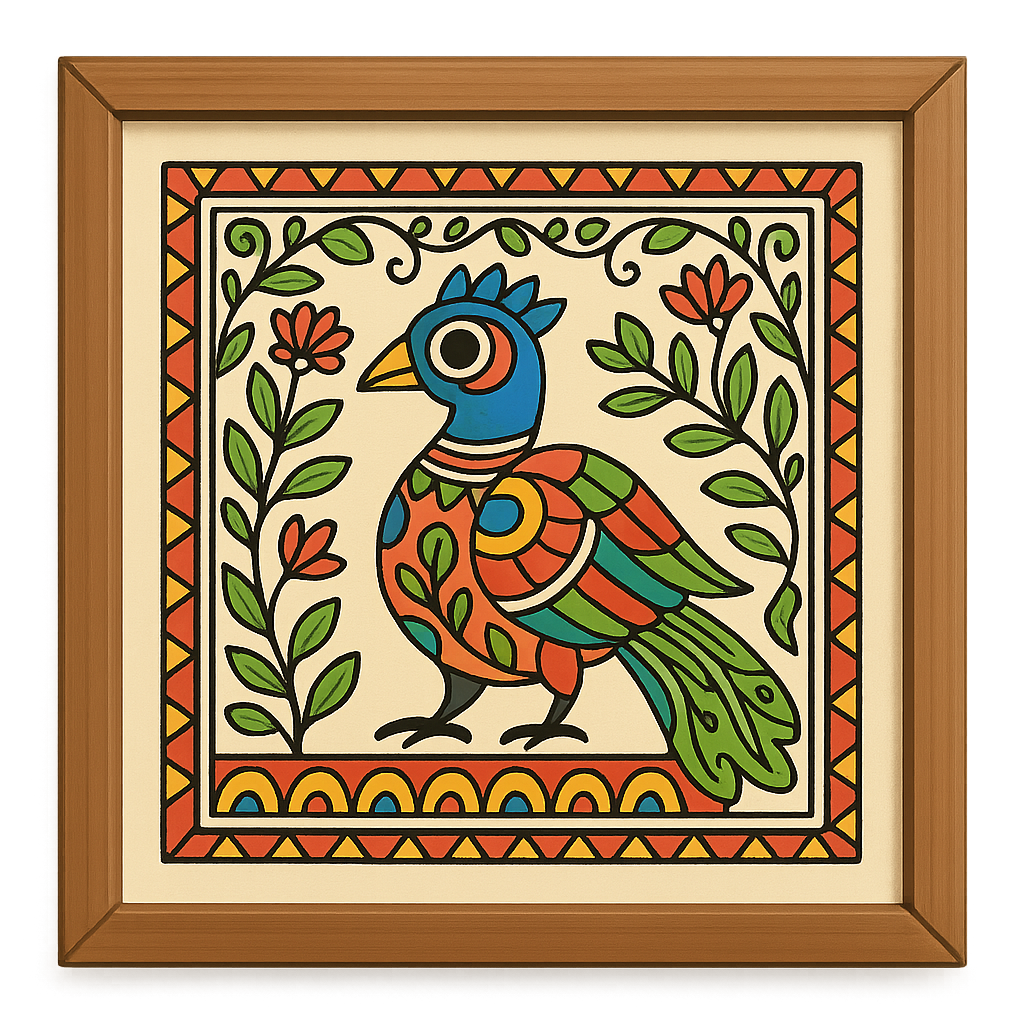
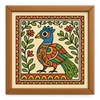
Imagine a world drawn with thin, dancing lines and filled with the brightest colors you’ve ever seen. Fish swim with flowery patterns on their scales, peacocks spread their magnificent tails, and smiling suns and moons watch over everything. I am made of these things—of stories, dreams, and happy wishes. I am Madhubani Painting, a special kind of art born in the heart of India, in a place called Mithila. My name means 'Forest of Honey,' which is just as sweet as the pictures I show you. Every line and dot is put there with care, telling a story without a single word.
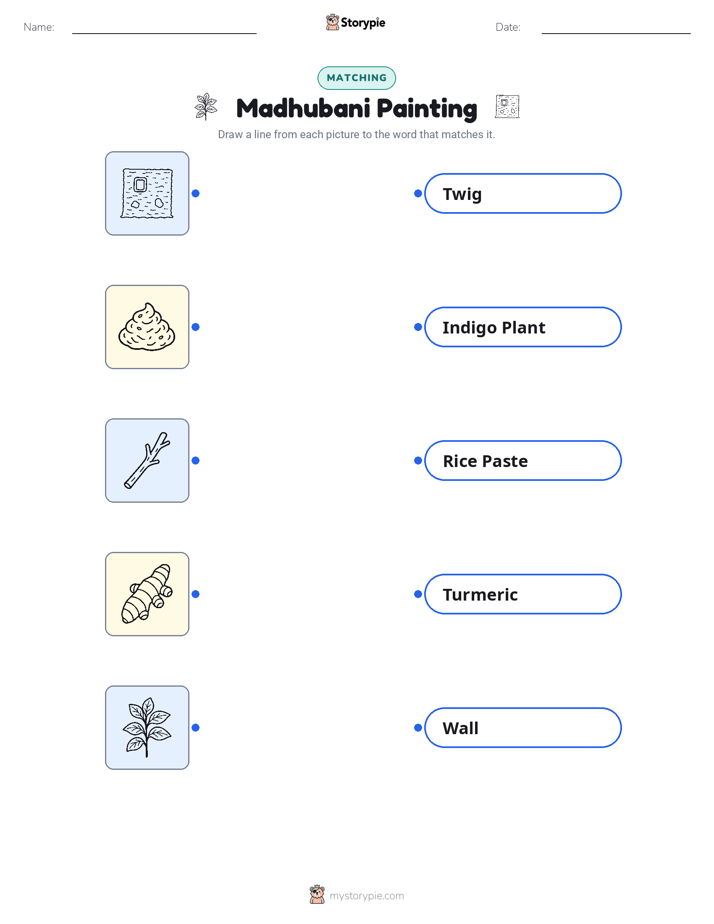
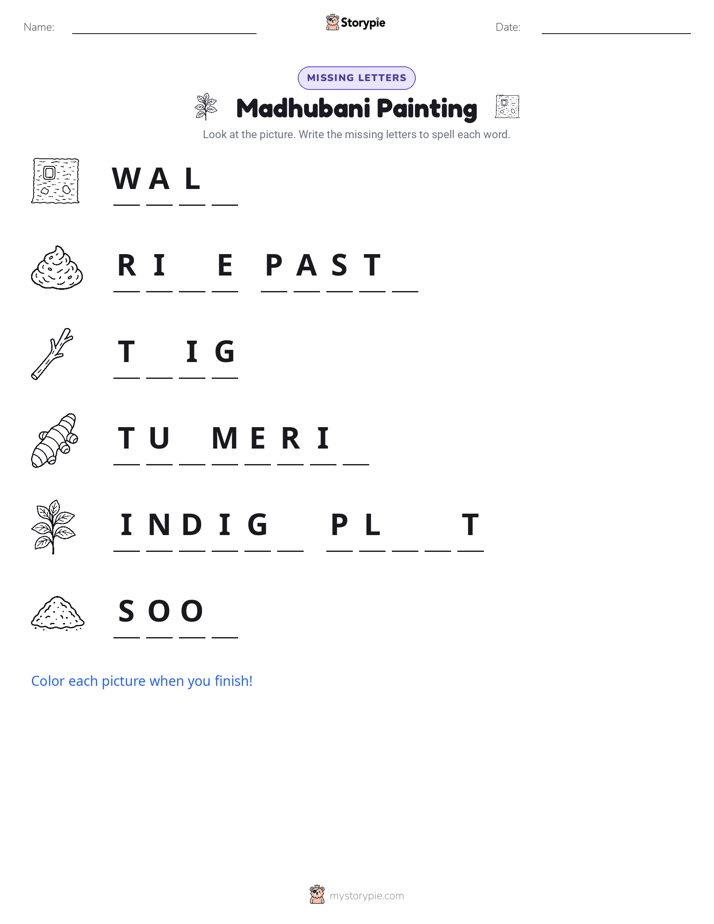
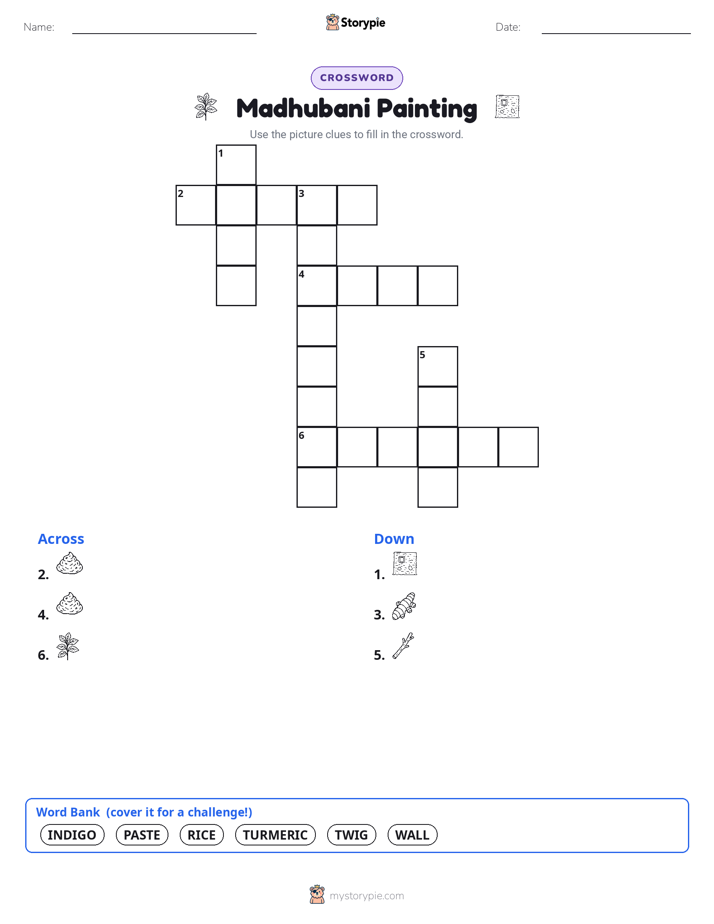
For a very long time, I lived as a secret on the walls and floors of homes in Mithila. The women of the villages were my creators. They were my mothers, and they brought me to life for special days. When someone was getting married or a happy festival was coming, they would paint me on the freshly coated mud walls of their homes. They didn't have fancy paint from a store. They made their own colors. They would mix soot from a lamp to make my black lines and ground up flower petals, leaves, and berries to create my vibrant yellows, greens, and reds. Using their fingers, tiny twigs, or handmade brushes, they would paint stories of gods and goddesses, kings and queens, and the beautiful nature all around them. I showed turtles for good luck, elephants for wisdom, and fish for happiness. I was their way of making their homes beautiful and asking for blessings of happiness and good fortune for their families.
I was a joyful secret kept inside homes for hundreds and hundreds of years. But in 1934, something big happened. A powerful earthquake shook the region, and sadly, many of the mud houses fell down. When people came to help, a British officer named William G. Archer saw me for the very first time on the broken walls. He had never seen art like me before and was amazed by my beautiful lines and bright colors. He even took pictures of me. Then, many years later, another challenge came. A long drought happened between 1966 and 1968, which meant there was very little rain. The women of Mithila needed a way to help their families. They were encouraged to paint me not just on walls, but on paper. This was a wonderful idea. Now, I could travel far and wide and be shared with the whole world. I was no longer a secret.
The Honey Forest Painting
Imagine a world drawn with thin, dancing lines and filled with the brightest colors you’ve ever seen. Fish swim with flowery patterns on their scales, peacocks spread their magnificent tails, and smiling suns and moons watch over everything. I am made of these things—of stories, dreams, and happy wishes. I am Madhubani Painting, a special kind of art born in the heart of India, in a place called Mithila. My name means 'Forest of Honey,' which is just as sweet as the pictures I show you. Every line and dot is put there with care, telling a story without a single word.
For a very long time, I lived as a secret on the walls and floors of homes in Mithila. The women of the villages were my creators. They were my mothers, and they brought me to life for special days. When someone was getting married or a happy festival was coming, they would paint me on the freshly coated mud walls of their homes. They didn't have fancy paint from a store. They made their own colors. They would mix soot from a lamp to make my black lines and ground up flower petals, leaves, and berries to create my vibrant yellows, greens, and reds. Using their fingers, tiny twigs, or handmade brushes, they would paint stories of gods and goddesses, kings and queens, and the beautiful nature all around them. I showed turtles for good luck, elephants for wisdom, and fish for happiness. I was their way of making their homes beautiful and asking for blessings of happiness and good fortune for their families.
I was a joyful secret kept inside homes for hundreds and hundreds of years. But in 1934, something big happened. A powerful earthquake shook the region, and sadly, many of the mud houses fell down. When people came to help, a British officer named William G. Archer saw me for the very first time on the broken walls. He had never seen art like me before and was amazed by my beautiful lines and bright colors. He even took pictures of me. Then, many years later, another challenge came. A long drought happened between 1966 and 1968, which meant there was very little rain. The women of Mithila needed a way to help their families. They were encouraged to paint me not just on walls, but on paper. This was a wonderful idea. Now, I could travel far and wide and be shared with the whole world. I was no longer a secret.
Today, you can find me in museums and homes all over the globe, from India to America. I still tell the same happy stories of dancing peacocks, wise elephants, and playful fish. My style hasn't changed very much at all. The women of Mithila continue to pass down the special skill of creating me from mother to daughter, keeping the tradition alive for new generations. Every single line they draw is filled with love and history, connecting the past to today. I am a painting that carries a story, and I hope my bright colors and happy scenes make you smile and think about the wonderful stories you can tell, too.
Wow facts
About
Madhubani painting, also known as Mithila art, is a style of Indian folk art practiced in the Mithila region of India and Nepal. Characterized by intricate geometric patterns and vibrant natural colors, it traditionally depicts scenes from mythology and nature.
Take a Quiz
Question 1 of 4
Why did the women of Mithila start painting on paper instead of just walls?
Explore next






Want to do even more?
Go beyond exploring. Unlock tools that turn every story into real learning.

Storypie Plus for families
Full stories, quizzes, and printables. Nights and car rides, sorted.
- Unlimited audio stories
- Create Mode: your child stars in the story
- Offline downloads
- Printable worksheets & coloring pages

Why Storypie for Schools
Students engaged. Prep in seconds. Evenings back to you.
- Worksheets & Quizzes
- Classroom Management
- Formative Assessment
- Custom Curriculum & Lesson Plans
- 27 Languages

Why Storypie for Homeschool
Curriculum done. They'll ask for more. Hours back in your day.
- Worksheet Generator
- First-Person Audio Stories
- Built-in Comprehension Quizzes
- Custom Curriculum & Lesson Plans
- Print & Go Activities