English

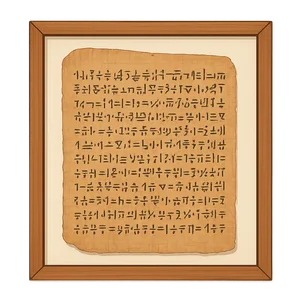
Rhind Mathematical Papyrus
A famous ancient Egyptian mathematical text, copied by the scribe Ahmes around 1550 BCE.
Reads at Grades 6–8 Listens at Grades 4–8
Print & create
Answer keys·No prep·Free with an account
28 worksheets · answer keys · full story · quiz · Ages 10-12 · CEFR B2
Plus adds 164,000+ more stories in 27 languages, audio for every one, and printables for all of them.
Just want Rhind Mathematical Papyrus?
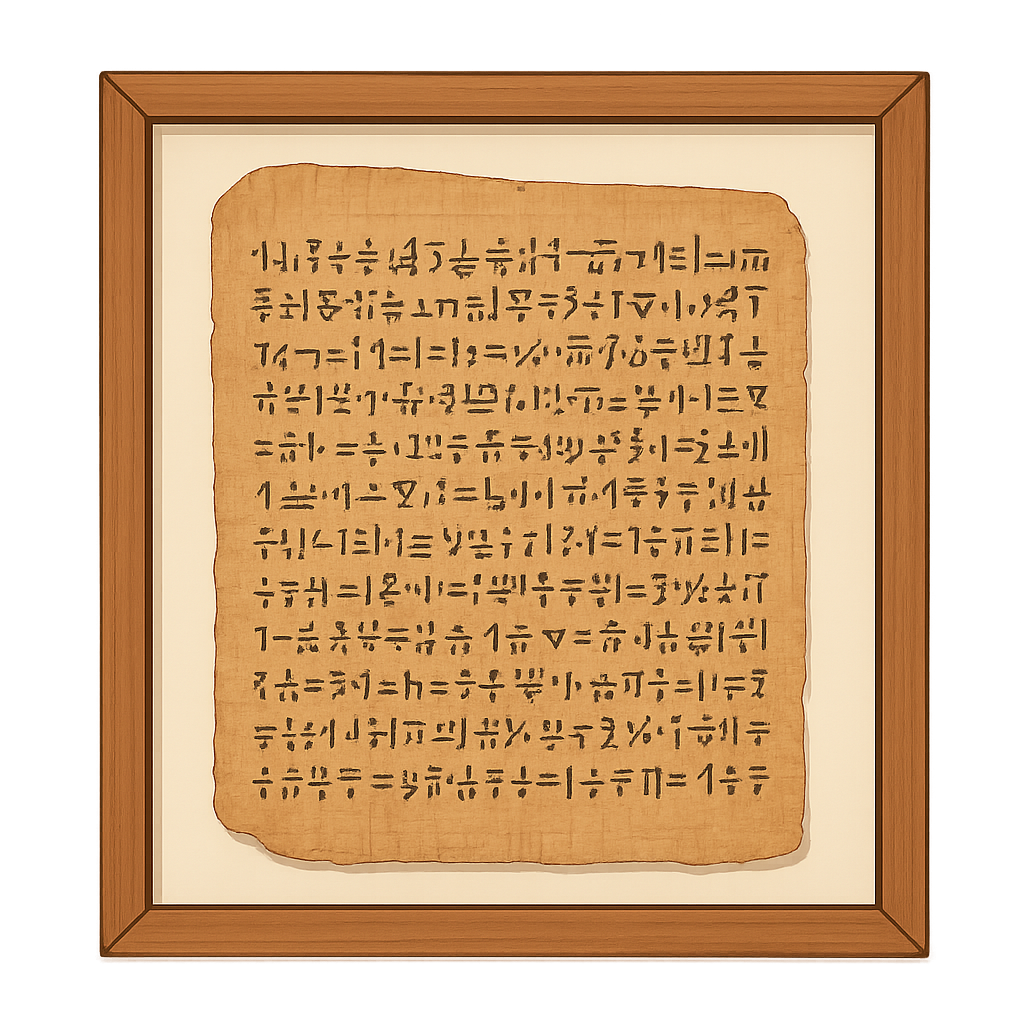
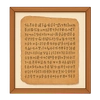
I am a long, brittle scroll, the color of desert sand. My skin is covered in delicate, dark markings made with a careful hand—some look like birds, others like reeds, and many are just lines and dots. For thousands of years, I lay sleeping in the dry air of Egypt, holding secrets not of kings or gods, but of numbers. I am filled with puzzles that challenged the minds of people who lived when the great pyramids were already ancient landmarks on the horizon. Before you learn my name, know this: I am a map of human curiosity, a journey into the minds of the past, written in the universal language of mathematics. My pages don't tell tales of great battles, but of the quiet, brilliant victories of logic and reason that allowed a civilization to flourish along the banks of the Nile River. I am proof that the desire to measure, to calculate, and to understand the world is as old as civilization itself, a fundamental human impulse that connects us across the ages.
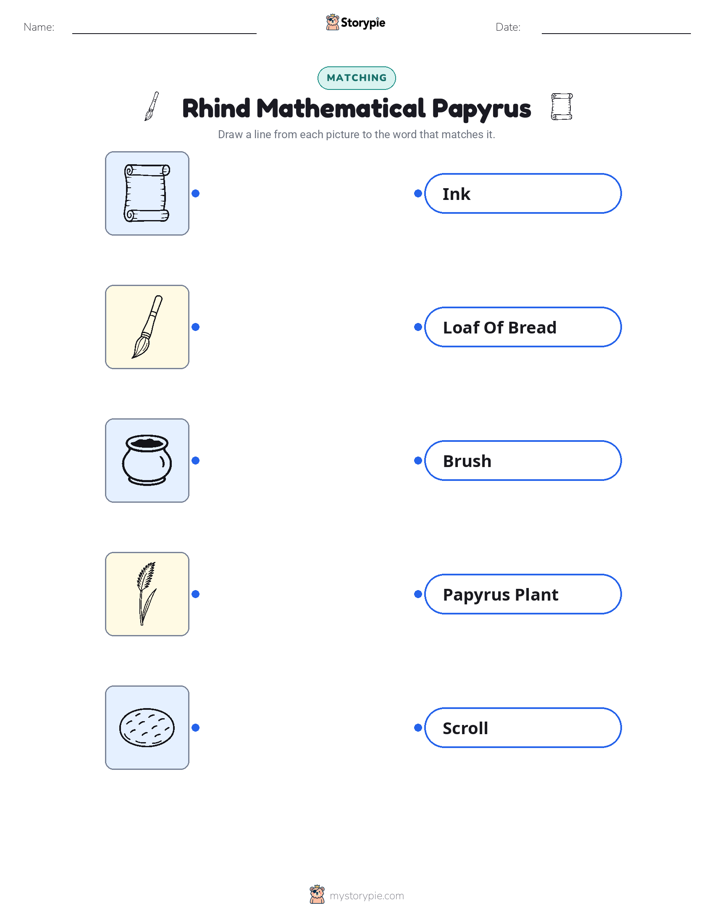
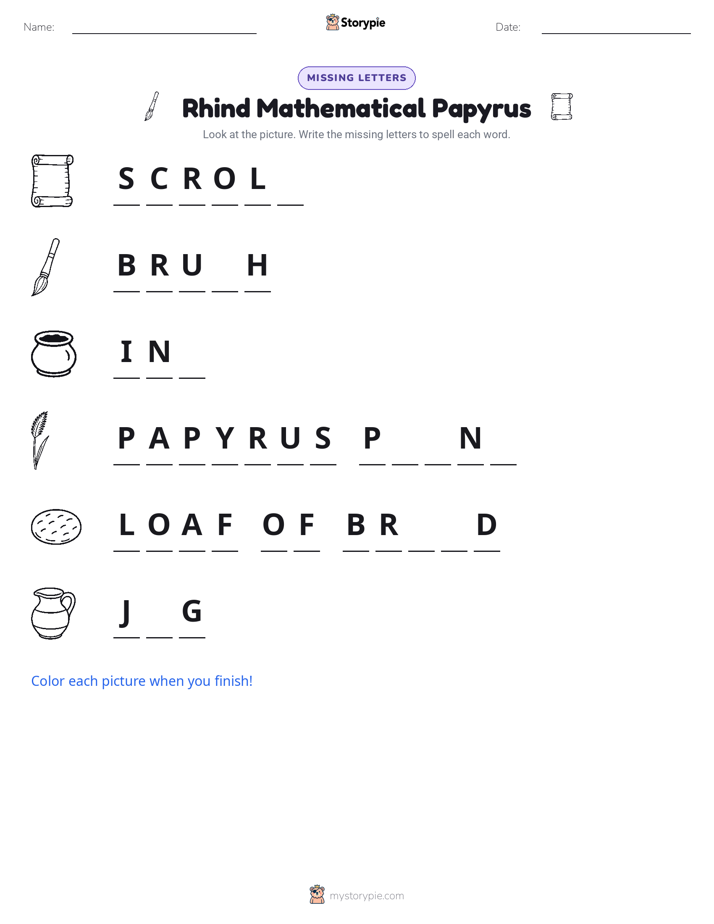
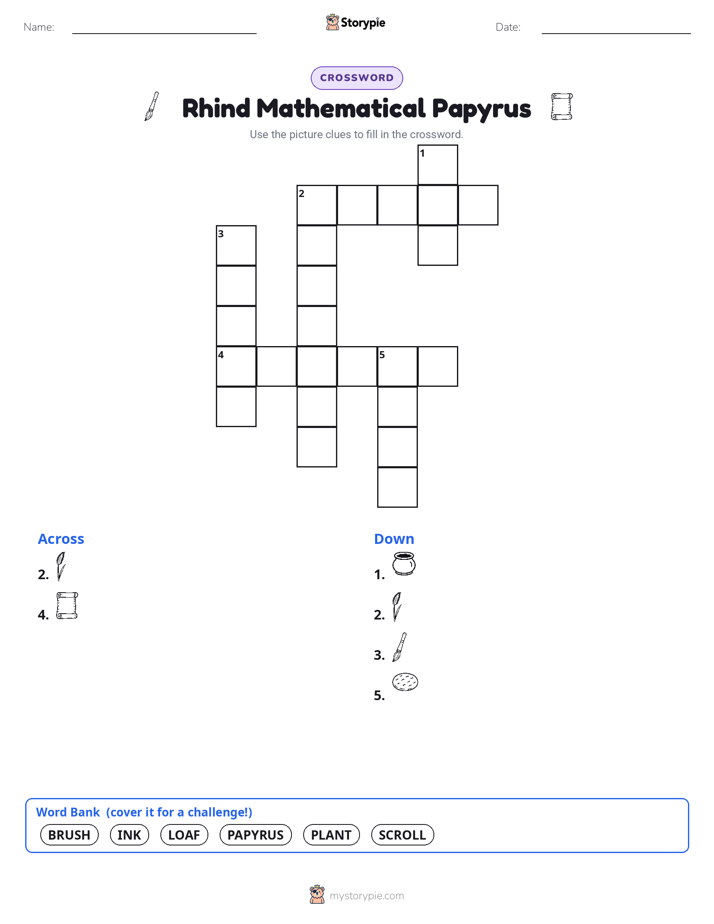
Now, let me introduce myself properly. I am the Rhind Mathematical Papyrus. I was carefully written down around the year 1550 BCE by a devoted scribe named Ahmes. He was a humble and honest scholar. In my introduction, he made it clear that he wasn't my original author. He was copying my contents from an even older document, one from the reign of the pharaoh Amenemhat III, who ruled nearly three hundred years earlier, around 1860 BCE. Ahmes used a simple brush made from a river reed, and his ink was a dark mixture of soot and water. With these tools, he meticulously transcribed my 84 problems onto sheets of papyrus, a paper-like material made from the pith of the papyrus plant. My purpose was clear and noble: I was a textbook, a practical guide for young scribes in training. I was designed to help them solve the very real challenges they would face in their careers, managing the vast and complex workings of the Egyptian kingdom. I was not for entertainment; I was for education and administration, a vital tool for a thriving society.
The Papyrus of Problems
I am a long, brittle scroll, the color of desert sand. My skin is covered in delicate, dark markings made with a careful hand—some look like birds, others like reeds, and many are just lines and dots. For thousands of years, I lay sleeping in the dry air of Egypt, holding secrets not of kings or gods, but of numbers. I am filled with puzzles that challenged the minds of people who lived when the great pyramids were already ancient landmarks on the horizon. Before you learn my name, know this: I am a map of human curiosity, a journey into the minds of the past, written in the universal language of mathematics. My pages don't tell tales of great battles, but of the quiet, brilliant victories of logic and reason that allowed a civilization to flourish along the banks of the Nile River. I am proof that the desire to measure, to calculate, and to understand the world is as old as civilization itself, a fundamental human impulse that connects us across the ages.
Now, let me introduce myself properly. I am the Rhind Mathematical Papyrus. I was carefully written down around the year 1550 BCE by a devoted scribe named Ahmes. He was a humble and honest scholar. In my introduction, he made it clear that he wasn't my original author. He was copying my contents from an even older document, one from the reign of the pharaoh Amenemhat III, who ruled nearly three hundred years earlier, around 1860 BCE. Ahmes used a simple brush made from a river reed, and his ink was a dark mixture of soot and water. With these tools, he meticulously transcribed my 84 problems onto sheets of papyrus, a paper-like material made from the pith of the papyrus plant. My purpose was clear and noble: I was a textbook, a practical guide for young scribes in training. I was designed to help them solve the very real challenges they would face in their careers, managing the vast and complex workings of the Egyptian kingdom. I was not for entertainment; I was for education and administration, a vital tool for a thriving society.
My pages are a collection of practical questions and their elegant solutions. I teach essential skills, like how to divide loaves of bread and jugs of beer fairly among groups of workers, a crucial task for managing the labor force that built temples and tombs. I explain how to calculate the area of a farmer's circular field to determine his harvest and taxes, or how to find the volume of a cylindrical grain silo to know how much food was in storage. One of my most famous sections reveals a brilliant method for approximating the value of pi, reaching a figure of about 3.1605, an astonishingly accurate estimate for that time. I also contain problems that helped architects and builders, showing them how to calculate the `seked`, or the slope, of a pyramid's side to ensure its angles were precise. To the ancient Egyptians, I wasn't just a collection of abstract puzzles. I was a handbook for building their world, a manual for feeding their people, and a key to understanding the geometric shapes and patterns that governed their universe.
After my time in the scribal schools, my purpose served, I was laid to rest. I slept for over three thousand years, hidden from the world in the ruins of a small building near the great Ramesseum temple at Thebes. The dry Egyptian climate was my guardian, preserving my fragile form. Then, in the year 1858, my long silence was broken. A young Scottish lawyer and archaeologist named Alexander Henry Rhind was exploring the area and purchased me. It was a dramatic change for a quiet scroll. I traveled from the dusty stillness of an ancient city to the bustling, foggy metropolis of London. There, in the care of the British Museum, I was carefully unrolled and studied by scholars. They were amazed. I was not a religious text or a royal decree; I was a window into the intellectual life of ancient Egypt, revealing their sophisticated understanding of mathematics. I received my modern name in honor of the man who brought me into this new world.
Today, I live safely behind glass in the British Museum, where visitors from all over the world come to see me. I may be old, fragile, and faded, but the ideas I hold are as powerful and relevant as ever. I demonstrate that long before calculators or computers existed, humans used the incredible power of their minds to solve complex problems, to design magnificent structures, and to bring order to their world. The numbers and shapes inscribed on my surface are a bridge connecting your mind to the minds of scribes who lived millennia ago. I am proof that the human desire to ask 'how?' and 'why?'—the very spirit of science and mathematics—is one of the oldest and most wonderful stories of all.
Wow facts
About
A famous ancient Egyptian mathematical text, copied by the scribe Ahmes around 1550 BCE. It contains 84 problems and solutions, providing insight into Egyptian arithmetic, algebra, and geometry.
Take a Quiz
Question 1 of 5
In your own words, describe the journey of the Rhind Papyrus from its creation to its current home in the British Museum.
Explore next




Want to do even more?
Go beyond exploring. Unlock tools that turn every story into real learning.

Storypie Plus for families
Full stories, quizzes, and printables. Nights and car rides, sorted.
- Unlimited audio stories
- Create Mode: your child stars in the story
- Offline downloads
- Printable worksheets & coloring pages

Why Storypie for Schools
Students engaged. Prep in seconds. Evenings back to you.
- Worksheets & Quizzes
- Classroom Management
- Formative Assessment
- Custom Curriculum & Lesson Plans
- 27 Languages

Why Storypie for Homeschool
Curriculum done. They'll ask for more. Hours back in your day.
- Worksheet Generator
- First-Person Audio Stories
- Built-in Comprehension Quizzes
- Custom Curriculum & Lesson Plans
- Print & Go Activities