English

The Tale of Genji
Often called the world's first novel…
Reads at Grades 6–8 Listens at Grades 4–8
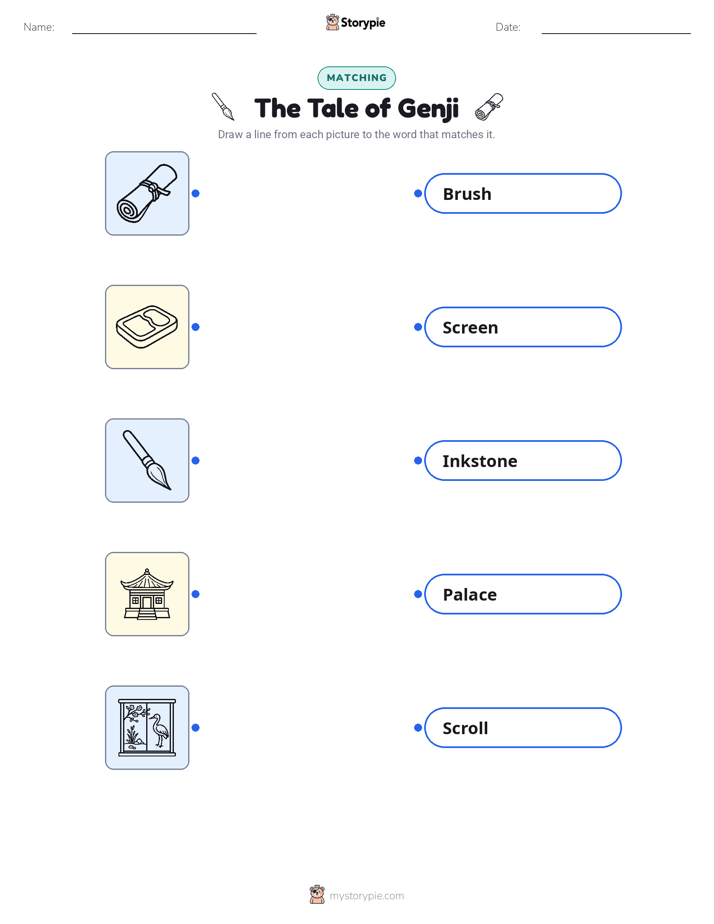
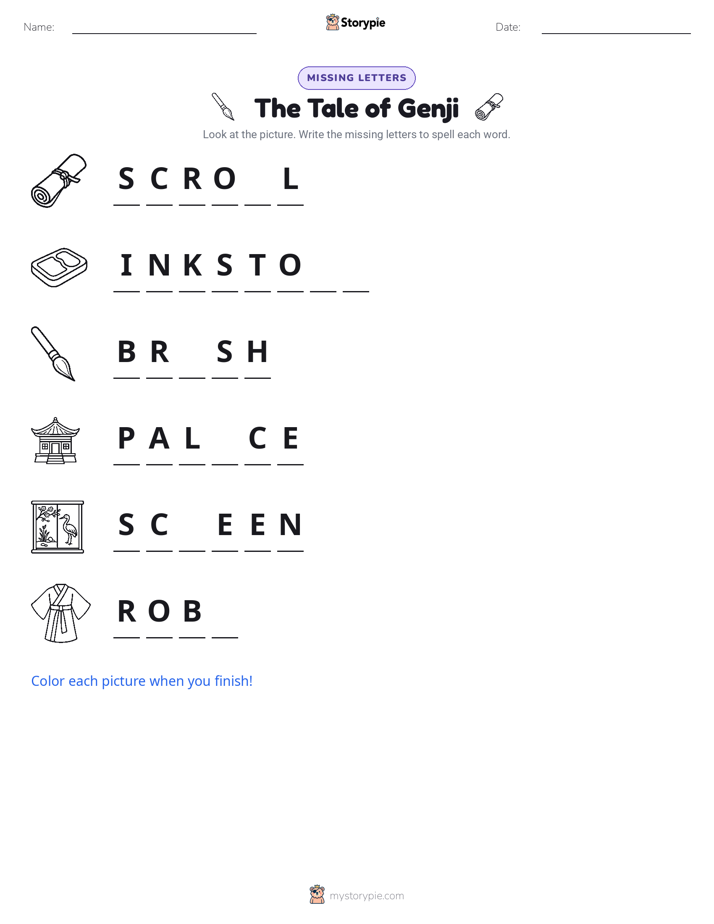
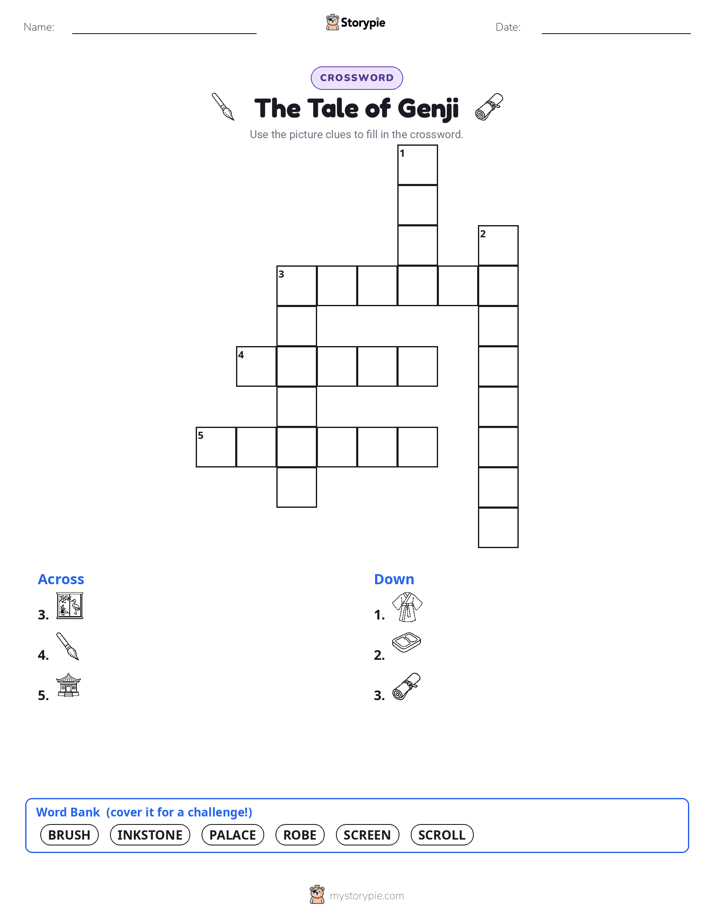
Print & create
Answer keys·No prep·Free with an account
28 worksheets · answer keys · full story · quiz · Ages 10-12 · CEFR B2
Plus adds 244,000+ more stories in 27 languages, audio for every one, and printables for all of them.
Just want The Tale of Genji?
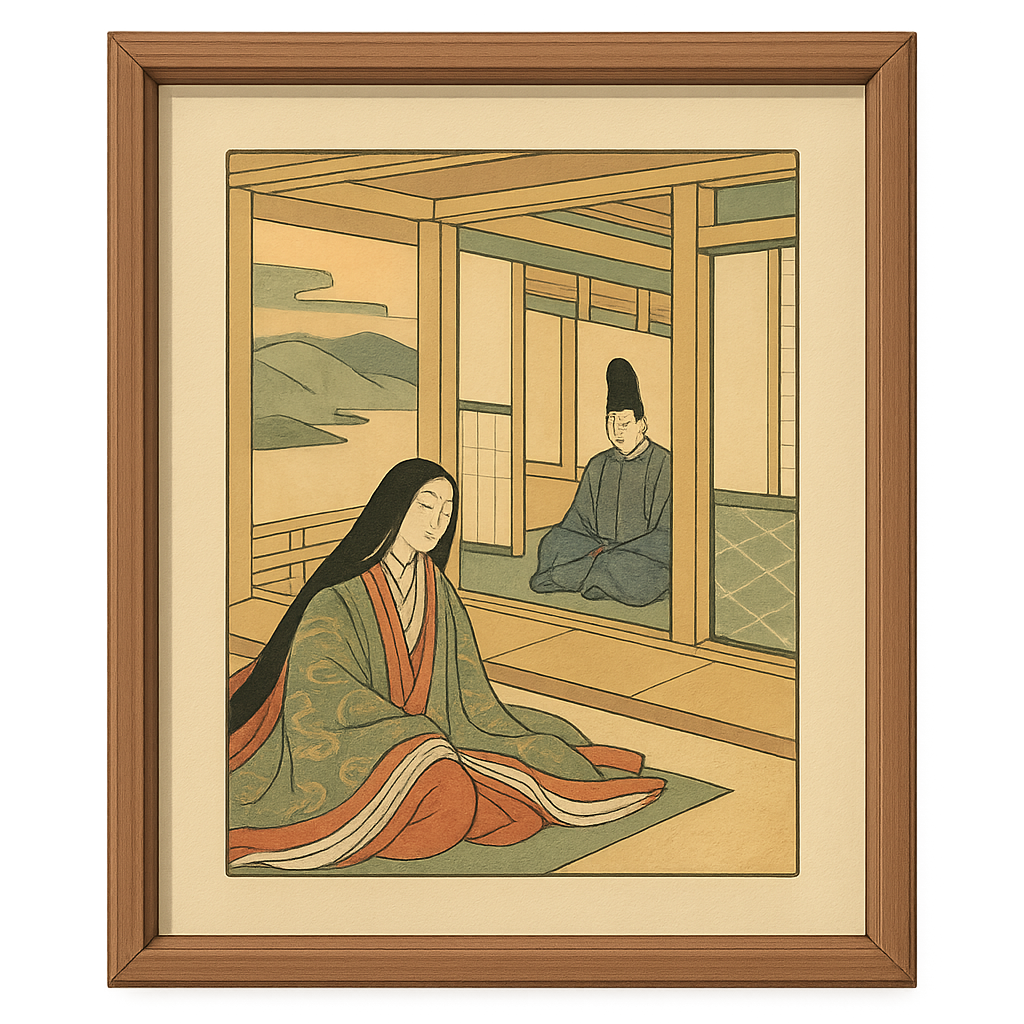
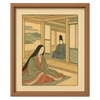
I remember the first whisper of my existence, not as a sound, but as a feeling. Imagine the delicate rustle of fine silk paper, the earthy, sharp scent of freshly ground ink, and the soft, deliberate touch of a brush painting characters across my pages. I was born in a world of quiet beauty, in a city called Heian-kyō, which you now know as Kyoto, Japan. This was a place of polished wooden palaces, sliding paper screens, and gardens where poems were whispered on the breeze. The people who lived here, the elegant courtiers of the imperial court, valued art and feeling above all else. I am not built of stone or painted on canvas; my substance is the world of human feelings, ideas, and the intricate dance of relationships. For more than a thousand years, I have been breathing, my pages filled with the sighs, laughter, and tears of characters who feel as real today as they did then. My story has echoed through centuries, a long, continuous dream of a bygone era. I am The Tale of Genji, or as I am known in my homeland, Genji Monogatari.
The hand that brought me to life belonged to a brilliant and wonderfully observant woman, a lady-in-waiting at the imperial court. Her name was Murasaki Shikibu. She lived during what is known as the Heian period, a golden age of culture and art in Japan that lasted from the year 794 to 1185. It was a time when poetry, calligraphy, and literature flourished, especially among the aristocracy. Lady Murasaki was not just a writer; she was a keen observer of the world around her, noticing every subtle glance, every hidden emotion, and every social rule that governed the lives of the people in the court. She began writing my story in the early 11th century, with historians believing she worked on me between the years 1000 and 1021. I wasn't created for fame or for the entire world to read. My purpose was much more intimate. I was written for the private entertainment of Empress Shōshi and the other ladies of her court. Lady Murasaki would write me in sections, bound into beautiful little booklets. Each new chapter was a sensation. The ladies would eagerly await the next installment, passing my pages from hand to hand, whispering about the fates of my characters and wondering what adventures and heartaches would come next. I was their favorite television series, their most anticipated book release, all rolled into one.
The Tale of the Shining Prince
I remember the first whisper of my existence, not as a sound, but as a feeling. Imagine the delicate rustle of fine silk paper, the earthy, sharp scent of freshly ground ink, and the soft, deliberate touch of a brush painting characters across my pages. I was born in a world of quiet beauty, in a city called Heian-kyō, which you now know as Kyoto, Japan. This was a place of polished wooden palaces, sliding paper screens, and gardens where poems were whispered on the breeze. The people who lived here, the elegant courtiers of the imperial court, valued art and feeling above all else. I am not built of stone or painted on canvas; my substance is the world of human feelings, ideas, and the intricate dance of relationships. For more than a thousand years, I have been breathing, my pages filled with the sighs, laughter, and tears of characters who feel as real today as they did then. My story has echoed through centuries, a long, continuous dream of a bygone era. I am The Tale of Genji, or as I am known in my homeland, Genji Monogatari.
The hand that brought me to life belonged to a brilliant and wonderfully observant woman, a lady-in-waiting at the imperial court. Her name was Murasaki Shikibu. She lived during what is known as the Heian period, a golden age of culture and art in Japan that lasted from the year 794 to 1185. It was a time when poetry, calligraphy, and literature flourished, especially among the aristocracy. Lady Murasaki was not just a writer; she was a keen observer of the world around her, noticing every subtle glance, every hidden emotion, and every social rule that governed the lives of the people in the court. She began writing my story in the early 11th century, with historians believing she worked on me between the years 1000 and 1021. I wasn't created for fame or for the entire world to read. My purpose was much more intimate. I was written for the private entertainment of Empress Shōshi and the other ladies of her court. Lady Murasaki would write me in sections, bound into beautiful little booklets. Each new chapter was a sensation. The ladies would eagerly await the next installment, passing my pages from hand to hand, whispering about the fates of my characters and wondering what adventures and heartaches would come next. I was their favorite television series, their most anticipated book release, all rolled into one.
My heart and soul belong to my main character, the impossibly charming and handsome Hikaru Genji, whose name means the 'Shining Prince.' He is the son of an emperor, blessed with great talent, beauty, and sensitivity. But my story is not one of great wars, clashing swords, or epic battles for a throne. Instead, it is an epic of the human heart. I explore the complexities of love, the strength of friendship, the pain of loss, and the quiet sadness that can linger in a life, no matter how privileged. Through the eyes of Genji and the many women and men who fill his world, I delve into the deepest parts of human experience. This is why many people call me the world's first novel. Before me, stories were often myths, legends, or simple folk tales. But I presented something new. My characters are not just heroes or villains; they are complex, flawed, and psychologically deep. They have inner thoughts, conflicting desires, and make mistakes. Lady Murasaki gave them a richness that made them feel like real people. My 54 chapters follow Genji from his birth to his later years, and even continue after he is gone, creating a long, continuous narrative that was unlike anything the world had ever seen. I am a vast tapestry of life, woven with the threads of poetry, art, and emotion.
Surviving for over a millennium is no small feat for a story written on delicate paper. My journey through time is a story in itself. For centuries after Lady Murasaki completed me, there were no printing presses in Japan. The only way for me to live on was for my words to be painstakingly copied by hand. Scribes, who were often nobles and monks, would spend countless hours meticulously recreating every one of my thousands of characters, ensuring my tale would not be lost. They treasured my words and treated the act of copying me as a form of art. My story became so beloved that it leaped from the page and into other art forms. For generations, artists created magnificent paintings on folding screens and long narrative handscrolls, called emakimono, bringing my most famous scenes to life with vibrant colors and gold leaf. For a very long time, I was a treasure known only within Japan. But the world is a wide place, and stories have a way of traveling. In the 20th century, scholars began the difficult task of translating my elegant, ancient Japanese into English and other languages. The first complete English translation was finished by Arthur Waley between 1925 and 1933. Suddenly, I could sail across oceans and continents, sharing the world of the Shining Prince with new friends everywhere who had never imagined my existence.
Today, I am more than just an ancient story. I am a time machine. When you open my pages, you are given a window into the refined, elegant, and incredibly complex world of the Japanese imperial court during the Heian period. You can see the clothes they wore, understand the poems they wrote to each other, and feel the strict rules that governed their every move. But my true importance lies somewhere deeper. Though my characters lived over 1,000 years ago, their feelings are not ancient artifacts. The joy of a new friendship, the ache of unspoken love, the sorrow of a final goodbye—these are the same emotions that connect people today, no matter where they live. I am proof that a truly powerful story can bridge the vast gaps of time and culture. I remind every new reader that the human heart, with all its wonder, its flaws, and its capacity for great feeling, has always been the greatest story of all. And through me, that story continues to be told.
Wow facts
About
Often called the world's first novel, The Tale of Genji is a classic work of Japanese literature written in the early 11th century by the lady-in-waiting at the Imperial court during the Heian period, Murasaki Shikibu.
Take a Quiz
Question 1 of 5
Using details from the story, retell in your own words how "The Tale of Genji" was created and first shared with its audience.
Explore next






Want to do even more?
Go beyond exploring. Unlock tools that turn every story into real learning.

Storypie Plus for families
Full stories, quizzes, and printables. Nights and car rides, sorted.
- Unlimited audio stories
- Create Mode: your child stars in the story
- Offline downloads
- Printable worksheets & coloring pages

Why Storypie for Schools
Students engaged. Prep in seconds. Evenings back to you.
- Worksheets & Quizzes
- Classroom Management
- Formative Assessment
- Custom Curriculum & Lesson Plans
- 27 Languages

Why Storypie for Homeschool
Curriculum done. They'll ask for more. Hours back in your day.
- Worksheet Generator
- First-Person Audio Stories
- Built-in Comprehension Quizzes
- Custom Curriculum & Lesson Plans
- Print & Go Activities