English

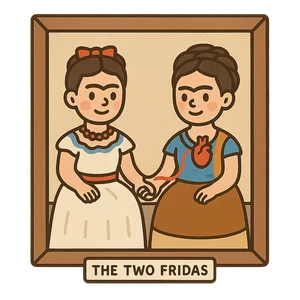
The Two Fridas
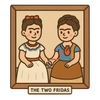
A 1939 double self-portrait by Mexican artist Frida Kahlo…
Reads at Grades 6–8 Listens at Grades 4–8
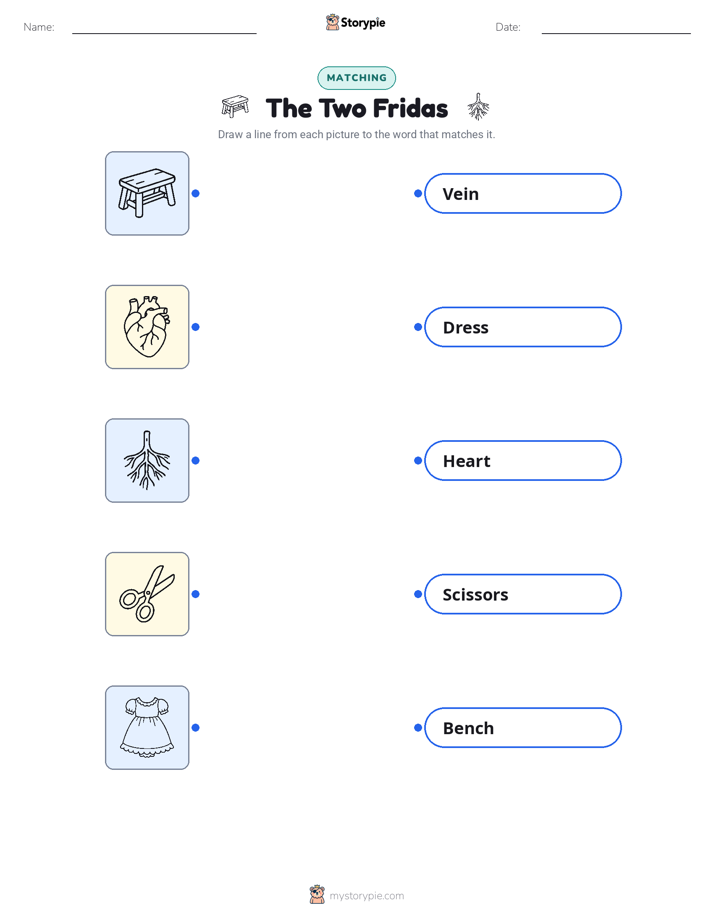
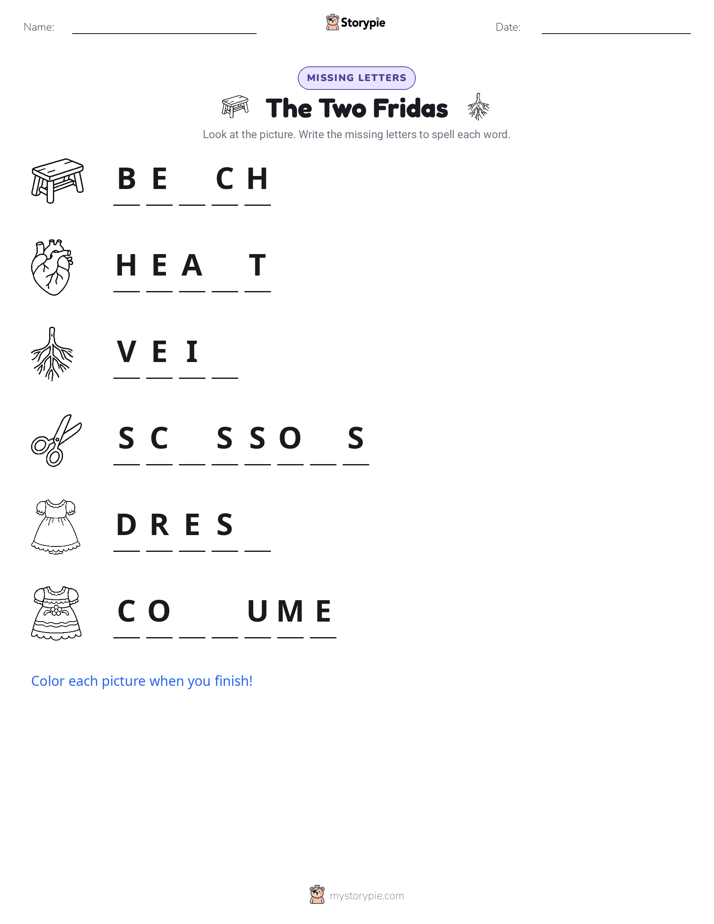
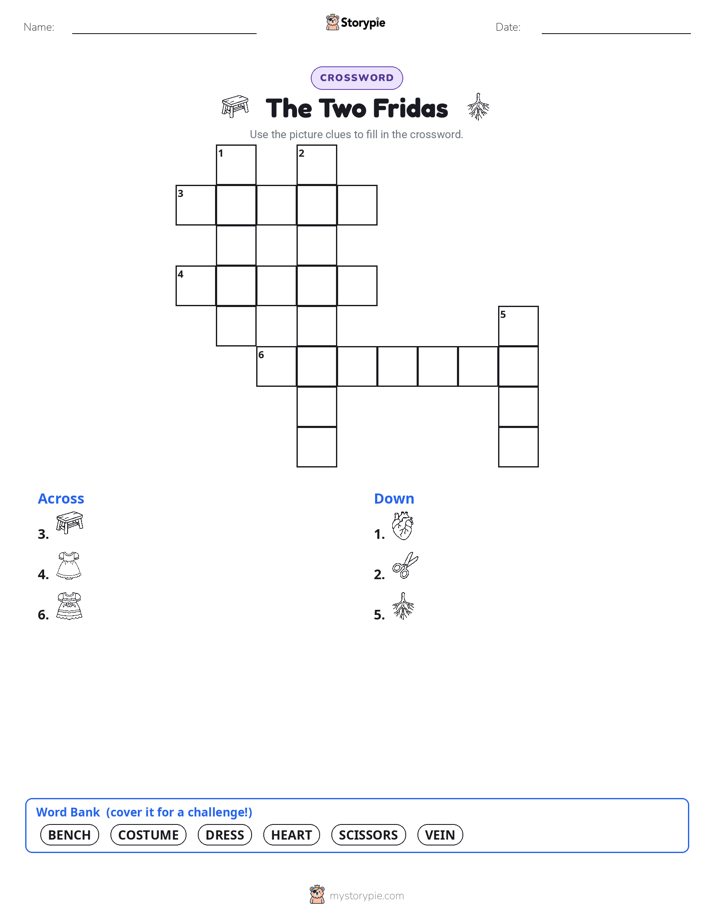
Print & create
Answer keys·No prep·Free with an account
28 worksheets · answer keys · full story · quiz · Ages 10-12 · CEFR B2
Plus adds 164,000+ more stories in 27 languages, audio for every one, and printables for all of them.
Just want The Two Fridas?
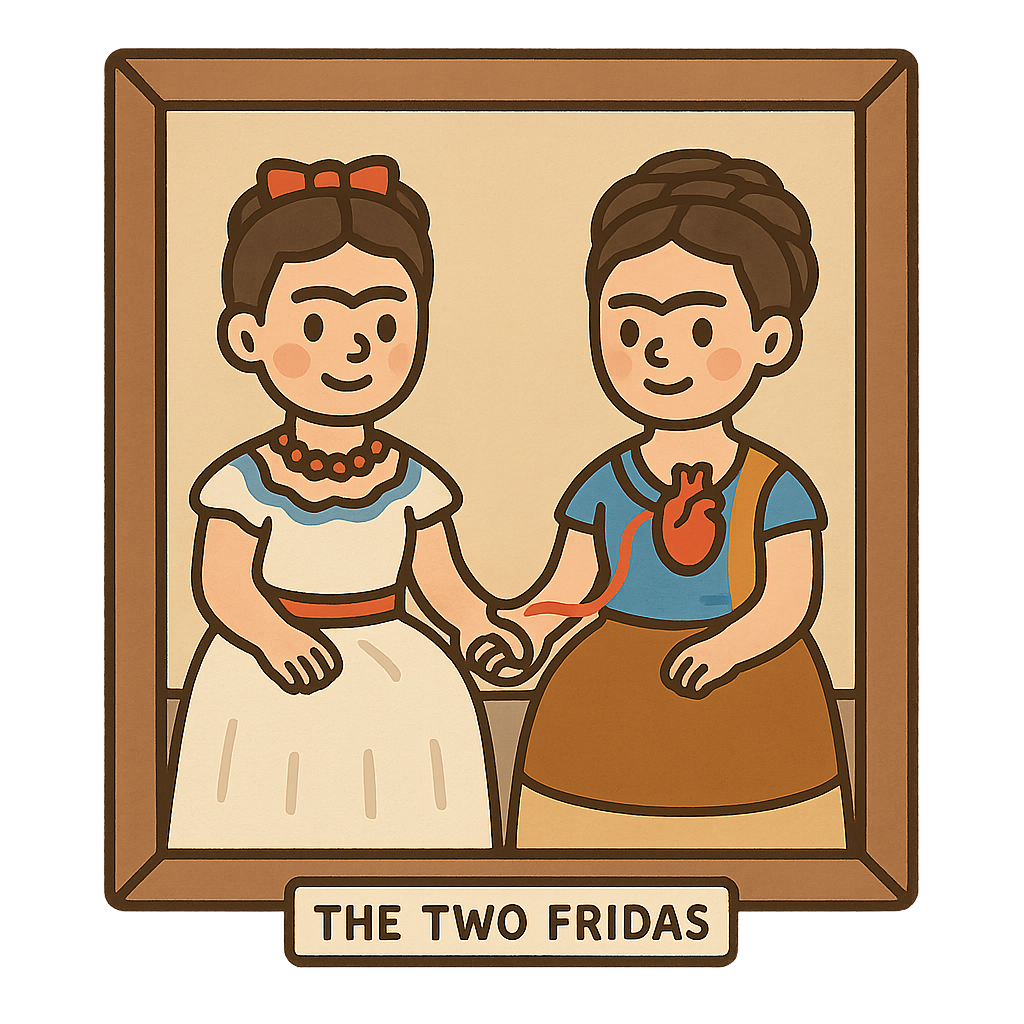
Imagine sitting on a simple wooden bench beneath a sky swirling with dark, stormy clouds. I am not one person, but two, and we are holding hands. We are identical, yet we are worlds apart. One of us has a heart that is whole and strong, beating with life. The other’s heart is different; it is sliced open, exposed to the turbulent air, and bleeding. A delicate red vein connects us, stretching like a root from the whole heart to the broken one, a physical line of shared blood, shared pain, and shared existence. People who stand before me often feel a powerful combination of sorrow and resilience. They see the storm brewing in the clouds behind us and recognize the very same storm raging within our two hearts. I am not just a picture of two women; I am a portrait of a feeling so immense, so complicated, that it required two bodies to contain it. I am the painting known as 'The Two Fridas'.
My creator was a woman of astonishing strength and a spirit so bright it could fill any room. Her name was Frida Kahlo. The year she brought me to life, 1939, was a time of great pain for her. Her heart had been shattered by her divorce from the man she considered the great love of her life, the famous muralist Diego Rivera. Living in her beautiful home in Mexico City, known as the 'Casa Azul' or 'Blue House', she felt as though her very self had been split in two. To make sense of this profound heartbreak, she turned to her canvas and her brushes. She painted the Frida she believed Diego had loved—the one dressed in a traditional Mexican Tehuana costume, her heart intact, and holding a small portrait of him in her hand. Beside her, she painted the other Frida, the one he had rejected. This Frida wears a European-style white lace dress, and her heart is torn open, symbolizing the end of their love. I was not merely a painting to her; I was a page from her diary, an intimate confession written in oil paint for all the world to see.
The Two Fridas
Imagine sitting on a simple wooden bench beneath a sky swirling with dark, stormy clouds. I am not one person, but two, and we are holding hands. We are identical, yet we are worlds apart. One of us has a heart that is whole and strong, beating with life. The other’s heart is different; it is sliced open, exposed to the turbulent air, and bleeding. A delicate red vein connects us, stretching like a root from the whole heart to the broken one, a physical line of shared blood, shared pain, and shared existence. People who stand before me often feel a powerful combination of sorrow and resilience. They see the storm brewing in the clouds behind us and recognize the very same storm raging within our two hearts. I am not just a picture of two women; I am a portrait of a feeling so immense, so complicated, that it required two bodies to contain it. I am the painting known as 'The Two Fridas'.
My creator was a woman of astonishing strength and a spirit so bright it could fill any room. Her name was Frida Kahlo. The year she brought me to life, 1939, was a time of great pain for her. Her heart had been shattered by her divorce from the man she considered the great love of her life, the famous muralist Diego Rivera. Living in her beautiful home in Mexico City, known as the 'Casa Azul' or 'Blue House', she felt as though her very self had been split in two. To make sense of this profound heartbreak, she turned to her canvas and her brushes. She painted the Frida she believed Diego had loved—the one dressed in a traditional Mexican Tehuana costume, her heart intact, and holding a small portrait of him in her hand. Beside her, she painted the other Frida, the one he had rejected. This Frida wears a European-style white lace dress, and her heart is torn open, symbolizing the end of their love. I was not merely a painting to her; I was a page from her diary, an intimate confession written in oil paint for all the world to see.
Frida painted me on a very large canvas, making us almost life-sized. When you stand in front of me, it can feel as though you are sitting right there with us, sharing our silent moment under that menacing sky. She filled me with symbols that tell her story with a quiet, piercing honesty. The vein that joins us begins at the tiny portrait of Diego that one Frida holds. It winds its way through her whole heart, across our arms, and into the chest of the other Frida. There, the vein is cut short by a pair of surgical scissors she holds in her lap. But the effort is not entirely successful. Blood continues to drip from the severed vein, staining the pristine white of her dress. This single, powerful detail shows that even when you attempt to sever a connection, the pain and the memories can persist. And yet, we are holding hands. This was Frida’s way of declaring that in her moment of deepest sorrow, she still had herself. The two conflicting parts of her—the beloved and the abandoned, the traditional Mexican and the modern European, the broken and the whole—were there to support one another. She painted her reality without hiding its ugliness or pain, and in doing so, she revealed a breathtaking strength.
In January of 1940, I was presented to the world for the first time at the International Surrealist Exhibition held in Mexico City. The people who saw me were captivated. They had rarely, if ever, seen such raw, complex emotions depicted with such unflinching power on a canvas. I was not a dream, as the Surrealists might have imagined; I was, as Frida said, her reality. In 1947, I found my permanent home at the Museo de Arte Moderno, the Museum of Modern Art, in Mexico City, where I continue to live today. For decades, people from every corner of the globe have come to see me. They sit and look into my two sets of eyes and often see reflections of their own moments of heartbreak, inner conflict, and resilience. I am a reminder that it is human to have complicated feelings, to sometimes feel like two different people at once. I show them that even when your heart is broken, there is an incredible power in accepting and holding onto all parts of yourself. My story is one of sadness, it is true, but it is more than that. It is a timeless story of survival and self-love that continues to inspire everyone who meets my gaze.
Wow facts
About
A 1939 double self-portrait by Mexican artist Frida Kahlo, representing her emotional pain and dual identity following her divorce from Diego Rivera.
Take a Quiz
Question 1 of 5
In your own words, retell the main events that led Frida Kahlo to create 'The Two Fridas'.
Explore next





Want to do even more?
Go beyond exploring. Unlock tools that turn every story into real learning.

Storypie Plus for families
Full stories, quizzes, and printables. Nights and car rides, sorted.
- Unlimited audio stories
- Create Mode: your child stars in the story
- Offline downloads
- Printable worksheets & coloring pages

Why Storypie for Schools
Students engaged. Prep in seconds. Evenings back to you.
- Worksheets & Quizzes
- Classroom Management
- Formative Assessment
- Custom Curriculum & Lesson Plans
- 27 Languages

Why Storypie for Homeschool
Curriculum done. They'll ask for more. Hours back in your day.
- Worksheet Generator
- First-Person Audio Stories
- Built-in Comprehension Quizzes
- Custom Curriculum & Lesson Plans
- Print & Go Activities