English

Carnival of Venice
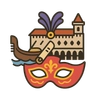
An annual festival in Venice, Italy, famous for its elaborate masks, costumes…
Reads at Grades 6–8 Listens at Grades 4–8
Print & create
Answer keys·No prep·Free with an account
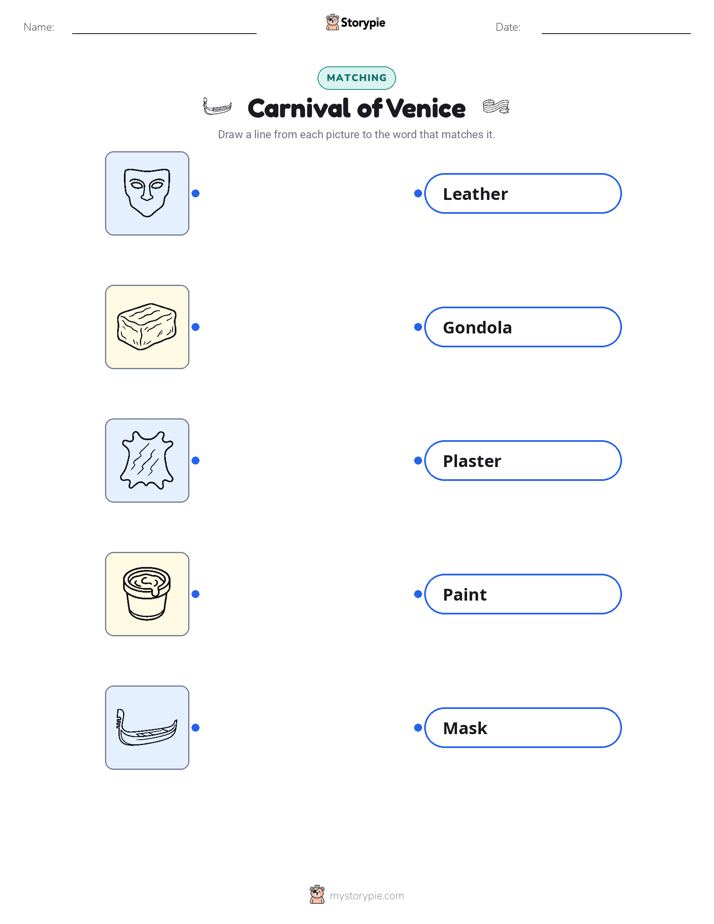
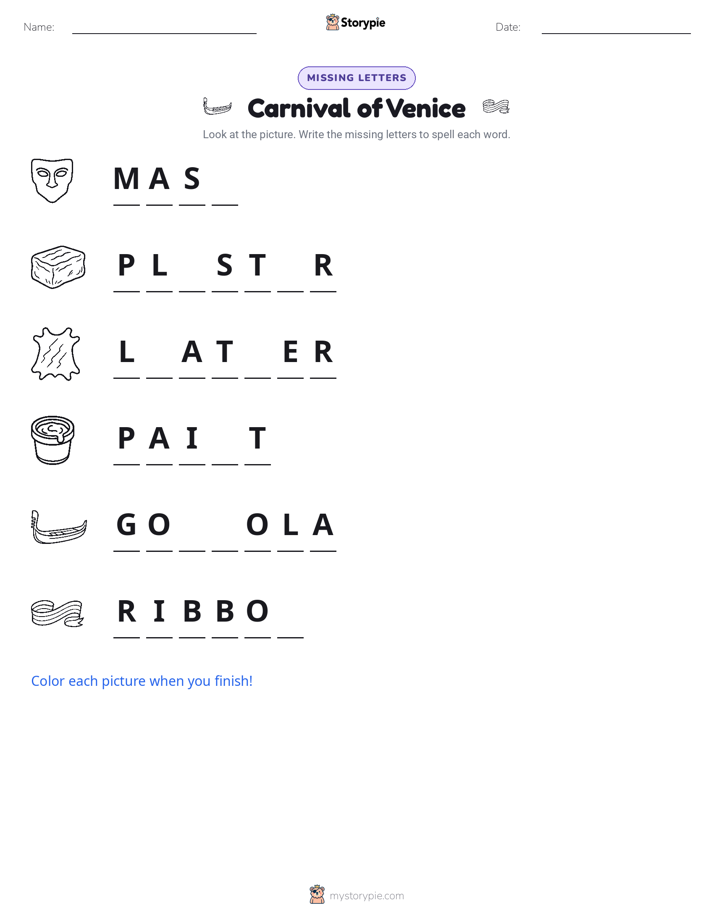
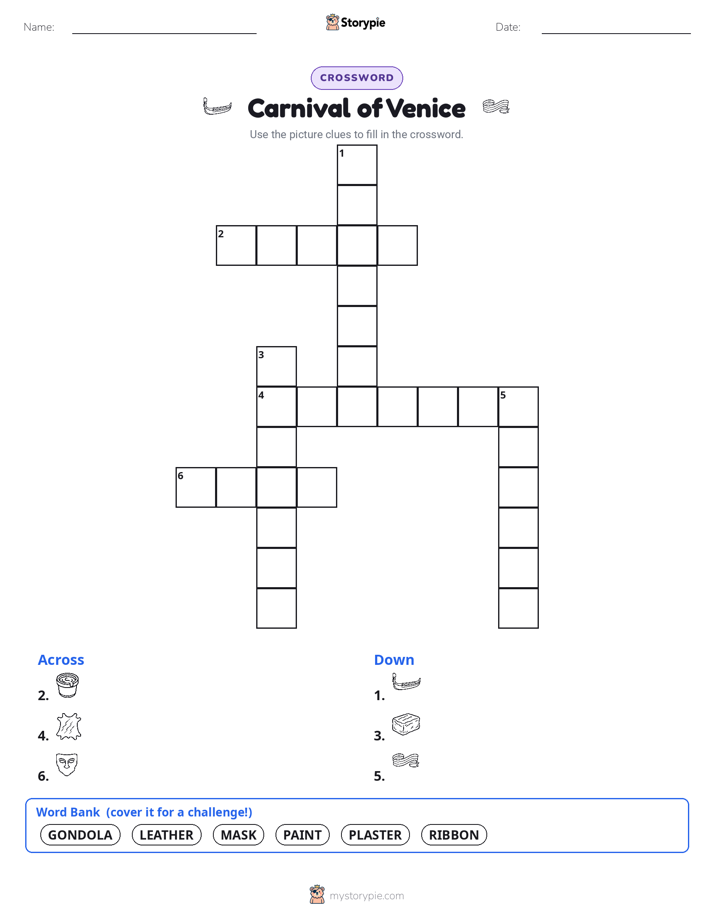
28 worksheets · answer keys · full story · quiz · Ages 10-12 · CEFR B2
Plus adds 116,000+ more stories in 27 languages, audio for every one, and printables for all of them.
Just want Carnival of Venice?
My name is Marco, and my hands have known the feel of plaster, leather, and paint for as long as I can remember. I am a mascheraro, a master mask-maker, and this is my workshop here in the heart of 18th-century Venice. The air in my bottega is thick with the scent of linseed oil and drying glue, a perfume I have come to love. All around you, you would see the silent, watching faces of my creations hanging from the walls: some with long, curved noses, others with mischievous smiles, and some with no expression at all, waiting for a wearer to give them life. My work is not just a craft; it is the very soul of my city, for I create the faces of the Carnival of Venice. This celebration is an ancient tradition, a magical time that has been an official holiday since the year 1296. It was created to give every single person, from the wealthiest noble to the humblest fisherman, a period of joy and freedom before the solemn forty days of Lent. During Carnival, the strict rules of our society melt away, and a mask is the key that unlocks it all.
When the Carnival season reached its peak, I would lock my workshop and step out into a city transformed. Venice was no longer just a city of canals and bridges; it became a living stage, a whirlwind of color, sound, and mystery. Laughter echoed in the narrow alleyways, and the music of violins and mandolins would drift from passing gondolas decorated with silk ribbons. People from every walk of life filled the Piazza San Marco, their identities hidden behind magnificent masks, many of them made by my own hands. I loved to watch them, trying to guess who was who. Was that nobleman wearing the Bauta, a stark white mask with a jutting chin that allowed him to eat and drink while remaining completely unknown. The Bauta was the great equalizer; behind it, a servant could joke with a prince. I would see ladies wearing the elegant Colombina, a half-mask glittering with gold leaf and feathers, held up to their eyes with a delicate baton. And of course, there was the strangest mask of all: the Medico della Peste, the Plague Doctor. With its long, bird-like beak and hollow eyes, it was a chilling reminder of the terrible sicknesses of the past, but during Carnival, it became just another fascinating character in our city’s grand play.
A Venetian Mask-Maker's Tale
My name is Marco, and my hands have known the feel of plaster, leather, and paint for as long as I can remember. I am a mascheraro, a master mask-maker, and this is my workshop here in the heart of 18th-century Venice. The air in my bottega is thick with the scent of linseed oil and drying glue, a perfume I have come to love. All around you, you would see the silent, watching faces of my creations hanging from the walls: some with long, curved noses, others with mischievous smiles, and some with no expression at all, waiting for a wearer to give them life. My work is not just a craft; it is the very soul of my city, for I create the faces of the Carnival of Venice. This celebration is an ancient tradition, a magical time that has been an official holiday since the year 1296. It was created to give every single person, from the wealthiest noble to the humblest fisherman, a period of joy and freedom before the solemn forty days of Lent. During Carnival, the strict rules of our society melt away, and a mask is the key that unlocks it all.
When the Carnival season reached its peak, I would lock my workshop and step out into a city transformed. Venice was no longer just a city of canals and bridges; it became a living stage, a whirlwind of color, sound, and mystery. Laughter echoed in the narrow alleyways, and the music of violins and mandolins would drift from passing gondolas decorated with silk ribbons. People from every walk of life filled the Piazza San Marco, their identities hidden behind magnificent masks, many of them made by my own hands. I loved to watch them, trying to guess who was who. Was that nobleman wearing the Bauta, a stark white mask with a jutting chin that allowed him to eat and drink while remaining completely unknown. The Bauta was the great equalizer; behind it, a servant could joke with a prince. I would see ladies wearing the elegant Colombina, a half-mask glittering with gold leaf and feathers, held up to their eyes with a delicate baton. And of course, there was the strangest mask of all: the Medico della Peste, the Plague Doctor. With its long, bird-like beak and hollow eyes, it was a chilling reminder of the terrible sicknesses of the past, but during Carnival, it became just another fascinating character in our city’s grand play.
The year 1797 brought a change that chilled me to the bone. Armies from France, led by a general named Napoleon Bonaparte, were marching across Europe. The thousand-year-old Republic of Venice was proud, but we could not stand against his power. On May 12th, 1797, our independence ended, and everything changed. Napoleon was a man of order and control, and he saw our beloved Carnival not as a celebration of freedom, but as a threat. He believed the masks that gave us such joy could also hide conspirators and rebels plotting against him. And so, he outlawed the Carnival. The public wearing of masks was forbidden. A silence fell over Venice that was heavier than any winter fog. My workshop grew dusty, my paints dried up, and my masks stared blankly from the walls, their purpose gone. For nearly two hundred years, the grandest party in the world was nothing but a faded memory.
But the spirit of a city like Venice is not so easily extinguished. Though my time on this earth has long since passed, I like to think that the memory of my craft and the joy of the Carnival lingered in the stones of the city. A great quiet settled for many, many years. Then, a wonderful thing happened. In 1979, the people of Italy decided that this beautiful tradition had been silent for too long. They chose to bring the Carnival back to life. The masks returned, the music played once more, and the canals again filled with laughter and mystery. My work, the work of the mascherari, was reborn. The joy, art, and community that I poured into my creations did not die with Napoleon's decree. They live on today, a testament to the enduring power of celebration and the unbreakable spirit of Venice.
Wow facts
About
An annual festival in Venice, Italy, famous for its elaborate masks, costumes, and public celebrations that take place in the weeks leading up to Lent.
Take a Quiz
Question 1 of 5
Summarize the main conflict in the story and how it was eventually resolved.
Explore next

Want to do even more?
Go beyond exploring. Unlock tools that turn every story into real learning.

Storypie Plus for families
Full stories, quizzes, and printables. Nights and car rides, sorted.
- Unlimited audio stories
- Create Mode: your child stars in the story
- Offline downloads
- Printable worksheets & coloring pages

Why Storypie for Schools
Students engaged. Prep in seconds. Evenings back to you.
- Worksheets & Quizzes
- Classroom Management
- Formative Assessment
- Custom Curriculum & Lesson Plans
- 27 Languages

Why Storypie for Homeschool
Curriculum done. They'll ask for more. Hours back in your day.
- Worksheet Generator
- First-Person Audio Stories
- Built-in Comprehension Quizzes
- Custom Curriculum & Lesson Plans
- Print & Go Activities