English

Carnival of Venice
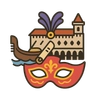
An annual festival in Venice, Italy, famous for its elaborate masks, costumes…
Reads at Grades 3–5 Listens at Grades 1–5
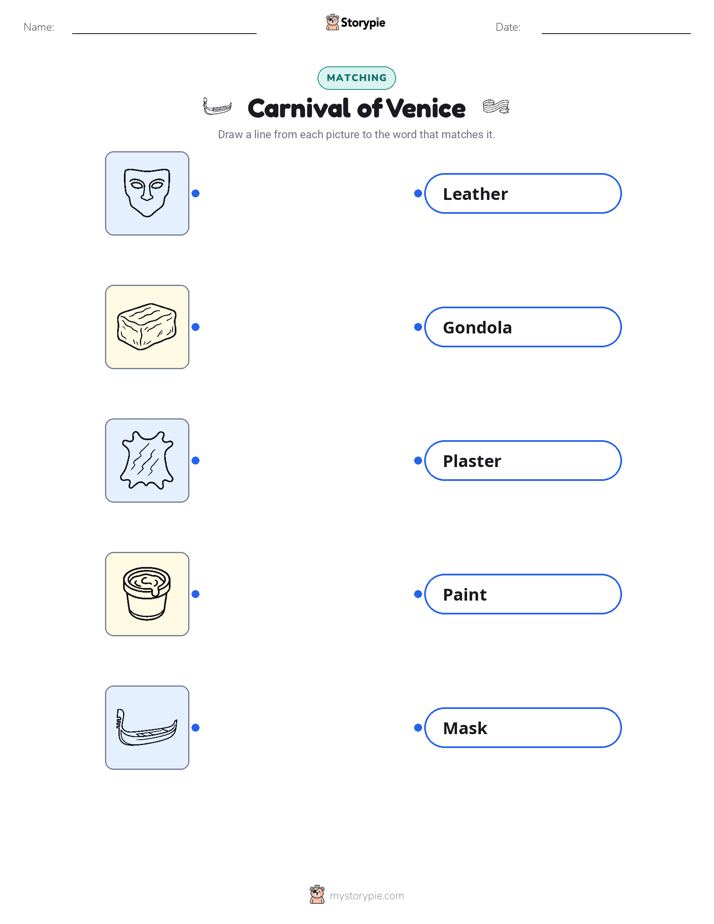
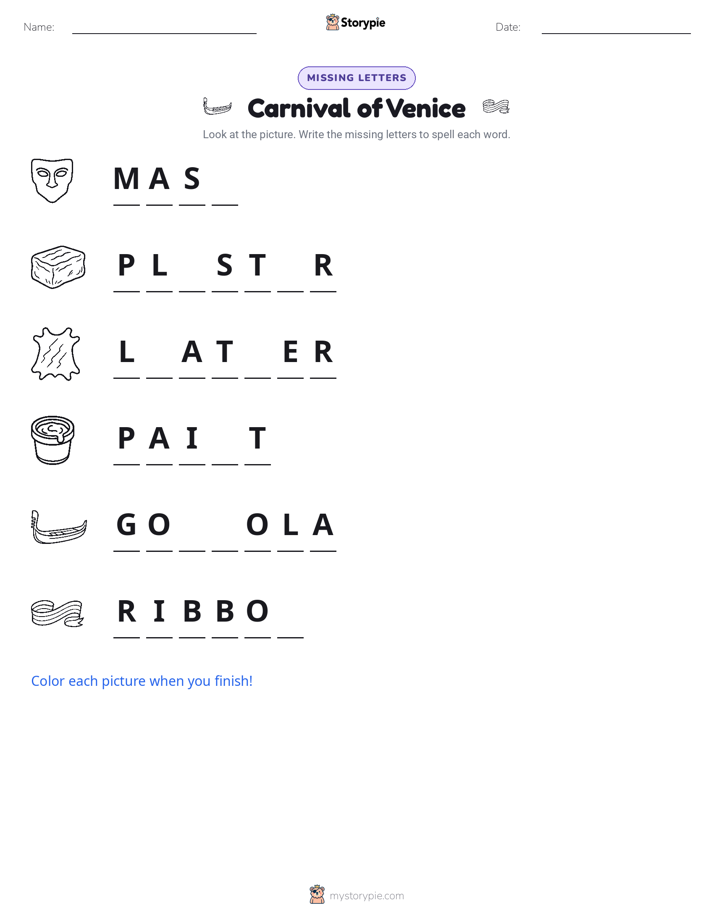
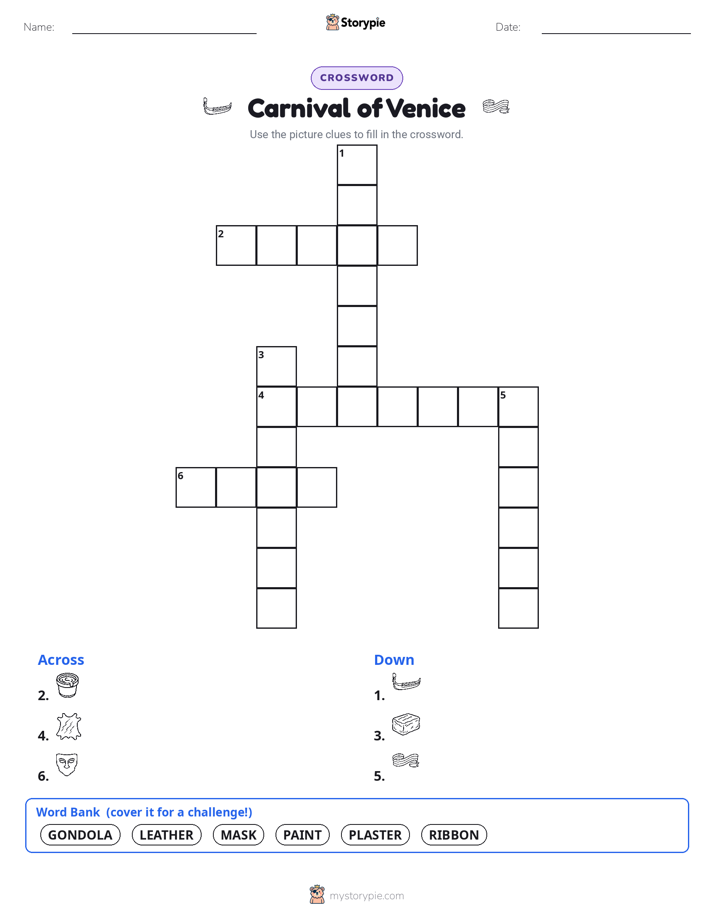
Print & create
Answer keys·No prep·Free with an account
28 worksheets · answer keys · full story · quiz · Ages 8-10 · CEFR B1
Plus adds 116,000+ more stories in 27 languages, audio for every one, and printables for all of them.
Just want Carnival of Venice?
My name is Marco, and my story begins in the magical city of Venice in the 18th century. Our city isn't like others. Instead of roads, we have shimmering canals, and instead of horses, we travel in long, graceful boats called gondolas. I wasn't a nobleman or a sailor; I was a humble apprentice in a mask-maker's shop. My master, Signor Bellini, taught me how to shape plaster, paint delicate designs, and add feathers and jewels until we had created a masterpiece. As winter’s chill began to fade, a special kind of excitement would bubble up through the stone alleyways. It was the feeling of Carnival approaching. Carnival was the most wonderful time of the year, a long celebration before the quiet days of Lent. During this time, the entire city transformed into a stage for a grand party. The most important part of Carnival was the mask. A mask was like a secret. Behind it, a wealthy duchess could dance with a poor fisherman, and a servant could share a laugh with a powerful merchant. For a few weeks, our masks made us all equal. Everyone was simply a citizen of Venice, ready to celebrate together. The secret I helped create in our dusty workshop was the key to unlocking the city’s joy.
When Carnival was in full swing, Venice was a city of wonders that dazzled the senses. I remember stepping into St. Mark's Square, the heart of our city, and feeling like I had walked into a dream. Music from violins and lutes filled the air, mixing with the sounds of laughter and cheerful chatter. Acrobats tumbled on raised stages, and puppeteers made their marionettes dance for crowds of delighted children. People wore the most incredible costumes, dressed as jesters, kings, and characters from stories. In our shop, we made many kinds of masks. There was the ‘Bauta’, a white mask that covered the whole face and had a jutting chin so men could eat and talk without taking it off. For the ladies, we crafted the beautiful ‘Columbina’, a half-mask held on with a ribbon or a stick, which we decorated with gold leaf and tiny pearls. One year, I made a simple mask for myself, painted deep blue like the evening sky. Wearing it, I felt a thrilling sense of freedom. No one knew I was Marco, the apprentice. I was just another mysterious figure in the crowd. I remember watching the famous ‘Flight of the Angel’, where a brave acrobat would glide down a long rope from the top of the tall bell tower to the Doge's Palace below. The whole square would hold its breath and then erupt in cheers. It was pure magic, a time when anything felt possible.
Marco's Venetian Carnival
My name is Marco, and my story begins in the magical city of Venice in the 18th century. Our city isn't like others. Instead of roads, we have shimmering canals, and instead of horses, we travel in long, graceful boats called gondolas. I wasn't a nobleman or a sailor; I was a humble apprentice in a mask-maker's shop. My master, Signor Bellini, taught me how to shape plaster, paint delicate designs, and add feathers and jewels until we had created a masterpiece. As winter’s chill began to fade, a special kind of excitement would bubble up through the stone alleyways. It was the feeling of Carnival approaching. Carnival was the most wonderful time of the year, a long celebration before the quiet days of Lent. During this time, the entire city transformed into a stage for a grand party. The most important part of Carnival was the mask. A mask was like a secret. Behind it, a wealthy duchess could dance with a poor fisherman, and a servant could share a laugh with a powerful merchant. For a few weeks, our masks made us all equal. Everyone was simply a citizen of Venice, ready to celebrate together. The secret I helped create in our dusty workshop was the key to unlocking the city’s joy.
When Carnival was in full swing, Venice was a city of wonders that dazzled the senses. I remember stepping into St. Mark's Square, the heart of our city, and feeling like I had walked into a dream. Music from violins and lutes filled the air, mixing with the sounds of laughter and cheerful chatter. Acrobats tumbled on raised stages, and puppeteers made their marionettes dance for crowds of delighted children. People wore the most incredible costumes, dressed as jesters, kings, and characters from stories. In our shop, we made many kinds of masks. There was the ‘Bauta’, a white mask that covered the whole face and had a jutting chin so men could eat and talk without taking it off. For the ladies, we crafted the beautiful ‘Columbina’, a half-mask held on with a ribbon or a stick, which we decorated with gold leaf and tiny pearls. One year, I made a simple mask for myself, painted deep blue like the evening sky. Wearing it, I felt a thrilling sense of freedom. No one knew I was Marco, the apprentice. I was just another mysterious figure in the crowd. I remember watching the famous ‘Flight of the Angel’, where a brave acrobat would glide down a long rope from the top of the tall bell tower to the Doge's Palace below. The whole square would hold its breath and then erupt in cheers. It was pure magic, a time when anything felt possible.
All wonderful parties must come to an end, and Carnival was no different. On the final day, known as Shrove Tuesday, the celebrations would reach their peak before falling silent at midnight. The next morning, Venice would be quiet again, the colorful costumes packed away and the masks stored carefully for next year. But one year, the quiet lasted much, much longer. In 1797, when the Republic of Venice fell, our grand public Carnival was stopped. For nearly two hundred years, the city’s greatest celebration was just a memory, a story that grandparents told their grandchildren. It seemed the magic might be lost forever. But a spirit as strong as Venice’s is hard to keep down. I was overjoyed to learn that in 1979, the city decided to bring the Carnival back to life. Today, people from all over the world come to experience the same wonder I did so long ago. They wear beautiful masks, watch the parades, and feel the joy of being part of something truly special. My story taught me that even when traditions seem to fade, their spirit can be reborn. The true magic of Carnival was never just about the masks or the parties; it was about bringing people together to share in a moment of pure happiness, a lesson that is just as important now as it was then.
Wow facts
About
An annual festival in Venice, Italy, famous for its elaborate masks, costumes, and public celebrations that take place in the weeks leading up to Lent.
Take a Quiz
Question 1 of 5
What was Marco's job in 18th-century Venice?
Explore next



Want to do even more?
Go beyond exploring. Unlock tools that turn every story into real learning.

Storypie Plus for families
Full stories, quizzes, and printables. Nights and car rides, sorted.
- Unlimited audio stories
- Create Mode: your child stars in the story
- Offline downloads
- Printable worksheets & coloring pages

Why Storypie for Schools
Students engaged. Prep in seconds. Evenings back to you.
- Worksheets & Quizzes
- Classroom Management
- Formative Assessment
- Custom Curriculum & Lesson Plans
- 27 Languages

Why Storypie for Homeschool
Curriculum done. They'll ask for more. Hours back in your day.
- Worksheet Generator
- First-Person Audio Stories
- Built-in Comprehension Quizzes
- Custom Curriculum & Lesson Plans
- Print & Go Activities