English

Children's Day (Japan)
A Japanese national holiday celebrated annually on May 5th to respect children's personalities…
Reads at Grades 6–8 Listens at Grades 4–8
Print & create
Answer keys·No prep·Free with an account
28 worksheets · answer keys · full story · quiz · Ages 10-12 · CEFR B2
Plus adds 164,000+ more stories in 27 languages, audio for every one, and printables for all of them.
Just want Children's Day (Japan)?
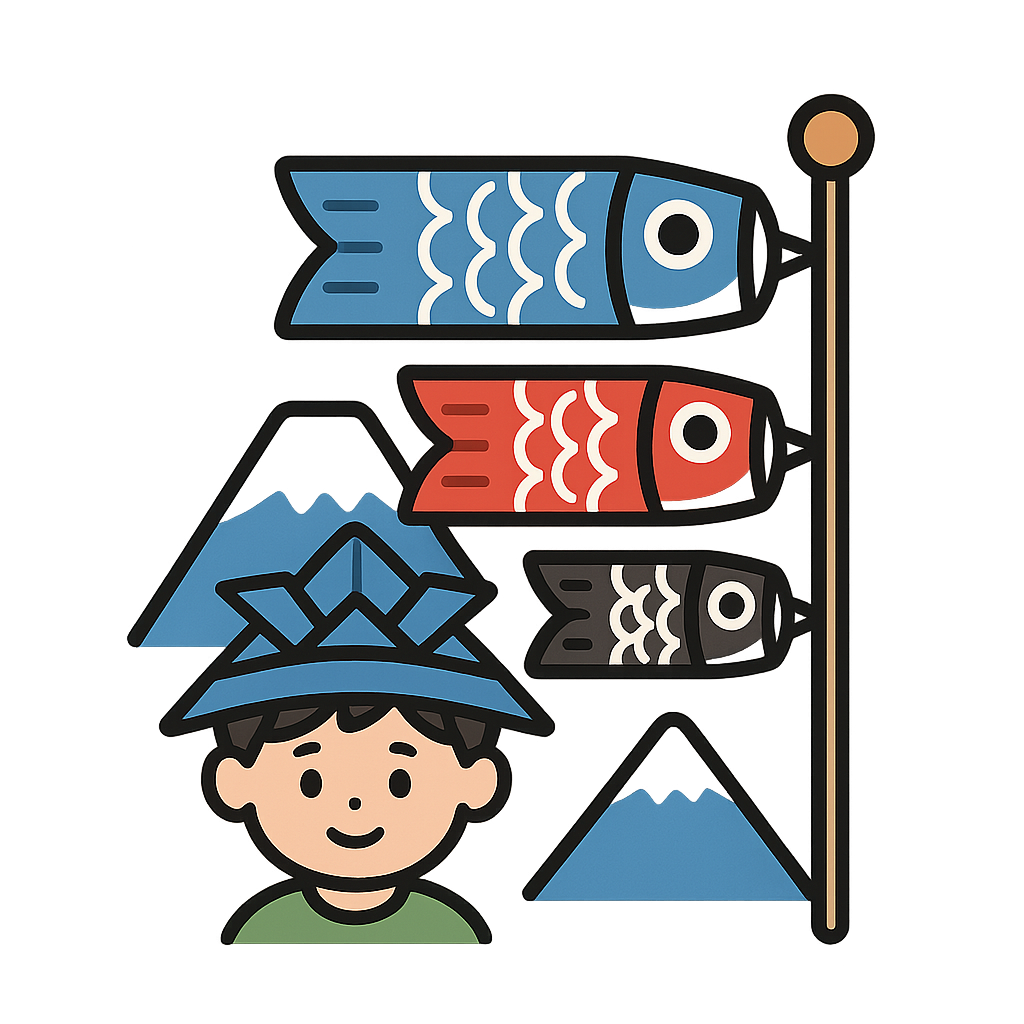
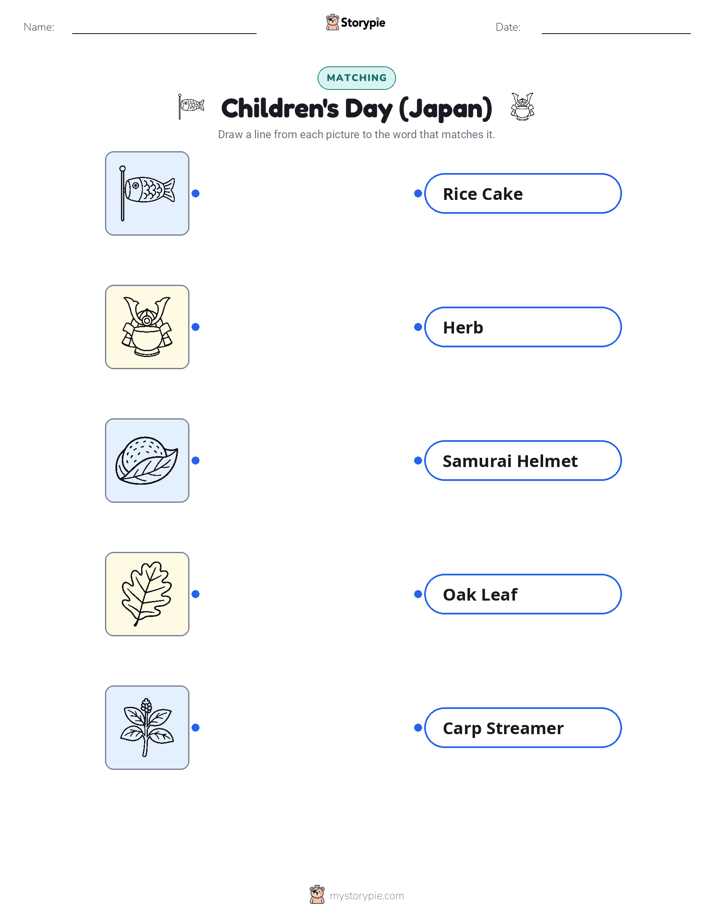
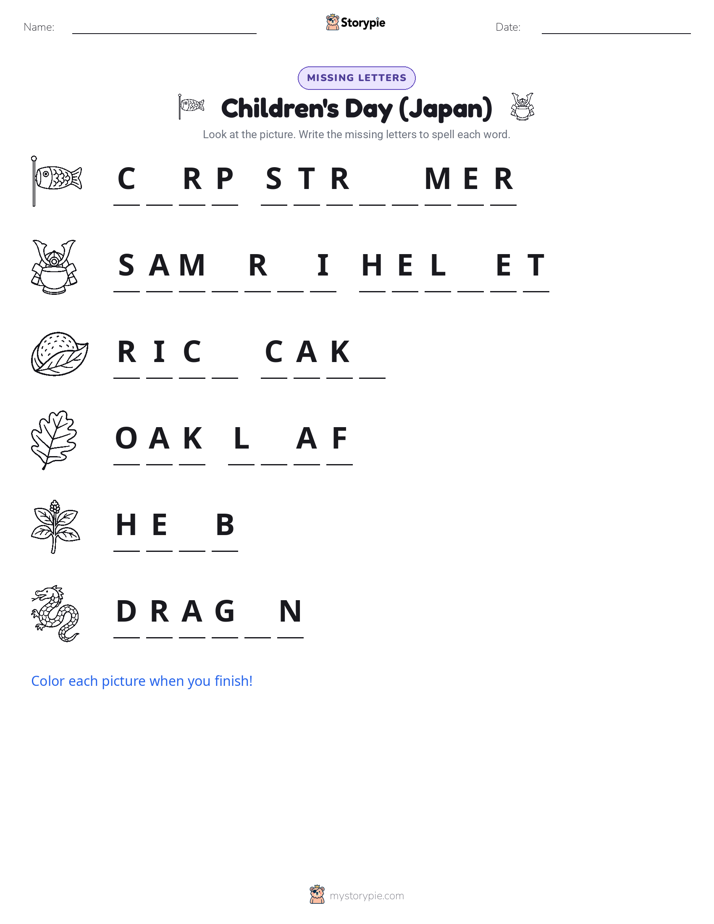
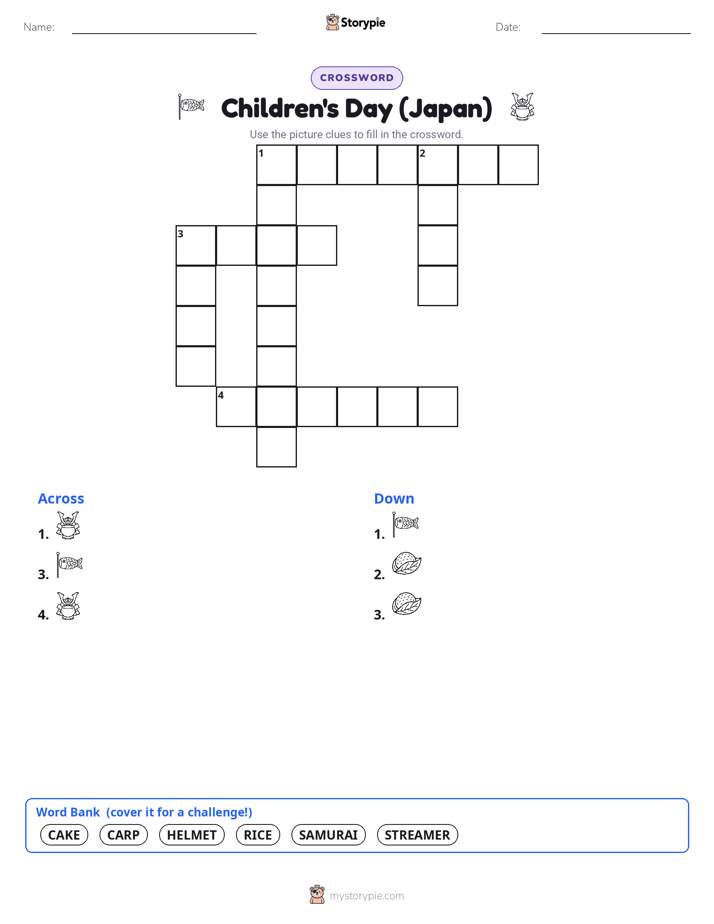
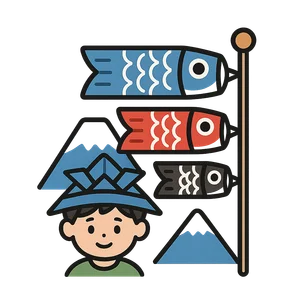
Hello there. My name is Haruto, and today is my favorite day of the year. It is May 5th, a day we call Kodomo no Hi, or Children’s Day, in Japan. If you were standing outside my home right now, you would see the most wonderful sight. Flying from a tall pole in our garden are colorful streamers shaped like giant fish, swimming in the wind. These are koinobori, or carp streamers. The biggest one, a black carp, represents me. The next one, red, is for my wife, and the smaller blue and green ones are for our children. Inside, on a special stand, we have placed a miniature samurai helmet, a kabuto, gleaming with intricate details. The air is filled with the sweet, earthy smell of kashiwa mochi, which are delicious rice cakes filled with sweet bean paste and wrapped in oak leaves. Today, this holiday is for all children, a day to celebrate their happiness and unique personalities. But it wasn't always this way. This celebration has a long and fascinating story, one my own grandfather told me when I was a boy. It’s a story that stretches back over a thousand years, a tale of ancient beliefs, brave samurai warriors, and a nation's enduring hope for its future. Come, listen closely, and I will share it with you.
The story of Children’s Day begins long, long ago, during a time in Japan known as the Nara Period, which lasted from 710 to 794. Back then, it wasn’t called Children’s Day. It was known as Tango no Sekku, and it was one of five ancient seasonal festivals adopted from China. On the fifth day of the fifth month, people believed that bad spirits and illness were especially common. To protect themselves, they would hang iris leaves and other herbs in their homes because the leaves' long, sharp shape was thought to ward off evil. For centuries, this was its main purpose: a ritual for health and protection for everyone. But things began to change during the Kamakura Period, from 1185 to 1333. This was the age of the samurai, Japan’s legendary warrior class. The samurai noticed a coincidence in our language. The word for iris, 'shobu,' sounds exactly like another word, 'shobu,' which means martial spirit or a preference for military arts. This was too perfect to ignore. The samurai transformed Tango no Sekku into a day to celebrate their sons, praying for them to grow up strong, brave, and courageous like the great warriors of the time. This is when the tradition of displaying miniature armor, helmets, and swords in the home began. It was a way of instilling the values of the samurai in the next generation. As time moved into the Edo Period, from 1603 to 1868, Japan was peaceful, and a vibrant merchant and artisan class grew in the cities. These commoners, who were not samurai, wanted to celebrate their sons too. They couldn't display expensive armor, so they created their own symbol: the koinobori. They were inspired by a Chinese legend of a carp that swam up a powerful waterfall and transformed into a mighty dragon. The carp became a symbol of strength, perseverance, and success. Flying the koinobori was a wish for their sons to overcome any obstacle. For hundreds of years, the day was known as Boys' Day. But after the great struggle of World War II, Japan wanted to build a new future. On May 5th, 1948, the government made a powerful decision. They officially renamed the holiday 'Kodomo no Hi'—Children’s Day—making it a national holiday to honor all children, both boys and girls, and to celebrate family unity and happiness.
The Carp in the Sky: A Children's Day Story
Hello there. My name is Haruto, and today is my favorite day of the year. It is May 5th, a day we call Kodomo no Hi, or Children’s Day, in Japan. If you were standing outside my home right now, you would see the most wonderful sight. Flying from a tall pole in our garden are colorful streamers shaped like giant fish, swimming in the wind. These are koinobori, or carp streamers. The biggest one, a black carp, represents me. The next one, red, is for my wife, and the smaller blue and green ones are for our children. Inside, on a special stand, we have placed a miniature samurai helmet, a kabuto, gleaming with intricate details. The air is filled with the sweet, earthy smell of kashiwa mochi, which are delicious rice cakes filled with sweet bean paste and wrapped in oak leaves. Today, this holiday is for all children, a day to celebrate their happiness and unique personalities. But it wasn't always this way. This celebration has a long and fascinating story, one my own grandfather told me when I was a boy. It’s a story that stretches back over a thousand years, a tale of ancient beliefs, brave samurai warriors, and a nation's enduring hope for its future. Come, listen closely, and I will share it with you.
The story of Children’s Day begins long, long ago, during a time in Japan known as the Nara Period, which lasted from 710 to 794. Back then, it wasn’t called Children’s Day. It was known as Tango no Sekku, and it was one of five ancient seasonal festivals adopted from China. On the fifth day of the fifth month, people believed that bad spirits and illness were especially common. To protect themselves, they would hang iris leaves and other herbs in their homes because the leaves' long, sharp shape was thought to ward off evil. For centuries, this was its main purpose: a ritual for health and protection for everyone. But things began to change during the Kamakura Period, from 1185 to 1333. This was the age of the samurai, Japan’s legendary warrior class. The samurai noticed a coincidence in our language. The word for iris, 'shobu,' sounds exactly like another word, 'shobu,' which means martial spirit or a preference for military arts. This was too perfect to ignore. The samurai transformed Tango no Sekku into a day to celebrate their sons, praying for them to grow up strong, brave, and courageous like the great warriors of the time. This is when the tradition of displaying miniature armor, helmets, and swords in the home began. It was a way of instilling the values of the samurai in the next generation. As time moved into the Edo Period, from 1603 to 1868, Japan was peaceful, and a vibrant merchant and artisan class grew in the cities. These commoners, who were not samurai, wanted to celebrate their sons too. They couldn't display expensive armor, so they created their own symbol: the koinobori. They were inspired by a Chinese legend of a carp that swam up a powerful waterfall and transformed into a mighty dragon. The carp became a symbol of strength, perseverance, and success. Flying the koinobori was a wish for their sons to overcome any obstacle. For hundreds of years, the day was known as Boys' Day. But after the great struggle of World War II, Japan wanted to build a new future. On May 5th, 1948, the government made a powerful decision. They officially renamed the holiday 'Kodomo no Hi'—Children’s Day—making it a national holiday to honor all children, both boys and girls, and to celebrate family unity and happiness.
Now, when I look at the decorations my family puts up each year, I see this entire history woven together. Those carp streamers dancing in the sky are not just for my son. The black carp is the father, the red one is the mother, and the smaller ones are the children. The koinobori now represent the whole family, and our shared wish for our children to be resilient and strong enough to swim against any current life throws at them. The beautiful kabuto, once a symbol of a samurai's martial spirit, now represents a deeper kind of courage—the courage to be a good and kind person. It is a symbol of protection, a wish that our children will be safe from harm. The holiday has become a beautiful blend of ancient traditions and modern hopes. It reminds us to cherish every child for who they are and to celebrate the love and strength that holds a family together. This day connects us to our ancestors—to the ancient people hanging iris leaves, to the samurai praying for their sons, and to the city dwellers flying the first paper carp. By carrying on these traditions, we are passing down not just a story, but a message of enduring love and hope for a bright future for every child in Japan and around the world.
Wow facts
About
A Japanese national holiday celebrated annually on May 5th to respect children's personalities, celebrate their happiness, and wish for their healthy growth.
Take a Quiz
Question 1 of 5
In your own words, summarize the evolution of Children's Day, starting from the Nara Period and ending with its official designation in 1948.
Explore next





Want to do even more?
Go beyond exploring. Unlock tools that turn every story into real learning.

Storypie Plus for families
Full stories, quizzes, and printables. Nights and car rides, sorted.
- Unlimited audio stories
- Create Mode: your child stars in the story
- Offline downloads
- Printable worksheets & coloring pages

Why Storypie for Schools
Students engaged. Prep in seconds. Evenings back to you.
- Worksheets & Quizzes
- Classroom Management
- Formative Assessment
- Custom Curriculum & Lesson Plans
- 27 Languages

Why Storypie for Homeschool
Curriculum done. They'll ask for more. Hours back in your day.
- Worksheet Generator
- First-Person Audio Stories
- Built-in Comprehension Quizzes
- Custom Curriculum & Lesson Plans
- Print & Go Activities