English

Children's Day (Japan)
A Japanese national holiday celebrated annually on May 5th to respect children's personalities…
Reads at Grades 3–5 Listens at Grades 1–5
Print & create
Answer keys·No prep·Free with an account
28 worksheets · answer keys · full story · quiz · Ages 8-10 · CEFR B1
Plus adds 164,000+ more stories in 27 languages, audio for every one, and printables for all of them.
Just want Children's Day (Japan)?
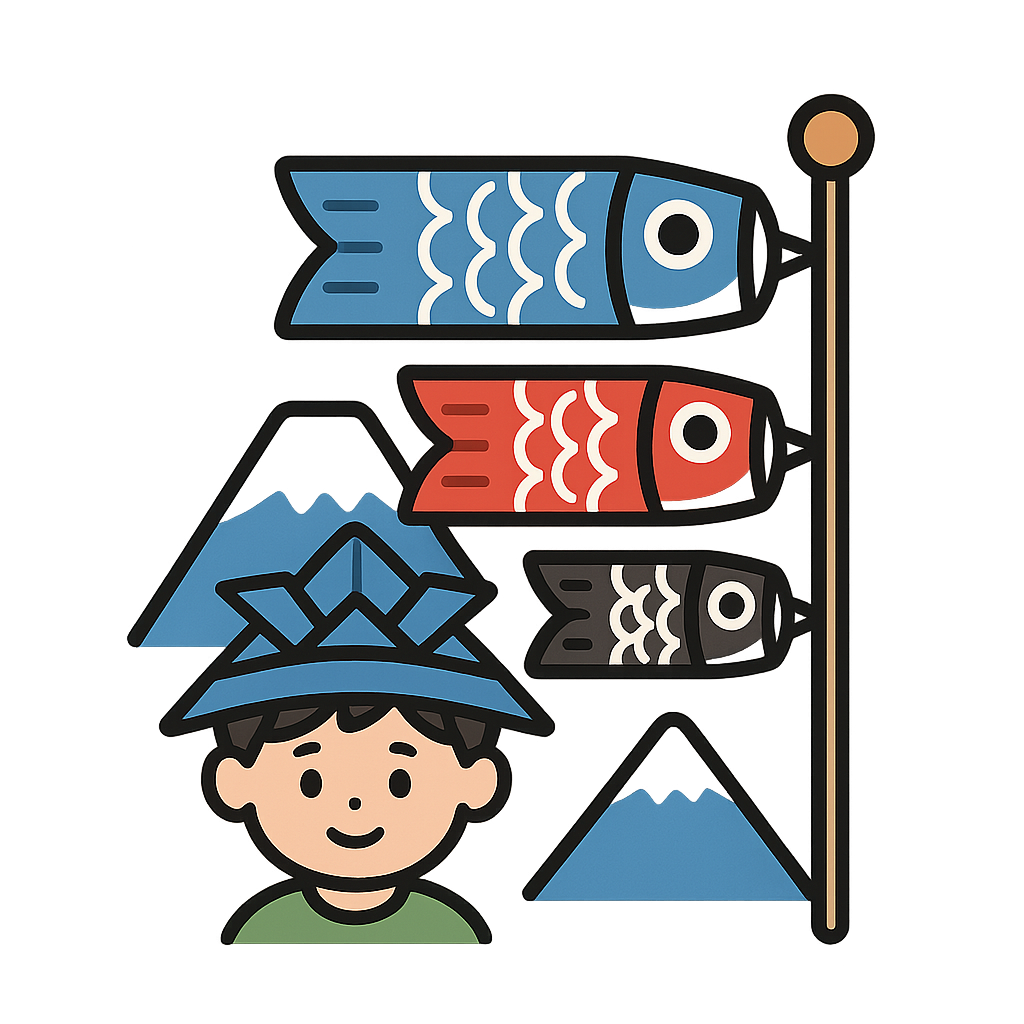
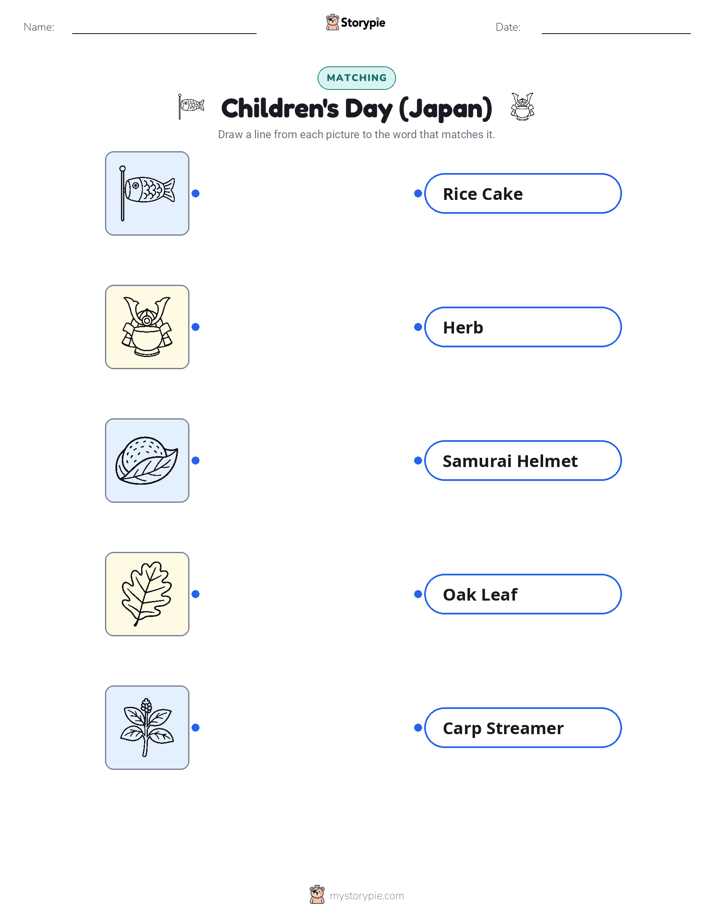
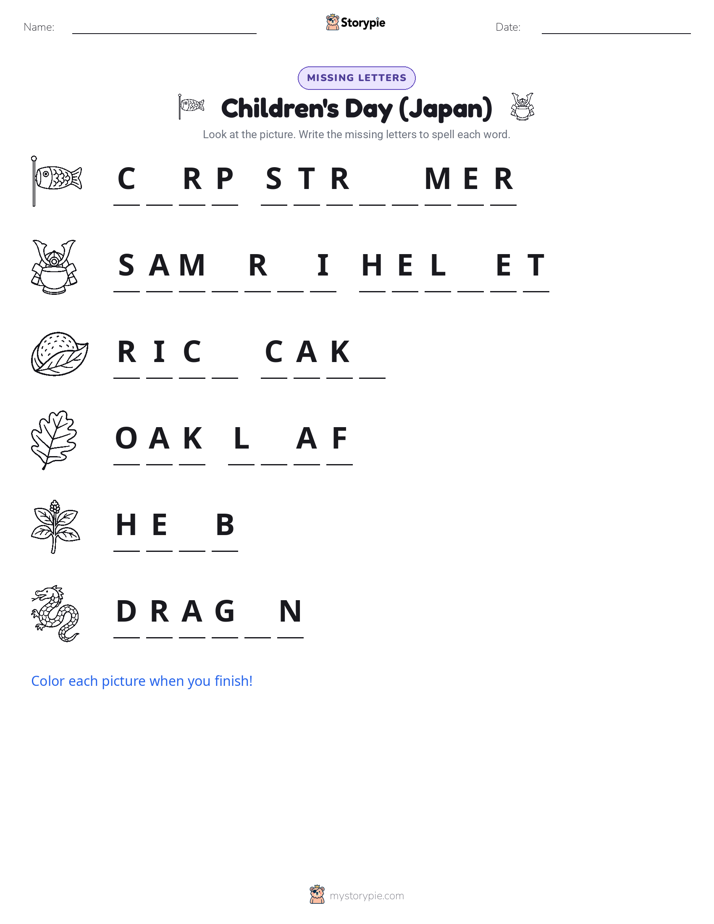
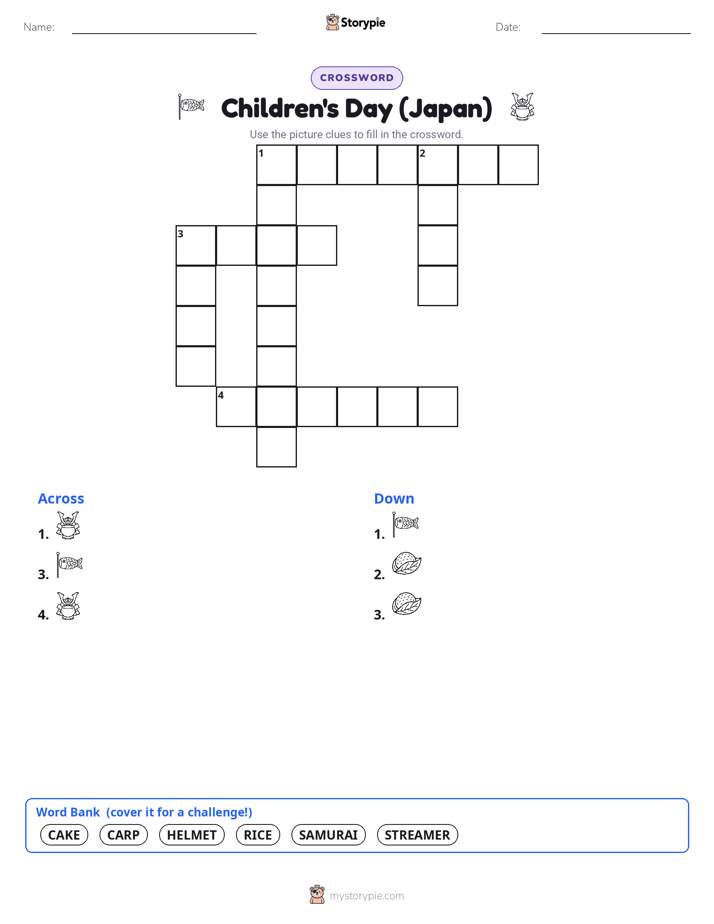
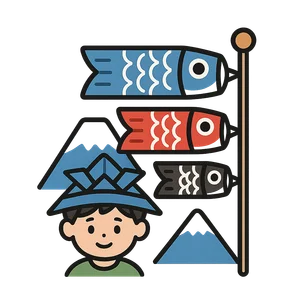
Hello, my name is Kenji. Today is my favorite day of the entire year. It’s May 5th, and if you looked out my window, you would think that fish had learned to fly. The sky is full of them. Big, beautiful fish made of cloth, swimming in the wind. We call them koinobori, which means ‘carp streamers.’ At the very top of the pole is the biggest one, a strong black carp, which represents my father. Below him is a slightly smaller, red carp for my mother. Then there’s one for me, and a smaller one for my little sister, Hana. They dance and twist in the breeze, their paper scales shimmering in the sun. Seeing them fill the sky makes my chest puff out with pride. This is a special day for my family, a day full of joy, and those colorful carp are a sign to the whole neighborhood that we are celebrating something wonderful.
My grandfather, who I call Ojiisan, came to sit with me by the window. He smiled as he watched the koinobori. 'Ojiisan,' I asked, 'why do we fly fish in the sky for just one day?'. He chuckled and told me it was a very old story. 'A very, very long time ago, Kenji, during a time called the Nara period, this day was known as Tango no Sekku. It was a day for getting rid of bad spirits.' He explained that as time went on, especially during the age of the mighty samurai warriors, the holiday changed. It became a special day just for boys. Families would pray that their sons would grow up to be as strong, brave, and honorable as the greatest samurai. He pointed to the corner of our living room where a magnificent samurai helmet, called a kabuto, sat on a special stand. 'We displayed symbols of strength, like helmets and armor, to inspire boys to have a warrior’s spirit.' He told me that on this day, they would also eat special rice dumplings called chimaki, which were wrapped in bamboo leaves for good fortune. It was a day all about hoping boys would become powerful and successful leaders.
The Story of Children's Day
Hello, my name is Kenji. Today is my favorite day of the entire year. It’s May 5th, and if you looked out my window, you would think that fish had learned to fly. The sky is full of them. Big, beautiful fish made of cloth, swimming in the wind. We call them koinobori, which means ‘carp streamers.’ At the very top of the pole is the biggest one, a strong black carp, which represents my father. Below him is a slightly smaller, red carp for my mother. Then there’s one for me, and a smaller one for my little sister, Hana. They dance and twist in the breeze, their paper scales shimmering in the sun. Seeing them fill the sky makes my chest puff out with pride. This is a special day for my family, a day full of joy, and those colorful carp are a sign to the whole neighborhood that we are celebrating something wonderful.
My grandfather, who I call Ojiisan, came to sit with me by the window. He smiled as he watched the koinobori. 'Ojiisan,' I asked, 'why do we fly fish in the sky for just one day?'. He chuckled and told me it was a very old story. 'A very, very long time ago, Kenji, during a time called the Nara period, this day was known as Tango no Sekku. It was a day for getting rid of bad spirits.' He explained that as time went on, especially during the age of the mighty samurai warriors, the holiday changed. It became a special day just for boys. Families would pray that their sons would grow up to be as strong, brave, and honorable as the greatest samurai. He pointed to the corner of our living room where a magnificent samurai helmet, called a kabuto, sat on a special stand. 'We displayed symbols of strength, like helmets and armor, to inspire boys to have a warrior’s spirit.' He told me that on this day, they would also eat special rice dumplings called chimaki, which were wrapped in bamboo leaves for good fortune. It was a day all about hoping boys would become powerful and successful leaders.
'But Ojiisan,' I said, looking over at my sister who was drawing a picture of our family’s koinobori, 'Hana celebrates with us. Is it her special day, too?'. He nodded with a warm smile. 'It is now, Kenji. And that is a very important part of the story. After a big war that ended many years ago, the leaders of Japan decided it was time for another change. On May 4th, 1948, they made a new law. They officially renamed the holiday ‘Kodomo no Hi,’ which means Children’s Day.' He explained that they wanted it to be a day to honor all children, both boys and girls, and to celebrate their happiness and good health. It was no longer just about boys becoming warriors, but about every child growing up happy and with their own unique personality. Thinking about this made me happy. I love celebrating with my sister. Later, our whole family shared kashiwa-mochi, which are sweet rice cakes filled with red bean paste and wrapped in strong oak leaves. Eating them together felt like the perfect way to celebrate all of us.
I looked back at the carp streamers, which seemed to be swimming even more energetically in the wind. Now I understood their true meaning. Ojiisan had told me about an old legend of a carp that was so determined and strong that it swam all the way up a powerful, rushing waterfall. When it reached the top, the gods were so impressed that they turned the carp into a mighty dragon. The koinobori weren't just decorations; they were a reminder for me and Hana to always be strong, to never give up, and to chase our dreams, no matter how hard it seems. Children's Day is about family and celebrating every child’s future.
Wow facts
About
A Japanese national holiday celebrated annually on May 5th to respect children's personalities, celebrate their happiness, and wish for their healthy growth.
Take a Quiz
Question 1 of 5
In the story, Kenji's grandfather says the holiday celebrated boys, wishing for them to be 'strong and brave like warriors.' What is another word for 'brave'?
Explore next


Want to do even more?
Go beyond exploring. Unlock tools that turn every story into real learning.

Storypie Plus for families
Full stories, quizzes, and printables. Nights and car rides, sorted.
- Unlimited audio stories
- Create Mode: your child stars in the story
- Offline downloads
- Printable worksheets & coloring pages

Why Storypie for Schools
Students engaged. Prep in seconds. Evenings back to you.
- Worksheets & Quizzes
- Classroom Management
- Formative Assessment
- Custom Curriculum & Lesson Plans
- 27 Languages

Why Storypie for Homeschool
Curriculum done. They'll ask for more. Hours back in your day.
- Worksheet Generator
- First-Person Audio Stories
- Built-in Comprehension Quizzes
- Custom Curriculum & Lesson Plans
- Print & Go Activities