English

Civil Rights Act of 1964
The Civil Rights Act of 1964 is a landmark U.S.
Reads at Grades 6–8 Listens at Grades 4–8
Print & create
Answer keys·No prep·Free with an account
28 worksheets · answer keys · full story · quiz · Ages 10-12 · CEFR B2
Plus adds 102,000+ more stories in 27 languages, audio for every one, and printables for all of them.
Just want Civil Rights Act of 1964?
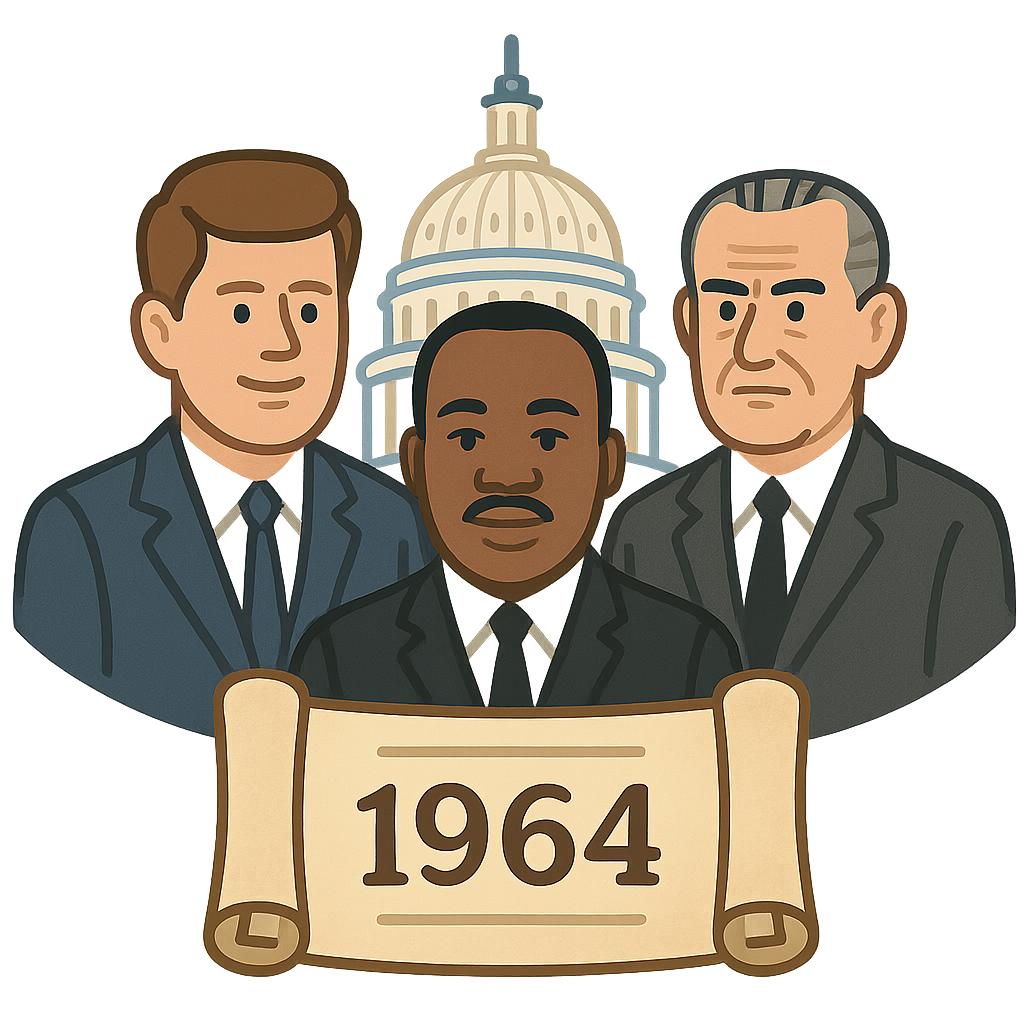
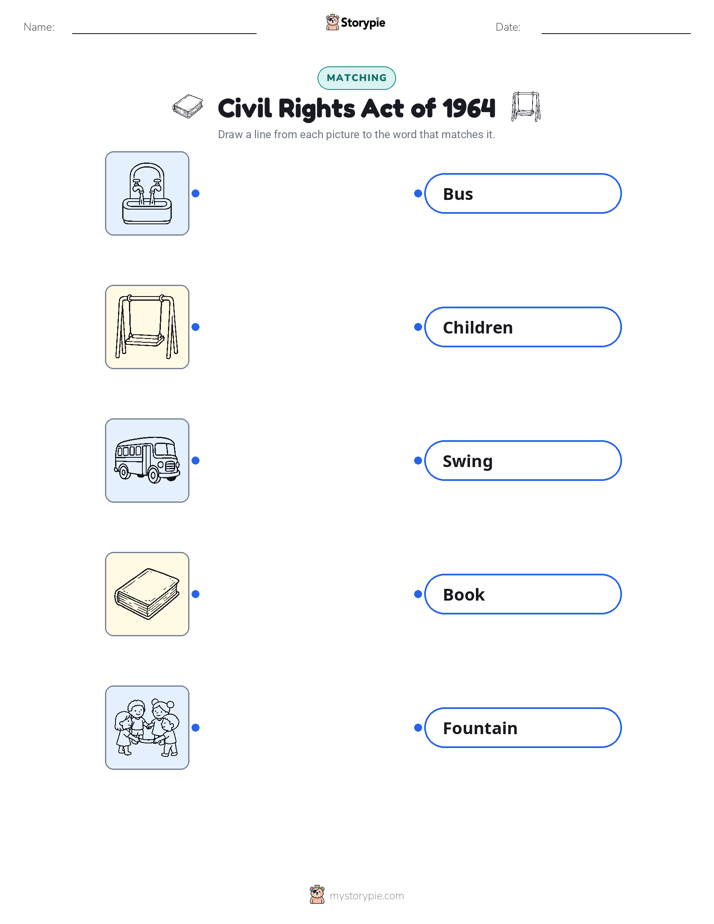
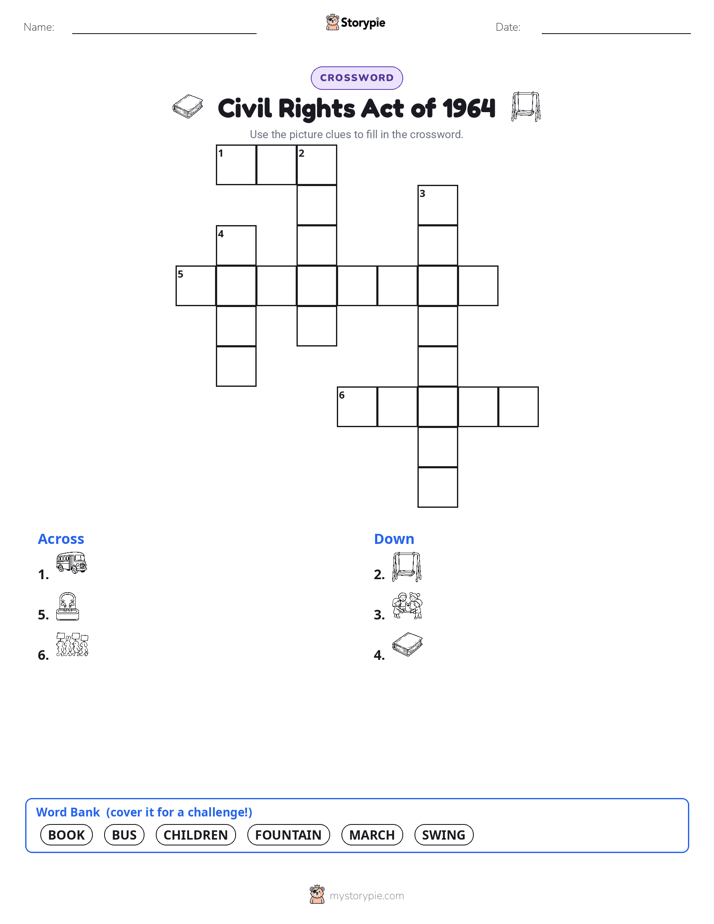
My name is Martin Luther King Jr., and I grew up in a world that was divided by the color of a person’s skin. I was born in Atlanta, Georgia, on January 15th, 1929. As a boy, I didn't always understand the rules that governed my life, but I felt their sting. These rules were part of a system called segregation, enforced by what were known as Jim Crow laws. Imagine going to a park and seeing a sign that says you can't play on the swings simply because of the color of your skin. Imagine being thirsty on a hot day and seeing two water fountains, one labeled 'White' and one labeled 'Colored,' and knowing you were only allowed to use one. We had separate schools, separate restaurants, and separate sections on buses. This system sent a painful message: that some people were considered less valuable than others. But my parents and my faith taught me something different. They taught me that every single person has worth and dignity. I came to believe deeply in the promise of our nation, a promise that all people are created equal. I dreamed of a day when my own four little children would not be judged by the color of their skin but by the content of their character. This dream wasn't just for my family; it was for all of America. It was clear that to make this dream a reality, we couldn't just wish for it. We needed to change the laws of the land to reflect the true meaning of justice and fairness for everyone. The journey to change those laws would require courage, faith, and a powerful belief in a better future.
A Law for All People
My name is Martin Luther King Jr., and I grew up in a world that was divided by the color of a person’s skin. I was born in Atlanta, Georgia, on January 15th, 1929. As a boy, I didn't always understand the rules that governed my life, but I felt their sting. These rules were part of a system called segregation, enforced by what were known as Jim Crow laws. Imagine going to a park and seeing a sign that says you can't play on the swings simply because of the color of your skin. Imagine being thirsty on a hot day and seeing two water fountains, one labeled 'White' and one labeled 'Colored,' and knowing you were only allowed to use one. We had separate schools, separate restaurants, and separate sections on buses. This system sent a painful message: that some people were considered less valuable than others. But my parents and my faith taught me something different. They taught me that every single person has worth and dignity. I came to believe deeply in the promise of our nation, a promise that all people are created equal. I dreamed of a day when my own four little children would not be judged by the color of their skin but by the content of their character. This dream wasn't just for my family; it was for all of America. It was clear that to make this dream a reality, we couldn't just wish for it. We needed to change the laws of the land to reflect the true meaning of justice and fairness for everyone. The journey to change those laws would require courage, faith, and a powerful belief in a better future.
To change an unjust system, we needed to show the world the truth of our struggle. We chose the path of nonviolent protest. Some people thought we should fight back with anger and fists, but I believed that love and peace were more powerful weapons. We organized marches, sit-ins at lunch counters where we weren't allowed to eat, and boycotts of businesses that treated us unfairly. Our goal was to create a tension that society could no longer ignore. In the spring of 1963, we held a series of demonstrations in Birmingham, Alabama, one of the most segregated cities in America. The courage I witnessed there was astounding. Even children and teenagers joined the marches, peacefully facing angry crowds and police forces because they believed so strongly in the cause of freedom. Their bravery helped open the eyes of the nation. Later that year, on August 28th, 1963, we organized the March on Washington for Jobs and Freedom. It was a day I will never forget. Standing on the steps of the Lincoln Memorial, I looked out at a sea of more than 250,000 people, black and white, young and old, who had gathered together. They came from all corners of the country to demand justice. As I spoke that day, I shared my dream for America. I spoke of a future where freedom and equality were not just words in a book, but a reality for all of God's children. It was a powerful moment, not because of my words, but because of the unified spirit of the people who stood together, showing the government and the world that the time for change had come.
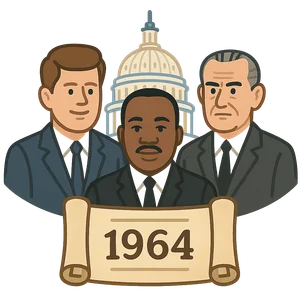
Our peaceful protests and the March on Washington sent a clear message to our leaders. President John F. Kennedy, who had seen the injustice on television and heard the voices of the people, proposed a strong new civil rights bill. He believed it was time for the nation to live up to its founding principles. Tragically, President Kennedy was assassinated in November of 1963, and a great sadness fell over the country. But our cause did not die with him. The new president, Lyndon B. Johnson, took up the fight with great determination. He told the nation that there was no more fitting memorial to President Kennedy than the passage of the civil rights bill. After much debate and resistance in Congress, the day of victory finally arrived. On July 2nd, 1964, President Johnson signed the Civil Rights Act into law. I was honored to be there to witness that historic moment. This new law was a giant step forward. It officially outlawed segregation in public places like hotels, restaurants, and theaters. It also aimed to end discrimination in employment, meaning people could not be denied a job because of their race, color, religion, or gender. It was a promise of a fairer America. But I knew then, as I know now, that a law alone cannot change people's hearts. The signing of that act was not the end of our journey, but a new beginning. The work for true equality continues in every generation, and it is up to each of you to carry on the dream of building a world filled with fairness, justice, and love for all.
Wow facts
About
The Civil Rights Act of 1964 is a landmark U.S. federal law that outlaws discrimination based on race, color, religion, sex, or national origin. It was a pivotal achievement of the Civil Rights Movement.
Take a Quiz
Question 1 of 5
Based on the story, summarize the main goal of the Civil Rights Movement.
Explore next





Want to do even more?
Go beyond exploring. Unlock tools that turn every story into real learning.

Storypie Plus for families
Full stories, quizzes, and printables. Nights and car rides, sorted.
- Unlimited audio stories
- Create Mode: your child stars in the story
- Offline downloads
- Printable worksheets & coloring pages

Why Storypie for Schools
Students engaged. Prep in seconds. Evenings back to you.
- Worksheets & Quizzes
- Classroom Management
- Formative Assessment
- Custom Curriculum & Lesson Plans
- 27 Languages

Why Storypie for Homeschool
Curriculum done. They'll ask for more. Hours back in your day.
- Worksheet Generator
- First-Person Audio Stories
- Built-in Comprehension Quizzes
- Custom Curriculum & Lesson Plans
- Print & Go Activities