English

Día de los Muertos
A multi-day Mexican holiday celebrating the lives of deceased loved ones…
Reads at Grades 3–5 Listens at Grades 1–5
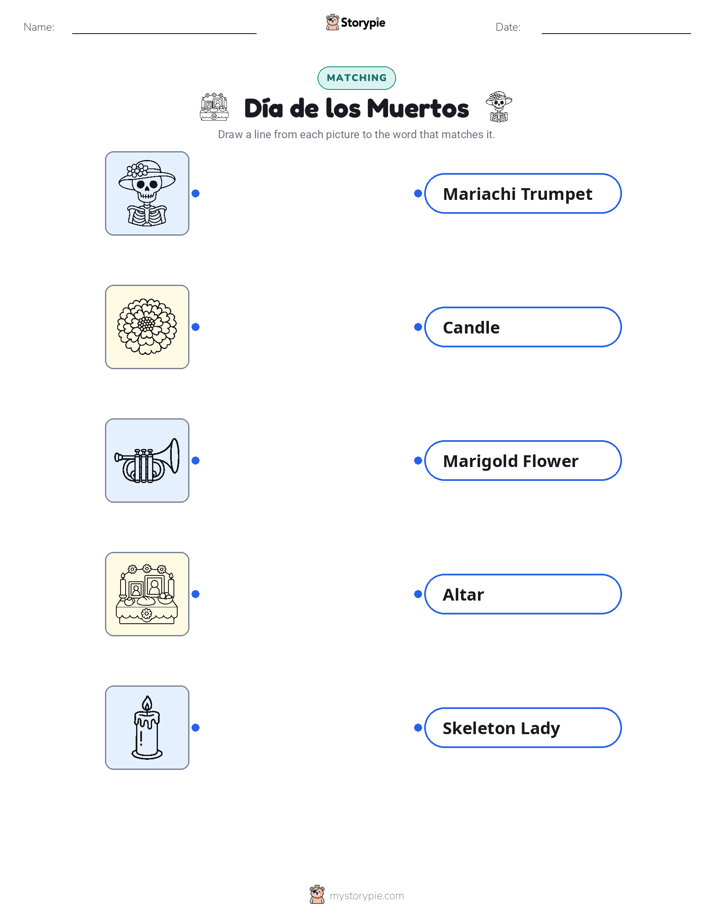
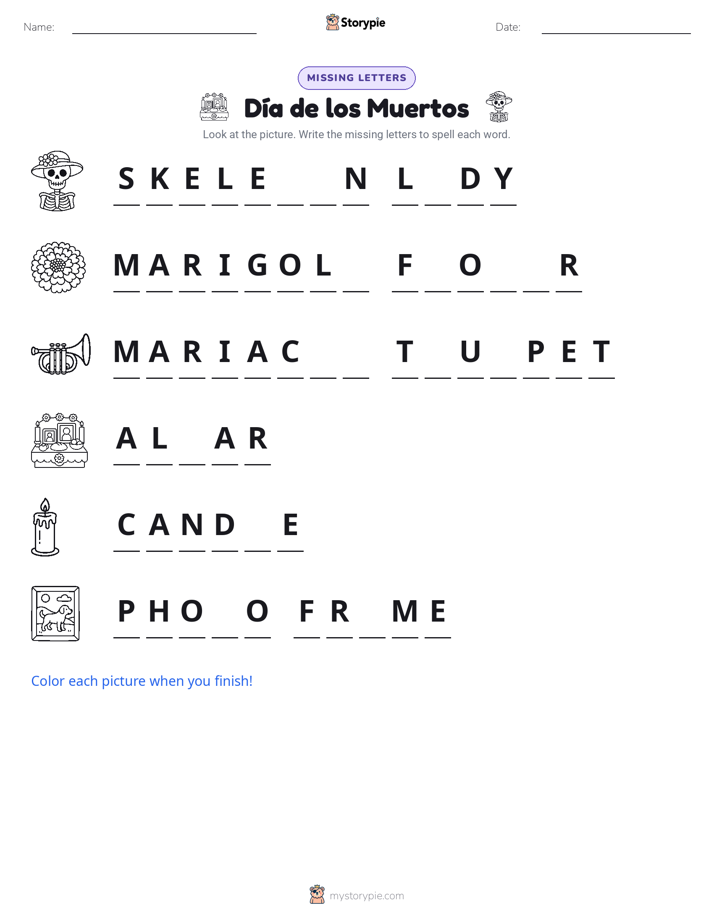
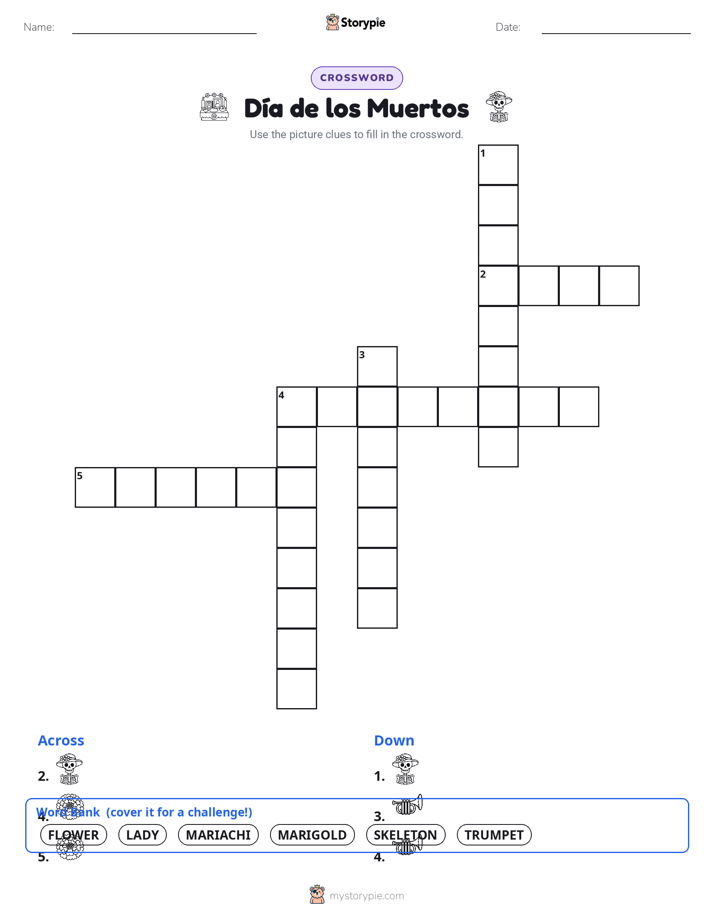
Print & create
Answer keys·No prep·Free with an account
28 worksheets · answer keys · full story · quiz · Ages 8-10 · CEFR B1
Plus adds 116,000+ more stories in 27 languages, audio for every one, and printables for all of them.
Just want Día de los Muertos?
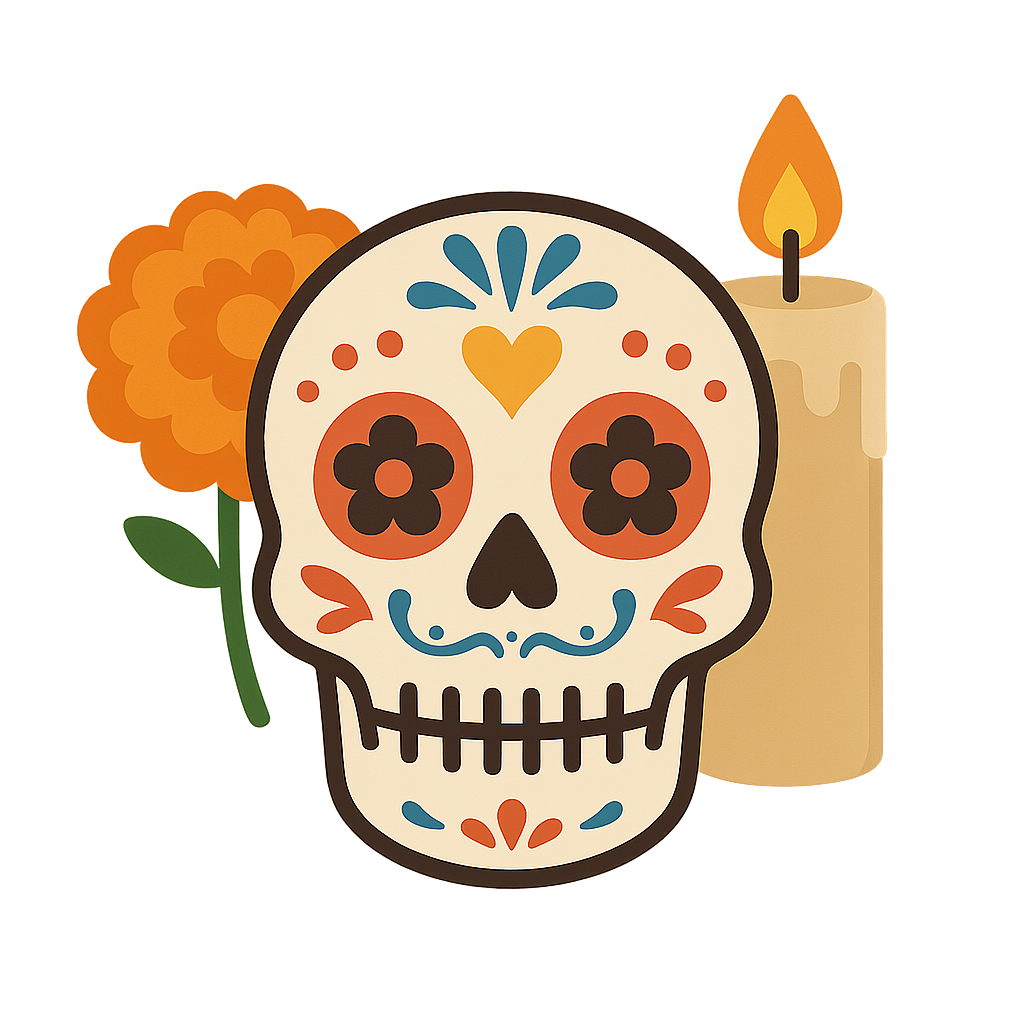
Hello, my dear. Come closer. The air is sweet with the smell of baking bread and the earthy scent of marigolds. My name is Abuela Elena, and this is my favorite time of year. Today, we prepare for Día de los Muertos, the Day of the Dead. It may sound like a sad day, but it is one of the most joyful celebrations we have. All around us, you can see bright colors, from the fluttering paper banners called papel picado to the brilliant orange of the cempasúchil flowers. This is a happy time to remember our family who are no longer with us. We are going to build an ofrenda, which is a special altar. Think of it as a bridge, not made of wood or stone, but of love and memories. It’s a bridge that connects us to our ancestors, inviting them to come home for a short visit. Will you help me build it? Every piece we add tells a part of their story and a part of ours.
This celebration is very old, older than even I can imagine. Its roots go back thousands of years, to my ancestors, the Aztec people who lived in what is now Mexico. They believed that life and death were part of the same beautiful cycle. They held a month-long festival to honor those who had passed away and to celebrate the powerful queen of the underworld, who they believed watched over the spirits. They didn't see death as an end, but as a new beginning in a different place. Many, many years later, people from Spain came to our lands. They brought their own traditions with them, including two special days. On November 1st, they honored children who had passed away, a day they called All Saints' Day. The very next day, on November 2nd, they remembered the adults on All Souls' Day. Instead of choosing one way over the other, our ancestors found a beautiful way to bring them together. The Aztec love for family and the Spanish traditions mixed like colors in a painting, creating the wonderful Día de los Muertos we celebrate today.
A Bridge of Golden Petals
Hello, my dear. Come closer. The air is sweet with the smell of baking bread and the earthy scent of marigolds. My name is Abuela Elena, and this is my favorite time of year. Today, we prepare for Día de los Muertos, the Day of the Dead. It may sound like a sad day, but it is one of the most joyful celebrations we have. All around us, you can see bright colors, from the fluttering paper banners called papel picado to the brilliant orange of the cempasúchil flowers. This is a happy time to remember our family who are no longer with us. We are going to build an ofrenda, which is a special altar. Think of it as a bridge, not made of wood or stone, but of love and memories. It’s a bridge that connects us to our ancestors, inviting them to come home for a short visit. Will you help me build it? Every piece we add tells a part of their story and a part of ours.
This celebration is very old, older than even I can imagine. Its roots go back thousands of years, to my ancestors, the Aztec people who lived in what is now Mexico. They believed that life and death were part of the same beautiful cycle. They held a month-long festival to honor those who had passed away and to celebrate the powerful queen of the underworld, who they believed watched over the spirits. They didn't see death as an end, but as a new beginning in a different place. Many, many years later, people from Spain came to our lands. They brought their own traditions with them, including two special days. On November 1st, they honored children who had passed away, a day they called All Saints' Day. The very next day, on November 2nd, they remembered the adults on All Souls' Day. Instead of choosing one way over the other, our ancestors found a beautiful way to bring them together. The Aztec love for family and the Spanish traditions mixed like colors in a painting, creating the wonderful Día de los Muertos we celebrate today.
Now, let’s begin building our bridge of memories. The ofrenda is the heart of our celebration. First, we place a photograph of my own abuelos, your great-grandparents. Look at their kind smiles. This helps us remember their faces and the joy they brought into our lives. Next, we add their favorite things. My abuelo loved tamales, so we will place a warm one here for him. My abuela made the best mole, a rich, dark sauce, so we will add a small dish of it. The smells will welcome them home. Spirits get thirsty on their long journey, so we must place a glass of fresh water for them. And here is the pan de muerto, or 'bread of the dead.' It’s a sweet bread, and the shape on top looks like bones to honor our ancestors. We also have colorful sugar skulls, which we call calaveras. See how they are decorated with bright frosting and sparkly sequins? They are not meant to be scary. They remind us that death is just another part of life, and it can be sweet. Finally, we take these bright cempasúchil petals and lay a path from the front door all the way to our ofrenda. Their vibrant color and strong scent act like a map, guiding the spirits home to us.
Our celebration doesn't stay inside our home. It fills our whole community. On the night of November 2nd, we will go to the cemetery together. We will join other families who are cleaning the graves of their loved ones, decorating them with more flowers, candles, and special trinkets. We will share a meal right there, telling funny stories about my abuelo and singing the songs my abuela used to love. Music will fill the air, and the entire cemetery will glow with the light of hundreds of candles. It is a beautiful party, a reunion of the living and the spirits. Día de los Muertos teaches us a very important lesson: as long as we remember our loved ones and tell their stories, they are never truly gone. Their love and their memory stay alive inside of us, connecting our family forever across the bridge of golden petals.
Wow facts
About
A multi-day Mexican holiday celebrating the lives of deceased loved ones, blending indigenous Aztec rituals with Spanish Catholic traditions.
Take a Quiz
Question 1 of 5
In the story, the ofrenda is described as a 'bridge of love and memory.' What does this phrase mean?
Explore next


Want to do even more?
Go beyond exploring. Unlock tools that turn every story into real learning.

Storypie Plus for families
Full stories, quizzes, and printables. Nights and car rides, sorted.
- Unlimited audio stories
- Create Mode: your child stars in the story
- Offline downloads
- Printable worksheets & coloring pages

Why Storypie for Schools
Students engaged. Prep in seconds. Evenings back to you.
- Worksheets & Quizzes
- Classroom Management
- Formative Assessment
- Custom Curriculum & Lesson Plans
- 27 Languages

Why Storypie for Homeschool
Curriculum done. They'll ask for more. Hours back in your day.
- Worksheet Generator
- First-Person Audio Stories
- Built-in Comprehension Quizzes
- Custom Curriculum & Lesson Plans
- Print & Go Activities