English

Día de los Muertos
A multi-day Mexican holiday celebrating the lives of deceased loved ones…
Reads at Grades 6–8 Listens at Grades 4–8
Print & create
Answer keys·No prep·Free with an account
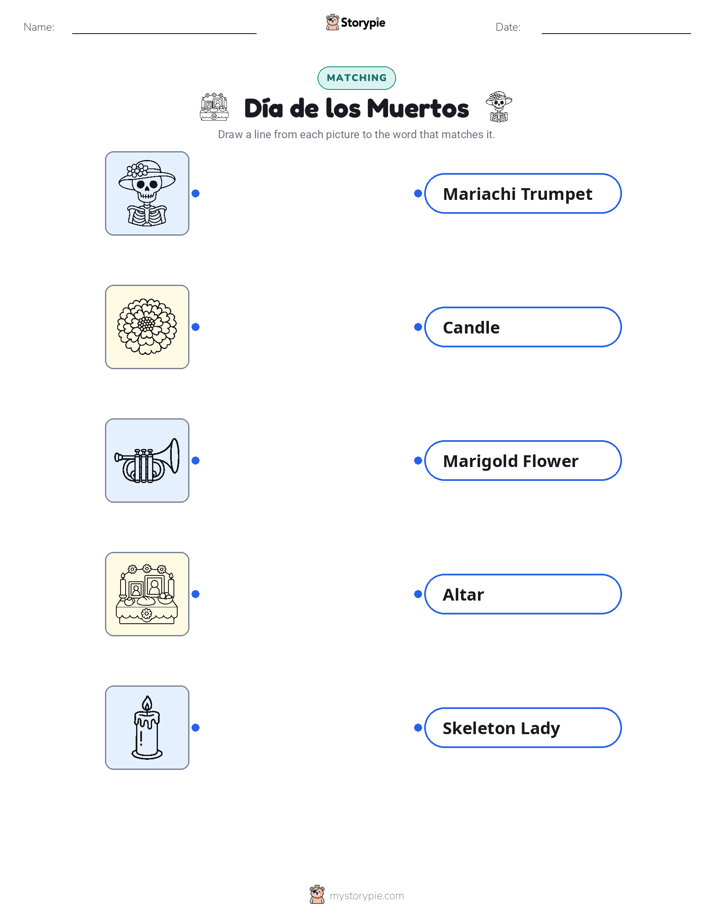
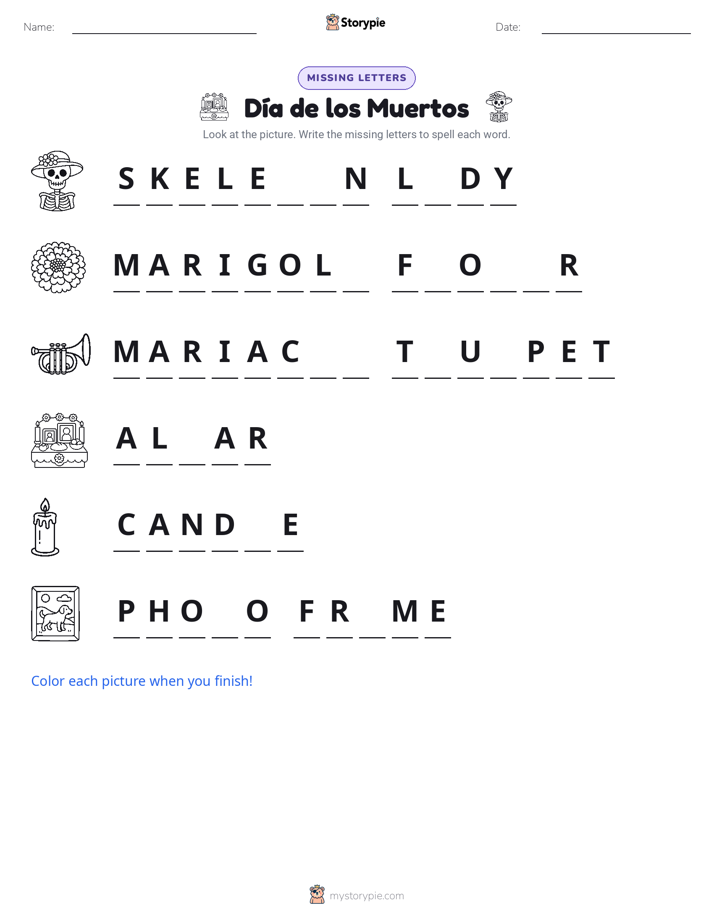
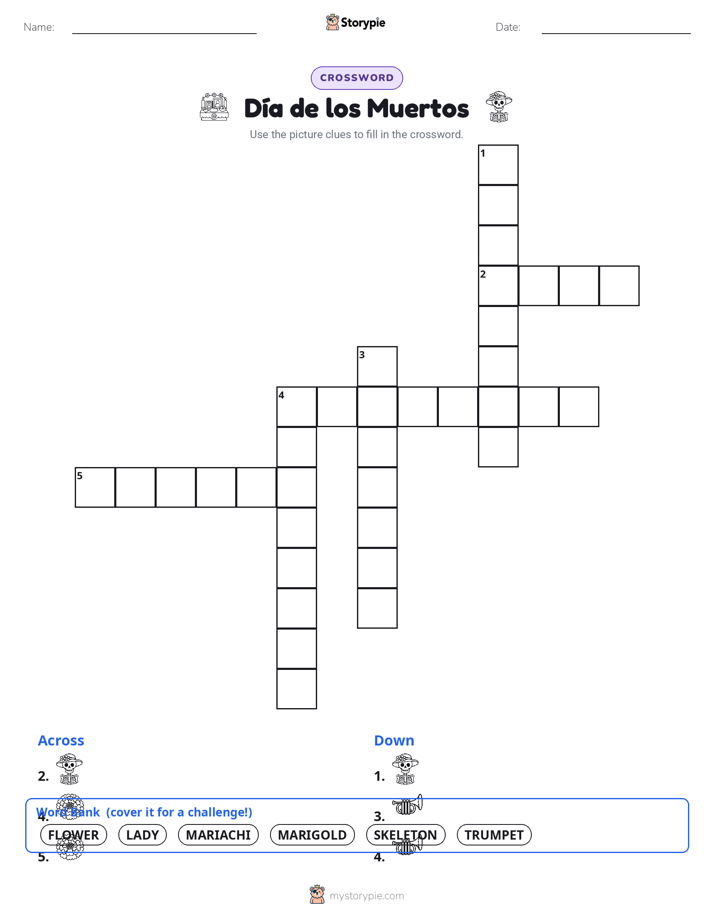
28 worksheets · answer keys · full story · quiz · Ages 10-12 · CEFR B2
Plus adds 116,000+ more stories in 27 languages, audio for every one, and printables for all of them.
Just want Día de los Muertos?
Hello there. You might know me. I am the tall, elegant skeleton lady in the fancy hat adorned with flowers. I am La Calavera Catrina, and I am a spirit of remembrance. Come, walk with me. Can you smell that? It is the sweet, earthy scent of cempasúchil, the marigold flower, which we call the flower of the dead. Its bright orange and yellow petals create a path to guide the spirits of our loved ones home. Listen to the joyful music of the mariachi bands and the happy chatter of families sharing stories. This is Día de los Muertos, the Day of the Dead, a time not for sorrow, but for celebration. You see, many people think of death as a sad and frightening end, but here, we see it differently. It is a natural, inevitable part of life's journey. I was created to remind everyone of this simple truth. Beneath our clothes, our jobs, and our worries, we are all the same. Rich or poor, famous or humble, we are all skeletons underneath. My purpose is to be a symbol of this great equality and to welcome the souls who return for this brief, beautiful reunion on the 1st and 2nd of November each year.
Our tradition of honoring the dead is not a new one. Its roots run deep into the soil of Mexico, stretching back over 3,000 years. Long before the Spanish arrived, the indigenous peoples of this land, like the Aztecs, held a very different view of the afterlife. For them, death was not an end but a continuation. They believed that the souls of the dead journeyed to a resting place called Mictlán. To honor them, they held a month-long festival each year, presided over by the goddess Mictecacihuatl, the powerful Lady of the Dead. She was the queen of the underworld, and her festival was filled with offerings, dances, and ceremonies to honor those who had passed on. Then, in the 1500s, everything began to change. Spanish explorers and missionaries arrived, bringing with them their own beliefs and traditions, particularly Catholicism. They saw the indigenous festivals as strange and tried to replace them with their own holy days. They introduced All Saints' Day on November 1st, to honor the saints and deceased children, and All Souls' Day on November 2nd, to pray for the souls of all the departed adults. But our ancient ways were too strong to simply disappear. Instead of being erased, our traditions blended with theirs. The month-long celebration was shortened to two days, aligning perfectly with the Catholic holidays. The result was a beautiful hybrid celebration, a fusion of two worlds that created the Día de los Muertos we know today.
A Bridge of Marigolds
Hello there. You might know me. I am the tall, elegant skeleton lady in the fancy hat adorned with flowers. I am La Calavera Catrina, and I am a spirit of remembrance. Come, walk with me. Can you smell that? It is the sweet, earthy scent of cempasúchil, the marigold flower, which we call the flower of the dead. Its bright orange and yellow petals create a path to guide the spirits of our loved ones home. Listen to the joyful music of the mariachi bands and the happy chatter of families sharing stories. This is Día de los Muertos, the Day of the Dead, a time not for sorrow, but for celebration. You see, many people think of death as a sad and frightening end, but here, we see it differently. It is a natural, inevitable part of life's journey. I was created to remind everyone of this simple truth. Beneath our clothes, our jobs, and our worries, we are all the same. Rich or poor, famous or humble, we are all skeletons underneath. My purpose is to be a symbol of this great equality and to welcome the souls who return for this brief, beautiful reunion on the 1st and 2nd of November each year.
Our tradition of honoring the dead is not a new one. Its roots run deep into the soil of Mexico, stretching back over 3,000 years. Long before the Spanish arrived, the indigenous peoples of this land, like the Aztecs, held a very different view of the afterlife. For them, death was not an end but a continuation. They believed that the souls of the dead journeyed to a resting place called Mictlán. To honor them, they held a month-long festival each year, presided over by the goddess Mictecacihuatl, the powerful Lady of the Dead. She was the queen of the underworld, and her festival was filled with offerings, dances, and ceremonies to honor those who had passed on. Then, in the 1500s, everything began to change. Spanish explorers and missionaries arrived, bringing with them their own beliefs and traditions, particularly Catholicism. They saw the indigenous festivals as strange and tried to replace them with their own holy days. They introduced All Saints' Day on November 1st, to honor the saints and deceased children, and All Souls' Day on November 2nd, to pray for the souls of all the departed adults. But our ancient ways were too strong to simply disappear. Instead of being erased, our traditions blended with theirs. The month-long celebration was shortened to two days, aligning perfectly with the Catholic holidays. The result was a beautiful hybrid celebration, a fusion of two worlds that created the Día de los Muertos we know today.
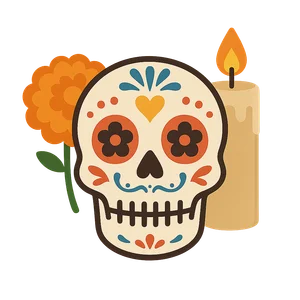
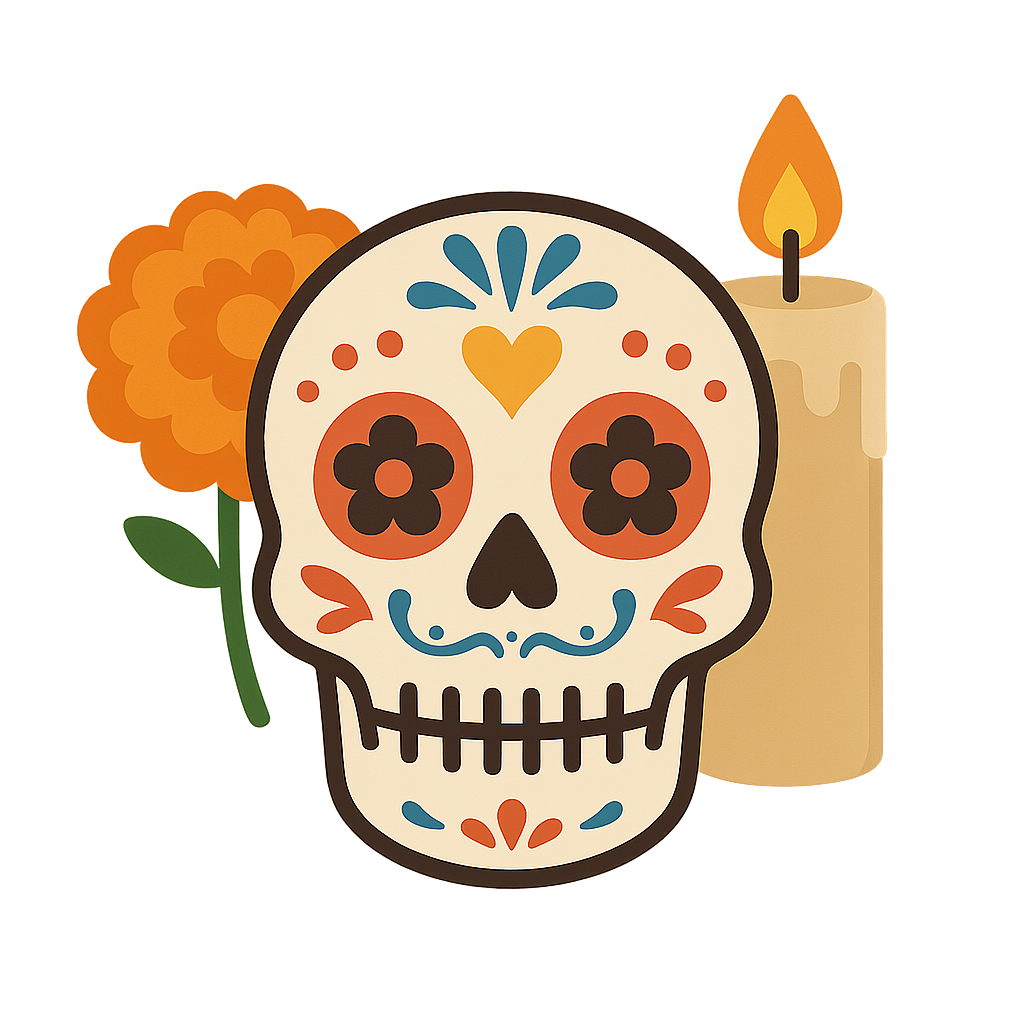
Now, as for my own story, I am much younger than the celebration I represent. I was born from ink and paper around the year 1910. My creator was a brilliant printmaker named José Guadalupe Posada. At that time, Mexico was on the verge of a great revolution, and many people were questioning what it meant to be Mexican. Posada drew me as a satirical sketch he called 'La Calavera Garbancera.' I was meant to gently poke fun at people who, despite their indigenous roots, tried to imitate European high society, wearing fancy French hats while forgetting their own rich culture. For a time, I was just one of his many clever drawings. But decades later, in 1947, the great muralist Diego Rivera painted me into his masterpiece, 'Dream of a Sunday Afternoon in the Alameda Central.' He gave me an elegant feather boa, a full Victorian-style dress, and a new name: La Catrina. From that moment on, I became the grand dame of Día de los Muertos. My image now inspires the sugar skulls, or calaveras, that families decorate, and the elaborate face paint you see everywhere. I watch over the modern traditions, like the building of ofrendas, or altars, in homes. These aren't for worship, but are beautiful displays of love, decorated with photos, candles, the favorite foods and drinks of the departed, and of course, paths of marigold petals to lead them home from the spirit world.
A Bridge of Memory and Love
So you see, Día de los Muertos is more than just a festival with colorful skulls and flowers. It is a profound declaration that our relationships with those we love do not end when they leave this world. The ofrendas we build, the food we share, and the stories we tell are all part of a vibrant bridge of memory that connects us to them. Each year, on November 1st and 2nd, that bridge, paved with marigold petals and lit by candlelight, allows our loved ones to cross back over and be with us once more. It is a celebration of the unending circle of life and death, and a testament to the fact that love, like memory, never truly dies. It is a time to remember, to honor, and to celebrate the lives that touched our own.
Wow facts
About
A multi-day Mexican holiday celebrating the lives of deceased loved ones, blending indigenous Aztec rituals with Spanish Catholic traditions.
Take a Quiz
Question 1 of 5
What was José Guadalupe Posada's original motivation for creating the character who would later become La Catrina?
Explore next


Want to do even more?
Go beyond exploring. Unlock tools that turn every story into real learning.

Storypie Plus for families
Full stories, quizzes, and printables. Nights and car rides, sorted.
- Unlimited audio stories
- Create Mode: your child stars in the story
- Offline downloads
- Printable worksheets & coloring pages

Why Storypie for Schools
Students engaged. Prep in seconds. Evenings back to you.
- Worksheets & Quizzes
- Classroom Management
- Formative Assessment
- Custom Curriculum & Lesson Plans
- 27 Languages

Why Storypie for Homeschool
Curriculum done. They'll ask for more. Hours back in your day.
- Worksheet Generator
- First-Person Audio Stories
- Built-in Comprehension Quizzes
- Custom Curriculum & Lesson Plans
- Print & Go Activities