English

Día de los Muertos
A multi-day Mexican holiday celebrating the lives of deceased loved ones…
Reads at Grades K-2 Listens at K–3
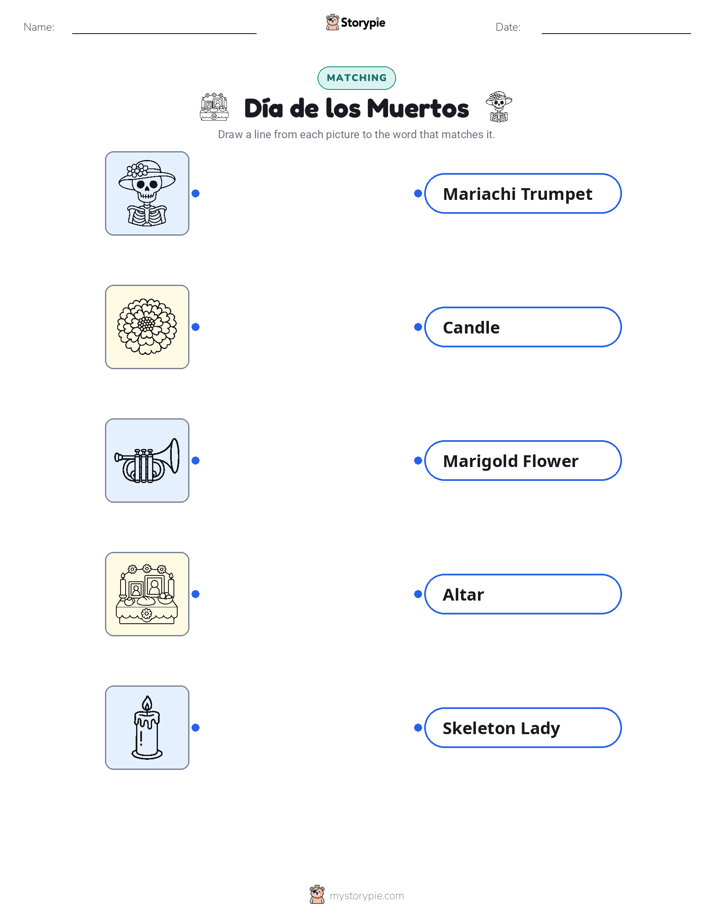
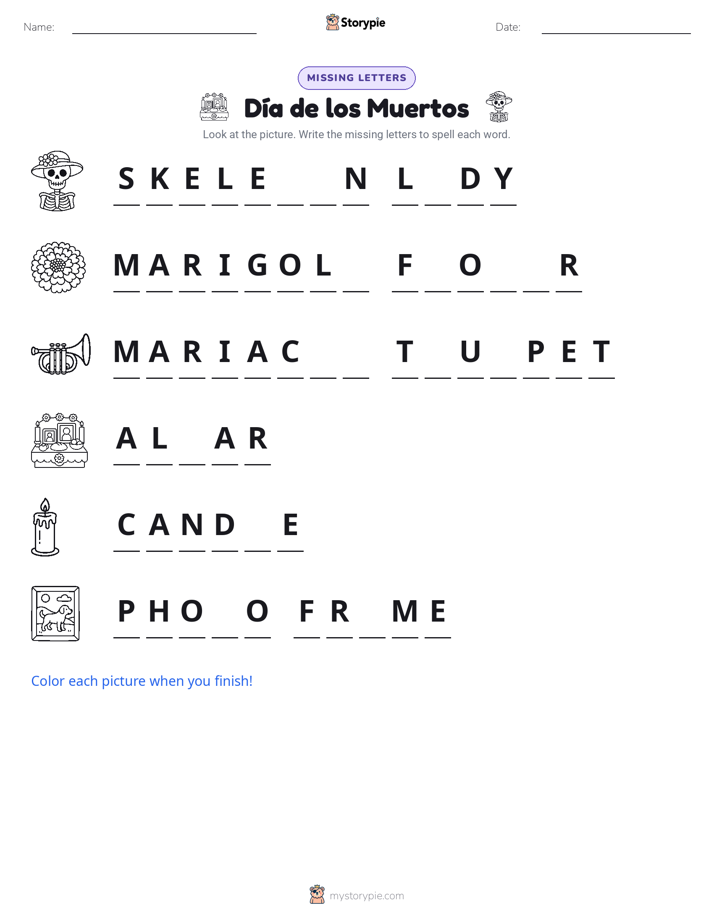
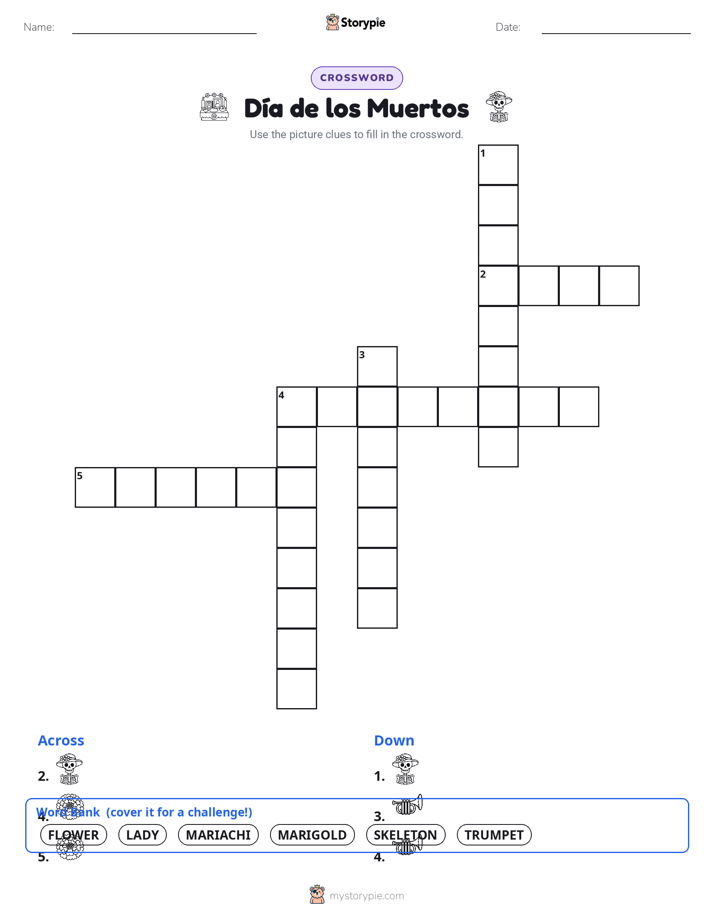
Print & create
Answer keys·No prep·Free with an account
28 worksheets · answer keys · full story · quiz · Ages 6-8 · CEFR A2
Plus adds 116,000+ more stories in 27 languages, audio for every one, and printables for all of them.
Just want Día de los Muertos?
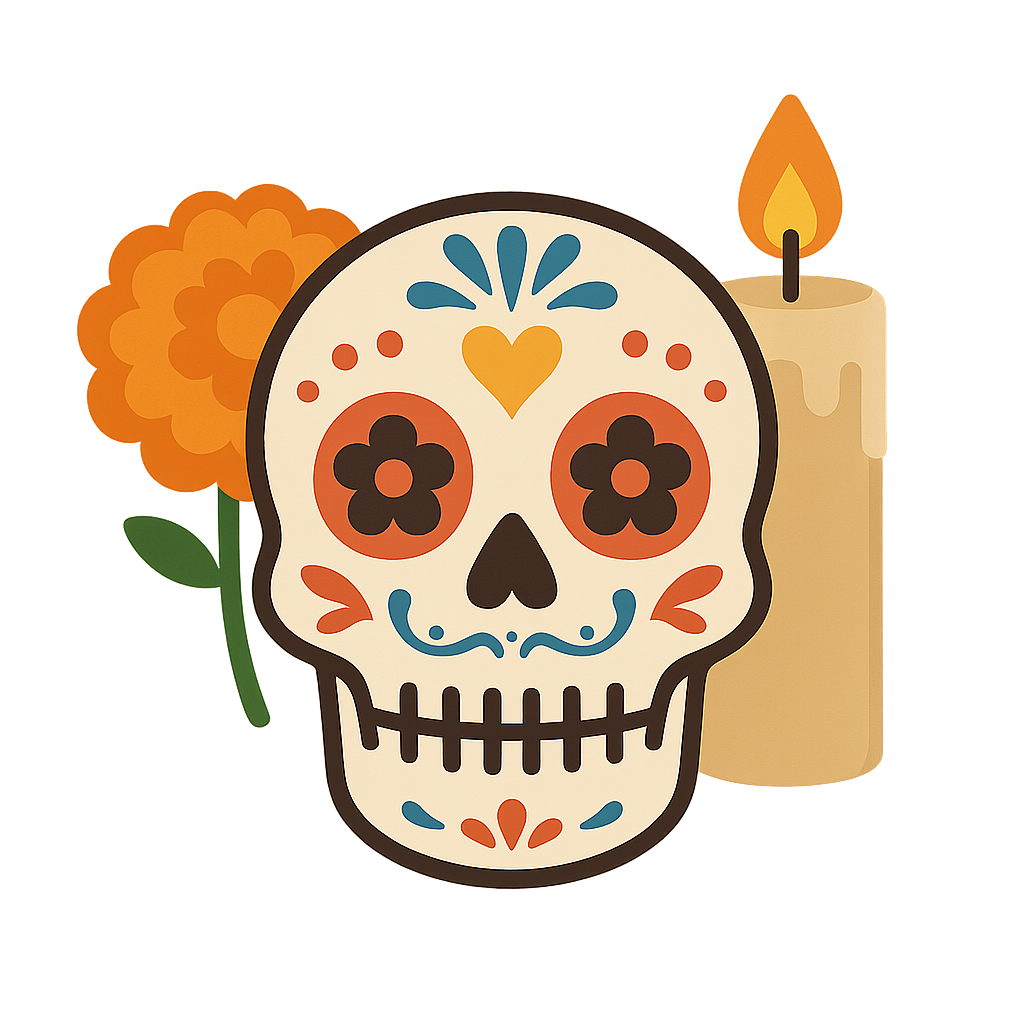
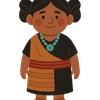
Hello, my little one. I am an Abuela, which means grandmother, and I want to tell you about my favorite time of year. As the days get shorter, a special feeling fills the air. It is almost November 1st and 2nd, the time for Día de los Muertos, the Day of the Dead. Our whole house begins to smell sweet, like cinnamon and warm bread, because we are baking pan de muerto, a special bread for our loved ones. Soon, our home will be filled with the bright, happy orange of cempasúchil flowers, which many people call marigolds. Some people think this time of year is scary, but it is not. It is a happy, beautiful time when we welcome the spirits of our family back for a short visit. It is a time for remembering all the love and laughter we shared, and that is never a sad thing.
In our living room, my family and I work together to build something very special. It is called an ofrenda, which is a kind of altar. It is not for being sad, but for building a bridge of memories to our family who are no longer with us. We cover a table with a colorful cloth and place photos of our loved ones on it. There is a picture of your great-grandfather, my abuelo, with his big, warm smile. We place candles all around to light the way, so the spirits can find their way home to us. We also put out water to quench their thirst after their long journey and salt to purify their souls. Most importantly, we fill the ofrenda with their favorite things. I remember my abuelo loved sweet bread with his morning chocolate. So, I place a piece of pan de muerto right next to his picture. "This is for you, Abuelo," I whisper with a smile. Each item is a piece of our love, a way to say, "We remember you, and we miss you." The ofrenda becomes a beautiful bridge of love, connecting us to them.
A Bridge of Marigolds: My Día de los Muertos
Hello, my little one. I am an Abuela, which means grandmother, and I want to tell you about my favorite time of year. As the days get shorter, a special feeling fills the air. It is almost November 1st and 2nd, the time for Día de los Muertos, the Day of the Dead. Our whole house begins to smell sweet, like cinnamon and warm bread, because we are baking pan de muerto, a special bread for our loved ones. Soon, our home will be filled with the bright, happy orange of cempasúchil flowers, which many people call marigolds. Some people think this time of year is scary, but it is not. It is a happy, beautiful time when we welcome the spirits of our family back for a short visit. It is a time for remembering all the love and laughter we shared, and that is never a sad thing.
In our living room, my family and I work together to build something very special. It is called an ofrenda, which is a kind of altar. It is not for being sad, but for building a bridge of memories to our family who are no longer with us. We cover a table with a colorful cloth and place photos of our loved ones on it. There is a picture of your great-grandfather, my abuelo, with his big, warm smile. We place candles all around to light the way, so the spirits can find their way home to us. We also put out water to quench their thirst after their long journey and salt to purify their souls. Most importantly, we fill the ofrenda with their favorite things. I remember my abuelo loved sweet bread with his morning chocolate. So, I place a piece of pan de muerto right next to his picture. "This is for you, Abuelo," I whisper with a smile. Each item is a piece of our love, a way to say, "We remember you, and we miss you." The ofrenda becomes a beautiful bridge of love, connecting us to them.
The celebration continues with a fiesta for the soul. On the night of November 2nd, we go to the cemetery. But it is not a quiet or gloomy place. Tonight, it is full of light, music, and families. It looks like a wonderful party. We work together to clean the graves of our family members and decorate them with blankets of bright orange cempasúchil flowers and glowing candles. We bring a picnic basket full of delicious food and share a meal right there. Someone might start playing a guitar, and we will sing the songs our loved ones used to enjoy. We sit together and tell stories, laughing about funny things they did and remembering all the happy times. We do this to show them they are not forgotten. As long as we share their stories and say their names, their memory stays alive right here, inside our hearts. Día de los Muertos teaches us that our loved ones are never truly gone, because love is stronger than anything.
Wow facts
About
A multi-day Mexican holiday celebrating the lives of deceased loved ones, blending indigenous Aztec rituals with Spanish Catholic traditions.
Take a Quiz
Question 1 of 4
Why does Abuela say Día de los Muertos is a happy time?
Explore next



Want to do even more?
Go beyond exploring. Unlock tools that turn every story into real learning.

Storypie Plus for families
Full stories, quizzes, and printables. Nights and car rides, sorted.
- Unlimited audio stories
- Create Mode: your child stars in the story
- Offline downloads
- Printable worksheets & coloring pages

Why Storypie for Schools
Students engaged. Prep in seconds. Evenings back to you.
- Worksheets & Quizzes
- Classroom Management
- Formative Assessment
- Custom Curriculum & Lesson Plans
- 27 Languages

Why Storypie for Homeschool
Curriculum done. They'll ask for more. Hours back in your day.
- Worksheet Generator
- First-Person Audio Stories
- Built-in Comprehension Quizzes
- Custom Curriculum & Lesson Plans
- Print & Go Activities