English

Hurricane Katrina
Hurricane Katrina was a powerful Category 4 Atlantic hurricane in August 2005 that caused catastrophic damage…
Reads at Grades 6–8 Listens at Grades 4–8
Print & create
Answer keys·No prep·Free with an account
28 worksheets · answer keys · full story · quiz · Ages 10-12 · CEFR B2
Plus adds 279,000+ more stories in 27 languages, audio for every one, and printables for all of them.
Just want Hurricane Katrina?
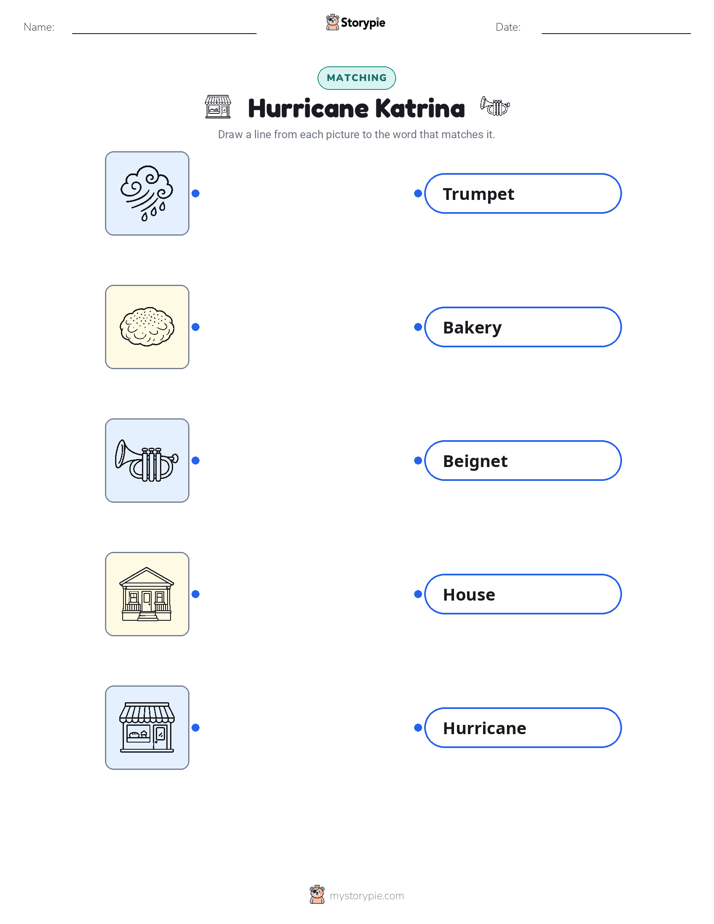
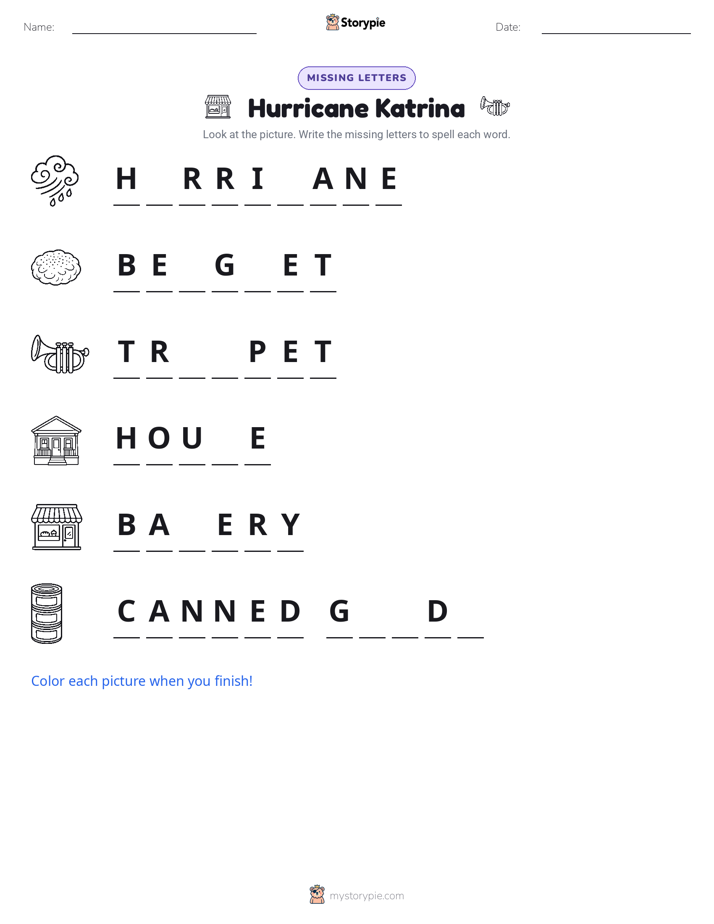
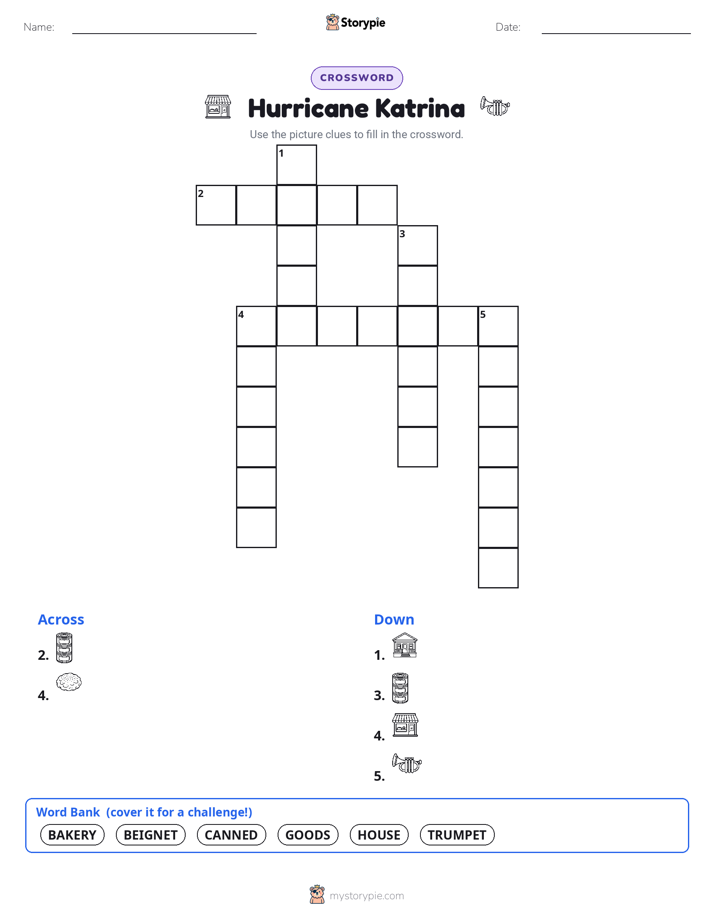
My name is Marie, and back in the summer of 2005, I was fourteen years old. My whole world was the Lower Ninth Ward of New Orleans. It wasn't just a place on a map; it was a rhythm you could feel in your bones. My mornings started with the sweet, powdery scent of beignets from the corner bakery, and my afternoons were filled with the sound of my grandpa's trumpet, practicing jazz tunes on our front porch. Our house was a shotgun-style home, painted a bright, cheerful yellow. Life was loud, colorful, and full of music. We were a community where everyone knew everyone, and a pot of gumbo was always simmering on somebody's stove. In late August of that year, the news anchors started talking about a storm brewing in the Gulf of Mexico. They called her Katrina. At first, it felt like any other hurricane season warning. My dad boarded up the windows, and my mom stocked up on canned goods and bottled water. We’d done this drill before. But as the days passed, the warnings grew more urgent. The mayor announced a mandatory evacuation on August 28th. A knot of worry tightened in my stomach. We didn't have a car that could make a long trip, and my grandma was too frail to travel easily. Like many of our neighbors, we decided to ride it out, believing our home, which had stood for generations, would protect us once more. We thought we were prepared for a storm, but we had no idea we were about to face the water.
On the morning of August 29th, 2005, the sky turned a bruised, greenish-gray. The wind began to howl, a sound I’ll never forget. It wasn’t a whistle; it was a deep, angry roar that made the whole house tremble. Rain hammered against the roof and windows like thousands of tiny fists. We huddled together in the living room, listening to the radio until the power went out, plunging us into a noisy darkness. For hours, the storm raged. But the real terror didn't start with the wind. It started with a low, gurgling sound. Water began seeping in under the front door, then the back. It was dirty, brown water, and it rose with terrifying speed. My dad shouted that the levees, the massive walls that were supposed to protect our city from the lake and the canals, must have broken. That's when panic set in. The water was no longer just at our ankles; it was at our knees, then our waists. Dad used an axe to chop a hole in the ceiling, and one by one, he pushed us up into the suffocating heat of the attic. From a small attic window, I looked out at a sight that didn't seem real. My neighborhood, my entire world, was gone. The tops of houses poked out of a vast, churning brown sea. Street signs, cars, and pieces of people's lives floated by. Our bright yellow house was an island in a nightmare, and the water was still rising.
Marie's Story: Hurricane Katrina
My name is Marie, and back in the summer of 2005, I was fourteen years old. My whole world was the Lower Ninth Ward of New Orleans. It wasn't just a place on a map; it was a rhythm you could feel in your bones. My mornings started with the sweet, powdery scent of beignets from the corner bakery, and my afternoons were filled with the sound of my grandpa's trumpet, practicing jazz tunes on our front porch. Our house was a shotgun-style home, painted a bright, cheerful yellow. Life was loud, colorful, and full of music. We were a community where everyone knew everyone, and a pot of gumbo was always simmering on somebody's stove. In late August of that year, the news anchors started talking about a storm brewing in the Gulf of Mexico. They called her Katrina. At first, it felt like any other hurricane season warning. My dad boarded up the windows, and my mom stocked up on canned goods and bottled water. We’d done this drill before. But as the days passed, the warnings grew more urgent. The mayor announced a mandatory evacuation on August 28th. A knot of worry tightened in my stomach. We didn't have a car that could make a long trip, and my grandma was too frail to travel easily. Like many of our neighbors, we decided to ride it out, believing our home, which had stood for generations, would protect us once more. We thought we were prepared for a storm, but we had no idea we were about to face the water.
On the morning of August 29th, 2005, the sky turned a bruised, greenish-gray. The wind began to howl, a sound I’ll never forget. It wasn’t a whistle; it was a deep, angry roar that made the whole house tremble. Rain hammered against the roof and windows like thousands of tiny fists. We huddled together in the living room, listening to the radio until the power went out, plunging us into a noisy darkness. For hours, the storm raged. But the real terror didn't start with the wind. It started with a low, gurgling sound. Water began seeping in under the front door, then the back. It was dirty, brown water, and it rose with terrifying speed. My dad shouted that the levees, the massive walls that were supposed to protect our city from the lake and the canals, must have broken. That's when panic set in. The water was no longer just at our ankles; it was at our knees, then our waists. Dad used an axe to chop a hole in the ceiling, and one by one, he pushed us up into the suffocating heat of the attic. From a small attic window, I looked out at a sight that didn't seem real. My neighborhood, my entire world, was gone. The tops of houses poked out of a vast, churning brown sea. Street signs, cars, and pieces of people's lives floated by. Our bright yellow house was an island in a nightmare, and the water was still rising.
We spent a terrifying night in that attic, listening to the water lapping just below the floorboards. The next morning, Dad managed to knock a hole in the roof, and we climbed out into the hazy, humid daylight. The sight was devastating. As far as I could see, rooftops dotted the water. And on those rooftops were my neighbors. We were all stranded. We waved sheets and towels, anything we could find, hoping someone would see us. The hours dragged on, and the sun was relentless. But then, a small miracle appeared. It was our neighbor, Mr. Henderson, in his little fishing boat, navigating the flooded streets. He couldn't take everyone, but he brought water and ferried a family with a small baby to a larger, more stable roof. It was the first of many acts of bravery I saw. People with boats, no matter how small, were going from house to house, sharing what they had and helping the most vulnerable. It felt like forever before a rescue helicopter finally spotted us. They airlifted my family to a highway overpass, and from there, we were taken by bus to the Louisiana Superdome downtown. The stadium was packed with thousands of displaced, frightened people. It was chaotic and overwhelming, but even there, in the middle of so much loss, I saw people sharing their food, comforting crying children, and telling stories to keep hope alive.
Leaving the Superdome meant leaving New Orleans. We were evacuated to a shelter in Texas, and every mile the bus traveled away from home felt like a piece of my heart was being left behind. I didn't know if I would ever see my yellow house or my neighborhood again. We were safe, but we were adrift. Months later, when we were finally able to return in early 2006, the devastation was even worse than I had imagined. A brown, grimy waterline was stained halfway up the buildings that were still standing. Our house was a wreck, filled with mud and debris. But amid the ruin, I saw signs of life. Volunteers from all over the country were there, helping people gut their homes. Neighbors were holding community cookouts in the street, sharing stories of survival. And then one day, I heard it. Faintly at first, then growing stronger, it was the unmistakable sound of a brass band, marching through the streets, playing a defiant, joyful tune. It was a promise. Katrina had washed away our homes, but it could never wash away our spirit. My city, and my family, had a long road ahead, but I knew then that the rhythm of New Orleans would never truly be silenced. Home is more than a building; it's the spirit of the people, and that spirit never drowns.
Wow facts
About
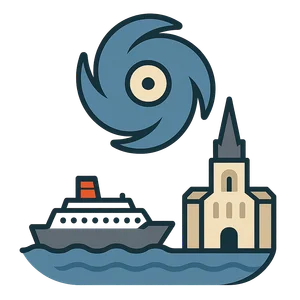
Hurricane Katrina was a powerful Category 4 Atlantic hurricane in August 2005 that caused catastrophic damage, particularly in the city of New Orleans and surrounding areas after its storm surge breached the levee system.
Take a Quiz
Question 1 of 5
In your own words, describe the main events Marie and her family experienced, from the moment the levees broke to their arrival at the Superdome.
Explore next






Want to do even more?
Go beyond exploring. Unlock tools that turn every story into real learning.

Storypie Plus for families
Full stories, quizzes, and printables. Nights and car rides, sorted.
- Unlimited audio stories
- Create Mode: your child stars in the story
- Offline downloads
- Printable worksheets & coloring pages

Why Storypie for Schools
Students engaged. Prep in seconds. Evenings back to you.
- Worksheets & Quizzes
- Classroom Management
- Formative Assessment
- Custom Curriculum & Lesson Plans
- 27 Languages

Why Storypie for Homeschool
Curriculum done. They'll ask for more. Hours back in your day.
- Worksheet Generator
- First-Person Audio Stories
- Built-in Comprehension Quizzes
- Custom Curriculum & Lesson Plans
- Print & Go Activities