English

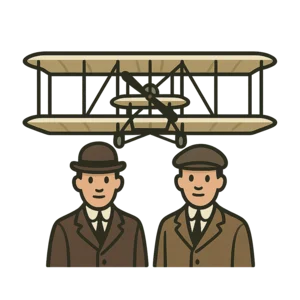
Invention of the Airplane
The creation of the first successful motor-operated airplane, the Wright Flyer…
Reads at Grades 6–8 Listens at Grades 4–8
 Screen-free speaker. Built for your kids.
No card, no commitment. One email when there is real news, and one click to stop.
Print & create
Answer keys·No prep·Free with an account
28 worksheets · answer keys · full story · quiz · Ages 10-12 · CEFR B2
Plus adds 102,000+ more stories in 27 languages, audio for every one, and printables for all of them.
Just want Invention of the Airplane?
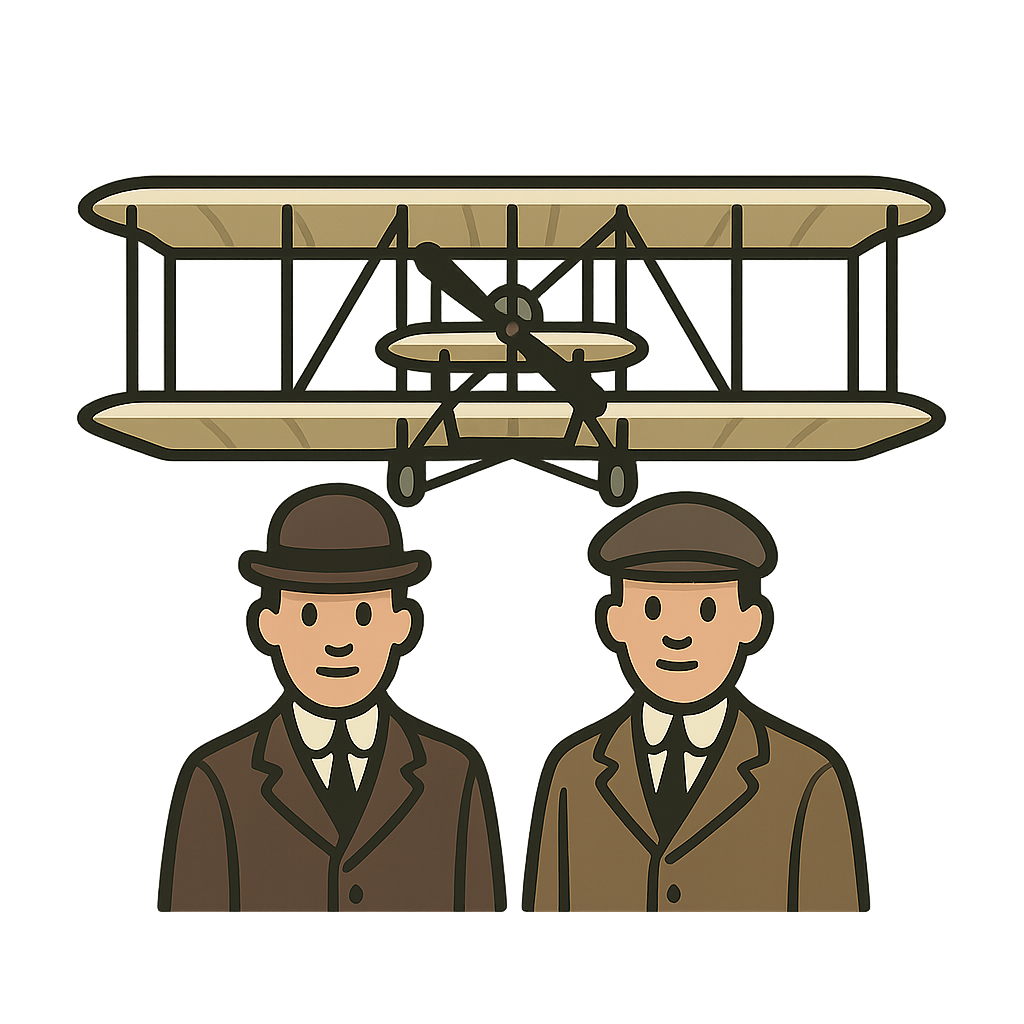
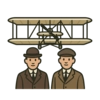
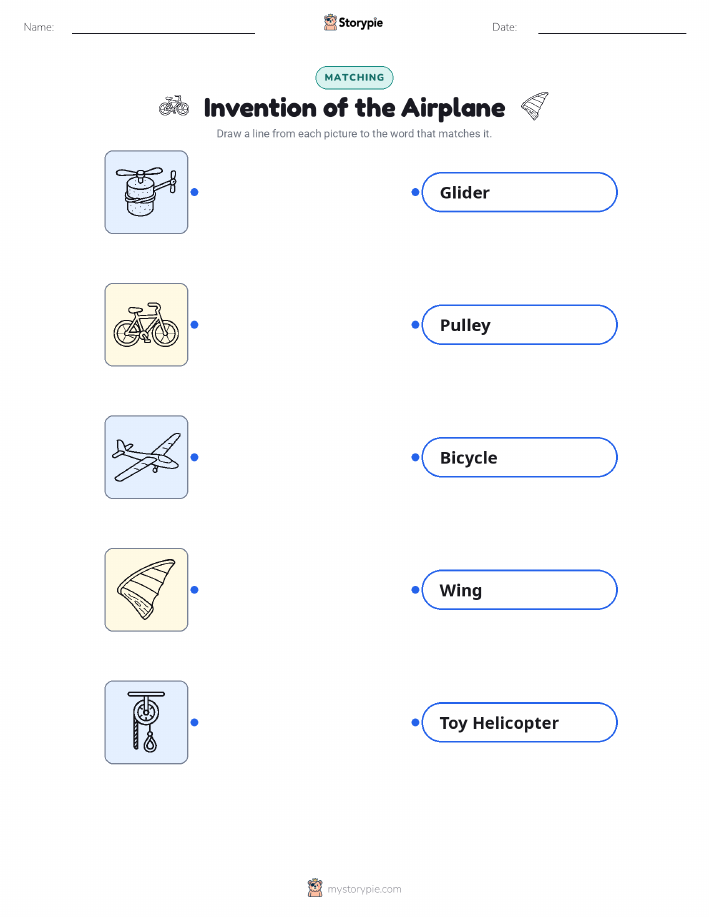
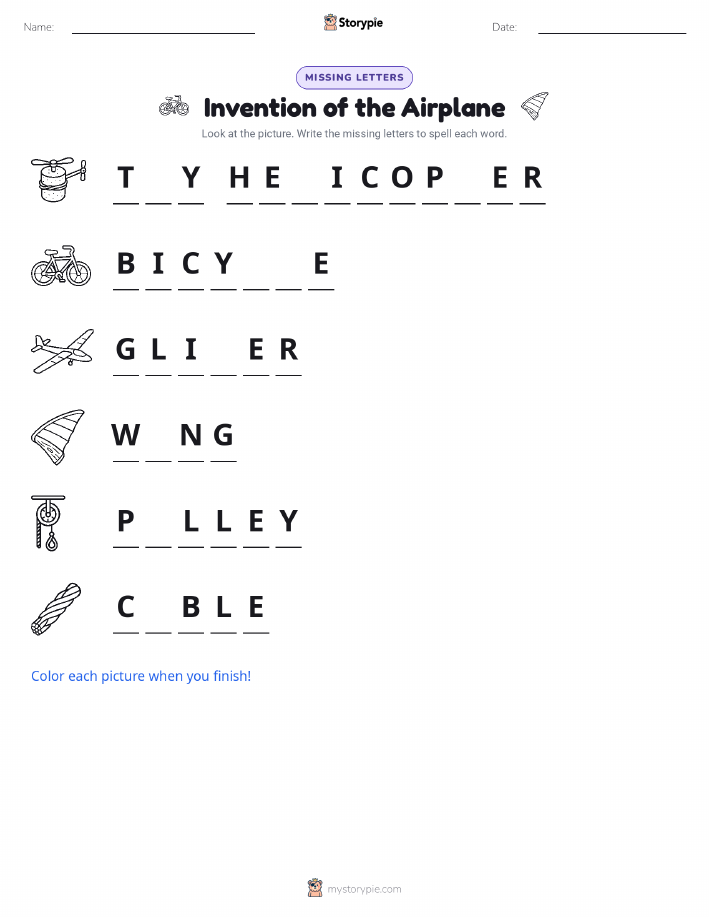
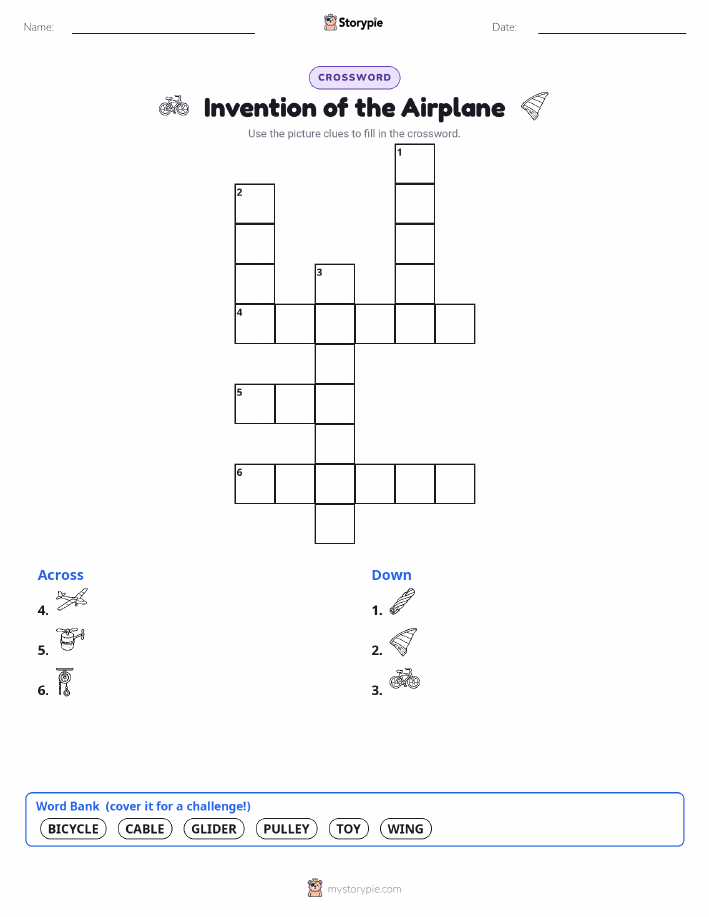
My name is Orville Wright, and alongside my older brother Wilbur, I had a dream that most people thought was impossible. It all started with a simple toy. When we were just boys back in Dayton, Ohio, our father came home one day with a gift. It was a little helicopter made of cork, bamboo, and paper, powered by a twisted rubber band. We were mesmerized as it fluttered up to the ceiling. We played with it until it broke, and then we built our own, making them bigger and better each time. That little toy planted a seed in our minds: if a small machine could fly, why not a big one. One that could carry a person. As we grew up, we opened our own bicycle shop. People might not think fixing bikes has much to do with flying, but it taught us everything. We learned about balance, how a rider shifts their weight to stay upright and turn. We learned how to build strong, lightweight frames, and how a chain and sprocket system could transfer power efficiently. Every bicycle we built and repaired was a lesson in mechanics and control, the very problems we would need to solve to conquer the air. Our dream wasn't just a fantasy; it was an engineering puzzle we were determined to solve, piece by piece.
To turn our dream into a reality, we needed the perfect place to experiment, a natural laboratory of sorts. After studying weather charts, we chose a remote stretch of sand dunes called Kitty Hawk in North Carolina. It was perfect. The winds blew steadily off the Atlantic Ocean, strong enough to help lift our gliders, and the soft sand promised a gentler landing if things went wrong, which they often did. We didn't try to build a powered airplane right away. We believed in a careful, scientific process. First, we studied the masters of flight: the birds. We would lie on the sand for hours, watching buzzards and gulls soar effortlessly. We noticed how they twisted the tips of their wings ever so slightly to turn and maintain balance in the gusts of wind. This simple observation was our breakthrough. We realized we didn't need to steer our aircraft like a ship with a rudder, but to balance it in the air like a bird. Between 1900 and 1902, we built a series of full-sized gliders to test our ideas. Those years were filled with trial and error. Our first glider didn't provide enough lift. We had crashes that splintered wood and tore fabric. There were moments of deep frustration when our calculations didn't match our results. But every failure was a lesson. We went back home to Dayton and built a small wind tunnel, a simple wooden box with a fan, to test hundreds of different wing shapes. This research allowed us to design a far more efficient wing for our 1902 glider. Most importantly, we developed a system of pulleys and cables that allowed the pilot, lying on the lower wing, to twist or 'warp' the wings, just like the birds we had watched. This invention, called wing-warping, gave us control. By the end of our season in 1902, we had made nearly a thousand successful glider flights, soaring gracefully over the dunes. We had solved the problem of flight. Now, we just needed to add power.
Twelve Seconds of Sky
My name is Orville Wright, and alongside my older brother Wilbur, I had a dream that most people thought was impossible. It all started with a simple toy. When we were just boys back in Dayton, Ohio, our father came home one day with a gift. It was a little helicopter made of cork, bamboo, and paper, powered by a twisted rubber band. We were mesmerized as it fluttered up to the ceiling. We played with it until it broke, and then we built our own, making them bigger and better each time. That little toy planted a seed in our minds: if a small machine could fly, why not a big one. One that could carry a person. As we grew up, we opened our own bicycle shop. People might not think fixing bikes has much to do with flying, but it taught us everything. We learned about balance, how a rider shifts their weight to stay upright and turn. We learned how to build strong, lightweight frames, and how a chain and sprocket system could transfer power efficiently. Every bicycle we built and repaired was a lesson in mechanics and control, the very problems we would need to solve to conquer the air. Our dream wasn't just a fantasy; it was an engineering puzzle we were determined to solve, piece by piece.
To turn our dream into a reality, we needed the perfect place to experiment, a natural laboratory of sorts. After studying weather charts, we chose a remote stretch of sand dunes called Kitty Hawk in North Carolina. It was perfect. The winds blew steadily off the Atlantic Ocean, strong enough to help lift our gliders, and the soft sand promised a gentler landing if things went wrong, which they often did. We didn't try to build a powered airplane right away. We believed in a careful, scientific process. First, we studied the masters of flight: the birds. We would lie on the sand for hours, watching buzzards and gulls soar effortlessly. We noticed how they twisted the tips of their wings ever so slightly to turn and maintain balance in the gusts of wind. This simple observation was our breakthrough. We realized we didn't need to steer our aircraft like a ship with a rudder, but to balance it in the air like a bird. Between 1900 and 1902, we built a series of full-sized gliders to test our ideas. Those years were filled with trial and error. Our first glider didn't provide enough lift. We had crashes that splintered wood and tore fabric. There were moments of deep frustration when our calculations didn't match our results. But every failure was a lesson. We went back home to Dayton and built a small wind tunnel, a simple wooden box with a fan, to test hundreds of different wing shapes. This research allowed us to design a far more efficient wing for our 1902 glider. Most importantly, we developed a system of pulleys and cables that allowed the pilot, lying on the lower wing, to twist or 'warp' the wings, just like the birds we had watched. This invention, called wing-warping, gave us control. By the end of our season in 1902, we had made nearly a thousand successful glider flights, soaring gracefully over the dunes. We had solved the problem of flight. Now, we just needed to add power.
That brings me to the morning of December 17, 1903. The air was bitterly cold, and a fierce wind of over 20 miles per hour swept across the beach. It was hardly ideal flying weather, but we were out of time and determined to try. We had built a machine we called the 'Flyer'. It had a wooden frame, wings covered in muslin fabric, and a small, four-cylinder gasoline engine that we had designed and built ourselves in our bicycle shop because no one sold one light and powerful enough. A small group of men from the nearby Kill Devil Hills Life-Saving Station were our only witnesses. We had tossed a coin a few days earlier to see who would get the first chance, and Wilbur won. But his attempt ended in a stall and a minor crash. So now, it was my turn. I lay flat on my stomach on the lower wing, my hands gripping the controls for the elevator and my hips resting in a cradle that controlled the wing-warping. Wilbur steadied the wingtip as I fired up the engine. It sputtered and roared to life, vibrating through the entire frame. The propellers whirred, and the machine began to move forward along the 60-foot wooden launching rail we had laid on the sand. Wilbur ran alongside. Then, I felt it. A lifting sensation. The rail disappeared beneath me. For the first time in history, a powered, heavier-than-air machine was flying, and I was at the controls. The flight was bumpy and erratic. I struggled with the overly sensitive front elevator, bobbing up and down. But I was flying. It was a feeling of pure exhilaration, a moment of intense concentration and unbelievable triumph. Twelve seconds later, the machine skidded to a stop on the sand. The flight had covered only 120 feet, less than the wingspan of a modern jumbo jet. But in those twelve seconds, we had changed the world forever.
That first flight was just the beginning of the day. We were so excited we could barely contain ourselves. We hauled the Flyer back to the starting rail and took turns. On the fourth and final flight of the morning, it was Wilbur's turn again. He flew with much more confidence and skill, staying in the air for an incredible 59 seconds and covering a distance of 852 feet. We had truly done it. We knew in that moment that we had unlocked one of nature's greatest secrets and had given humanity the gift of wings. We packed up our machine and sent a telegram to our father back home: 'Success four flights thursday morning… average speed through air thirty one miles… home for Christmas'. Those brief moments above the sand at Kitty Hawk were the humble start of a new age. From our simple flyer made of spruce and fabric, an entire world of aviation would grow. Think of the airplanes that now cross oceans in a matter of hours, and the spacecraft that have carried people to the moon. It all started with a dream sparked by a toy, and the belief that with curiosity, hard work, and the courage to learn from your mistakes, nothing is truly impossible. So whatever your dream may be, hold onto it, work for it, and you might just find your own way to fly.
Wow facts
About
The creation of the first successful motor-operated airplane, the Wright Flyer, by brothers Orville and Wilbur Wright, culminating in the first sustained, controlled, heavier-than-air flight on December 17, 1903.
Take a Quiz
Question 1 of 5
In your own words, describe the process the Wright brothers went through at Kitty Hawk before their first successful powered flight.
Explore next




Want to do even more?
Go beyond exploring. Unlock tools that turn every story into real learning.

Storypie Plus for families
Full stories, quizzes, and printables. Nights and car rides, sorted.
- Unlimited audio stories
- Create Mode: your child stars in the story
- Offline downloads
- Printable worksheets & coloring pages

Why Storypie for Schools
Students engaged. Prep in seconds. Evenings back to you.
- Worksheets & Quizzes
- Classroom Management
- Formative Assessment
- Custom Curriculum & Lesson Plans
- 27 Languages

Why Storypie for Homeschool
Curriculum done. They'll ask for more. Hours back in your day.
- Worksheet Generator
- First-Person Audio Stories
- Built-in Comprehension Quizzes
- Custom Curriculum & Lesson Plans
- Print & Go Activities