English

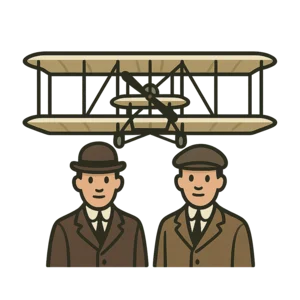
Invention of the Airplane
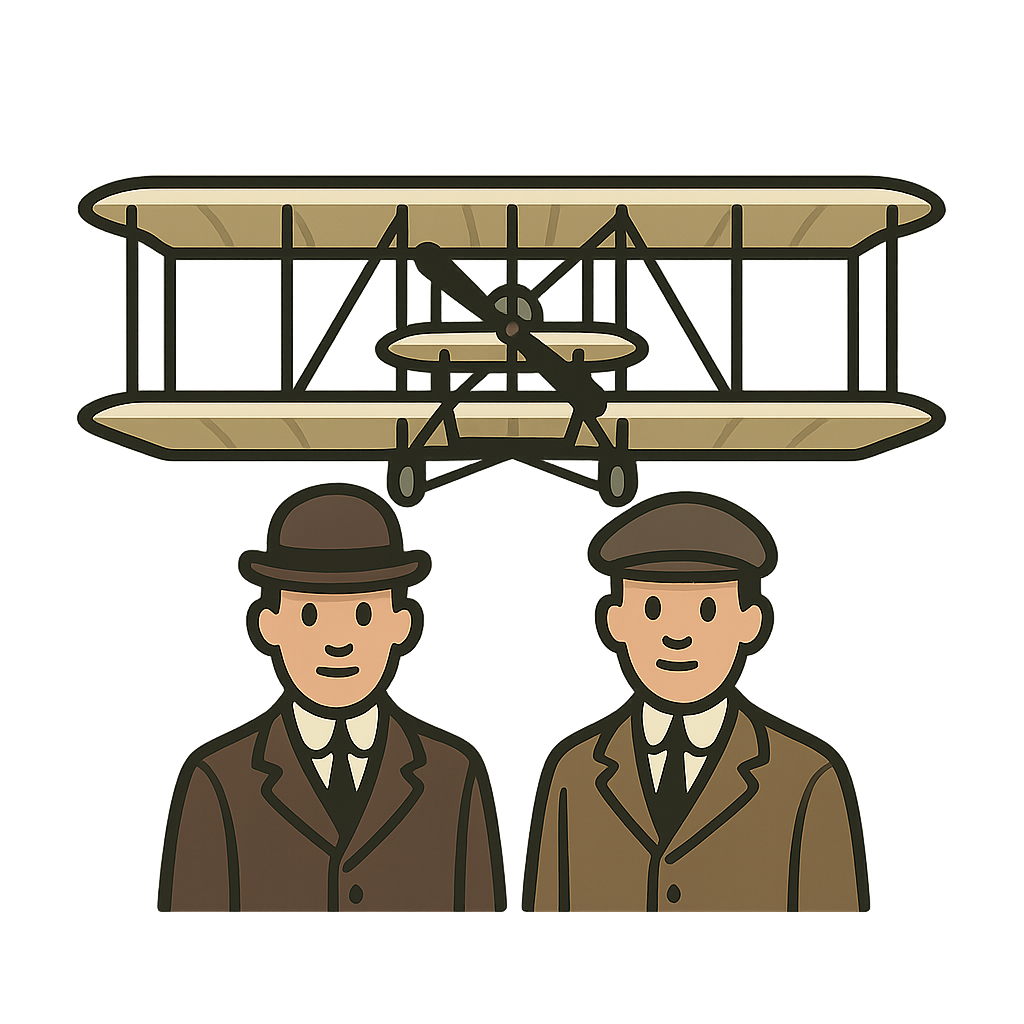
The creation of the first successful motor-operated airplane, the Wright Flyer…
Reads at Grades K-2 Listens at K–3
 Screen-free speaker. Built for your kids.
No card, no commitment. One email when there is real news, and one click to stop.
Print & create
Answer keys·No prep·Free with an account
28 worksheets · answer keys · full story · quiz · Ages 6-8 · CEFR A2
Plus adds 102,000+ more stories in 27 languages, audio for every one, and printables for all of them.
Just want Invention of the Airplane?
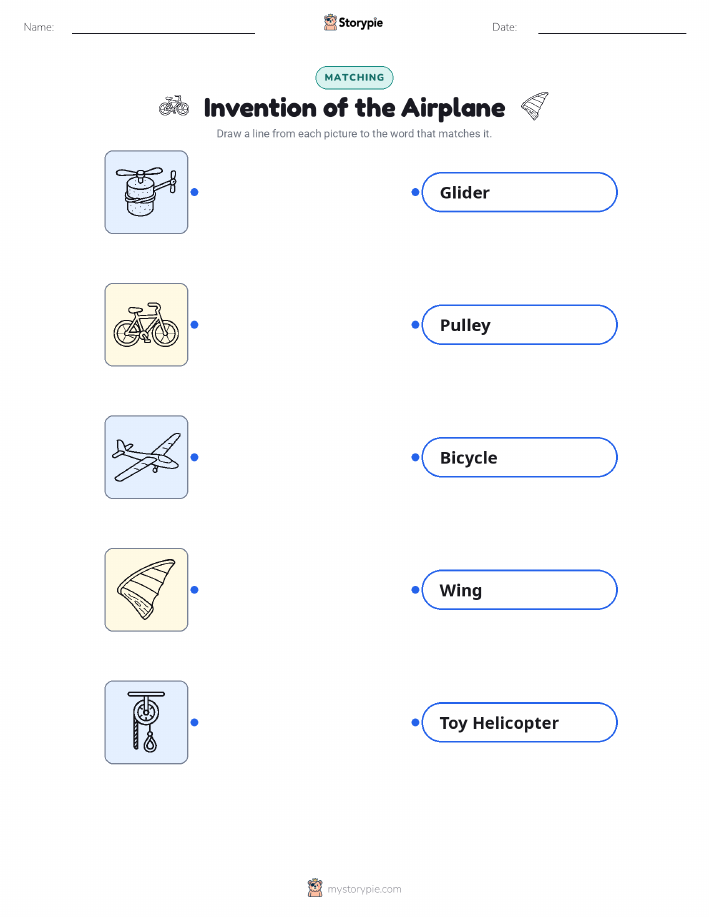
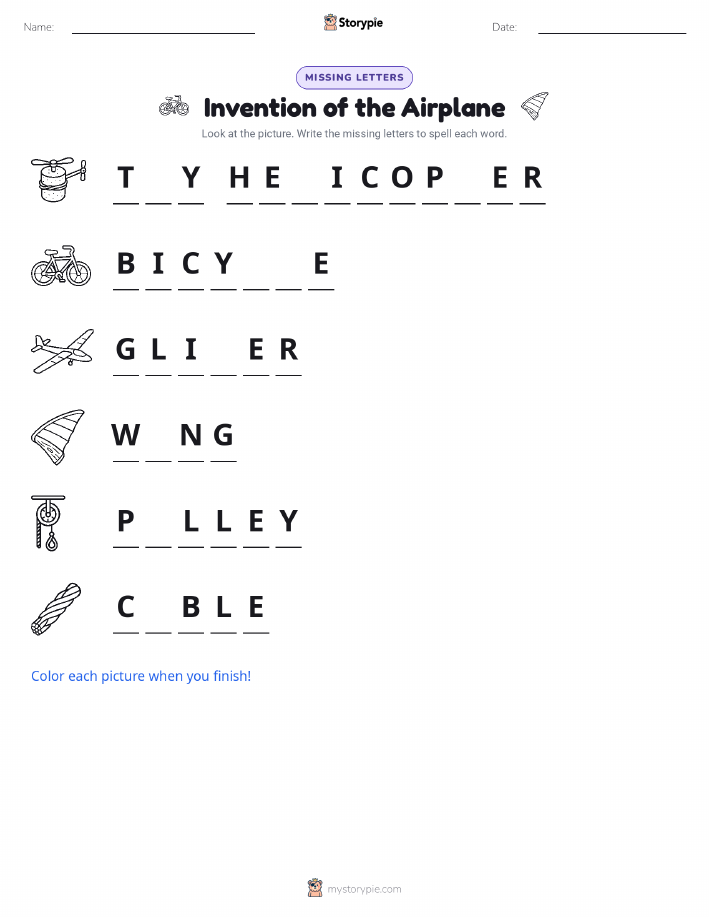
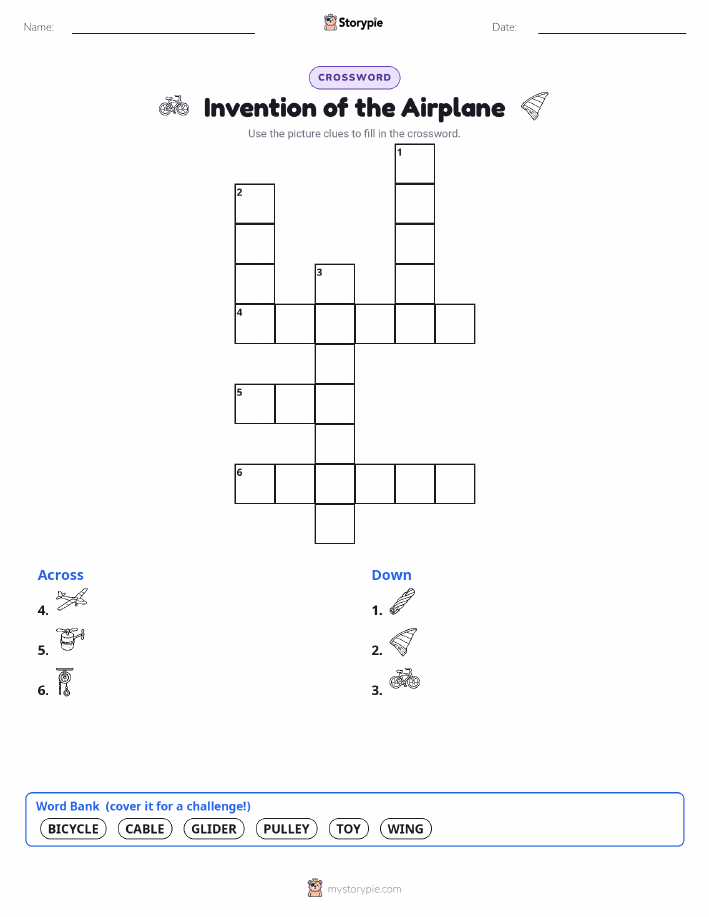
Hello there. My name is Orville Wright, and I want to tell you about my big brother, Wilbur, and our amazing adventure. Ever since we were little boys, Wilbur and I loved to build things. We would spend hours in our workshop, tinkering with wood, wires, and scraps of metal. One day, our father brought home a wonderful gift. It was a toy helicopter made of cork, bamboo, and paper, with a rubber band to make it fly. We played with it until it broke, but that didn't stop us. We just built our own. Watching that little toy spin and fly up to the ceiling planted a giant idea in our heads. If a tiny toy could fly, why couldn't a big machine fly too, with a person inside. We looked at the birds soaring high in the sky and thought, “We can do that.”. That little toy started our big, wonderful dream of building a machine that could fly.
Before we built airplanes, Wilbur and I had a bicycle shop. It was the perfect place to work on our big idea. Building bicycles taught us so much about how things move and stay balanced. We figured if a rider could balance a bicycle by shifting their weight, maybe a pilot could balance a flying machine in the same way. Our shop became our laboratory. We drew countless pictures, which we called blueprints, and built models. Our first real flying machines weren't airplanes at all; they were gliders. They had big wings but no engine. To test them, we needed a place with strong, steady winds and soft sand for landing, just in case. We found the perfect spot: a town called Kitty Hawk in North Carolina. We would run along the sandy hills and launch our gliders into the wind. Whoosh. Sometimes they would glide beautifully for a few moments. Other times, they would tumble and crash right into a big, soft sand dune. It was frustrating, but it was also fun. We learned something new from every single crash, and we never, ever gave up. We just dusted the sand off and tried again.
Orville Wright and the First Flight
Hello there. My name is Orville Wright, and I want to tell you about my big brother, Wilbur, and our amazing adventure. Ever since we were little boys, Wilbur and I loved to build things. We would spend hours in our workshop, tinkering with wood, wires, and scraps of metal. One day, our father brought home a wonderful gift. It was a toy helicopter made of cork, bamboo, and paper, with a rubber band to make it fly. We played with it until it broke, but that didn't stop us. We just built our own. Watching that little toy spin and fly up to the ceiling planted a giant idea in our heads. If a tiny toy could fly, why couldn't a big machine fly too, with a person inside. We looked at the birds soaring high in the sky and thought, “We can do that.”. That little toy started our big, wonderful dream of building a machine that could fly.
Before we built airplanes, Wilbur and I had a bicycle shop. It was the perfect place to work on our big idea. Building bicycles taught us so much about how things move and stay balanced. We figured if a rider could balance a bicycle by shifting their weight, maybe a pilot could balance a flying machine in the same way. Our shop became our laboratory. We drew countless pictures, which we called blueprints, and built models. Our first real flying machines weren't airplanes at all; they were gliders. They had big wings but no engine. To test them, we needed a place with strong, steady winds and soft sand for landing, just in case. We found the perfect spot: a town called Kitty Hawk in North Carolina. We would run along the sandy hills and launch our gliders into the wind. Whoosh. Sometimes they would glide beautifully for a few moments. Other times, they would tumble and crash right into a big, soft sand dune. It was frustrating, but it was also fun. We learned something new from every single crash, and we never, ever gave up. We just dusted the sand off and tried again.
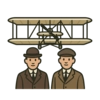
Finally, the big day arrived. It was December 17, 1903. I remember it was a very cold and windy morning in Kitty Hawk. Our new machine, the Wright Flyer, was ready. It had wings made of wood and fabric and a small engine that we built ourselves. It was my turn to fly first. I took a deep breath and lay down on the lower wing, my hands gripping the controls. My heart was pounding like a drum. Wilbur started the engine, and it sputtered and roared to life. The whole machine shook. Then, we were moving. The Flyer slid along its track, going faster and faster. Suddenly, I felt a lift. I wasn't bumping on the ground anymore. I was flying. For 12 whole seconds, I was in the air, soaring like a bird. It was the most amazing feeling in the world. That flight may have been short, but it proved that our dream was possible. It was the start of something that would change the world forever. So remember, no matter how big your dream is, if you work hard and never give up, you can make it fly too.
Wow facts
About
The creation of the first successful motor-operated airplane, the Wright Flyer, by brothers Orville and Wilbur Wright, culminating in the first sustained, controlled, heavier-than-air flight on December 17, 1903.
Take a Quiz
Question 1 of 4
Why did Orville and Wilbur go to a place called Kitty Hawk to test their gliders?
Explore next




Want to do even more?
Go beyond exploring. Unlock tools that turn every story into real learning.

Storypie Plus for families
Full stories, quizzes, and printables. Nights and car rides, sorted.
- Unlimited audio stories
- Create Mode: your child stars in the story
- Offline downloads
- Printable worksheets & coloring pages

Why Storypie for Schools
Students engaged. Prep in seconds. Evenings back to you.
- Worksheets & Quizzes
- Classroom Management
- Formative Assessment
- Custom Curriculum & Lesson Plans
- 27 Languages

Why Storypie for Homeschool
Curriculum done. They'll ask for more. Hours back in your day.
- Worksheet Generator
- First-Person Audio Stories
- Built-in Comprehension Quizzes
- Custom Curriculum & Lesson Plans
- Print & Go Activities