English

La Tomatina
An annual festival held in Buñol, Spain, where the number of participants varies each year…
Reads at Grades 3–5 Listens at Grades 1–5
Print & create
Answer keys·No prep·Free with an account
28 worksheets · answer keys · full story · quiz · Ages 8-10 · CEFR B1
Plus adds 116,000+ more stories in 27 languages, audio for every one, and printables for all of them.
Just want La Tomatina?
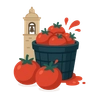
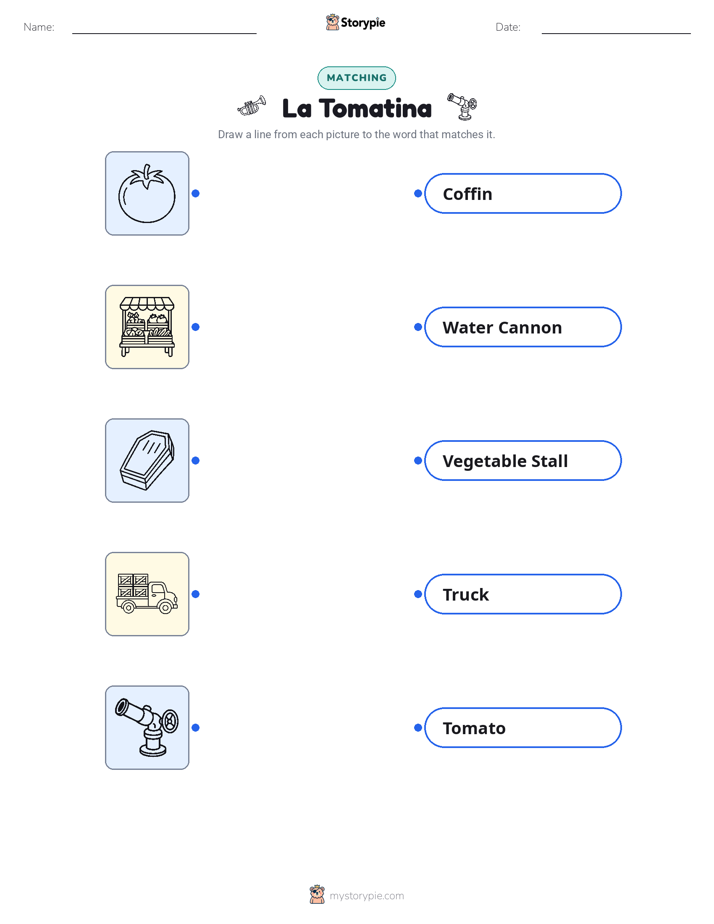
My name is Mateo, and I want to tell you about how my friends and I accidentally started the world’s biggest food fight. It all began in my small town of Buñol, Spain, on a hot afternoon. The date was the last Wednesday of August in 1945, a day our town always celebrated with a big parade called 'Gigantes y Cabezudos'. The name means 'Giants and Big-Heads', and that’s exactly what it was. People wore enormous paper-mâché heads and paraded through the town square, while music played and everyone cheered. The air was buzzing with excitement, and my friends and I wanted to be right in the middle of it all. We were just a group of youngsters, eager to join the fun. As we pushed our way through the crowd to get a better look, we got a little too rowdy. We squeezed past a market stall piled high with fresh, red tomatoes. In all the pushing and shoving, one of the parade performers, with his giant head wobbling, stumbled and fell right into the crowd near us. It was pure chaos. People started yelling, and in the confusion, someone—maybe it was me, maybe a friend—grabbed a tomato from the stall and threw it. Then another person threw one back. Suddenly, we were all grabbing the squishy red vegetables and launching them at each other. The messy, splattering fight was the most fun we’d had all year. We didn’t know it then, but we had just started something incredible.
That first tomato fight was so much fun that we couldn't stop talking about it. The next year, on the very same last Wednesday of August, my friends and I met up with a plan. This time, we didn't rely on a market stall. We came prepared, bringing our own tomatoes from home in bags. When the parade started, we found each other in the crowd and, with a nod, began our second tomato battle. It was even better than the first time. Soon, other young people in the town started joining in year after year. It became our own special, unofficial tradition. However, not everyone was happy about it. The town officials and the police thought we were just making a mess. In the early 1950s, they officially banned our tomato fight. They told us we would get in trouble if we were caught. But did that stop us? Not at all. We felt the tradition was ours, a joyful and harmless way to celebrate. We continued our fight in defiance, even though we had to be careful. Some of my friends were even arrested for a short time, but we all believed our silly, messy festival was worth protecting. It was a symbol of our friendship and the lively spirit of our town. The fight had become more than just a game; it was a tradition we had created ourselves, and we weren't going to let it go easily.
Mateo and the Great Tomato Fight
My name is Mateo, and I want to tell you about how my friends and I accidentally started the world’s biggest food fight. It all began in my small town of Buñol, Spain, on a hot afternoon. The date was the last Wednesday of August in 1945, a day our town always celebrated with a big parade called 'Gigantes y Cabezudos'. The name means 'Giants and Big-Heads', and that’s exactly what it was. People wore enormous paper-mâché heads and paraded through the town square, while music played and everyone cheered. The air was buzzing with excitement, and my friends and I wanted to be right in the middle of it all. We were just a group of youngsters, eager to join the fun. As we pushed our way through the crowd to get a better look, we got a little too rowdy. We squeezed past a market stall piled high with fresh, red tomatoes. In all the pushing and shoving, one of the parade performers, with his giant head wobbling, stumbled and fell right into the crowd near us. It was pure chaos. People started yelling, and in the confusion, someone—maybe it was me, maybe a friend—grabbed a tomato from the stall and threw it. Then another person threw one back. Suddenly, we were all grabbing the squishy red vegetables and launching them at each other. The messy, splattering fight was the most fun we’d had all year. We didn’t know it then, but we had just started something incredible.
That first tomato fight was so much fun that we couldn't stop talking about it. The next year, on the very same last Wednesday of August, my friends and I met up with a plan. This time, we didn't rely on a market stall. We came prepared, bringing our own tomatoes from home in bags. When the parade started, we found each other in the crowd and, with a nod, began our second tomato battle. It was even better than the first time. Soon, other young people in the town started joining in year after year. It became our own special, unofficial tradition. However, not everyone was happy about it. The town officials and the police thought we were just making a mess. In the early 1950s, they officially banned our tomato fight. They told us we would get in trouble if we were caught. But did that stop us? Not at all. We felt the tradition was ours, a joyful and harmless way to celebrate. We continued our fight in defiance, even though we had to be careful. Some of my friends were even arrested for a short time, but we all believed our silly, messy festival was worth protecting. It was a symbol of our friendship and the lively spirit of our town. The fight had become more than just a game; it was a tradition we had created ourselves, and we weren't going to let it go easily.
The struggle with the town officials continued for years. They just didn't understand how much our tomato fight meant to us. So, in 1957, we decided we had to do something they couldn't ignore, something bold and a little bit funny. We organized a protest, but it was a protest like no other. We held a 'Tomato Funeral'. That's right, we found a huge, beautiful tomato, placed it inside a real coffin, and held a funeral procession through the streets of Buñol. We hired a band to play sad funeral music, and people carried the coffin on their shoulders, pretending to weep for our beloved lost festival. It must have been a very strange sight. But it worked. The town officials saw how much we cared, and perhaps they saw how silly it was to ban something that brought people so much joy. The protest was a huge success. After that, the town council finally made La Tomatina an official festival. They even started providing the tomatoes themselves. Looking back, I can't help but smile. What started as an accidental tumble at a parade grew into a world-famous event that brings thousands of people to my little town every year. It all happened because a few friends weren't afraid to be a little messy and stand up for a good time. It showed me that even the silliest ideas can grow into something that brings the whole world together in a shower of happiness and squashed tomatoes.
Wow facts
About
An annual festival held in Buñol, Spain, where the number of participants varies each year, ranging from approximately 15,000 to 22,000, engage in a massive tomato fight that serves as both entertainment and a way for everyone to let go of stress and forget about daily worries.
Take a Quiz
Question 1 of 5
What event directly caused the very first tomato fight in 1945?
Want to do even more?
Go beyond exploring. Unlock tools that turn every story into real learning.

Storypie Plus for families
Full stories, quizzes, and printables. Nights and car rides, sorted.
- Unlimited audio stories
- Create Mode: your child stars in the story
- Offline downloads
- Printable worksheets & coloring pages

Why Storypie for Schools
Students engaged. Prep in seconds. Evenings back to you.
- Worksheets & Quizzes
- Classroom Management
- Formative Assessment
- Custom Curriculum & Lesson Plans
- 27 Languages

Why Storypie for Homeschool
Curriculum done. They'll ask for more. Hours back in your day.
- Worksheet Generator
- First-Person Audio Stories
- Built-in Comprehension Quizzes
- Custom Curriculum & Lesson Plans
- Print & Go Activities