English

May Revolution
The May Revolution was a week-long series of events in May 1810 in Buenos Aires…
Reads at Grades 6–8 Listens at Grades 4–8
Print & create
Answer keys·No prep·Free with an account
28 worksheets · answer keys · full story · quiz · Ages 10-12 · CEFR B2
Plus adds 164,000+ more stories in 27 languages, audio for every one, and printables for all of them.
Just want May Revolution?
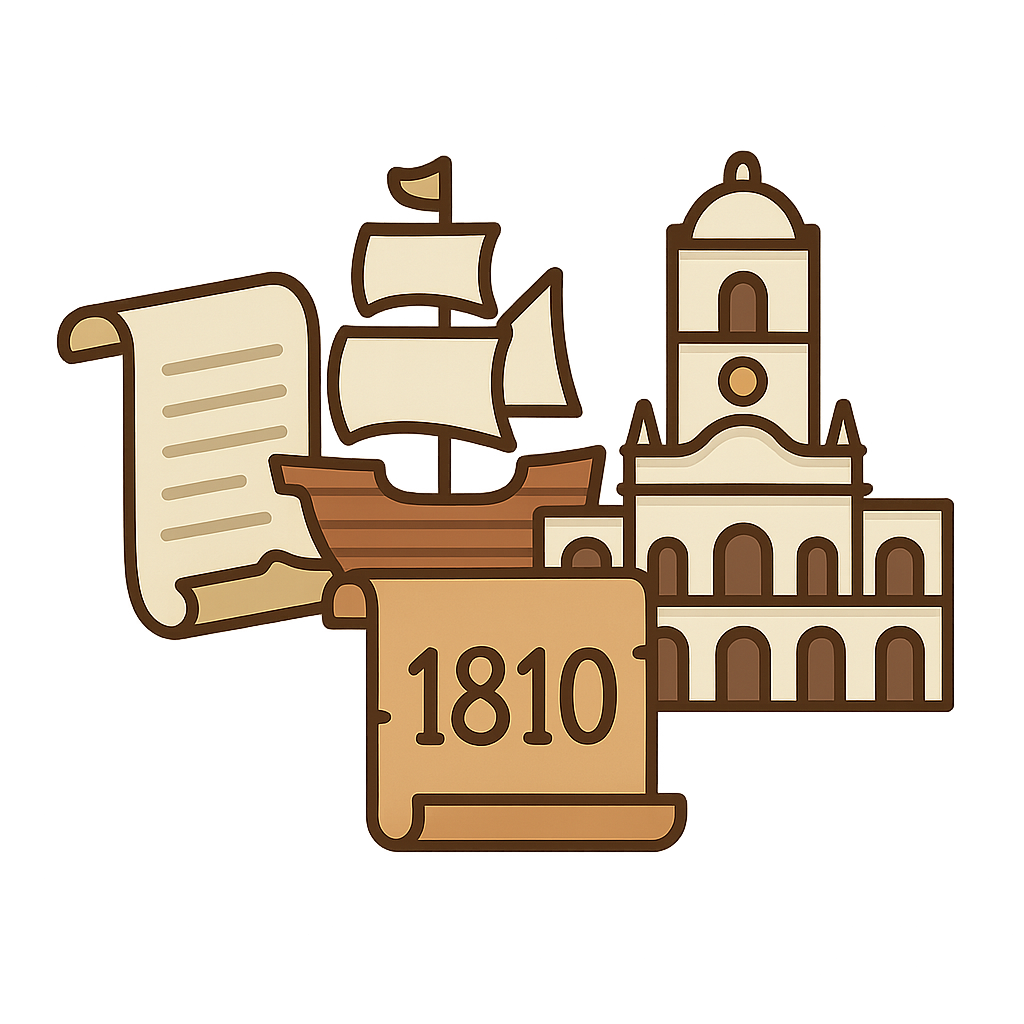
My name is Manuel Belgrano, and though I was trained as a lawyer, my destiny was to help birth a nation. I lived in the city of Buenos Aires in the early 1800s. It was a bustling port city, full of merchants, artisans, and families. But as lively as it was, we were not entirely our own masters. We were part of the Viceroyalty of the Río de la Plata, a territory ruled by the King of Spain from thousands of miles away. A man called the Viceroy governed in the king's name. For years, my friends and I—we were called Criollos, people of Spanish blood born here in the Americas—felt a growing unease. We loved our land, but all the important decisions were made in a place we had never seen. We believed we should have a greater say in how our home was run. Our confidence had been growing since we had successfully fought off two invasions by the British, in 1806 and 1807, with very little help from Spain. We had proven to ourselves that we could defend our own land. Then, in May of 1810, astonishing news arrived that changed everything. A powerful French leader named Napoleon Bonaparte had invaded Spain and captured our king, Ferdinand VII. Suddenly, the very source of the Viceroy's power was gone. With the king imprisoned, who was truly in charge? This question hung in the air, creating a vacuum of power that sparked a fire in our hearts. The time for simply talking was over; the moment to act had arrived.
That spark ignited what we now call the 'May Week,' a period of incredible tension and rapid change that began on May 18th, 1810. The city was electric with rumors and secret meetings. I gathered with my fellow patriots, men like the brilliant orator Juan José Castelli and the respected military commander Cornelio Saavedra. We would meet in homes and cafes, speaking in hushed but urgent tones about the future. We knew this was our chance to take control of our own destiny. Our first step was to demand that the Viceroy, Baltasar Hidalgo de Cisneros, convene an Open Cabildo, a special town meeting where the leading citizens could debate the situation. After intense pressure, he agreed. The meeting was held on May 22nd. The assembly hall was packed, and the arguments were passionate. I stood before the assembly and argued that with the king gone, the right to govern—sovereignty—returned to the people. The loyalists were furious, but we won the vote. The Viceroy's authority was finished. However, our struggle was not over. On May 24th, the old guard tried to trick us. They announced a new governing committee, a junta, with the former Viceroy Cisneros as its president. The people of Buenos Aires felt betrayed. That evening, the city was in an uproar. The next day, May 25th, was a cold and rainy one, but the weather could not dampen our spirits. The Plaza de la Victoria, the main square, was filled with citizens and militia members, all demanding a true patriot government. The pressure was immense. We presented a list of names for a new junta, one made up entirely of Criollos. Faced with the will of the people, the old council had no choice but to accept. The Primera Junta, our first patriotic government, was born, and I was honored to be one of its members. The cheers from the crowd in the rain marked the true beginning of our journey.
Manuel Belgrano and the May Revolution
My name is Manuel Belgrano, and though I was trained as a lawyer, my destiny was to help birth a nation. I lived in the city of Buenos Aires in the early 1800s. It was a bustling port city, full of merchants, artisans, and families. But as lively as it was, we were not entirely our own masters. We were part of the Viceroyalty of the Río de la Plata, a territory ruled by the King of Spain from thousands of miles away. A man called the Viceroy governed in the king's name. For years, my friends and I—we were called Criollos, people of Spanish blood born here in the Americas—felt a growing unease. We loved our land, but all the important decisions were made in a place we had never seen. We believed we should have a greater say in how our home was run. Our confidence had been growing since we had successfully fought off two invasions by the British, in 1806 and 1807, with very little help from Spain. We had proven to ourselves that we could defend our own land. Then, in May of 1810, astonishing news arrived that changed everything. A powerful French leader named Napoleon Bonaparte had invaded Spain and captured our king, Ferdinand VII. Suddenly, the very source of the Viceroy's power was gone. With the king imprisoned, who was truly in charge? This question hung in the air, creating a vacuum of power that sparked a fire in our hearts. The time for simply talking was over; the moment to act had arrived.
That spark ignited what we now call the 'May Week,' a period of incredible tension and rapid change that began on May 18th, 1810. The city was electric with rumors and secret meetings. I gathered with my fellow patriots, men like the brilliant orator Juan José Castelli and the respected military commander Cornelio Saavedra. We would meet in homes and cafes, speaking in hushed but urgent tones about the future. We knew this was our chance to take control of our own destiny. Our first step was to demand that the Viceroy, Baltasar Hidalgo de Cisneros, convene an Open Cabildo, a special town meeting where the leading citizens could debate the situation. After intense pressure, he agreed. The meeting was held on May 22nd. The assembly hall was packed, and the arguments were passionate. I stood before the assembly and argued that with the king gone, the right to govern—sovereignty—returned to the people. The loyalists were furious, but we won the vote. The Viceroy's authority was finished. However, our struggle was not over. On May 24th, the old guard tried to trick us. They announced a new governing committee, a junta, with the former Viceroy Cisneros as its president. The people of Buenos Aires felt betrayed. That evening, the city was in an uproar. The next day, May 25th, was a cold and rainy one, but the weather could not dampen our spirits. The Plaza de la Victoria, the main square, was filled with citizens and militia members, all demanding a true patriot government. The pressure was immense. We presented a list of names for a new junta, one made up entirely of Criollos. Faced with the will of the people, the old council had no choice but to accept. The Primera Junta, our first patriotic government, was born, and I was honored to be one of its members. The cheers from the crowd in the rain marked the true beginning of our journey.
The events of May 25th, 1810, were not the end of our story, but the dawn of a new nation. That day, we did not declare full independence from Spain; that would take six more years of difficult and bloody war, a war in which I would serve as a general. But we took the most critical step. We had decided, as a people, to govern ourselves. No longer would we wait for orders from across the Atlantic Ocean. Our future was now in our own hands. In the years that followed, I dedicated my life to the cause of our freedom. I even had the honor of creating our national flag, the sky-blue and white banner that represents Argentina to this day. I wanted our soldiers to fight under a symbol that was uniquely ours, a symbol of our new identity. The May Revolution was more than a political change; it was the triumph of an idea. It was the belief that people have the right to shape their own destiny, to build a country based on their own values and dreams. It taught us that with courage, unity, and a firm belief in a just cause, ordinary people can achieve extraordinary things. The journey was long and hard, but it all began with that rainy, hopeful day in May.
Wow facts
About
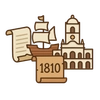
The May Revolution was a week-long series of events in May 1810 in Buenos Aires, which resulted in the removal of the Spanish viceroy and the establishment of a local government, the Primera Junta, marking a key step towards Argentina's independence.
Take a Quiz
Question 1 of 5
What motivated Manuel Belgrano and the other Criollos to seek a new government?
Explore next

Want to do even more?
Go beyond exploring. Unlock tools that turn every story into real learning.

Storypie Plus for families
Full stories, quizzes, and printables. Nights and car rides, sorted.
- Unlimited audio stories
- Create Mode: your child stars in the story
- Offline downloads
- Printable worksheets & coloring pages

Why Storypie for Schools
Students engaged. Prep in seconds. Evenings back to you.
- Worksheets & Quizzes
- Classroom Management
- Formative Assessment
- Custom Curriculum & Lesson Plans
- 27 Languages

Why Storypie for Homeschool
Curriculum done. They'll ask for more. Hours back in your day.
- Worksheet Generator
- First-Person Audio Stories
- Built-in Comprehension Quizzes
- Custom Curriculum & Lesson Plans
- Print & Go Activities