English

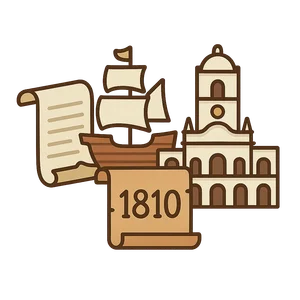
May Revolution
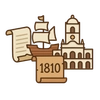
The May Revolution was a week-long series of events in May 1810 in Buenos Aires…
Reads at Grades 3–5 Listens at Grades 1–5
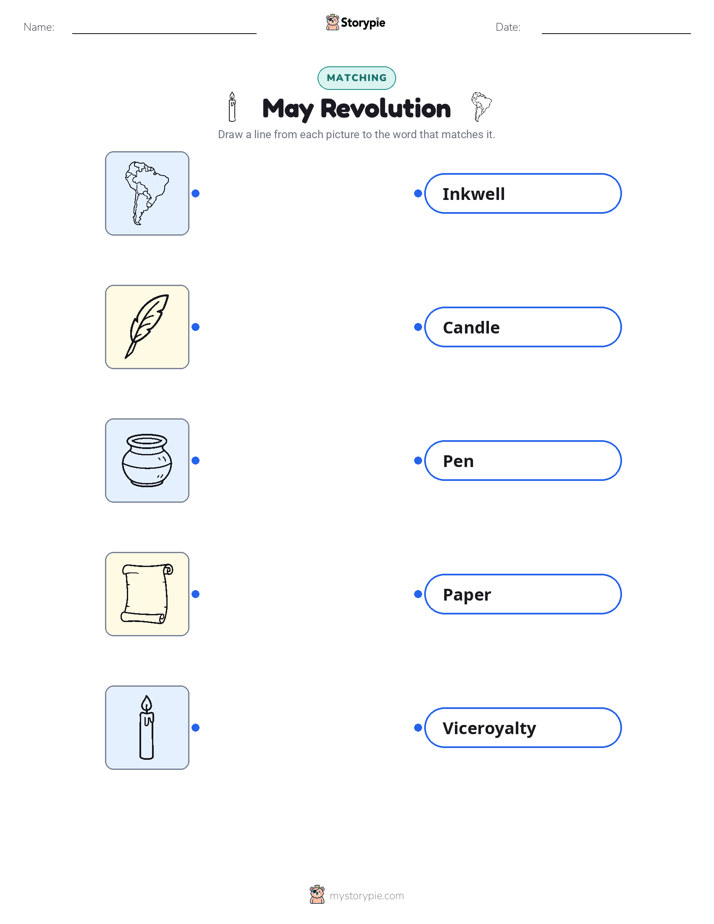
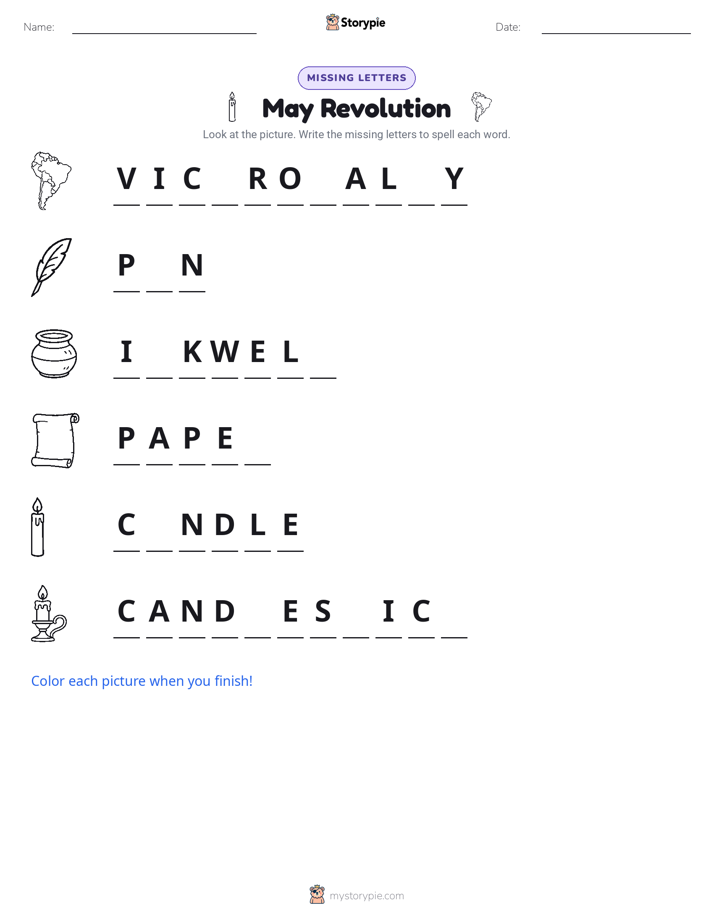
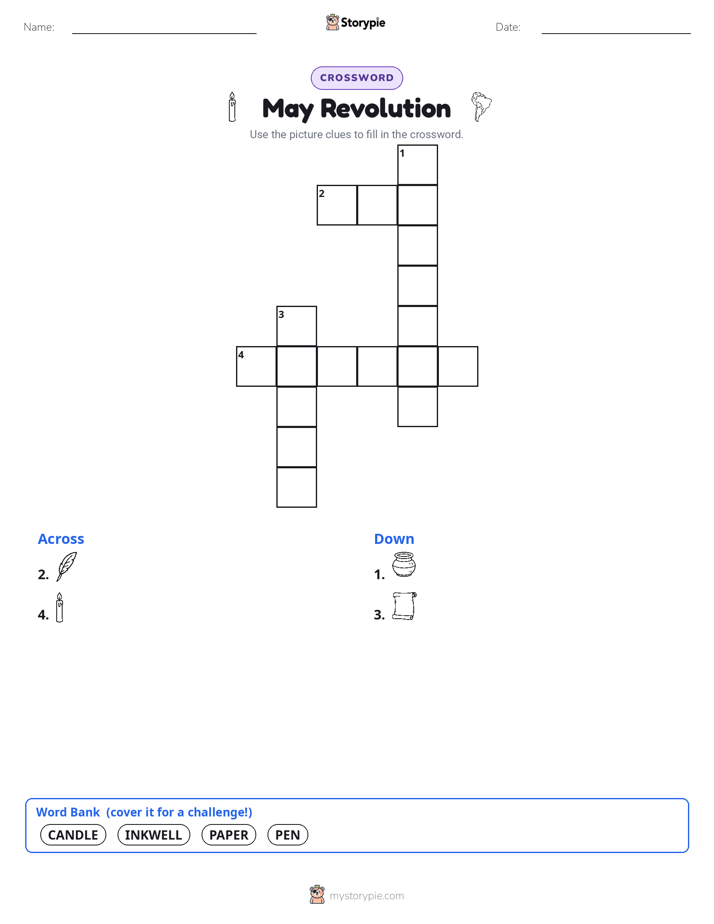
Print & create
Answer keys·No prep·Free with an account
28 worksheets · answer keys · full story · quiz · Ages 8-10 · CEFR B1
Plus adds 164,000+ more stories in 27 languages, audio for every one, and printables for all of them.
Just want May Revolution?
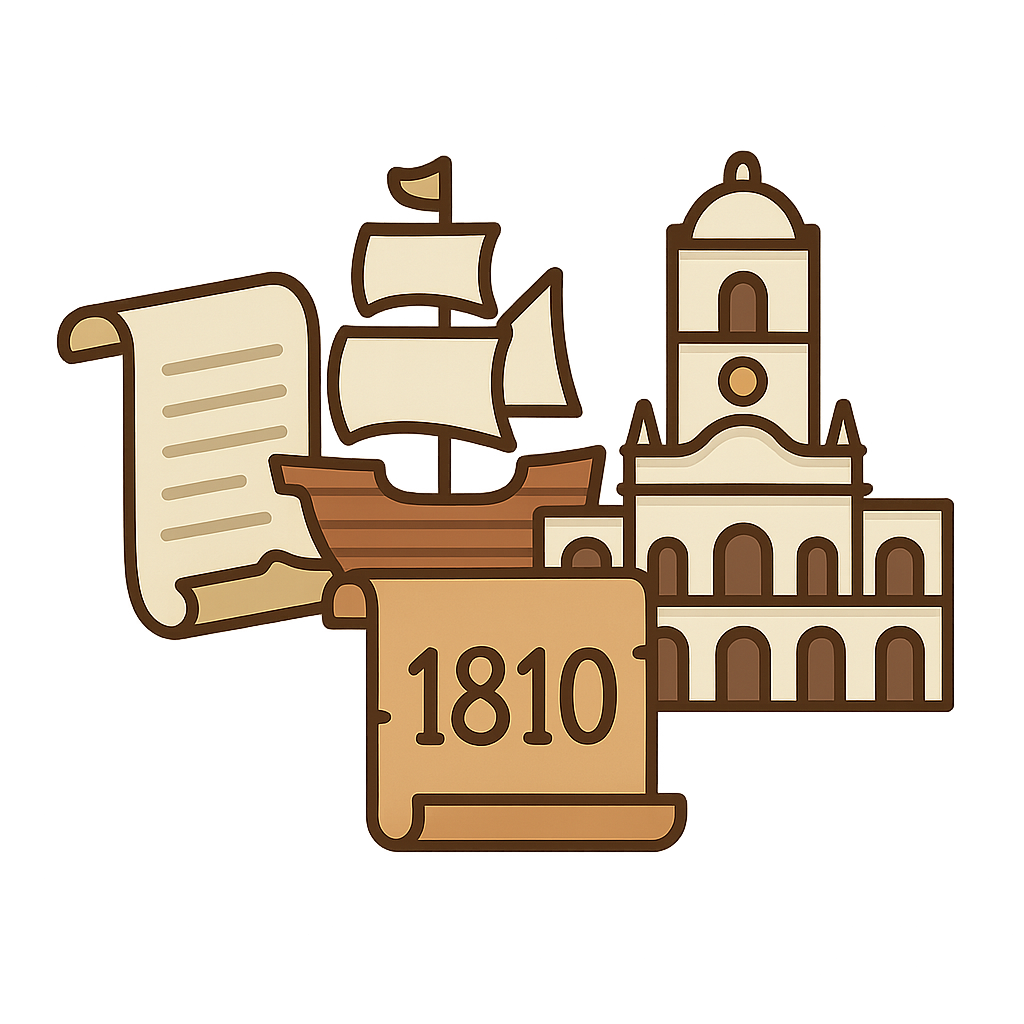
Hello there. My name is Manuel Belgrano, and I want to tell you about a week that changed my home forever. Back in 1810, I was a lawyer living in the bustling port city of Buenos Aires. Our city was part of a huge territory called the Viceroyalty of the Río de la Plata, which was ruled by Spain. Imagine if the principal of your school lived on the other side of a giant ocean and you had never even met him. That’s what it was like for us. Our leader, King Ferdinand VII of Spain, made all the big decisions for us from thousands of miles away. The man who represented the king here was called the Viceroy. He lived in a big fort and tried to enforce the king's rules, but it always felt like we were being told what to do by strangers. We had to sell our goods only to Spain, and we couldn't make many of our own laws. It was frustrating. One cloudy day in the middle of May of 1810, a ship from Europe sailed into our port. It carried news that spread through the city like wildfire, a shocking secret that would turn our world upside down. A messenger told us that our king, Ferdinand VII, had been captured. A powerful French emperor named Napoleon Bonaparte had invaded Spain and taken him prisoner. Suddenly, the string that connected us to our king was cut. We all looked at each other with wide eyes. If the king was gone, who was supposed to be in charge of us? It was a frightening question, but for me and many of my friends, it was also the beginning of a very big, very exciting idea.
That single piece of news lit a spark in Buenos Aires. The week that followed, from May 18th to May 25th, was one I will never forget. Historians now call it the 'Semana de Mayo,' or May Week. The entire city was buzzing like a disturbed beehive. In the cafes, on the cobblestone street corners, and inside our homes, everyone was talking. The whispers turned into discussions, and the discussions turned into loud, passionate debates. What should we do? Should we be loyal to a king who was in a French prison? Should we let the Viceroy continue to rule? Or was this our moment, our one great chance to take control of our own destiny? I met in secret with my friends, men who loved this land as much as I did. People like Cornelio Saavedra, the leader of our local soldiers, and Juan José Castelli, a brilliant speaker. We were patriots, and we decided we had to act. We couldn't let this opportunity slip away. So, we made a bold move. We went straight to the Viceroy, Baltasar Hidalgo de Cisneros, and demanded that he call a 'Cabildo Abierto'—an open town meeting where the most important citizens could gather and vote on our future. At first, he refused. He wanted to hold onto power. But we, along with the city's armed militias led by Saavedra, insisted. The pressure was enormous. The meeting was finally set for May 22nd. I remember standing inside the crowded Cabildo, the air thick with tension and the smell of rain-soaked wool coats. Men argued fiercely. Some were loyal to Spain and wanted to wait. But my friend Castelli and I argued that with the king gone, the power to govern should return to the people. It was a radical idea. The debates raged for hours. All the while, outside in the main square, the Plaza de la Victoria, a crowd was growing. Day after day, more people came, standing in the mud and the cold, anxious to hear what was happening inside. They weren't just curious. They were there to demand a new government, one of their very own.
The Week We Found Our Voice
Hello there. My name is Manuel Belgrano, and I want to tell you about a week that changed my home forever. Back in 1810, I was a lawyer living in the bustling port city of Buenos Aires. Our city was part of a huge territory called the Viceroyalty of the Río de la Plata, which was ruled by Spain. Imagine if the principal of your school lived on the other side of a giant ocean and you had never even met him. That’s what it was like for us. Our leader, King Ferdinand VII of Spain, made all the big decisions for us from thousands of miles away. The man who represented the king here was called the Viceroy. He lived in a big fort and tried to enforce the king's rules, but it always felt like we were being told what to do by strangers. We had to sell our goods only to Spain, and we couldn't make many of our own laws. It was frustrating. One cloudy day in the middle of May of 1810, a ship from Europe sailed into our port. It carried news that spread through the city like wildfire, a shocking secret that would turn our world upside down. A messenger told us that our king, Ferdinand VII, had been captured. A powerful French emperor named Napoleon Bonaparte had invaded Spain and taken him prisoner. Suddenly, the string that connected us to our king was cut. We all looked at each other with wide eyes. If the king was gone, who was supposed to be in charge of us? It was a frightening question, but for me and many of my friends, it was also the beginning of a very big, very exciting idea.
That single piece of news lit a spark in Buenos Aires. The week that followed, from May 18th to May 25th, was one I will never forget. Historians now call it the 'Semana de Mayo,' or May Week. The entire city was buzzing like a disturbed beehive. In the cafes, on the cobblestone street corners, and inside our homes, everyone was talking. The whispers turned into discussions, and the discussions turned into loud, passionate debates. What should we do? Should we be loyal to a king who was in a French prison? Should we let the Viceroy continue to rule? Or was this our moment, our one great chance to take control of our own destiny? I met in secret with my friends, men who loved this land as much as I did. People like Cornelio Saavedra, the leader of our local soldiers, and Juan José Castelli, a brilliant speaker. We were patriots, and we decided we had to act. We couldn't let this opportunity slip away. So, we made a bold move. We went straight to the Viceroy, Baltasar Hidalgo de Cisneros, and demanded that he call a 'Cabildo Abierto'—an open town meeting where the most important citizens could gather and vote on our future. At first, he refused. He wanted to hold onto power. But we, along with the city's armed militias led by Saavedra, insisted. The pressure was enormous. The meeting was finally set for May 22nd. I remember standing inside the crowded Cabildo, the air thick with tension and the smell of rain-soaked wool coats. Men argued fiercely. Some were loyal to Spain and wanted to wait. But my friend Castelli and I argued that with the king gone, the power to govern should return to the people. It was a radical idea. The debates raged for hours. All the while, outside in the main square, the Plaza de la Victoria, a crowd was growing. Day after day, more people came, standing in the mud and the cold, anxious to hear what was happening inside. They weren't just curious. They were there to demand a new government, one of their very own.
By the morning of May 25th, the shouting from the crowd in the plaza grew louder and louder. They were tired of waiting. They chanted, '¡El pueblo quiere saber de qué se trata!', which means 'The people want to know what this is all about!'. The pressure was too much. Finally, the old Viceroy, Cisneros, officially resigned. His power was gone. A short time later, we stepped out onto the grand balcony of the Cabildo to face the thousands of hopeful, rain-soaked faces below. A declaration was read aloud, listing the names of the 'Primera Junta,' our very first governing council, chosen right here in Buenos Aires. My name was on that list, along with my friends Saavedra and Castelli. I can’t describe the feeling of that moment. The rain was still drizzling, but it felt like the sun was shining on us as the crowd erupted in a massive cheer. We had done it. We had taken our first, crucial step toward governing ourselves. That day, May 25th, 1810, didn't make us a completely independent country overnight. That would take six more years of hard work and struggle. But it was the seed from which our nation, Argentina, would grow. It was the day we stopped being just a distant colony and started becoming a people with our own voice. Looking back, our May Revolution showed the world that when people unite for a shared dream, they have the power to shape their own future.
Wow facts
About
The May Revolution was a week-long series of events in May 1810 in Buenos Aires, which resulted in the removal of the Spanish viceroy and the establishment of a local government, the Primera Junta, marking a key step towards Argentina's independence.
Take a Quiz
Question 1 of 5
In the story, Manuel Belgrano says the news 'spread through the city like wildfire.' What does this phrase mean?
Explore next

Want to do even more?
Go beyond exploring. Unlock tools that turn every story into real learning.

Storypie Plus for families
Full stories, quizzes, and printables. Nights and car rides, sorted.
- Unlimited audio stories
- Create Mode: your child stars in the story
- Offline downloads
- Printable worksheets & coloring pages

Why Storypie for Schools
Students engaged. Prep in seconds. Evenings back to you.
- Worksheets & Quizzes
- Classroom Management
- Formative Assessment
- Custom Curriculum & Lesson Plans
- 27 Languages

Why Storypie for Homeschool
Curriculum done. They'll ask for more. Hours back in your day.
- Worksheet Generator
- First-Person Audio Stories
- Built-in Comprehension Quizzes
- Custom Curriculum & Lesson Plans
- Print & Go Activities