English

Printing Press Revolution
A period of social and technological change in Europe sparked by Johannes Gutenberg's invention of the…
Reads at Grades 6–8 Listens at Grades 4–8
Print & create
Answer keys·No prep·Free with an account
28 worksheets · answer keys · full story · quiz · Ages 10-12 · CEFR B2
Plus adds 280,000+ more stories in 27 languages, audio for every one, and printables for all of them.
Just want Printing Press Revolution?
My name is Johannes Gutenberg, and my story begins in the city of Mainz, in the heart of Germany, during the 15th century. In my time, the world of ideas was a quiet, exclusive place. Books were not like the ones you know today. They were magnificent, but incredibly rare treasures, each one a work of art copied by hand. Imagine a room full of scribes, monks with bent backs and tired eyes, dipping their quills into inkpots day after day, painstakingly copying every single letter of a book onto parchment. A single Bible could take years to complete. Because of this immense labor, books were so expensive that only the wealthiest nobles, kings, or the Church could afford them. Knowledge was locked away, accessible only to a select few. This always troubled me. I was a craftsman, a goldsmith who understood metals and precision. I looked at the slow, laborious work of the scribes and a powerful idea began to form in my mind. What if there was a faster way? A way to reproduce words not by hand, but with a machine? I dreamed of a world where stories, scientific knowledge, and sacred texts could be shared with everyone, not just the privileged. I wanted to unlock the library of human thought for all people, and I was determined to find the key.
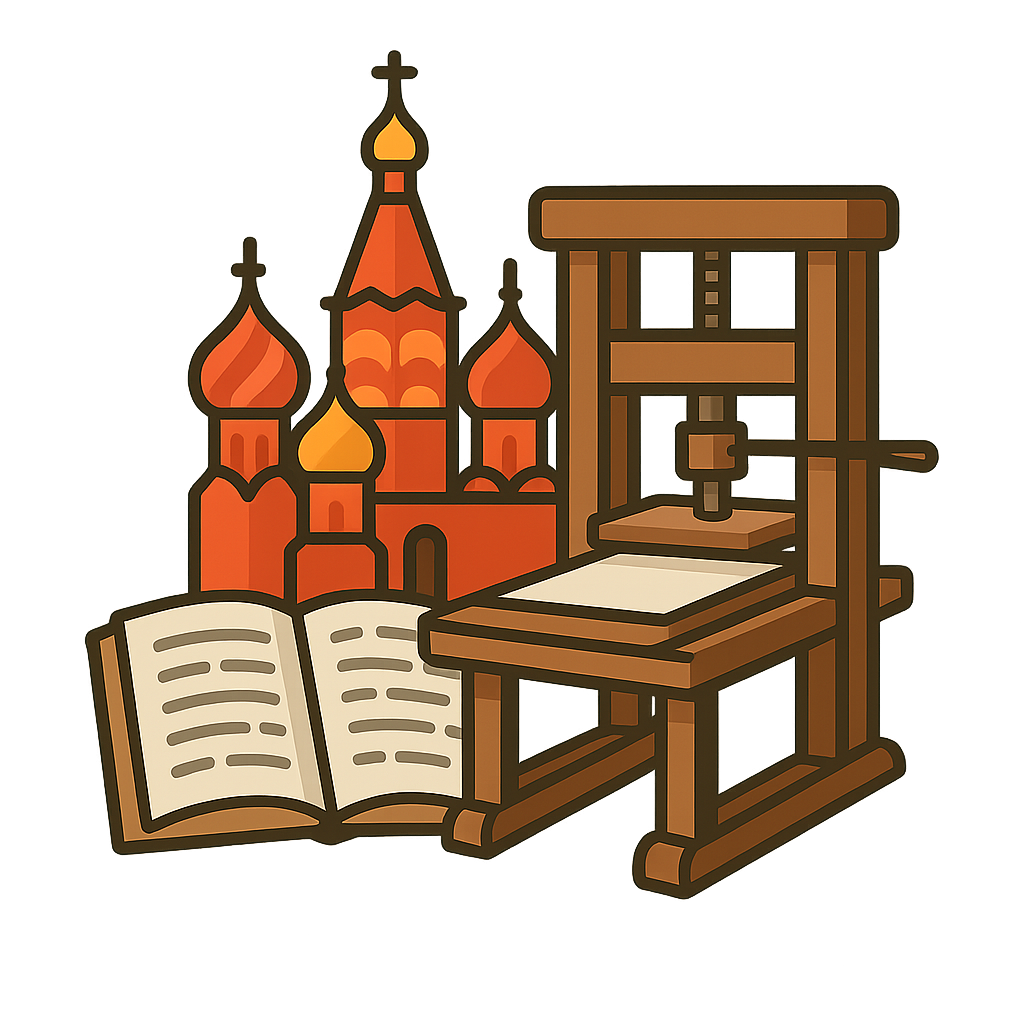
My workshop became my sanctuary and my secret laboratory. During the day, I worked on my official craft, but by night, I pursued my great obsession. My background as a goldsmith was my greatest advantage. I knew how to work with metal, how to melt it, pour it into molds, and create intricate designs. My idea was to create individual letters, each one a tiny, separate piece of metal. If I could make hundreds of 'A's, 'B's, 'C's, and so on, I could arrange them to spell out any word, any sentence, any page. This was the birth of movable type. It was an incredibly difficult task. Each letter had to be perfectly uniform so that when they were lined up, they formed a flat, even surface. I spent countless hours carving punches and creating molds, experimenting with different alloys of lead, tin, and antimony to find a metal that was durable yet easy to cast. But the letters were only one part of the puzzle. The watery ink used by scribes just rolled off my metal type. I needed a new kind of ink, one that was thick and oily, almost like a varnish, that would stick to the metal and transfer cleanly to paper. After many messy experiments, I developed a formula using linseed oil and soot. Finally, I needed a way to press the inked type onto the paper with enough force. My inspiration came from the vineyards surrounding Mainz. I adapted the design of a screw press, the kind used to squeeze grapes for wine, to create a machine that could apply firm, even pressure. There were so many failures. Pages came out smudged, letters were crooked, the press would break. But with each mistake, I learned something new. I will never forget the overwhelming joy I felt when I finally pulled the first clean, perfect sheet from the press. The black letters stood out stark and beautiful against the white paper. My secret was no longer just a dream.
Johannes Gutenberg and the Printing Revolution
My name is Johannes Gutenberg, and my story begins in the city of Mainz, in the heart of Germany, during the 15th century. In my time, the world of ideas was a quiet, exclusive place. Books were not like the ones you know today. They were magnificent, but incredibly rare treasures, each one a work of art copied by hand. Imagine a room full of scribes, monks with bent backs and tired eyes, dipping their quills into inkpots day after day, painstakingly copying every single letter of a book onto parchment. A single Bible could take years to complete. Because of this immense labor, books were so expensive that only the wealthiest nobles, kings, or the Church could afford them. Knowledge was locked away, accessible only to a select few. This always troubled me. I was a craftsman, a goldsmith who understood metals and precision. I looked at the slow, laborious work of the scribes and a powerful idea began to form in my mind. What if there was a faster way? A way to reproduce words not by hand, but with a machine? I dreamed of a world where stories, scientific knowledge, and sacred texts could be shared with everyone, not just the privileged. I wanted to unlock the library of human thought for all people, and I was determined to find the key.
My workshop became my sanctuary and my secret laboratory. During the day, I worked on my official craft, but by night, I pursued my great obsession. My background as a goldsmith was my greatest advantage. I knew how to work with metal, how to melt it, pour it into molds, and create intricate designs. My idea was to create individual letters, each one a tiny, separate piece of metal. If I could make hundreds of 'A's, 'B's, 'C's, and so on, I could arrange them to spell out any word, any sentence, any page. This was the birth of movable type. It was an incredibly difficult task. Each letter had to be perfectly uniform so that when they were lined up, they formed a flat, even surface. I spent countless hours carving punches and creating molds, experimenting with different alloys of lead, tin, and antimony to find a metal that was durable yet easy to cast. But the letters were only one part of the puzzle. The watery ink used by scribes just rolled off my metal type. I needed a new kind of ink, one that was thick and oily, almost like a varnish, that would stick to the metal and transfer cleanly to paper. After many messy experiments, I developed a formula using linseed oil and soot. Finally, I needed a way to press the inked type onto the paper with enough force. My inspiration came from the vineyards surrounding Mainz. I adapted the design of a screw press, the kind used to squeeze grapes for wine, to create a machine that could apply firm, even pressure. There were so many failures. Pages came out smudged, letters were crooked, the press would break. But with each mistake, I learned something new. I will never forget the overwhelming joy I felt when I finally pulled the first clean, perfect sheet from the press. The black letters stood out stark and beautiful against the white paper. My secret was no longer just a dream.
With my invention perfected, I knew I had to undertake a project so significant that it would prove the power of my new technology to the world. There was only one choice: the Holy Bible. It was the most important book in our world, and producing it with a machine would be the ultimate test. This was a monumental undertaking. My workshop became a hive of activity, filled with the constant clatter of metal type being set, the rhythmic creak of the press, and the rich smell of oil-based ink. We needed six presses running at once and a team of about twenty people to keep up the pace. My setters would arrange thousands of individual metal letters into lines and columns, lock them into a frame, ink them, and then carefully press the paper. It was slow, demanding work, but it was miraculously fast compared to the years a scribe would need. This grand project, however, was incredibly expensive. I had used all my own money and had to seek an investor. I entered into a partnership with a wealthy financier named Johann Fust. He loaned me a great sum of money, but the project took longer than we anticipated. Before the last pages were printed around 1455, my debts came due. Johann Fust sued me, and the court ruled in his favor. I lost my workshop, my presses, and even the nearly-completed Bibles. It was a crushing blow, but I could not be entirely defeated. The masterpiece, a beautiful Bible with 42 lines of text on each page, was finished. My invention had worked, and it had created something magnificent for the world to see.
Though I did not become a rich man from my invention, and the loss of my workshop was a personal sorrow, the idea I had unleashed could not be stopped. The workers I had trained went on to open their own print shops in other cities. The secret of movable type spread like wildfire across Germany and then all of Europe. Within a few decades, printing presses were operating in hundreds of towns. Suddenly, books were no longer the exclusive property of the rich. They became affordable and accessible. Students could have their own textbooks, doctors could study the latest medical findings, and explorers could read maps and accounts of new discoveries. This flood of information fueled a great awakening of art, science, and thought known as the Renaissance. People began to question old traditions and form their own ideas, which helped spark the great changes of the Reformation. My personal dream of unlocking knowledge had come true on a scale I could never have imagined. It proves that a single idea, born from a desire to share and to enlighten, has the power to change the world. You do not need wealth or status to make a difference. All you need is determination, a little bit of ingenuity, and the courage to believe that your idea can light up the darkness.
Wow facts
About
A period of social and technological change in Europe sparked by Johannes Gutenberg's invention of the printing press with movable type around 1440. This invention made books and knowledge widely accessible for the first time, transforming society.
Take a Quiz
Question 1 of 5
Why was Johannes Gutenberg so determined to find a new way to make books?
Explore next




Want to do even more?
Go beyond exploring. Unlock tools that turn every story into real learning.

Storypie Plus for families
Full stories, quizzes, and printables. Nights and car rides, sorted.
- Unlimited audio stories
- Create Mode: your child stars in the story
- Offline downloads
- Printable worksheets & coloring pages

Why Storypie for Schools
Students engaged. Prep in seconds. Evenings back to you.
- Worksheets & Quizzes
- Classroom Management
- Formative Assessment
- Custom Curriculum & Lesson Plans
- 27 Languages

Why Storypie for Homeschool
Curriculum done. They'll ask for more. Hours back in your day.
- Worksheet Generator
- First-Person Audio Stories
- Built-in Comprehension Quizzes
- Custom Curriculum & Lesson Plans
- Print & Go Activities