
 English

Printing Press Revolution
A period of dramatic change in Europe when Johannes Gutenberg's invention of the printing press around 1440…
Reads at Grades 3–5 Listens at Grades 1–5
 Screen-free speaker. Built for your kids.
No card, no commitment. One email when there is real news, and one click to stop.
Print & create
Answer keys·No prep·Free with an account
28 worksheets · answer keys · full story · quiz · Ages 8-10 · CEFR B1
Plus adds 102,000+ more stories in 27 languages, audio for every one, and printables for all of them.
Just want Printing Press Revolution?
Hello there. My name is Johannes Gutenberg, and I lived a long, long time ago in a town called Mainz in Germany. When I was a boy, the world was a very different place. There were no computers or phones, of course, but there were also very few books. Can you imagine a world with almost no books? The ones that did exist were incredibly special and precious. Each one had to be written out by hand, letter by letter, by a person called a scribe. A scribe would sit for months, sometimes even years, carefully dipping a pen into ink and copying words from an old book to a new page. Because it took so much time and effort, books were unbelievably expensive. Only the richest kings, queens, and church leaders could afford to own even a few. This always made me a little sad. It felt like all the wonderful stories, amazing ideas, and important knowledge about the world were locked away in a treasure chest, and only a few people had the key. I used to dream of finding a way to unlock that chest for everyone. I believed that if more people could read and learn, the world would become a brighter, smarter, and kinder place. I just needed to figure out how.
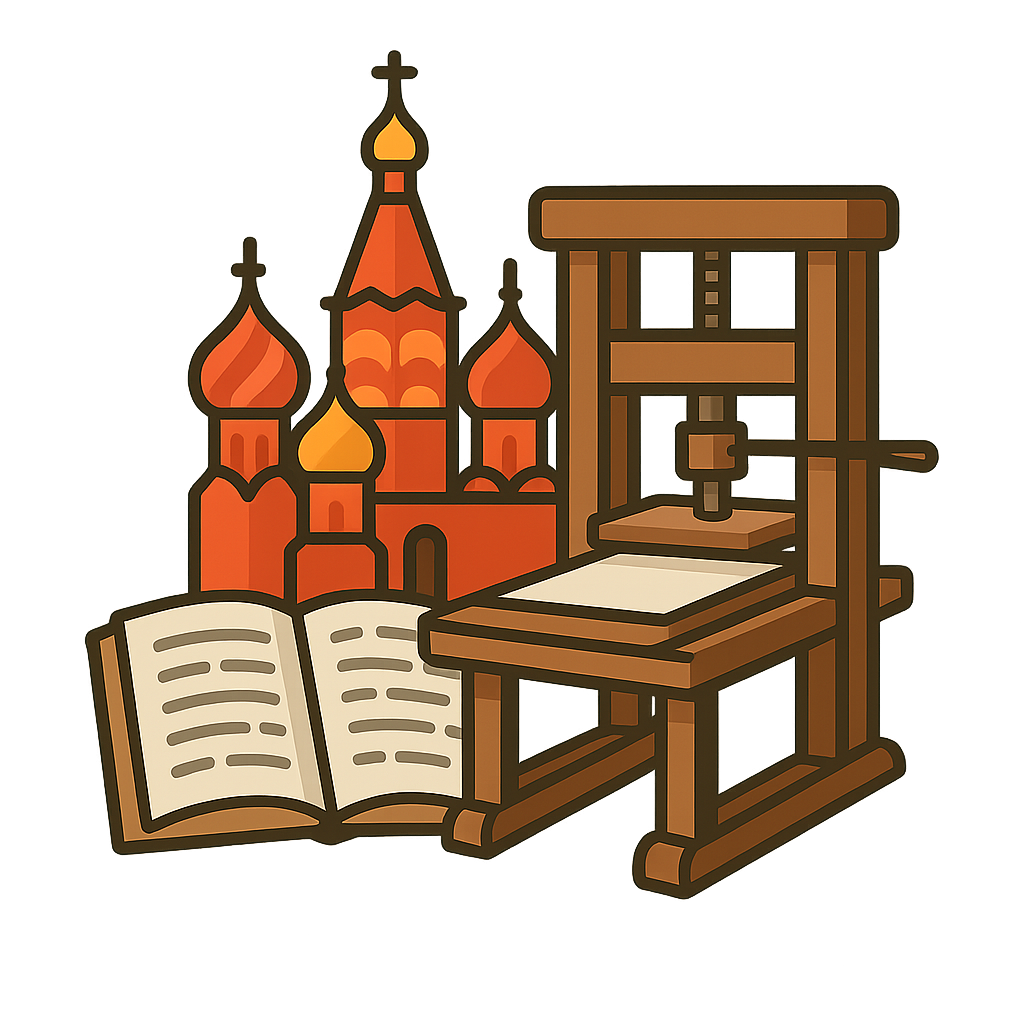
My work gave me the first glimmer of an idea. I was a goldsmith, which means I was skilled at working with metals. I knew how to melt them, pour them into molds, and carve them into detailed shapes. One day, while working in my shop, I thought about the coins we used. Each one was stamped with letters and images. What if, I wondered, I could make tiny metal stamps for every single letter of the alphabet? Not just one 'A' or one 'B', but dozens of them. Then I could arrange these little metal letters, these "movable type," to spell out words, then sentences, and finally an entire page. Once the page was set up, I could cover it in ink and press paper onto it, making a perfect copy. And I could do it again and again. It sounded simple, but it was incredibly difficult to get right. My first challenge was the metal itself. If it was too soft, the letters would get squished. If it was too hard, they would break. I spent years mixing different metals like lead, tin, and antimony to find the perfect recipe that was strong but easy to shape. Then there was the ink. The watery ink that scribes used just rolled right off my metal letters. I had to invent a whole new kind of ink, one that was thick and oily like a varnish, so it would stick to the metal perfectly. The biggest piece of the puzzle was the press itself. I saw how farmers used giant screws to press grapes for wine, and I realized I could adapt that idea. I designed a huge wooden machine that could press the paper down onto my inked letters with firm, even pressure. It took so much time and money, and many of my experiments failed. I had to borrow money from a man named Johann Fust to keep my workshop going. Sometimes I felt like giving up, but the dream of a world full of books kept me going.
Johannes Gutenberg and the Amazing Printing Machine
Hello there. My name is Johannes Gutenberg, and I lived a long, long time ago in a town called Mainz in Germany. When I was a boy, the world was a very different place. There were no computers or phones, of course, but there were also very few books. Can you imagine a world with almost no books? The ones that did exist were incredibly special and precious. Each one had to be written out by hand, letter by letter, by a person called a scribe. A scribe would sit for months, sometimes even years, carefully dipping a pen into ink and copying words from an old book to a new page. Because it took so much time and effort, books were unbelievably expensive. Only the richest kings, queens, and church leaders could afford to own even a few. This always made me a little sad. It felt like all the wonderful stories, amazing ideas, and important knowledge about the world were locked away in a treasure chest, and only a few people had the key. I used to dream of finding a way to unlock that chest for everyone. I believed that if more people could read and learn, the world would become a brighter, smarter, and kinder place. I just needed to figure out how.
My work gave me the first glimmer of an idea. I was a goldsmith, which means I was skilled at working with metals. I knew how to melt them, pour them into molds, and carve them into detailed shapes. One day, while working in my shop, I thought about the coins we used. Each one was stamped with letters and images. What if, I wondered, I could make tiny metal stamps for every single letter of the alphabet? Not just one 'A' or one 'B', but dozens of them. Then I could arrange these little metal letters, these "movable type," to spell out words, then sentences, and finally an entire page. Once the page was set up, I could cover it in ink and press paper onto it, making a perfect copy. And I could do it again and again. It sounded simple, but it was incredibly difficult to get right. My first challenge was the metal itself. If it was too soft, the letters would get squished. If it was too hard, they would break. I spent years mixing different metals like lead, tin, and antimony to find the perfect recipe that was strong but easy to shape. Then there was the ink. The watery ink that scribes used just rolled right off my metal letters. I had to invent a whole new kind of ink, one that was thick and oily like a varnish, so it would stick to the metal perfectly. The biggest piece of the puzzle was the press itself. I saw how farmers used giant screws to press grapes for wine, and I realized I could adapt that idea. I designed a huge wooden machine that could press the paper down onto my inked letters with firm, even pressure. It took so much time and money, and many of my experiments failed. I had to borrow money from a man named Johann Fust to keep my workshop going. Sometimes I felt like giving up, but the dream of a world full of books kept me going.
Finally, after so many years of hard work, the day came to print my first major book. I chose the Bible, as it was the most important book in my world. I can still remember the feeling in my workshop on that day, around the year 1455. The air was thick with the rich, earthy smell of my special ink. The great wooden press stood before me like a gentle giant. My helpers and I carefully arranged the thousands of tiny metal letters, locking them into a frame. We rolled the sticky ink over them, laid a clean sheet of paper on top, and then turned the giant screw of the press. There was a loud clank and a groan from the wood as it pushed down. My heart was pounding in my chest. Did it work? We pulled the screw back up and gently peeled the paper away. It was perfect. The letters were crisp, dark, and beautiful. I felt a wave of joy and relief wash over me; I had done it. My invention worked. After that moment, everything began to change. My idea spread like wildfire across Europe. Soon, other printing shops opened, making not just Bibles, but books about science, poetry, history, and thrilling adventures. Knowledge was finally unlocked from its treasure chest. Books became cheaper, so teachers, merchants, and families could finally afford them. Looking back, I see that my invention was more than just a machine. It was a key that opened the door to learning for everyone. It just goes to show that if you have an idea you believe in, and you work on it with all your heart, you can truly change the world.
Wow facts
About
A period of dramatic change in Europe when Johannes Gutenberg's invention of the printing press around 1440 made it possible to produce books quickly and cheaply, spreading knowledge and ideas to many more people.
Take a Quiz
Question 1 of 5
Why was it so important for Johannes Gutenberg to find a new way to make books?
Explore next



Want to do even more?
Go beyond exploring. Unlock tools that turn every story into real learning.

Storypie Plus for families
Full stories, quizzes, and printables. Nights and car rides, sorted.
- Unlimited audio stories
- Create Mode: your child stars in the story
- Offline downloads
- Printable worksheets & coloring pages

Why Storypie for Schools
Students engaged. Prep in seconds. Evenings back to you.
- Worksheets & Quizzes
- Classroom Management
- Formative Assessment
- Custom Curriculum & Lesson Plans
- 27 Languages

Why Storypie for Homeschool
Curriculum done. They'll ask for more. Hours back in your day.
- Worksheet Generator
- First-Person Audio Stories
- Built-in Comprehension Quizzes
- Custom Curriculum & Lesson Plans
- Print & Go Activities