English


Seneca Falls Convention
The first women's rights convention in the United States, held in Seneca Falls, New York, in July 1848.
Reads at Grades 6–8 Listens at Grades 4–8
Print & create
Answer keys·No prep·Free with an account
28 worksheets · answer keys · full story · quiz · Ages 10-12 · CEFR B2
Plus adds 102,000+ more stories in 27 languages, audio for every one, and printables for all of them.
Just want Seneca Falls Convention?
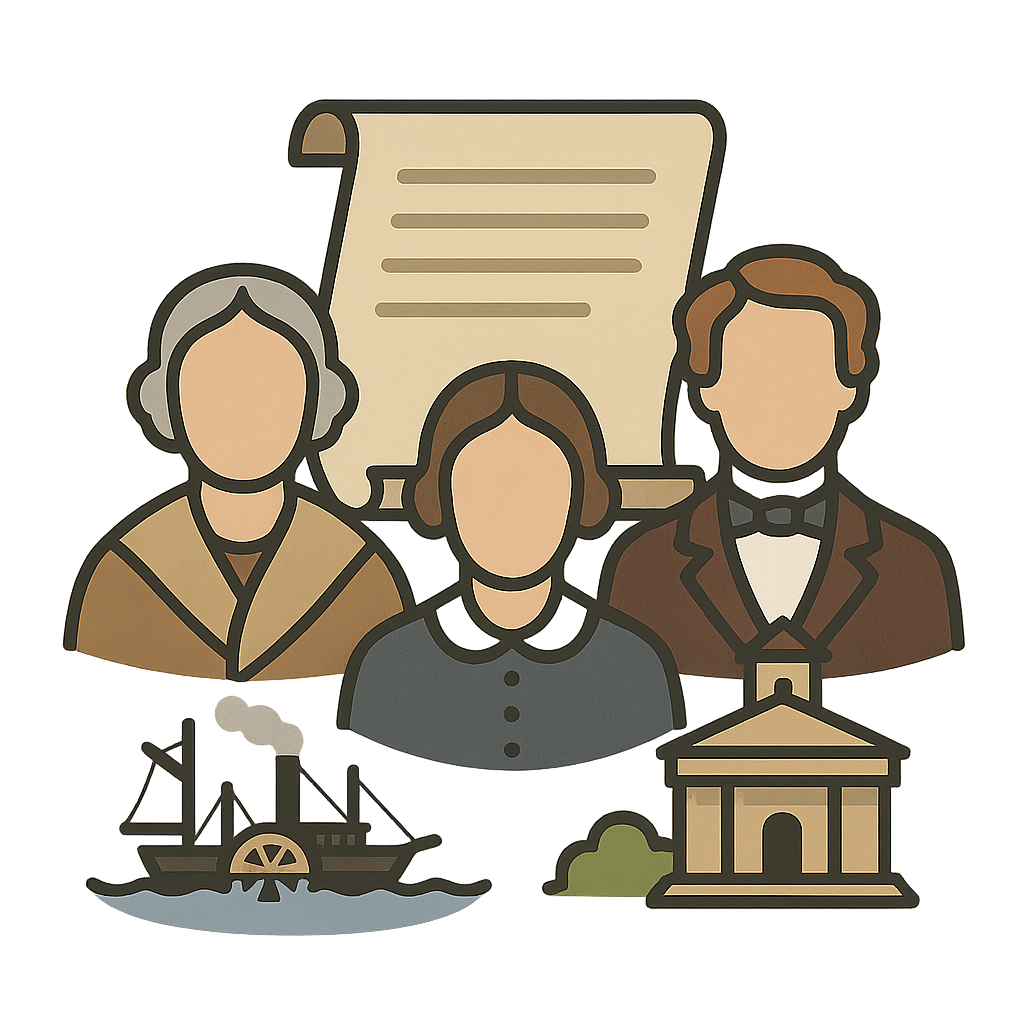
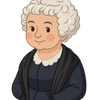
My name is Elizabeth Cady Stanton, and I want to tell you about a time when an idea, a simple but powerful idea, began to change the world for women. To understand why we did what we did, you must first imagine what life was like for a woman in the 1840s. It was a world with invisible walls. We were expected to marry, raise children, and manage a home. We could not vote, we could not own property in our own name once married, and the doors to higher education and most professions were firmly closed to us. Our opinions, especially on matters of politics or law, were considered unimportant. I felt a constant frustration, a sense that my mind was a bird in a cage, longing to fly free.
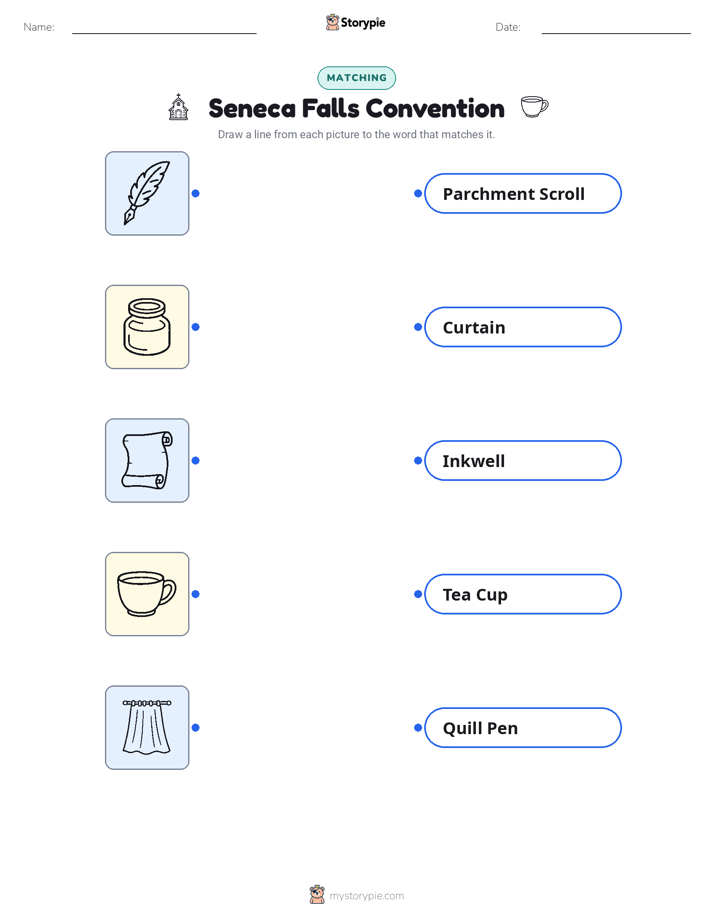
The seed for our rebellion was planted far from my home, across the Atlantic Ocean. In 1840, my husband and I traveled to London, England, for the World Anti-Slavery Convention. I was passionate about the cause of abolition, of ending the terrible injustice of slavery. I went expecting to join a great meeting of minds, to lend my voice to the chorus for freedom. It was there I met Lucretia Mott, a Quaker minister and a woman of incredible intellect and conviction. But upon our arrival, we were told that women delegates would not be seated. We were not allowed to speak. We were forced to sit in a separate gallery, hidden behind a curtain, and listen in silence as the men debated. The irony was staggering. Here were men fighting for the freedom of others, yet they could not see the injustice of silencing half the human race. Lucretia and I paced the streets of London, filled with a shared indignation. It was there, in our shared frustration, that we made a vow. Someday, we would hold a convention of our own, one for the rights of women.
The Seneca Falls Convention: A Woman's Right to a Voice
My name is Elizabeth Cady Stanton, and I want to tell you about a time when an idea, a simple but powerful idea, began to change the world for women. To understand why we did what we did, you must first imagine what life was like for a woman in the 1840s. It was a world with invisible walls. We were expected to marry, raise children, and manage a home. We could not vote, we could not own property in our own name once married, and the doors to higher education and most professions were firmly closed to us. Our opinions, especially on matters of politics or law, were considered unimportant. I felt a constant frustration, a sense that my mind was a bird in a cage, longing to fly free.
The seed for our rebellion was planted far from my home, across the Atlantic Ocean. In 1840, my husband and I traveled to London, England, for the World Anti-Slavery Convention. I was passionate about the cause of abolition, of ending the terrible injustice of slavery. I went expecting to join a great meeting of minds, to lend my voice to the chorus for freedom. It was there I met Lucretia Mott, a Quaker minister and a woman of incredible intellect and conviction. But upon our arrival, we were told that women delegates would not be seated. We were not allowed to speak. We were forced to sit in a separate gallery, hidden behind a curtain, and listen in silence as the men debated. The irony was staggering. Here were men fighting for the freedom of others, yet they could not see the injustice of silencing half the human race. Lucretia and I paced the streets of London, filled with a shared indignation. It was there, in our shared frustration, that we made a vow. Someday, we would hold a convention of our own, one for the rights of women.
For eight years, that vow simmered. Life went on. I moved to the small town of Seneca Falls, New York, and became busy with my growing family. The days were filled with the tasks of a mother and homemaker, and I felt my intellectual spirit dwindling. My discontent grew until it felt like a heavy cloak. Then, on a summer day, everything changed. On July 9th, 1848, I received an invitation to a tea party at the home of my friend Jane Hunt. There, I was reunited with Lucretia Mott, who was visiting her sister, Martha Coffin Wright. Another friend, Mary Ann M'Clintock, was also present. As we sat together, I poured out all my frustrations—the isolation, the limitations, the feeling of being powerless. I soon realized I was not alone. Every woman in that room felt the same burning injustice. Our quiet tea party quickly transformed into a council of war. Lucretia reminded me of our London vow, and we decided the time for waiting was over. The time to act was now.
We would hold our convention, not in a year or a month, but in just ten days. A flurry of activity erupted from that small tea party. We wrote a notice and placed it in the local newspaper, the Seneca County Courier, announcing the first-ever public meeting to discuss the social, civil, and religious rights of women. Our most important task, however, was to create a document that would clearly state our purpose. We gathered at Mary Ann M'Clintock's home and decided to model our declaration on the United States Declaration of Independence. It was a bold move. We took that famous phrase, “all men are created equal,” and wrote, “all men and women are created equal.” Instead of listing grievances against King George, we listed the long history of injustices that men had imposed upon women. We wrote about the laws that made a married woman “civilly dead,” the denial of education, the barring from professions, and the different moral code expected of us. We called it the Declaration of Sentiments, and it would be the centerpiece of our convention.
On the morning of July 19th, 1848, my heart pounded with a mix of excitement and terror as I rode to the Wesleyan Chapel in Seneca Falls. What if no one came. What if people just laughed at us. To our astonishment, people were already gathering. By the time the meeting began, nearly 300 individuals had crowded into the small chapel, including about 40 men who had come to listen and support us. The first day was for women only, and we read our Declaration of Sentiments and the resolutions we had drafted. The next day, July 20th, the meeting was open to everyone, and the real debates began. We discussed each resolution, and most passed with little argument. But then we came to the ninth resolution. It was the one I had insisted on including, the one that stated, “it is the duty of the women of this country to secure to themselves their sacred right to the elective franchise”—the right to vote.
The room erupted in debate. Many, including my dear friend Lucretia Mott, feared this demand was too extreme. She worried it was so radical that it would make our entire cause seem ridiculous and cause us to lose all support. The resolution seemed destined to fail. Just then, a powerful voice rose from the crowd. It belonged to Frederick Douglass, the renowned abolitionist leader and the only African American in attendance. He stood and spoke with great passion, arguing that he could not accept the right to vote for himself as a Black man if he did not also demand that same right for women. He said the world would be a better place if women were involved in the political sphere. His eloquent and principled stand shifted the mood in the room. When the vote was finally called, the resolution passed by a small margin. We had done it. We had officially demanded the right to vote.
In the weeks that followed, we faced a storm of criticism. Newspapers across the country mocked and condemned us. They called us unfeminine, ridiculous, and said we were threatening the very fabric of society. Some of the women who had signed the Declaration were so frightened by the public backlash that they withdrew their names. But for many of us, the ridicule only strengthened our resolve. We had spoken the truth, and we would not be silenced. The Seneca Falls Convention was not the end of our struggle; it was the very beginning. It was the first drop of water that starts a great wave. That small meeting in a little chapel in upstate New York sparked a movement that would spread across the nation. It inspired countless other women's rights conventions and launched a fight for suffrage that would last for more than seventy years. My role was to help plant that seed, to be one of the voices that dared to ask for more. I learned that you must never underestimate the power of raising your voice for justice, because even a single, determined voice can echo through history and inspire a revolution.
Wow facts
About
The first women's rights convention in the United States, held in Seneca Falls, New York, in July 1848. It launched the national women's suffrage movement and produced the Declaration of Sentiments, a foundational document for American feminism.
Take a Quiz
Question 1 of 5
In your own words, retell the main events that led to the Seneca Falls Convention.
Explore next





Want to do even more?
Go beyond exploring. Unlock tools that turn every story into real learning.

Storypie Plus for families
Full stories, quizzes, and printables. Nights and car rides, sorted.
- Unlimited audio stories
- Create Mode: your child stars in the story
- Offline downloads
- Printable worksheets & coloring pages

Why Storypie for Schools
Students engaged. Prep in seconds. Evenings back to you.
- Worksheets & Quizzes
- Classroom Management
- Formative Assessment
- Custom Curriculum & Lesson Plans
- 27 Languages

Why Storypie for Homeschool
Curriculum done. They'll ask for more. Hours back in your day.
- Worksheet Generator
- First-Person Audio Stories
- Built-in Comprehension Quizzes
- Custom Curriculum & Lesson Plans
- Print & Go Activities