English

Seneca Falls Convention
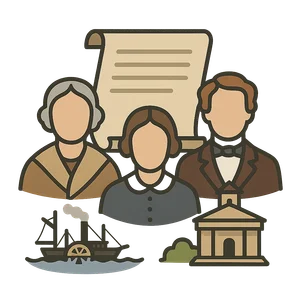
The first women's rights convention in the United States, held in Seneca Falls, New York, in July 1848.
Reads at Grades K-2 Listens at K–3
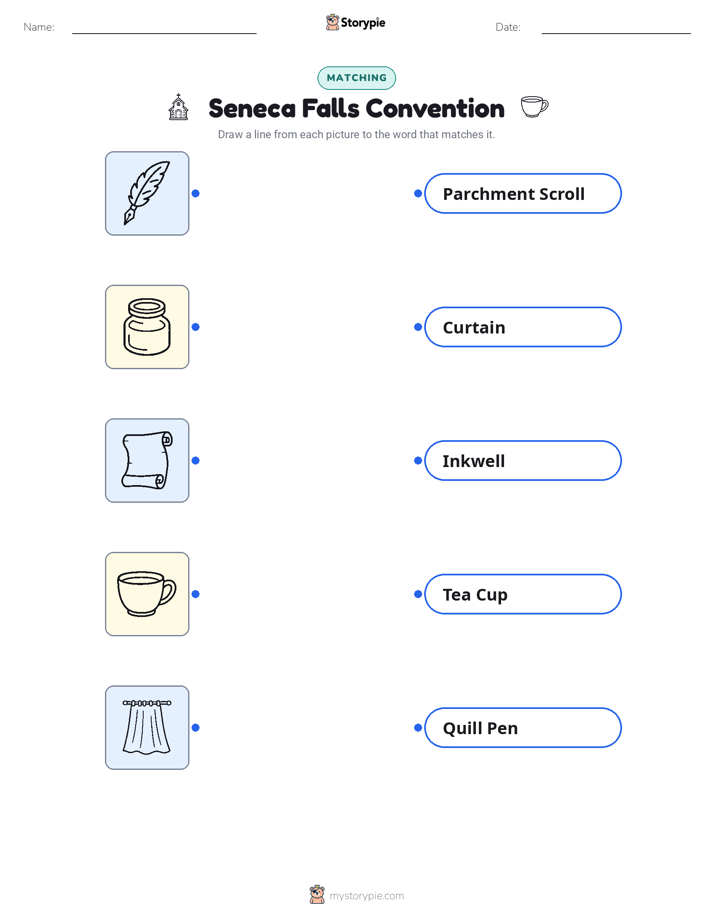
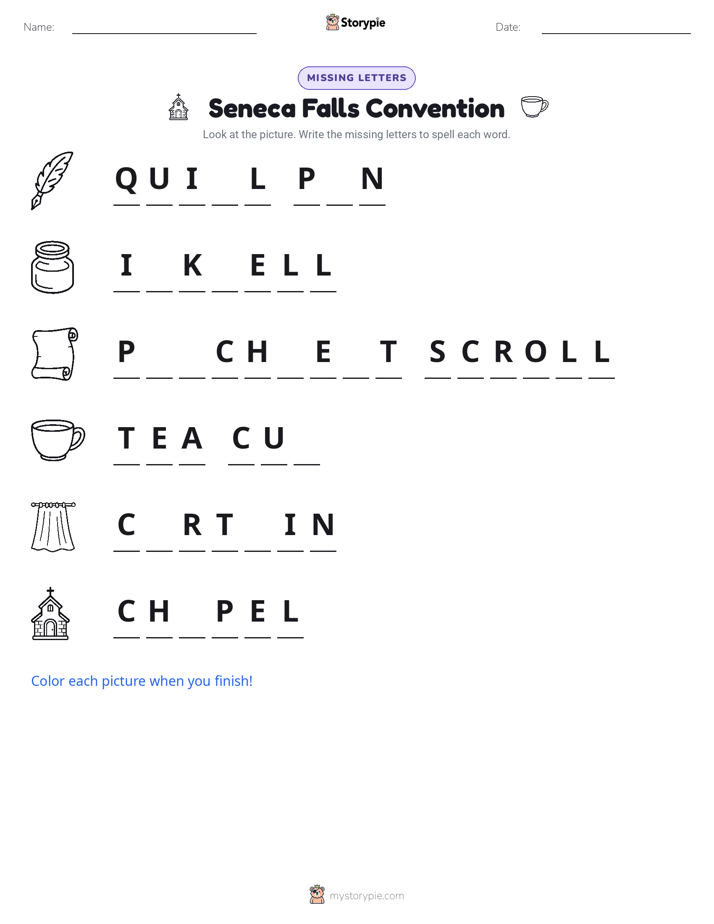
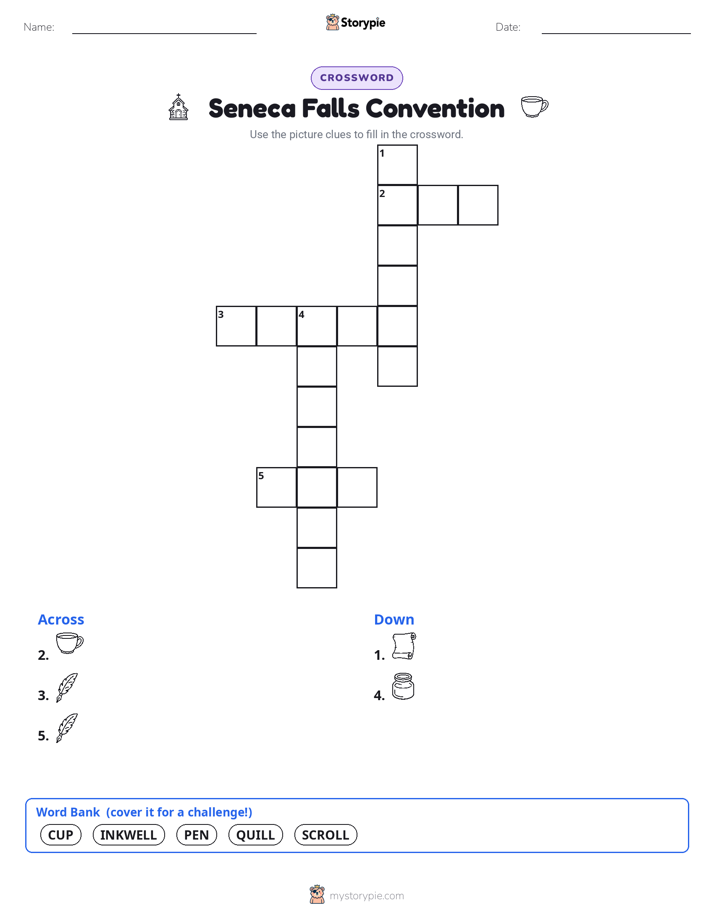
Print & create
Answer keys·No prep·Free with an account
28 worksheets · answer keys · full story · quiz · Ages 6-8 · CEFR A2
Plus adds 102,000+ more stories in 27 languages, audio for every one, and printables for all of them.
Just want Seneca Falls Convention?
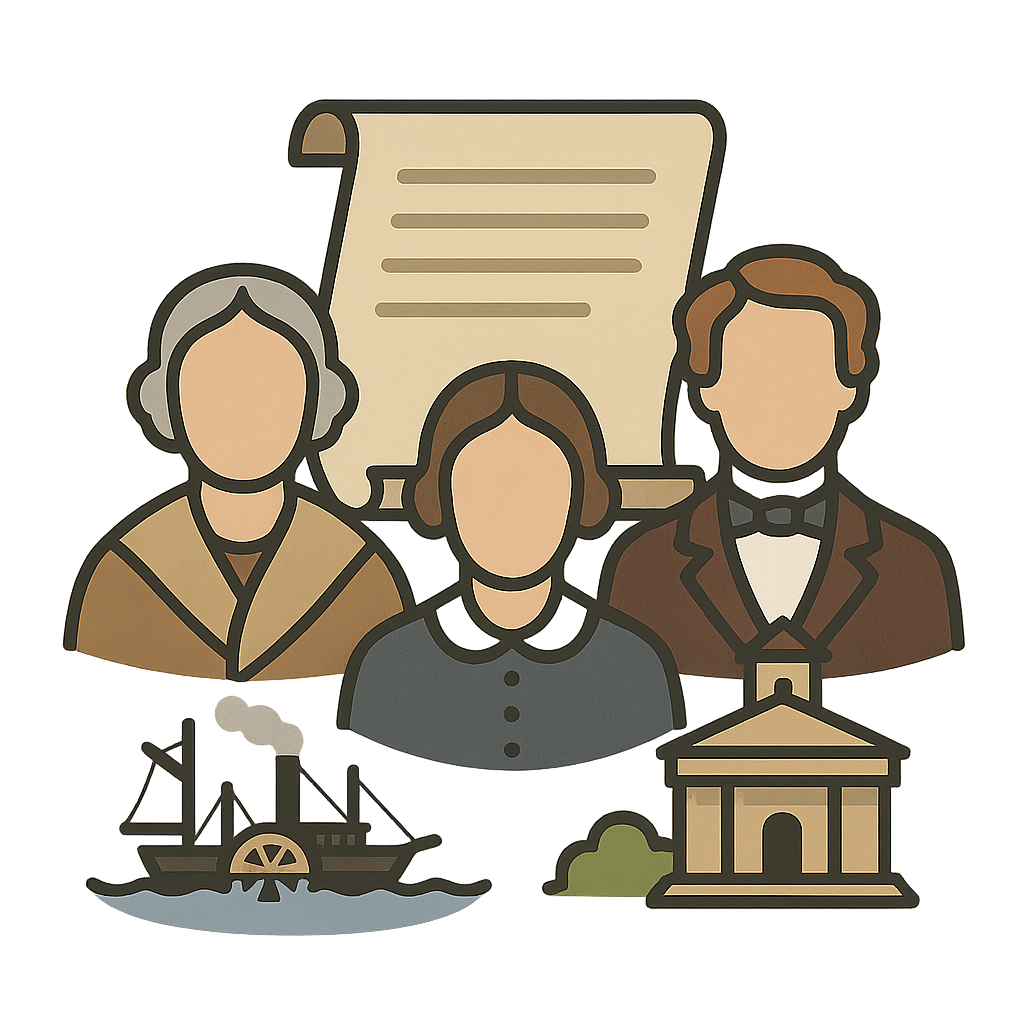
Hello there. My name is Elizabeth Cady Stanton. When I was a little girl, I noticed that the rules for boys and girls were very different. Boys could grow up to be doctors or lawyers, but girls were expected to stay home. It just didn't feel fair to me. One warm day, on July 9th, 1848, I was having tea with my good friend, Lucretia Mott. We talked about how unfair it was that women couldn't own property or even vote for the people who made the rules. As we sipped our tea, a big idea popped into my head. "Lucretia," I said, "we should have a meeting. A big meeting where we can invite everyone to talk about women's rights.". Lucretia’s eyes lit up. She agreed it was a wonderful idea. We decided right then and there to organize a convention to discuss how we could make the world a fairer place for women.
Ten days later, on July 19th, 1848, the big day arrived. I felt a mix of excitement and nervousness buzzing inside me, like a busy bumblebee. Our meeting was held at a building called the Wesleyan Chapel in a town named Seneca Falls, New York. So many people came, both women and men. Before the meeting, I had worked very hard on a special paper. I called it the Declaration of Sentiments. It was a list of all the things we believed were unfair and all the rights that women should have, just like men. My hands trembled a little as I stood up in front of everyone to read it aloud. "We hold these truths to be self-evident: that all men and women are created equal," I read. The room was quiet as everyone listened. After I finished, my friend, the wonderful Frederick Douglass, stood up to speak. He was a brave man who fought against slavery, and he used his powerful voice to support us. He especially agreed with our most daring idea: that women should have the right to vote. His words gave us all so much courage and made our message feel even stronger.
Elizabeth's Big Idea for a Fairer World
Hello there. My name is Elizabeth Cady Stanton. When I was a little girl, I noticed that the rules for boys and girls were very different. Boys could grow up to be doctors or lawyers, but girls were expected to stay home. It just didn't feel fair to me. One warm day, on July 9th, 1848, I was having tea with my good friend, Lucretia Mott. We talked about how unfair it was that women couldn't own property or even vote for the people who made the rules. As we sipped our tea, a big idea popped into my head. "Lucretia," I said, "we should have a meeting. A big meeting where we can invite everyone to talk about women's rights.". Lucretia’s eyes lit up. She agreed it was a wonderful idea. We decided right then and there to organize a convention to discuss how we could make the world a fairer place for women.
Ten days later, on July 19th, 1848, the big day arrived. I felt a mix of excitement and nervousness buzzing inside me, like a busy bumblebee. Our meeting was held at a building called the Wesleyan Chapel in a town named Seneca Falls, New York. So many people came, both women and men. Before the meeting, I had worked very hard on a special paper. I called it the Declaration of Sentiments. It was a list of all the things we believed were unfair and all the rights that women should have, just like men. My hands trembled a little as I stood up in front of everyone to read it aloud. "We hold these truths to be self-evident: that all men and women are created equal," I read. The room was quiet as everyone listened. After I finished, my friend, the wonderful Frederick Douglass, stood up to speak. He was a brave man who fought against slavery, and he used his powerful voice to support us. He especially agreed with our most daring idea: that women should have the right to vote. His words gave us all so much courage and made our message feel even stronger.
The meeting lasted for two whole days. Not everyone who came agreed with our ideas. Some people thought our plans were too bold and would never work. But many others believed in what we were saying. At the end of the convention, one hundred people, both women and men, stepped forward to sign their names on my Declaration of Sentiments. Seeing all those names felt like a promise for a better future. Our meeting in Seneca Falls wasn't the end of the journey; it was just the beginning. I like to think of it as a little spark. That one small spark started a big fire for change that would burn for many, many years. It took a long time, but that meeting helped start the long road that eventually led to women winning the right to vote. It showed that even a small group of friends with a good idea can help change the world.
Wow facts
About
The first women's rights convention in the United States, held in Seneca Falls, New York, in July 1848. It launched the national women's suffrage movement and produced the Declaration of Sentiments, a foundational document for American feminism.
Take a Quiz
Question 1 of 4
Why did Elizabeth and Lucretia decide to have a big meeting?
Explore next

Want to do even more?
Go beyond exploring. Unlock tools that turn every story into real learning.

Storypie Plus for families
Full stories, quizzes, and printables. Nights and car rides, sorted.
- Unlimited audio stories
- Create Mode: your child stars in the story
- Offline downloads
- Printable worksheets & coloring pages

Why Storypie for Schools
Students engaged. Prep in seconds. Evenings back to you.
- Worksheets & Quizzes
- Classroom Management
- Formative Assessment
- Custom Curriculum & Lesson Plans
- 27 Languages

Why Storypie for Homeschool
Curriculum done. They'll ask for more. Hours back in your day.
- Worksheet Generator
- First-Person Audio Stories
- Built-in Comprehension Quizzes
- Custom Curriculum & Lesson Plans
- Print & Go Activities