English


Song Dynasty
The Song Dynasty (960–1279 CE) was a culturally rich and technologically innovative era in Chinese history…
Reads at Grades 3–5 Listens at Grades 1–5
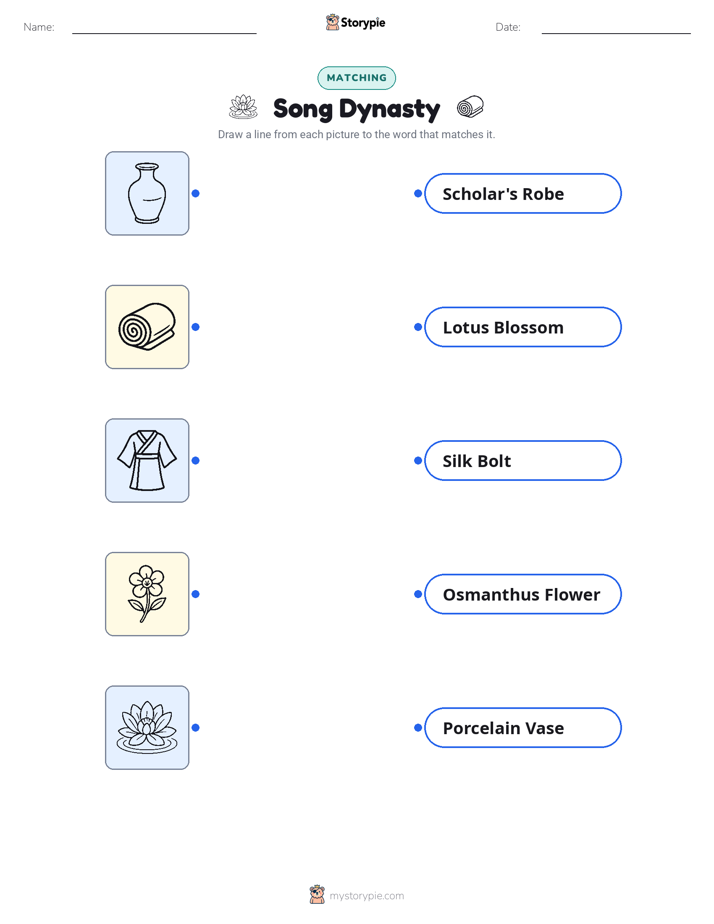
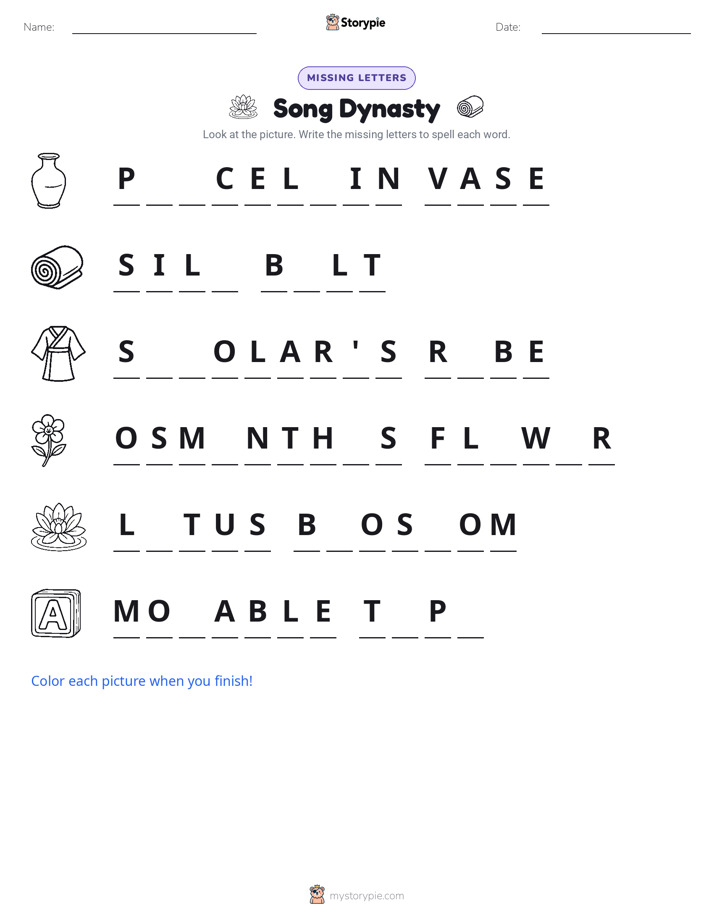
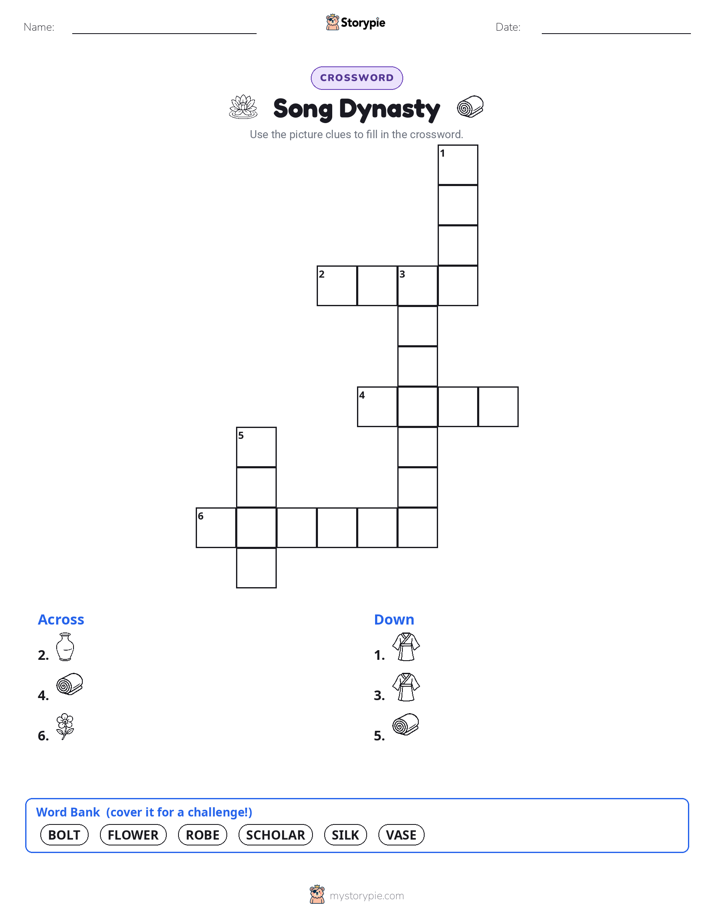
Print & create
Answer keys·No prep·Free with an account
28 worksheets · answer keys · full story · quiz · Ages 8-10 · CEFR B1
Plus adds 102,000+ more stories in 27 languages, audio for every one, and printables for all of them.
Just want Song Dynasty?

My name is Su Shi, and you might know me as a poet, a painter, or even a government official. I lived a long time ago, during a period in China called the Song Dynasty, which lasted from 960 to 1279 CE. My home for much of my life was the grand capital city of Kaifeng. What a place it was. Imagine a city so big and busy that the streets were always filled with people. Merchants called out, selling everything from shimmering silk cloth to fragrant spices that arrived on boats floating down the Grand Canal, a man-made river that connected the north and south of our country. The air was filled with the smells of delicious street food and the sounds of music and conversation. In my time, it was a city of art and ideas. We believed that the best people to help the emperor run the country were the smartest, not just the richest. So, men from all over would study for years to take difficult tests called the civil service examinations. If you passed, you could earn a respected job in the government based on your own knowledge. I was proud to be one of those scholar-officials, serving our emperor and our people through the power of my mind and my pen.
Living in the Song Dynasty felt like living in an age of wonders. Every day, it seemed there was a new, brilliant idea. One of the most amazing things I ever saw was something created by a man named Bi Sheng. He invented something called movable type printing. Before him, if you wanted a copy of a book, a scribe had to write out every single word by hand, which took months. But Bi Sheng created little clay blocks for each character of our language. He could arrange them to form a page, cover them in ink, and press paper onto them to make a copy in moments. Suddenly, books and poems could be shared with thousands of people. Knowledge was no longer just for the wealthy. I also saw our sailors using a new tool, a magnetic compass. It was a small needle that always pointed south, which meant our ships could navigate the vast, open ocean without getting lost. Our trading ships, called junks, could sail to faraway lands and bring back incredible treasures. And I can't forget about gunpowder. While some used it for weapons, my favorite use was for fireworks. During festivals, the night sky above Kaifeng would explode in showers of red, gold, and green light, booming and crackling in beautiful patterns. It was magic made from science.
My Life in the Amazing Song Dynasty
My name is Su Shi, and you might know me as a poet, a painter, or even a government official. I lived a long time ago, during a period in China called the Song Dynasty, which lasted from 960 to 1279 CE. My home for much of my life was the grand capital city of Kaifeng. What a place it was. Imagine a city so big and busy that the streets were always filled with people. Merchants called out, selling everything from shimmering silk cloth to fragrant spices that arrived on boats floating down the Grand Canal, a man-made river that connected the north and south of our country. The air was filled with the smells of delicious street food and the sounds of music and conversation. In my time, it was a city of art and ideas. We believed that the best people to help the emperor run the country were the smartest, not just the richest. So, men from all over would study for years to take difficult tests called the civil service examinations. If you passed, you could earn a respected job in the government based on your own knowledge. I was proud to be one of those scholar-officials, serving our emperor and our people through the power of my mind and my pen.
Living in the Song Dynasty felt like living in an age of wonders. Every day, it seemed there was a new, brilliant idea. One of the most amazing things I ever saw was something created by a man named Bi Sheng. He invented something called movable type printing. Before him, if you wanted a copy of a book, a scribe had to write out every single word by hand, which took months. But Bi Sheng created little clay blocks for each character of our language. He could arrange them to form a page, cover them in ink, and press paper onto them to make a copy in moments. Suddenly, books and poems could be shared with thousands of people. Knowledge was no longer just for the wealthy. I also saw our sailors using a new tool, a magnetic compass. It was a small needle that always pointed south, which meant our ships could navigate the vast, open ocean without getting lost. Our trading ships, called junks, could sail to faraway lands and bring back incredible treasures. And I can't forget about gunpowder. While some used it for weapons, my favorite use was for fireworks. During festivals, the night sky above Kaifeng would explode in showers of red, gold, and green light, booming and crackling in beautiful patterns. It was magic made from science.
Our golden age in Kaifeng was bright, but like all things, it faced challenges. From the north, powerful groups of people grew stronger, and they wanted the riches of our lands. Eventually, in the year 1127 CE, invaders forced our emperor’s court to flee Kaifeng and move to the south. It was a difficult time, and many beautiful things were lost. But a great idea, a beautiful poem, or a clever invention is not so easily destroyed. The spirit of the Song Dynasty lived on. Our artists continued to paint breathtaking landscapes, our thinkers continued to write, and our inventors’ creations began a long journey. The ideas of printing, the compass, and even gunpowder slowly traveled across the world, changing life for people in places I had never even heard of. I believe that our legacy is one of creativity and resilience. Even when we faced hardship, we continued to create things of beauty and intelligence. And that is a lesson that lasts forever: that the things we make with our minds and our hearts can outlive cities and empires, continuing to inspire people for a thousand years.
Wow facts
About
The Song Dynasty (960–1279 CE) was a culturally rich and technologically innovative era in Chinese history, divided into the Northern and Southern Song periods. It is renowned for its artistic achievements and the development of woodblock printing, as well as the use of gunpowder and the magnetic compass for navigation.
Take a Quiz
Question 1 of 5
Why does Su Shi call his time an 'age of wonders'?
Explore next






Want to do even more?
Go beyond exploring. Unlock tools that turn every story into real learning.

Storypie Plus for families
Full stories, quizzes, and printables. Nights and car rides, sorted.
- Unlimited audio stories
- Create Mode: your child stars in the story
- Offline downloads
- Printable worksheets & coloring pages

Why Storypie for Schools
Students engaged. Prep in seconds. Evenings back to you.
- Worksheets & Quizzes
- Classroom Management
- Formative Assessment
- Custom Curriculum & Lesson Plans
- 27 Languages

Why Storypie for Homeschool
Curriculum done. They'll ask for more. Hours back in your day.
- Worksheet Generator
- First-Person Audio Stories
- Built-in Comprehension Quizzes
- Custom Curriculum & Lesson Plans
- Print & Go Activities