English

Song Dynasty
The Song Dynasty (960–1279 CE) was a culturally rich and technologically innovative era in Chinese history…
Reads at Grades 6–8 Listens at Grades 4–8
Print & create
Answer keys·No prep·Free with an account
28 worksheets · answer keys · full story · quiz · Ages 10-12 · CEFR B2
Plus adds 102,000+ more stories in 27 languages, audio for every one, and printables for all of them.
Just want Song Dynasty?
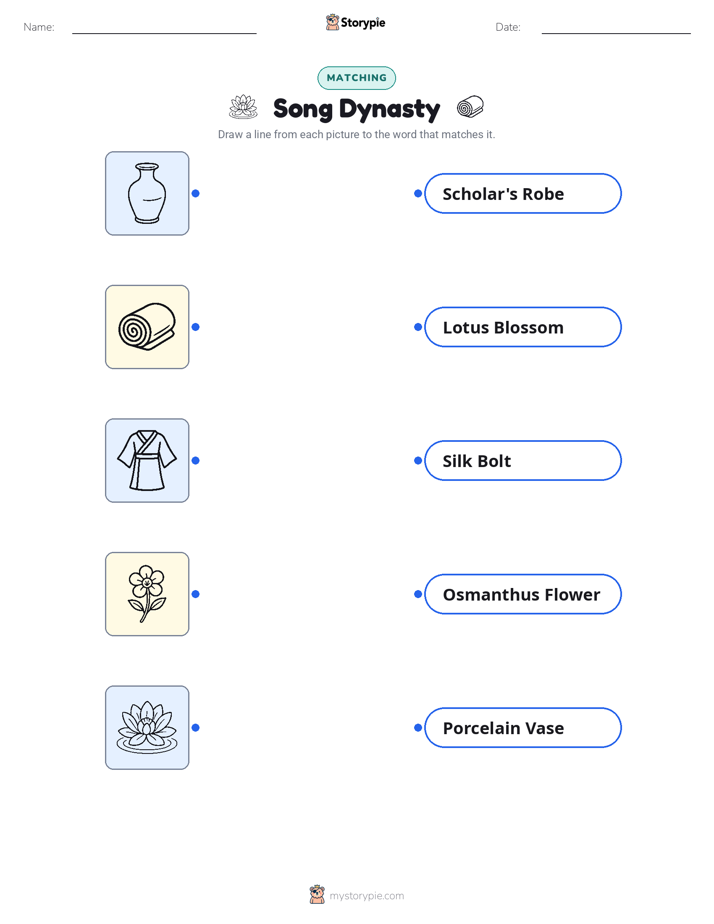
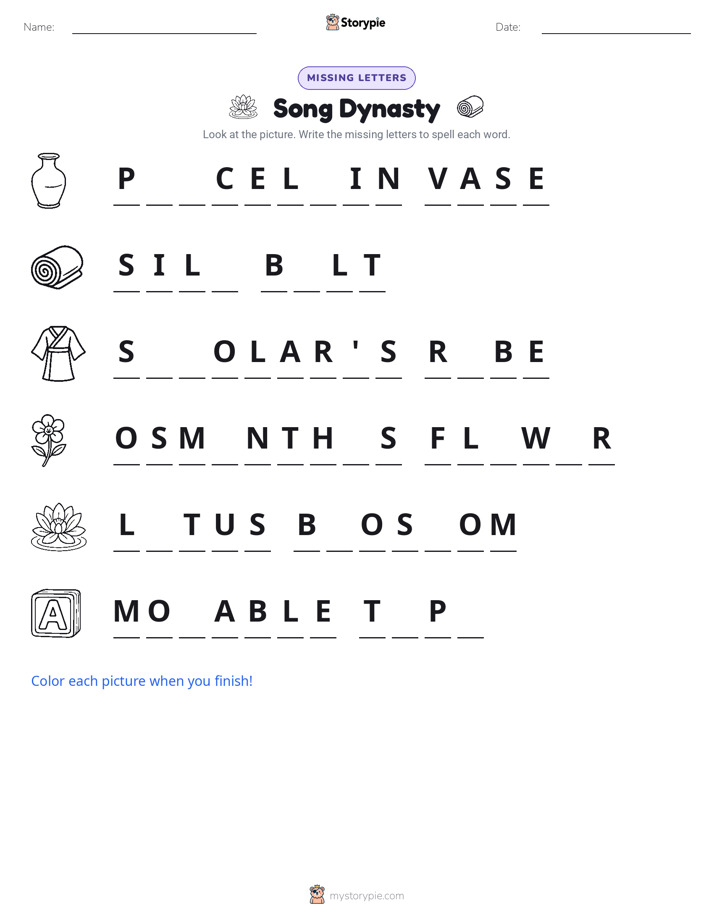
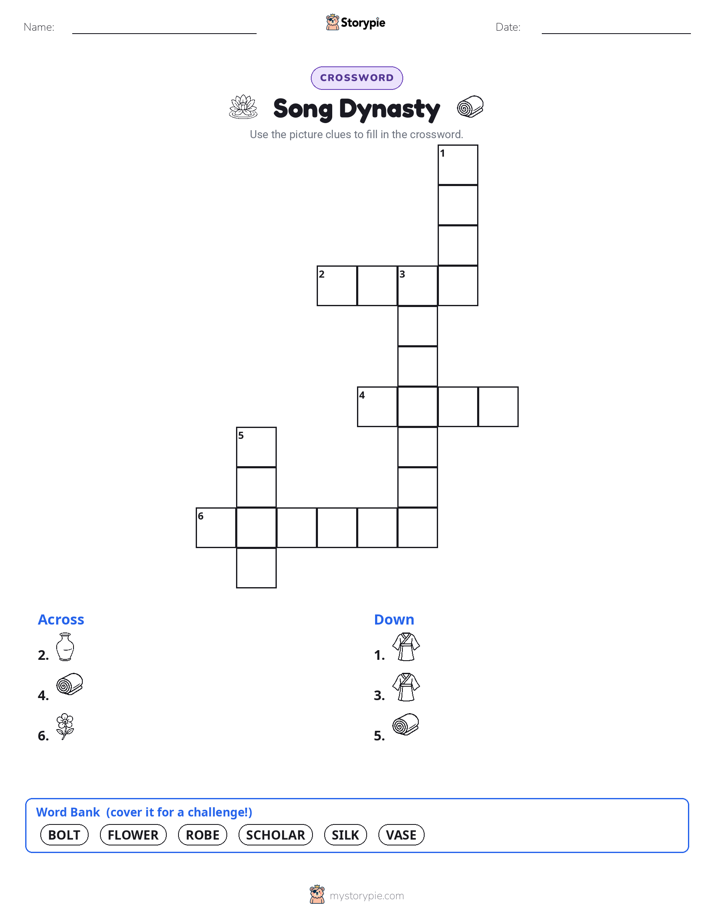
My name is Li Qingzhao, and my story is one of ink, jade, and memory. I was born in the year 1084 CE, into a world that felt as permanent and beautiful as a perfectly crafted porcelain vase. I grew up in Kaifeng, the capital of the great Northern Song Dynasty. It was a city alive with energy. The streets were a river of merchants selling silks from distant lands, scholars debating philosophy in shaded courtyards, and the scent of sweet osmanthus flowers drifting from magnificent gardens. For a girl who loved words, it was paradise. I spent my days reading the classics and writing my own poems, trying to capture the delicate beauty of a lotus blossom or the deep feeling of a quiet evening. Inventions like movable type printing meant that books were more available than ever, and our home was filled with them. Our society valued learning and art above all else, creating a golden age of culture.
My happiness grew when I married a man named Zhao Mingcheng. He was a scholar, just like my father, and he shared my deepest passion. Together, we began a collection that became the center of our world. We didn't collect gold or jewels, but something far more precious to us: ancient scrolls, rare books, bronze vessels from forgotten dynasties, and rubbings of old stone inscriptions. Our home was a museum of history and art. On market days, we would search for new treasures, and in the evenings, we would sit by candlelight, studying our latest find, our minds connected by a shared love for the past. We dreamed of compiling a great catalog of our collection, a book called the *Jin Shi Lu*, to preserve the knowledge of our ancestors. Life was orderly, peaceful, and filled with a quiet joy I thought would last forever.
The Poet and the Fallen Capital
My name is Li Qingzhao, and my story is one of ink, jade, and memory. I was born in the year 1084 CE, into a world that felt as permanent and beautiful as a perfectly crafted porcelain vase. I grew up in Kaifeng, the capital of the great Northern Song Dynasty. It was a city alive with energy. The streets were a river of merchants selling silks from distant lands, scholars debating philosophy in shaded courtyards, and the scent of sweet osmanthus flowers drifting from magnificent gardens. For a girl who loved words, it was paradise. I spent my days reading the classics and writing my own poems, trying to capture the delicate beauty of a lotus blossom or the deep feeling of a quiet evening. Inventions like movable type printing meant that books were more available than ever, and our home was filled with them. Our society valued learning and art above all else, creating a golden age of culture.
My happiness grew when I married a man named Zhao Mingcheng. He was a scholar, just like my father, and he shared my deepest passion. Together, we began a collection that became the center of our world. We didn't collect gold or jewels, but something far more precious to us: ancient scrolls, rare books, bronze vessels from forgotten dynasties, and rubbings of old stone inscriptions. Our home was a museum of history and art. On market days, we would search for new treasures, and in the evenings, we would sit by candlelight, studying our latest find, our minds connected by a shared love for the past. We dreamed of compiling a great catalog of our collection, a book called the Jin Shi Lu, to preserve the knowledge of our ancestors. Life was orderly, peaceful, and filled with a quiet joy I thought would last forever.
But the world outside our peaceful city was changing. To the north, a powerful group known as the Jurchens were growing stronger. Whispers of their armies turned into worried shouts, and soon, the peace we had known for so long began to crack. In the year 1127 CE, the unthinkable happened. The Jurchen armies swept down from the north and surrounded our magnificent capital. The siege was terrifying, and the city that had been a beacon of civilization fell into chaos. This event would later be known as the Jingkang Incident. My husband was away at the time, and I had to make the impossible decision to flee with what I could carry. We abandoned our home, leaving behind room after room of our precious collection. We loaded fifteen carts with the most valuable items, but it was only a fraction of what we had spent a lifetime gathering. My heart broke with every step I took away from Kaifeng. Our flight south was a nightmare. We were refugees in our own country, moving from town to town, always looking over our shoulders.
The journey was hard, and the world we knew was gone. The Emperor and his court had been captured, and the Northern Song Dynasty had collapsed. We were trying to find safety in the south, where a new court was forming. But the greatest tragedy was yet to come. The stress and hardship of our journey took their toll on my beloved Mingcheng. He fell gravely ill, and in 1129 CE, he died, leaving me utterly alone. His death was the final blow. I had lost my home, my collection, and now the love of my life. I was a widow in a fractured kingdom, carrying the heavy weight of our shared memories and the few remaining scrolls from our collection. The golden age was over, and a long, difficult winter had begun in my heart and in my country.
I eventually settled in the new capital, Lin'an, which you might know today as Hangzhou. It was a beautiful city of lakes and willows, but it was not my Kaifeng. I was a stranger there, a relic from a lost world. For years, I wandered, trying to protect the last remnants of our collection, but much of it was lost to theft, fires, and the chaos of the times. The grief and loss I felt were immense, but I had one thing that no one could take from me: my poetry. I poured all my sorrow, my memories, and my strength into my writing. My poems were no longer just about the delicate beauty of nature. They were now filled with the ache of longing for my husband, the deep sadness for my fallen homeland, and the bittersweet memories of a life that was gone. They spoke of cold rains, withered flowers, and the loneliness of a wanderer.
Yet, even in my sadness, I found a new purpose. My words became a way to remember, to honor what we had lost, and to connect with others who felt the same way. I wrote about the strength of the human spirit, the ability to endure even the most painful losses. I finished the catalog my husband and I had started, the Jin Shi Lu, as a final tribute to our life together. I lived into my old age, a famous poet whose words captured the heart of an entire era. My story, and the story of the Song Dynasty, is a lesson that even when cities fall and treasures are lost, the things we create—art, literature, and ideas—can survive. They become the true treasures, passed down through generations, reminding us that there is beauty in resilience and that memory itself is a form of hope.
Wow facts
About
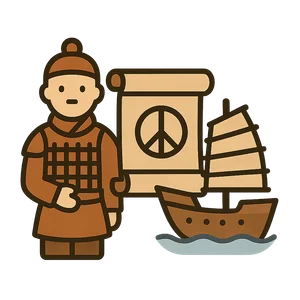
The Song Dynasty (960–1279 CE) was a culturally rich and technologically innovative era in Chinese history, divided into the Northern and Southern Song periods. It is renowned for its artistic achievements and the development of woodblock printing, as well as the use of gunpowder and the magnetic compass for navigation.
Explore next






Want to do even more?
Go beyond exploring. Unlock tools that turn every story into real learning.

Storypie Plus for families
Full stories, quizzes, and printables. Nights and car rides, sorted.
- Unlimited audio stories
- Create Mode: your child stars in the story
- Offline downloads
- Printable worksheets & coloring pages

Why Storypie for Schools
Students engaged. Prep in seconds. Evenings back to you.
- Worksheets & Quizzes
- Classroom Management
- Formative Assessment
- Custom Curriculum & Lesson Plans
- 27 Languages

Why Storypie for Homeschool
Curriculum done. They'll ask for more. Hours back in your day.
- Worksheet Generator
- First-Person Audio Stories
- Built-in Comprehension Quizzes
- Custom Curriculum & Lesson Plans
- Print & Go Activities