

 English

My Promise for the Vote
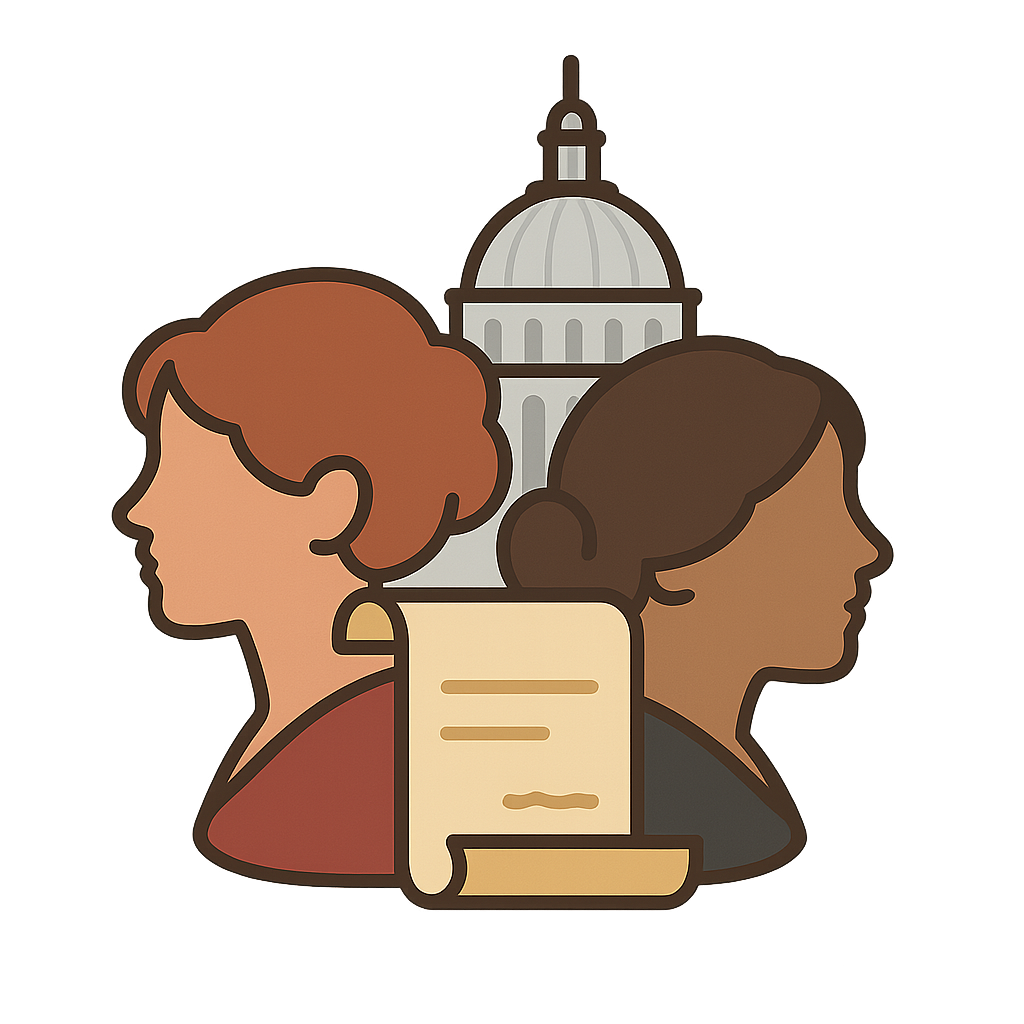
My name is Carrie Chapman Catt, and my story is one of a promise. It began not in a grand hall or on a speaker’s stage, but in the quiet of my family’s kitchen in Iowa when I was just a girl. It was 1872, an election year, and the air buzzed with talk of politics. I watched my father prepare to go to the polls, and I couldn’t understand why my mother, who was just as smart and informed as he was, was staying home. When I asked why she wasn't voting, the adults laughed, explaining that voting was a man’s job. That simple, unfair answer planted a seed of indignation in my heart that would grow for the rest of my life. As I grew older, that feeling blossomed into purpose. I was lucky enough to meet one of the most incredible women of our time, Susan B. Anthony. She was a giant in the fight for women’s right to vote, a movement we called suffrage. She had been fighting for decades, facing ridicule and resistance at every turn. Susan became my mentor and my dear friend. I remember standing with her one day, feeling the weight of the years she had dedicated to the cause. I made a solemn promise to her, a promise from my very soul. I told her that I would dedicate my own life to finishing the work she had started. I would not rest until every woman in America had a voice in her own government.
When I became the president of the National American Woman Suffrage Association for the second time in 1915, our movement was at a crossroads. For over sixty years, women had been fighting, but progress felt agonizingly slow. We were a passionate group, but we were disorganized. Some believed we should only fight for the right to vote state by state, while others insisted we needed an amendment to the U.S. Constitution. The arguments were pulling us apart. I knew we needed a single, unified strategy if we were ever to succeed. So, I developed what came to be known as the 'Winning Plan.' It was ambitious, requiring immense coordination. The plan called for us to fight on two fronts at once. In states where we had a chance of winning suffrage, we would pour our resources into local campaigns. At the same time, we would push relentlessly for a federal amendment in Washington, D.C. This meant organizing millions of women across the country. Imagine a great, national team. We had women writing thousands of letters to their congressmen, their ink staining the pages with passion and logic. We organized enormous, peaceful parades where women marched in white dresses, creating a powerful and beautiful spectacle of unity. I traveled from bustling cities on the East Coast to small farming towns in the West, giving speeches to anyone who would listen, trying to persuade them that democracy was incomplete if half the population was silent. It was exhausting but exhilarating work. Every small victory felt like a giant leap forward. Finally, after years of tireless lobbying, our work in Washington paid off. On June 4th, 1919, Congress passed the 19th Amendment. A wave of hope washed over us, but we knew the final, most difficult battle was still ahead.
The amendment wouldn’t become law until three-fourths of the states—thirty-six of them at the time—voted to ratify it. The countdown began, and it was the most nerve-wracking time of my life. One by one, states voted. Wisconsin, Illinois, and Michigan said yes immediately. We celebrated each victory. But then some states, particularly in the South, voted no. The numbers crept up slowly: thirty states, then thirty-three, then thirty-five. We needed just one more. The entire nation turned its eyes to Tennessee in the sweltering summer of 1920. Nashville became a battleground, not of soldiers, but of ideas. We called it the 'War of the Roses.' The city was flooded with people from both sides of the issue. The supporters of suffrage, like me, wore yellow roses to show our allegiance. The anti-suffrage lobbyists wore red roses. The state capitol building was a sea of red and yellow. The tension was so thick you could feel it in the humid air. The vote was expected to be incredibly close. It all came down to one man on August 18th, 1920. His name was Harry T. Burn, the youngest member of the legislature. He was wearing a red rose, and everyone expected him to vote 'nay.' But that morning, he had received a letter from his mother, Febb Burn. In her letter, she urged him to 'be a good boy' and vote for suffrage. When the time came to cast his vote, the chamber fell silent. Harry T. Burn, with his mother’s words in his heart, voted 'yea.' The tie was broken. We had won.
When the news from Tennessee reached me, I felt a wave of emotion so powerful it almost knocked me over. It was a feeling of pure, overwhelming joy mixed with profound relief. The fight was over. The promise I had made to Susan B. Anthony all those years ago had finally been fulfilled. We had done it. It had taken 72 years of struggle, from the very first women’s rights convention at Seneca Falls in 1848. I thought of all the brave women who had started this journey but were not alive to see its end. Women like Susan, Elizabeth Cady Stanton, and Lucy Stone. They had paved the way for us, and we stood on their shoulders. Their courage had fueled our own, and their legacy was now enshrined in the Constitution. To you, who are reading my story today, I want you to understand the power that now rests in your hands. The right to vote is more than just a privilege; it is your voice. It is your tool to shape the world you want to live in. We fought for so long so that your voice could be heard. Never let it fall silent. Remember our story, and know that no fight for fairness is ever too long or too difficult to win, especially when we stand together.
Activities
Take a Quiz
Test what you learned with a fun quiz!
Get creative with colors!
Print a coloring book page of this topic.















 Free for Educators