English

Carnival - Dutch
Dutch Carnival, known as Carnaval…
Reads at Grades 6–8 Listens at Grades 4–8
Print & create
Answer keys·No prep·Free with an account
28 worksheets · answer keys · full story · quiz · Ages 10-12 · CEFR B2
Plus adds 279,000+ more stories in 27 languages, audio for every one, and printables for all of them.
Just want Carnival - Dutch?
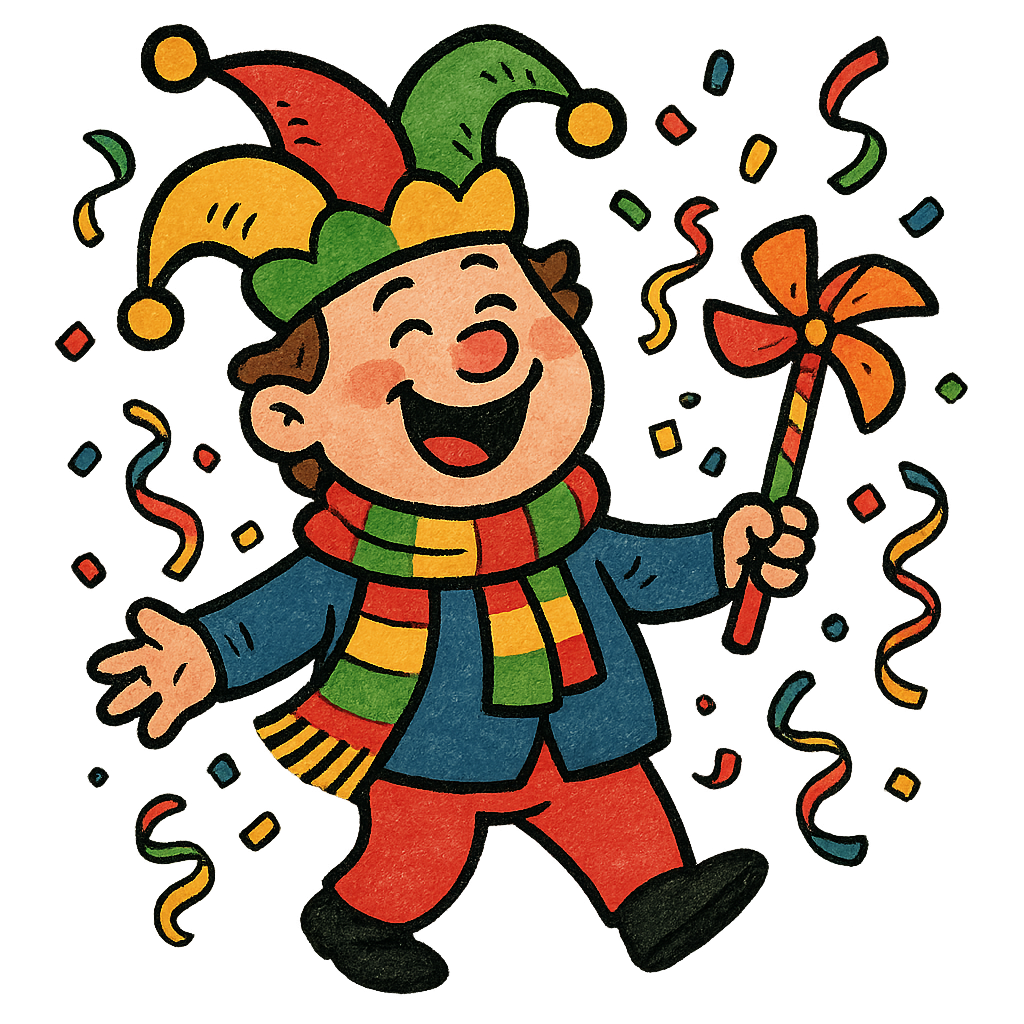
I am the Dutch Carnival, though many people in the Netherlands call me by my local name, 'Carnaval'. I arrive each year as a vibrant, multi-day festival filled with music, elaborate costumes, and grand parades. While my official season begins with a burst of excitement on the 11th of November, my main and most famous celebration takes place in the heart of winter. For three full days leading up to Ash Wednesday, which marks the beginning of the Christian season of Lent, communities gather to observe my traditions of joyful chaos and creativity.
My history is a rich blend of ancient customs and much later religious traditions. My exact origins are not perfectly clear, but some of my practices may have evolved from very old pagan festivals. These were celebrations held by people long ago to mark the end of the long, dark winter and to welcome the return of light and life in the spring. It was a time for feasting and merrymaking after a period of cold and scarcity. As Christianity spread, these older customs didn't simply disappear. Instead, they were often woven into the new cultural fabric. My observance was adopted into the Roman Catholic culture of the Netherlands, taking on a new meaning. I became a final, joyous opportunity for feasting and unrestricted fun before the beginning of Lent, a solemn, 40-day period of fasting and reflection where such indulgences were set aside.
While my spirit is known throughout the Netherlands, my truest home is in the southern provinces of the country. It is here, in the regions of North Brabant and Limburg, that my celebrations are the largest and most famous. These areas have historically been the Catholic heartland of the nation, and because of this deep-rooted connection, my traditions have remained exceptionally strong. The parades are more spectacular, the participation is more widespread, and the sense of community during my observance is powerful. People from all over the country, and even from other parts of Europe, travel to these southern cities to experience my festivities in their most traditional and lively form.
The Story of Dutch Carnival
I am the Dutch Carnival, though many people in the Netherlands call me by my local name, 'Carnaval'. I arrive each year as a vibrant, multi-day festival filled with music, elaborate costumes, and grand parades. While my official season begins with a burst of excitement on the 11th of November, my main and most famous celebration takes place in the heart of winter. For three full days leading up to Ash Wednesday, which marks the beginning of the Christian season of Lent, communities gather to observe my traditions of joyful chaos and creativity.
My history is a rich blend of ancient customs and much later religious traditions. My exact origins are not perfectly clear, but some of my practices may have evolved from very old pagan festivals. These were celebrations held by people long ago to mark the end of the long, dark winter and to welcome the return of light and life in the spring. It was a time for feasting and merrymaking after a period of cold and scarcity. As Christianity spread, these older customs didn't simply disappear. Instead, they were often woven into the new cultural fabric. My observance was adopted into the Roman Catholic culture of the Netherlands, taking on a new meaning. I became a final, joyous opportunity for feasting and unrestricted fun before the beginning of Lent, a solemn, 40-day period of fasting and reflection where such indulgences were set aside.
While my spirit is known throughout the Netherlands, my truest home is in the southern provinces of the country. It is here, in the regions of North Brabant and Limburg, that my celebrations are the largest and most famous. These areas have historically been the Catholic heartland of the nation, and because of this deep-rooted connection, my traditions have remained exceptionally strong. The parades are more spectacular, the participation is more widespread, and the sense of community during my observance is powerful. People from all over the country, and even from other parts of Europe, travel to these southern cities to experience my festivities in their most traditional and lively form.
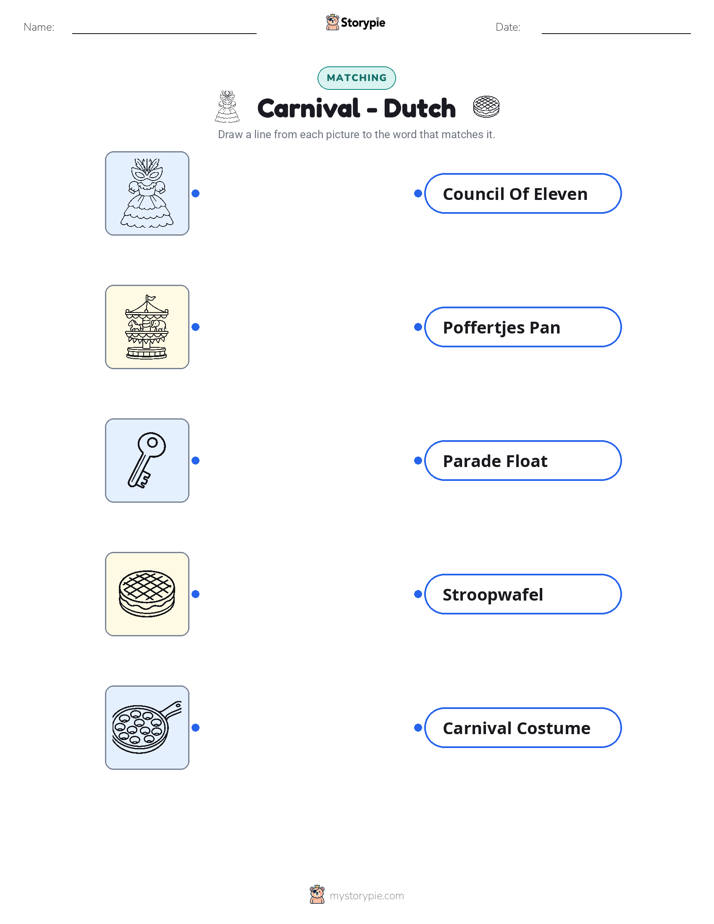
A central and much-loved figure in my celebrations is a temporary, symbolic ruler known as Prince Carnival, or 'Prins Carnaval'. In a special ceremony that kicks off the three-day festival, the mayor of the town or city officially hands over the key to the city to the newly chosen Prince. This act is more than just a performance; it symbolizes a temporary shift in power. For the duration of my celebration, the normal order is suspended, and the Prince, along with his council, rules over a delightful kingdom of foolishness, laughter, and fun. His reign signals that for these few days, the everyday rules of seriousness and decorum no longer apply.
Associated with the Prince and my entire tradition is a very special number: eleven. In my world, eleven is known as the 'gekkengetal', which translates to the 'fool's number'. This number appears everywhere. My season doesn't just begin on the 11th of November; it begins precisely on the 11th day of the 11th month at exactly 11:11 in the morning. This moment launches the months of preparation for my main event. The Prince Carnival is not a solitary ruler; he is assisted by a 'Raad van Elf', or a Council of Eleven, who help him lead the festivities. This embrace of the 'fool's number' reinforces my core theme of playful absurdity.
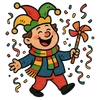
During my observance, the world is truly turned upside down. The normal routines and rules of daily life are put on hold. People of all ages, from young children to grandparents, shed their everyday identities and dress up in wonderfully creative and often humorous costumes. Entire cities embrace this transformation by taking on temporary, silly names for the duration of the festival. For many people, the highlight of the celebration is the series of grand parades, called 'optochten'. These are not small processions; they are massive displays of creativity and community effort. Enormous, elaborate floats, some several stories high, glide through the streets. They are accompanied by high-energy marching bands and countless dancing groups, all of whom have worked tirelessly throughout the year to perfect their costumes, routines, and creations.
However, it's important to know that I am not celebrated in exactly the same way everywhere. My traditions have developed into two distinct styles, particularly in my southern heartland. In the province of Limburg, people typically enjoy what is known as the 'Rhinelandic' Carnival. This style is generally more organized and formal, with uniformed councils, official ceremonies, and grand, structured parades that follow a set route. In contrast, the province of North Brabant is home to the 'Burgundian' style of Carnival. This version is often more informal and spontaneous, with a greater focus on boisterous street parties where the main attraction is the creativity and uniqueness of everyone's individual costume. While both styles are full of joy, they offer different experiences of my topsy-turvy world.
Today, I remain a major cultural event in the Netherlands, a tradition that brings entire towns and cities together for a shared experience of joy, creativity, and community bonding. While the direct religious connection to pre-Lent fasting is less of a central focus for many modern participants, my spirit of release and celebration is as beloved as ever. I represent a special, dedicated time for people to escape the pressures of the everyday world, to express their artistic and humorous sides, and to celebrate life together before the relative quiet of early spring arrives. I am a living tradition, a colorful bridge between the dark of winter and the promise of a new season.
Wow facts
About
Dutch Carnival, known as Carnaval, is a festival celebrated primarily in the southern provinces of the Netherlands in the days leading up to the Christian season of Lent, featuring parades, costumes, and the symbolic rule of Prince Carnival.
Take a Quiz
Question 1 of 5
In your own words, describe the role of Prince Carnival and the significance of the number eleven during the festival.
Want to do even more?
Go beyond exploring. Unlock tools that turn every story into real learning.

Storypie Plus for families
Full stories, quizzes, and printables. Nights and car rides, sorted.
- Unlimited audio stories
- Create Mode: your child stars in the story
- Offline downloads
- Printable worksheets & coloring pages

Why Storypie for Schools
Students engaged. Prep in seconds. Evenings back to you.
- Worksheets & Quizzes
- Classroom Management
- Formative Assessment
- Custom Curriculum & Lesson Plans
- 27 Languages

Why Storypie for Homeschool
Curriculum done. They'll ask for more. Hours back in your day.
- Worksheet Generator
- First-Person Audio Stories
- Built-in Comprehension Quizzes
- Custom Curriculum & Lesson Plans
- Print & Go Activities