English

Christmas - Ukrainian
A religious and cultural holiday celebrated by Ukrainian Christians, marking the birth of Jesus Christ.
Reads at Grades 6–8 Listens at Grades 4–8
Print & create
Answer keys·No prep·Free with an account
28 worksheets · answer keys · full story · quiz · Ages 10-12 · CEFR B2
Plus adds 279,000+ more stories in 27 languages, audio for every one, and printables for all of them.
Just want Christmas - Ukrainian?
I am Rizdvo, the Ukrainian celebration of Christmas. For many centuries, I have been an important religious and family holiday for Ukrainian Orthodox and Greek Catholic Christians. When people observe me, they commemorate the birth of Jesus Christ, a central event in their faith. Traditionally, my main celebrations occurred on January 7th. This date on the Gregorian calendar, which is widely used today, corresponds to December 25th on the older Julian calendar that many Orthodox churches followed. However, a significant change occurred in 2023. In that year, many Ukrainian churches officially moved my date of observance to December 25th. This decision was made to align my celebration with the Gregorian calendar used by many other Christian communities around the world, marking a notable shift in my long history.
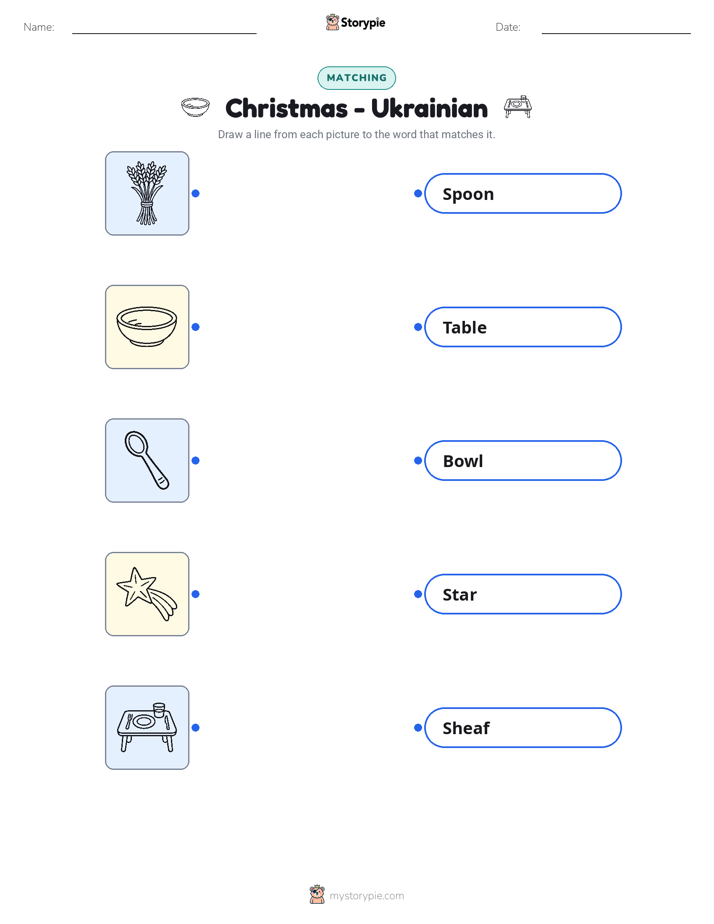
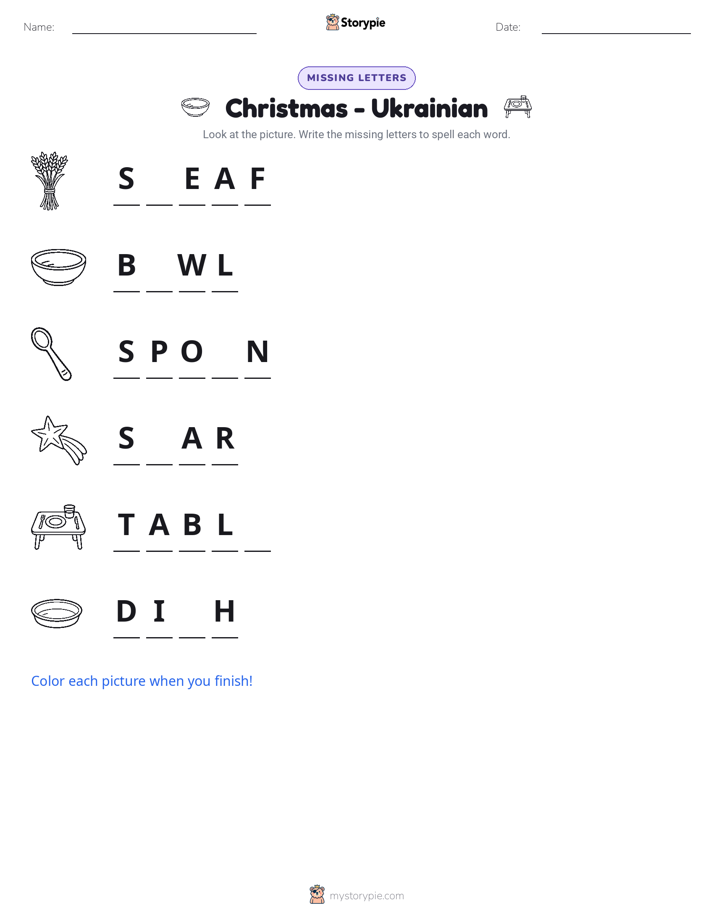
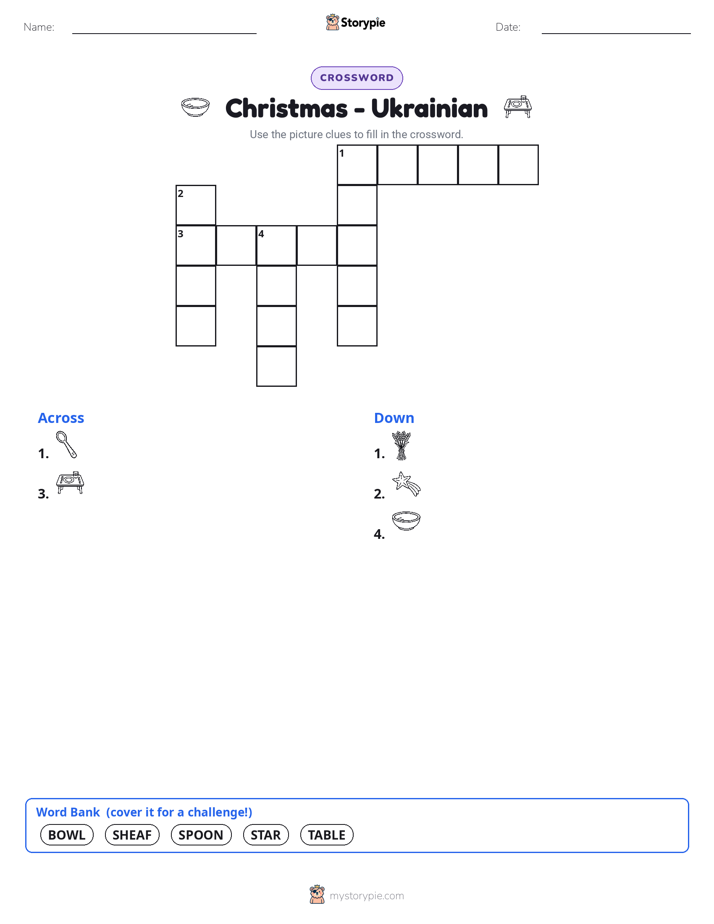
My primary observance begins on Christmas Eve with a special and meaningful meal called Sviata Vechera, which translates to the Holy Supper. This is not just a meal, but a deeply symbolic gathering of family. The table is set for a feast of twelve distinct dishes, all of which are prepared without meat. The number twelve is very intentional; each dish represents one of Jesus’s twelve apostles. Among these foods, one holds the most importance: a sweet grain pudding known as kutia. It is made from a base of wheatberries, which are whole wheat kernels, mixed with poppy seeds and sweetened with honey. Every part of kutia carries a message. It is a dish that symbolizes prosperity and abundance for the coming year, but it also serves as a powerful link between the living and the past, connecting the family to generations of their ancestors.
Christmas - Ukrainian
I am Rizdvo, the Ukrainian celebration of Christmas. For many centuries, I have been an important religious and family holiday for Ukrainian Orthodox and Greek Catholic Christians. When people observe me, they commemorate the birth of Jesus Christ, a central event in their faith. Traditionally, my main celebrations occurred on January 7th. This date on the Gregorian calendar, which is widely used today, corresponds to December 25th on the older Julian calendar that many Orthodox churches followed. However, a significant change occurred in 2023. In that year, many Ukrainian churches officially moved my date of observance to December 25th. This decision was made to align my celebration with the Gregorian calendar used by many other Christian communities around the world, marking a notable shift in my long history.
My primary observance begins on Christmas Eve with a special and meaningful meal called Sviata Vechera, which translates to the Holy Supper. This is not just a meal, but a deeply symbolic gathering of family. The table is set for a feast of twelve distinct dishes, all of which are prepared without meat. The number twelve is very intentional; each dish represents one of Jesus’s twelve apostles. Among these foods, one holds the most importance: a sweet grain pudding known as kutia. It is made from a base of wheatberries, which are whole wheat kernels, mixed with poppy seeds and sweetened with honey. Every part of kutia carries a message. It is a dish that symbolizes prosperity and abundance for the coming year, but it also serves as a powerful link between the living and the past, connecting the family to generations of their ancestors.
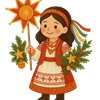
On the day of the Holy Supper, a quiet sense of anticipation builds. Many people who observe me choose to fast for most of the day, eating very little or nothing at all as they prepare for the evening’s gathering. The fast is broken only after a specific celestial sign appears. Families watch the sky together, waiting for the first star of the evening to become visible. The appearance of this star is the signal that the Sviata Vechera can finally begin. This tradition is a direct tribute to the Star of Bethlehem. According to Christian belief, a brilliant star appeared in the sky at the time of Jesus's birth and guided three wise men, also known as the Magi, on their long journey to find him. Waiting for the first star connects modern families directly to that ancient story of guidance and hope.
When you enter a Ukrainian home during my observance, you may notice that the central decoration is not a pine or fir tree. Instead, the traditional centerpiece is a didukh. The didukh is a carefully arranged sheaf of wheat, often with the stalks braided into intricate patterns. This beautiful bundle of grain is rich with meaning. It represents the vital importance of the harvest and agriculture to Ukrainian culture. At the same time, it is believed to embody the spirits of the family’s ancestors, bringing their presence into the home during this sacred time. When the didukh is brought into the house, it carries with it a wish for a healthy and prosperous new year. To further honor the story of the nativity, some families also scatter hay on the floor or place it under the tablecloth, a humble reminder of the manger where the infant Jesus is believed to have been born.
Once the Sviata Vechera has concluded, my arrival is announced by music and song. The quiet of the evening is filled with the sound of koliadky, which are traditional Ukrainian Christmas carols. Groups of carolers, sometimes dressed in festive costumes representing characters from the nativity, begin to travel from house to house. They stand outside and sing these beautiful songs, many of which tell the story of Jesus’s birth in poetic detail. The lyrics of the koliadky also carry blessings, wishing the families they visit good health, happiness, and good fortune for the year ahead. In return for their songs and good wishes, the homeowners thank the carolers by offering them sweets, small treats, or sometimes a little bit of money.
A particularly unique and cherished tradition associated with me is the vertep. The vertep is a form of folk theater, a portable puppet show that brings the nativity story to life. For hundreds of years, communities have gathered to watch these performances. The plays are presented in a small, often two-level stage, telling the story of Jesus’s birth using either handcrafted puppets or live actors. The first part of a vertep performance is typically a serious and reverent retelling of the religious narrative. However, what makes it a beloved form of entertainment is that it is often followed by a second part. This second act is filled with humorous scenes, non-religious characters, and funny stories that connect with the daily lives and experiences of the audience, making the vertep a joyful and engaging community event.
Today, I continue to be a powerful and cherished celebration of faith, family ties, and enduring cultural heritage for Ukrainians in their homeland and all over the world. While modern life can sometimes make it difficult for families to gather for the full twelve-dish Sviata Vechera, my core traditions are carefully preserved. People still share kutia, ensuring that its symbolic connection to ancestors and prosperity remains part of the celebration. The sound of koliadky can still be heard, whether sung by traveling groups or by families gathered in their homes. By continuing these practices, Ukrainians keep their cultural identity strong, share its richness with others, and pass these treasured traditions on to new generations.
Wow facts
About
A religious and cultural holiday celebrated by Ukrainian Christians, marking the birth of Jesus Christ. It is known for its unique traditions, including a twelve-dish Christmas Eve supper and carol singing.
Take a Quiz
Question 1 of 5
Summarize the two main symbolic meanings of the 'didukh' in Ukrainian Christmas traditions.
Want to do even more?
Go beyond exploring. Unlock tools that turn every story into real learning.

Storypie Plus for families
Full stories, quizzes, and printables. Nights and car rides, sorted.
- Unlimited audio stories
- Create Mode: your child stars in the story
- Offline downloads
- Printable worksheets & coloring pages

Why Storypie for Schools
Students engaged. Prep in seconds. Evenings back to you.
- Worksheets & Quizzes
- Classroom Management
- Formative Assessment
- Custom Curriculum & Lesson Plans
- 27 Languages

Why Storypie for Homeschool
Curriculum done. They'll ask for more. Hours back in your day.
- Worksheet Generator
- First-Person Audio Stories
- Built-in Comprehension Quizzes
- Custom Curriculum & Lesson Plans
- Print & Go Activities