English

Easter - Polish
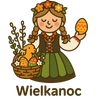
Known as Wielkanoc, Polish Easter is one of the most important holidays in the Polish calendar…
Reads at Grades 3–5 Listens at Grades 1–5
Print & create
Answer keys·No prep·Free with an account
28 worksheets · answer keys · full story · quiz · Ages 8-10 · CEFR B1
Plus adds 273,000+ more stories in 27 languages, audio for every one, and printables for all of them.
Just want Easter - Polish?
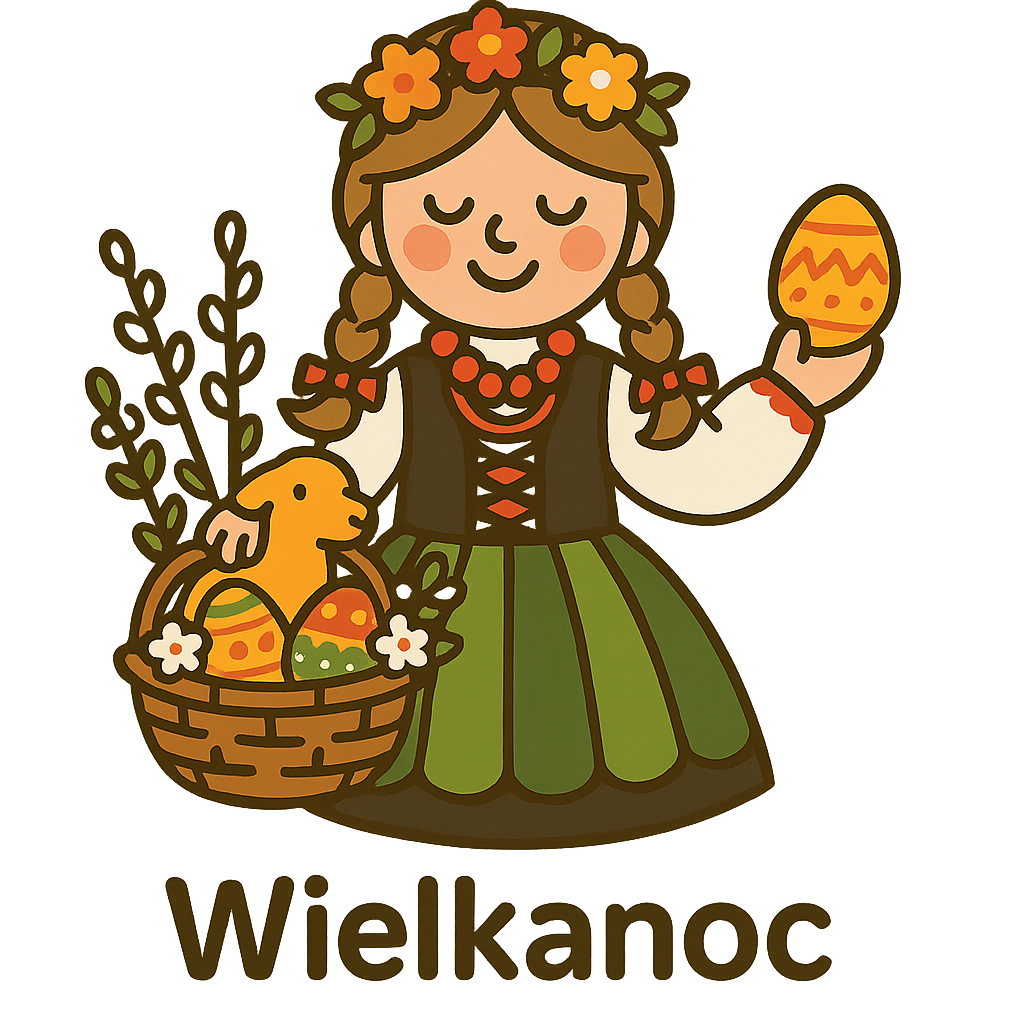
I am Polish Easter, a holiday of great importance and joy. In Poland, people call me by my Polish name, Wielkanoc, which translates to “Great Night.” For Polish Christians, I am considered the most significant religious holiday of the entire year because I commemorate the core belief in the resurrection of Jesus Christ. This event is central to the Christian faith, and my observance is filled with a sense of hope and happiness. My timing aligns with the arrival of spring, so my themes of new life connect deeply with the natural world waking up after a long winter. The blooming flowers and greening trees of the season are a beautiful backdrop for my celebration of spiritual rebirth and renewal.
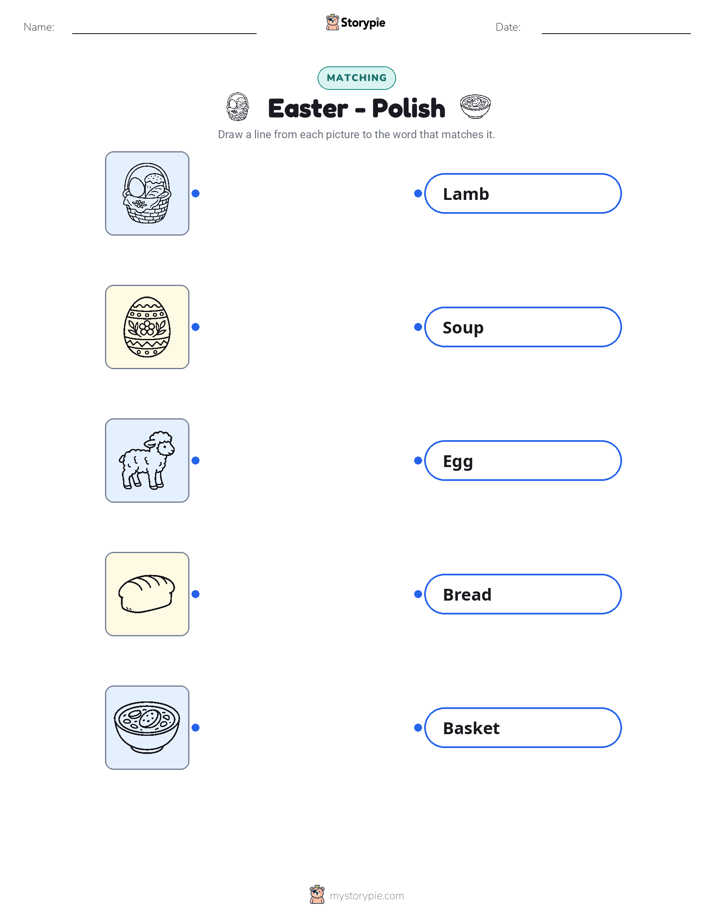
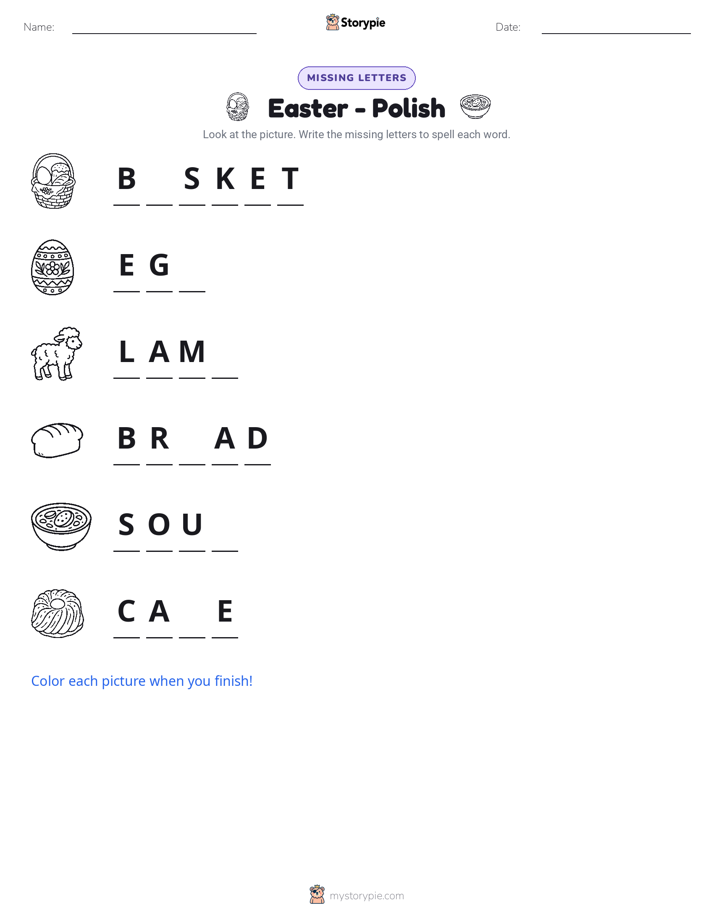
My preparations and special traditions begin even before the main day arrives. On Holy Saturday, the day right before Easter Sunday, a beloved custom takes place. Families carefully prepare a special basket called a Święconka. This isn't just any basket of food; it is filled with items that carry deep meaning. Once prepared, the baskets, often decorated with crisp white linens and sprigs of boxwood, are taken to church. There, a priest blesses the food with holy water. Inside each Święconka, you will find a collection of symbolic foods. There are beautifully decorated eggs, called pisanki, which stand for new life. A piece of bread is included to represent Jesus, who is called the “bread of life” in Christian belief. Sausage is there as a sign of abundance and good fortune, while salt represents purity. A key part of the basket is a small lamb, often made from sugar or butter, which is a powerful symbol of Jesus in this tradition.
The Story of Polish Easter
I am Polish Easter, a holiday of great importance and joy. In Poland, people call me by my Polish name, Wielkanoc, which translates to “Great Night.” For Polish Christians, I am considered the most significant religious holiday of the entire year because I commemorate the core belief in the resurrection of Jesus Christ. This event is central to the Christian faith, and my observance is filled with a sense of hope and happiness. My timing aligns with the arrival of spring, so my themes of new life connect deeply with the natural world waking up after a long winter. The blooming flowers and greening trees of the season are a beautiful backdrop for my celebration of spiritual rebirth and renewal.
My preparations and special traditions begin even before the main day arrives. On Holy Saturday, the day right before Easter Sunday, a beloved custom takes place. Families carefully prepare a special basket called a Święconka. This isn't just any basket of food; it is filled with items that carry deep meaning. Once prepared, the baskets, often decorated with crisp white linens and sprigs of boxwood, are taken to church. There, a priest blesses the food with holy water. Inside each Święconka, you will find a collection of symbolic foods. There are beautifully decorated eggs, called pisanki, which stand for new life. A piece of bread is included to represent Jesus, who is called the “bread of life” in Christian belief. Sausage is there as a sign of abundance and good fortune, while salt represents purity. A key part of the basket is a small lamb, often made from sugar or butter, which is a powerful symbol of Jesus in this tradition.
One of my most cherished and artistic traditions is the creation of pisanki. These decorated eggs are more than just a craft; they are a form of folk art passed down through generations. The name pisanki comes from the Polish word ‘pisać,’ which means “to write.” This name points to one of the oldest and most intricate methods of decoration, where a special stylus is used to write or draw designs on an eggshell with melted wax. The egg is then dipped in dye, and the wax is removed to reveal a stunning, delicate pattern. People use many other techniques as well. Some artists scratch fine designs onto the surface of a dyed egg, while others apply colorful, detailed paper cutouts. No matter the method, each egg becomes a small masterpiece, a vibrant symbol of life and rebirth that holds a central place in my celebration.
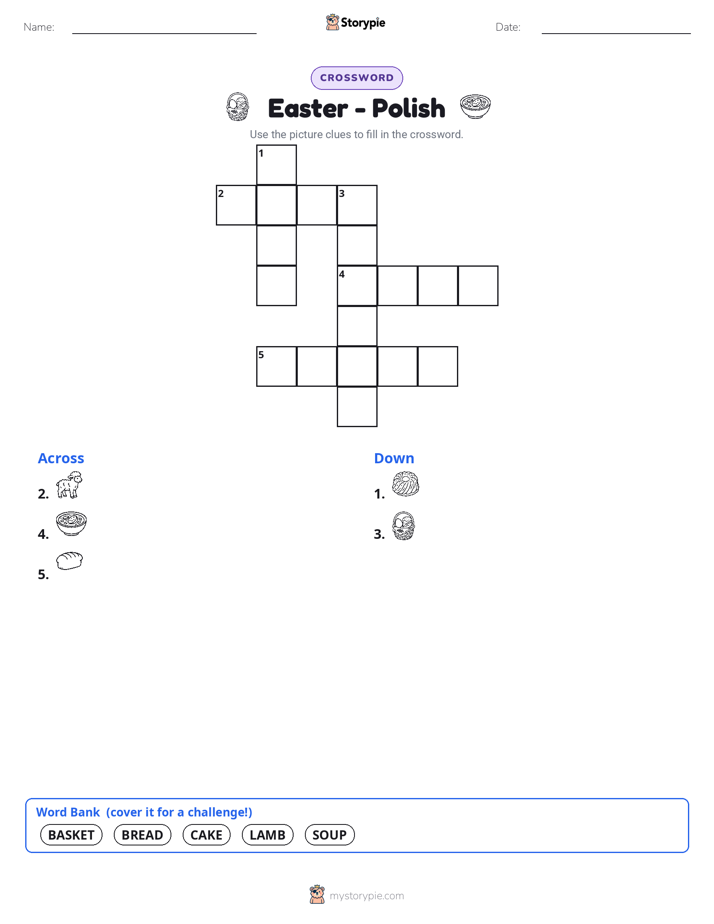
When Easter Sunday morning finally arrives, my main celebration begins with a special and festive family meal. Before anyone starts to eat, the family gathers to share the food from the Święconka basket that was blessed the day before. The meal starts with a meaningful ritual: they share pieces of the blessed eggs with one another. As they exchange these small pieces of egg, they also exchange good wishes for health, happiness, and prosperity in the coming year. This moment is a powerful expression of family unity and hope. After this, the great breakfast begins. It is a hearty and delicious meal featuring many traditional Polish dishes. Often, a special sour rye soup called żurek is served. Families also enjoy sweet, festive cakes, especially a flat cake decorated with icing and nuts called mazurek and a tall, fluffy yeast cake known as babka.
The day after Easter Sunday brings a different kind of fun. This day, Easter Monday, is known as Śmigus-Dyngus, or more simply as “Wet Monday.” It is a day full of laughter and playful mischief. The main tradition involves people, especially children and young adults, playfully splashing each other with water. They might use buckets, water guns, plastic bottles, or whatever they can find to surprise their friends and family with a splash. This custom is very old and brings a lighthearted and energetic spirit to the end of my observance. According to tradition, being splashed with water on Śmigus-Dyngus is thought to bring good luck and good health for the rest of the year, making it a cheerful and refreshing way to continue the celebration.
While I am a Christian holiday at my core, my long history in Poland means that some of my customs are a beautiful blend of religious beliefs and much older Slavic traditions. Many centuries ago, before Christianity was widely practiced in the region, people had their own festivals to mark the end of winter and welcome the spring. Customs like decorating eggs and the playful water-splashing of Śmigus-Dyngus very likely have their roots in these ancient folk celebrations of nature's rebirth. Over time, as people adopted new beliefs, they did not forget their old ways. Instead, these cherished customs were woven into my observance, adding unique layers of history and cultural meaning that continue to be an important part of how I am celebrated today.
Wow facts
About
Known as Wielkanoc, Polish Easter is one of the most important holidays in the Polish calendar, celebrating the resurrection of Jesus Christ with a unique blend of Catholic religious observances and ancient Slavic folk traditions.
Take a Quiz
Question 1 of 5
In the story, the food in the Święconka basket is described as 'symbolic.' What does 'symbolic' mean in this context?
Want to do even more?
Go beyond exploring. Unlock tools that turn every story into real learning.

Storypie Plus for families
Full stories, quizzes, and printables. Nights and car rides, sorted.
- Unlimited audio stories
- Create Mode: your child stars in the story
- Offline downloads
- Printable worksheets & coloring pages

Why Storypie for Schools
Students engaged. Prep in seconds. Evenings back to you.
- Worksheets & Quizzes
- Classroom Management
- Formative Assessment
- Custom Curriculum & Lesson Plans
- 27 Languages

Why Storypie for Homeschool
Curriculum done. They'll ask for more. Hours back in your day.
- Worksheet Generator
- First-Person Audio Stories
- Built-in Comprehension Quizzes
- Custom Curriculum & Lesson Plans
- Print & Go Activities