English


Fat Thursday - Polish
A traditional Polish holiday celebrated on the last Thursday before Lent…
Reads at Grades 6–8 Listens at Grades 4–8
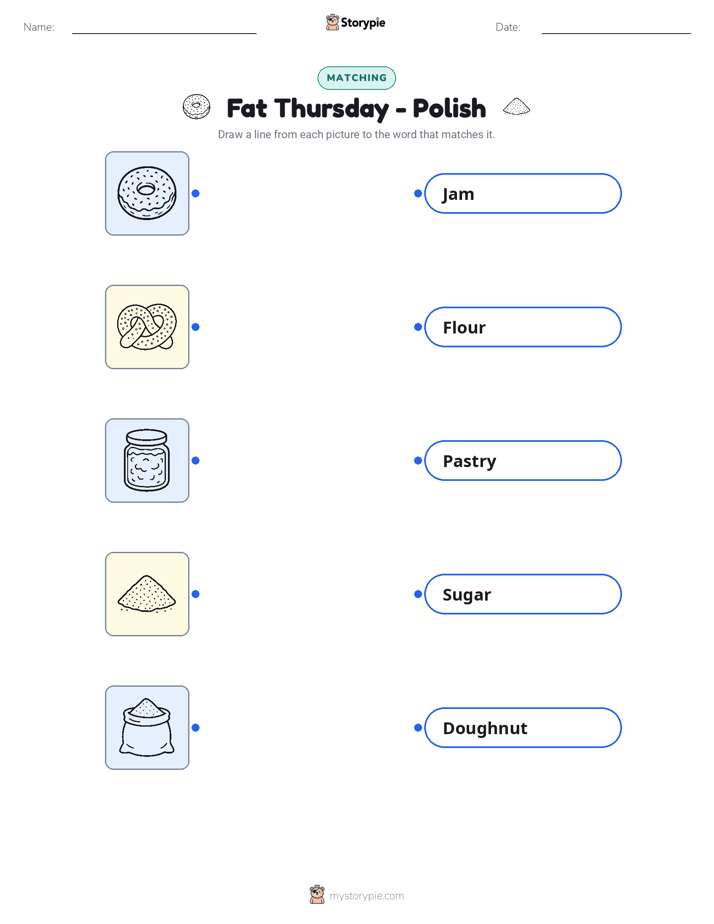
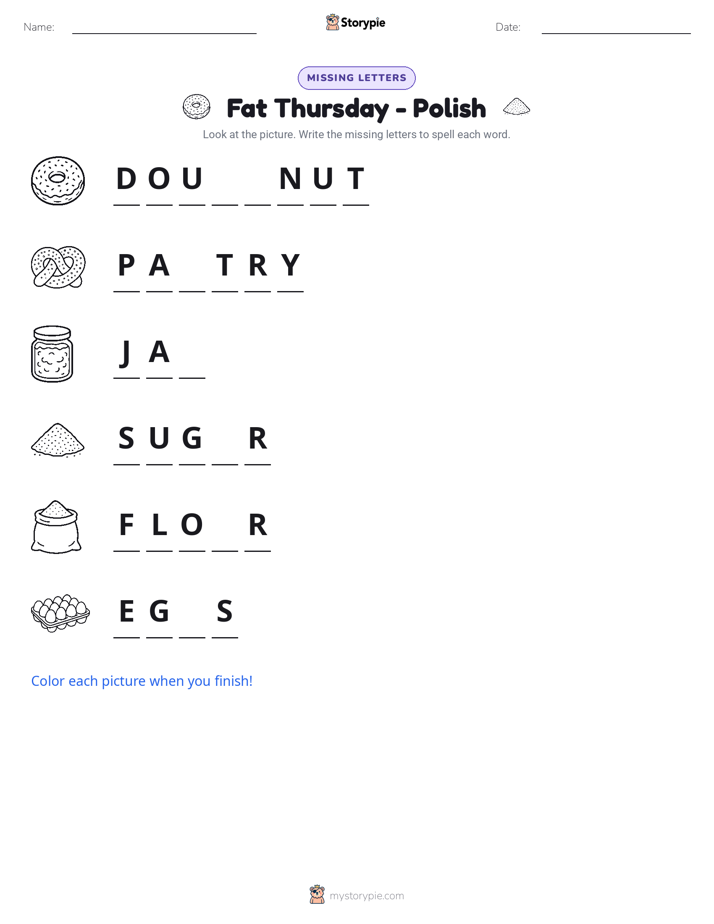
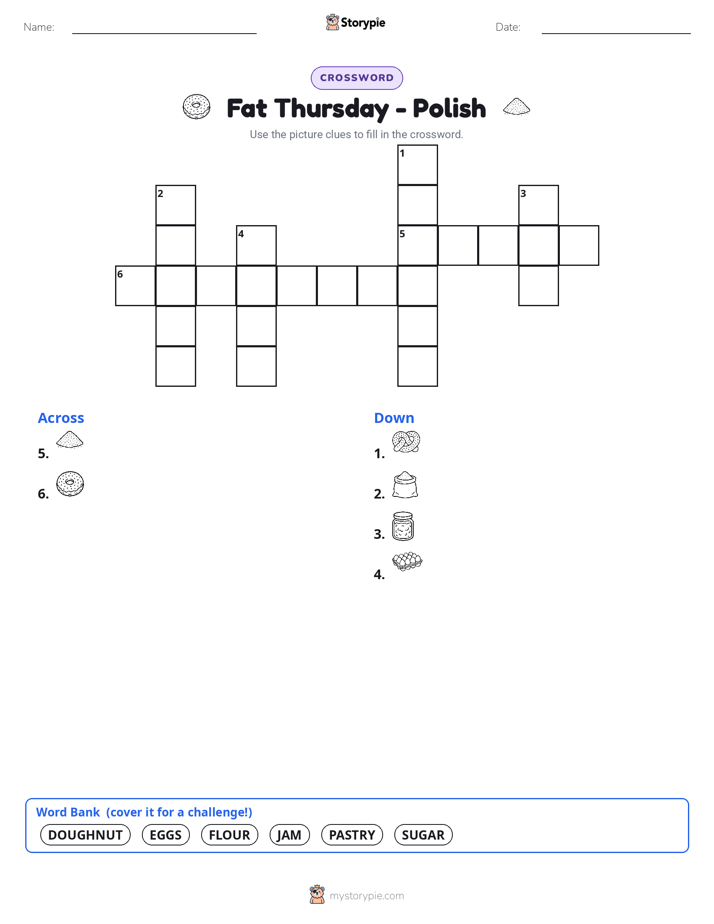
Print & create
Answer keys·No prep·Free with an account
28 worksheets · answer keys · full story · quiz · Ages 10-12 · CEFR B2
Plus adds 279,000+ more stories in 27 languages, audio for every one, and printables for all of them.
Just want Fat Thursday - Polish?

I am Tłusty Czwartek, which means Fat Thursday in Polish. My name describes my purpose perfectly. I am a day dedicated to feasting and indulgence, a final, joyful moment before a more solemn time begins. I mark the last week of a period known as 'Zapusty,' the Polish name for the Carnival season. This is a time of celebration and parties that happens just before the start of the Christian season of Lent. My role is to provide one last opportunity for people to enjoy rich, sweet, and fatty foods that they will give up for the 40 days leading to Easter. I am a day of abundance, a sweet farewell to the festive spirit of Carnival before the quiet reflection of Lent takes over.
My place on the calendar is not fixed; it changes every year. This is because my date is tied to the Christian liturgical calendar, which is based on the lunar cycle. People observe me on the last Thursday before Ash Wednesday. Ash Wednesday is a significant day that marks the beginning of Lent, a 40-day period of fasting, prayer, and penance for many Christians. Because the date of Easter changes each year, the dates for Ash Wednesday and, consequently, my own observance, shift as well. This system makes me a part of a larger, moving cycle of holidays that revolves around the central Christian celebration of Easter. My timing ensures that the feasting happens right before the fasting is set to begin.
While I am closely associated with the Christian calendar today, some of my customs may have roots that reach back even further into history, to pre-Christian times. Historians and folklorists suggest that some traditions of feasting at this time of year could be connected to ancient pagan festivals. These older celebrations were tied to the changing of the seasons. They marked the turning point from the cold, dark days of winter to the promise of spring. Feasting was a common way for people in ancient communities to celebrate the departure of winter and welcome the coming warmth and new life. So, while my modern identity is Christian, the act of a great feast at winter's end is a very old human tradition.
Fat Thursday - Polish
I am Tłusty Czwartek, which means Fat Thursday in Polish. My name describes my purpose perfectly. I am a day dedicated to feasting and indulgence, a final, joyful moment before a more solemn time begins. I mark the last week of a period known as 'Zapusty,' the Polish name for the Carnival season. This is a time of celebration and parties that happens just before the start of the Christian season of Lent. My role is to provide one last opportunity for people to enjoy rich, sweet, and fatty foods that they will give up for the 40 days leading to Easter. I am a day of abundance, a sweet farewell to the festive spirit of Carnival before the quiet reflection of Lent takes over.
My place on the calendar is not fixed; it changes every year. This is because my date is tied to the Christian liturgical calendar, which is based on the lunar cycle. People observe me on the last Thursday before Ash Wednesday. Ash Wednesday is a significant day that marks the beginning of Lent, a 40-day period of fasting, prayer, and penance for many Christians. Because the date of Easter changes each year, the dates for Ash Wednesday and, consequently, my own observance, shift as well. This system makes me a part of a larger, moving cycle of holidays that revolves around the central Christian celebration of Easter. My timing ensures that the feasting happens right before the fasting is set to begin.
While I am closely associated with the Christian calendar today, some of my customs may have roots that reach back even further into history, to pre-Christian times. Historians and folklorists suggest that some traditions of feasting at this time of year could be connected to ancient pagan festivals. These older celebrations were tied to the changing of the seasons. They marked the turning point from the cold, dark days of winter to the promise of spring. Feasting was a common way for people in ancient communities to celebrate the departure of winter and welcome the coming warmth and new life. So, while my modern identity is Christian, the act of a great feast at winter's end is a very old human tradition.
Today, when people think of me, one image comes to mind above all others: the pączek. The most famous and beloved way people celebrate me is by eating these delicious pastries. Pączki are a type of rich, deep-fried doughnut, beloved for their soft, pillowy texture. Traditionally, they are filled with a sweet and slightly tart rose hip jam, a classic Polish flavor. After being fried to a golden brown, they are often covered with a sweet, thin glaze or dusted generously with powdered sugar. They are much richer and denser than many other types of doughnuts, made with more eggs, sugar, and fat, which is perfectly suited to my identity as 'Fat Thursday.'
My food traditions have not always been the same; they have evolved significantly over the centuries. Looking back to my earlier observances, around the 16th century, the pączki people ate were quite different from the sweet treats enjoyed today. In those times, pączki were often savory pastries. Instead of being filled with jam, they were commonly stuffed with pork fat, bacon, or other meats. These savory doughnuts were eaten alongside other rich foods. The goal was practical: before beginning the strict Lenten fast, households needed to use up all the ingredients that were forbidden during Lent, such as lard, sugar, eggs, and fruit. My celebration was a way to ensure that nothing went to waste while allowing for one final day of feasting on these restricted items.
Although pączki are the undisputed star of my celebration, there is another traditional pastry that people enjoy. These are called faworki, a name that translates to 'angel wings' in English, which hints at their delicate nature. Faworki are made from a thin, crisp dough that is twisted into intricate ribbon shapes before being deep-fried until light and golden. Once they have cooled, they are dusted with a fine layer of powdered sugar. Unlike the soft and heavy pączki, faworki are light, airy, and crunchy. They offer a different kind of sweet indulgence, and many families enjoy making and eating both types of pastries as part of my observance.
In modern times, I am an incredibly popular and widely observed day in Poland and among Polish communities all over the world. My traditions are kept alive with great enthusiasm. In the days leading up to my arrival, bakeries and confectioneries across Poland begin preparing for the immense demand. On the day itself, they produce millions of fresh pączki. It is a common sight to see long lines of people stretching out the doors of bakeries, waiting patiently to buy boxes of pastries. People buy them not just for themselves but to share with others. Pączki are brought into offices to be shared with colleagues, taken to schools for classmates, and enjoyed at home with family and friends, making me a day of sweet, shared community spirit.
Over the years, a fun superstition has become attached to my celebration. It is a lighthearted belief that adds to the day's festive atmosphere. Many people believe that if a person does not eat at least one pączek on my day, they will be followed by bad luck for the rest of the year. This popular saying encourages everyone to partake in the tradition, ensuring that almost everyone indulges in at least one sweet treat. This belief, whether taken seriously or not, reinforces my identity as a day of universal participation in a shared cultural custom. I continue to be a day that connects people to their heritage through the simple, joyful act of sharing a traditional pastry.
Wow facts
About
A traditional Polish holiday celebrated on the last Thursday before Lent, Fat Thursday is part of the Carnival season with the eating of sweets, especially pączki (doughnuts).
Take a Quiz
Question 1 of 5
In your own words, describe the evolution of pączki from the 16th century to modern times.
Want to do even more?
Go beyond exploring. Unlock tools that turn every story into real learning.

Storypie Plus for families
Full stories, quizzes, and printables. Nights and car rides, sorted.
- Unlimited audio stories
- Create Mode: your child stars in the story
- Offline downloads
- Printable worksheets & coloring pages

Why Storypie for Schools
Students engaged. Prep in seconds. Evenings back to you.
- Worksheets & Quizzes
- Classroom Management
- Formative Assessment
- Custom Curriculum & Lesson Plans
- 27 Languages

Why Storypie for Homeschool
Curriculum done. They'll ask for more. Hours back in your day.
- Worksheet Generator
- First-Person Audio Stories
- Built-in Comprehension Quizzes
- Custom Curriculum & Lesson Plans
- Print & Go Activities