English

Fourth of July - American
The Fourth of July, also known as Independence Day…
Reads at Grades 6–8 Listens at Grades 4–8
Print & create
Answer keys·No prep·Free with an account
28 worksheets · answer keys · full story · quiz · Ages 10-12 · CEFR B2
Plus adds 279,000+ more stories in 27 languages, audio for every one, and printables for all of them.
Just want Fourth of July - American?
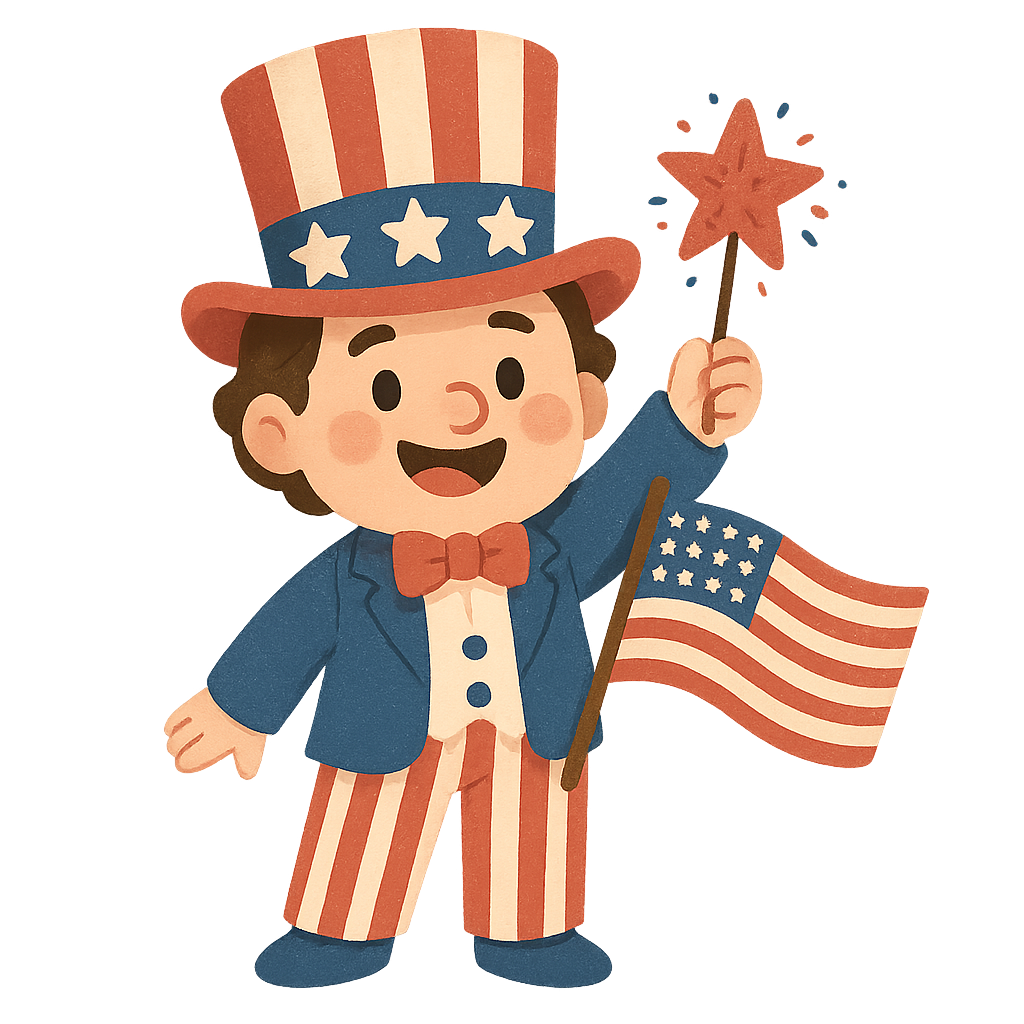
I am the Fourth of July, a day also known in the United States as Independence Day. My purpose is to serve as a yearly reminder of a pivotal moment in American history. I commemorate the date of July 4th, 1776, when a group of leaders from the thirteen American colonies came together to formally adopt a groundbreaking document. This document was the Declaration of Independence, and it was a bold and powerful statement. It officially announced to the world that the colonies were severing their ties with Great Britain and would no longer be under British rule. They were choosing to form their own new nation, based on their own rules and ideals.
The Declaration of Independence was more than just a statement of separation; it was a vision for the future. Within its text, it laid out the fundamental principles that would guide the new country. It spoke of liberty and the right of people to govern themselves, ideas that were revolutionary at the time. My date, July 4th, is therefore not just about a historical event, but about the enduring ideals of freedom and self-governance that were formally declared on that day, setting the foundation for the United States of America.
My first observances began almost as soon as the Declaration was signed. People were eager to mark this new chapter, and they did so with public displays of joy and patriotism. The first large-scale, organized anniversary celebration in my honor took place in Philadelphia, Pennsylvania, on July 4th, 1777, just one year after the Declaration's adoption. This event established a blueprint for how I would be celebrated for generations to come. The city streets were filled with the sounds of music and the sights of parades, creating a festive atmosphere. A significant part of the ceremony was a 13-gun salute. Each shot fired from the cannons was a deliberate tribute to one of the original thirteen colonies that had united to seek independence, audibly symbolizing their collective strength and resolve.
I Am the Fourth of July
I am the Fourth of July, a day also known in the United States as Independence Day. My purpose is to serve as a yearly reminder of a pivotal moment in American history. I commemorate the date of July 4th, 1776, when a group of leaders from the thirteen American colonies came together to formally adopt a groundbreaking document. This document was the Declaration of Independence, and it was a bold and powerful statement. It officially announced to the world that the colonies were severing their ties with Great Britain and would no longer be under British rule. They were choosing to form their own new nation, based on their own rules and ideals.
The Declaration of Independence was more than just a statement of separation; it was a vision for the future. Within its text, it laid out the fundamental principles that would guide the new country. It spoke of liberty and the right of people to govern themselves, ideas that were revolutionary at the time. My date, July 4th, is therefore not just about a historical event, but about the enduring ideals of freedom and self-governance that were formally declared on that day, setting the foundation for the United States of America.
My first observances began almost as soon as the Declaration was signed. People were eager to mark this new chapter, and they did so with public displays of joy and patriotism. The first large-scale, organized anniversary celebration in my honor took place in Philadelphia, Pennsylvania, on July 4th, 1777, just one year after the Declaration's adoption. This event established a blueprint for how I would be celebrated for generations to come. The city streets were filled with the sounds of music and the sights of parades, creating a festive atmosphere. A significant part of the ceremony was a 13-gun salute. Each shot fired from the cannons was a deliberate tribute to one of the original thirteen colonies that had united to seek independence, audibly symbolizing their collective strength and resolve.
From my earliest beginnings, one of my most spectacular and beloved traditions has been the use of fireworks. This was not an accidental development; it was part of the original vision for my observance. John Adams, one of the key figures in the American Revolution and later the second president of the United States, had strong feelings about how this day should be remembered. In a letter written in 1776, he expressed his belief that the day of independence ought to be celebrated with great ceremony. He envisioned 'Pomp and Parade...Bells, Bonfires and Illuminations from one End of this Continent to the other.' People embraced his call for 'illuminations' with great enthusiasm. They interpreted this to mean lighting up the night sky in celebration. Bonfires were common, but fireworks, with their brilliant bursts of color and light, became the ultimate expression of this idea, and they have remained a central and thrilling part of my identity ever since.
Even though I was celebrated with passion across the young nation, my journey to becoming an officially recognized holiday was a long one. For many decades, my observance was a matter of custom rather than law. The first major step toward official status came in 1781, when Massachusetts became the first state to formally recognize me as a legal holiday. However, it would take nearly another century for the federal government to do the same. In 1870, the United States Congress finally passed a law that made me a federal holiday, which meant that federal government employees were given the day off to participate in observances. My status was further solidified in 1941, when another act of Congress designated me as a paid federal holiday, ensuring that federal workers would be paid for their day off.
Today, people across the United States observe me through a vibrant blend of large-scale community events and more personal family gatherings. In countless towns and cities, the day begins with parades featuring local marching bands, community groups, and elaborately decorated floats that travel down main streets. These public celebrations are often complemented by private ones. Families and friends gather in backyards and parks for picnics and barbecues, sharing festive meals. Classic foods like hot dogs and watermelon have become staples of these get-togethers. Throughout the day, patriotic music fills the air at outdoor concerts and public events. The American flag and the national colors of red, white, and blue are displayed everywhere—on homes, in public spaces, and on clothing—serving as powerful visual symbols of national pride and unity.
Beyond the fireworks, parades, and picnics, I serve a deeper purpose as a day for reflection. I am a time for people to think about the meaning of freedom, independence, and the history of the nation. Throughout the years, my date has been used as an occasion to discuss both the country's achievements and its ongoing challenges in living up to its founding ideals. A powerful example of this occurred in 1852, when the famous abolitionist and formerly enslaved man, Frederick Douglass, delivered a speech titled 'What to the Slave Is the Fourth of July?' In his address, he challenged his audience to consider the hypocrisy of celebrating liberty in a nation where slavery was still legal. His words, and others that have followed, encourage a more complex understanding of my meaning. They prompt people to consider what liberty truly means for all Americans and to reflect on the continuous work required to ensure that the ideals of the Declaration of Independence apply to every single person.
Wow facts
About
The Fourth of July, also known as Independence Day, is a federal holiday in the United States commemorating the approval of the Declaration of Independence by the Continental Congress on July 4, 1776, following the vote for independence on July 2, 1776.
Take a Quiz
Question 1 of 5
In your own words, retell the key events that led to the Fourth of July becoming an official, paid federal holiday.
Want to do even more?
Go beyond exploring. Unlock tools that turn every story into real learning.

Storypie Plus for families
Full stories, quizzes, and printables. Nights and car rides, sorted.
- Unlimited audio stories
- Create Mode: your child stars in the story
- Offline downloads
- Printable worksheets & coloring pages

Why Storypie for Schools
Students engaged. Prep in seconds. Evenings back to you.
- Worksheets & Quizzes
- Classroom Management
- Formative Assessment
- Custom Curriculum & Lesson Plans
- 27 Languages

Why Storypie for Homeschool
Curriculum done. They'll ask for more. Hours back in your day.
- Worksheet Generator
- First-Person Audio Stories
- Built-in Comprehension Quizzes
- Custom Curriculum & Lesson Plans
- Print & Go Activities