English

Hanukkah
Hanukkah is a Jewish festival commemorating the rededication of the Second Temple in Jerusalem at the time of…
Reads at Grades 6–8 Listens at Grades 4–8
Print & create
Answer keys·No prep·Free with an account
28 worksheets · answer keys · full story · quiz · Ages 10-12 · CEFR B2
Plus adds 279,000+ more stories in 27 languages, audio for every one, and printables for all of them.
Just want Hanukkah?
I am Hanukkah, a Jewish holiday also known as the Festival of Lights. My name comes from the Hebrew word for 'dedication,' and my story is one of courage, faith, and the rededication of a sacred space. My observance commemorates a pivotal moment in Jewish history that took place in the 2nd century BCE. During this time, a small group of Jewish fighters, who came to be known as the Maccabees, fought for their religious freedom. They successfully reclaimed their holy Temple in Jerusalem from foreign rule, an act that symbolized their refusal to abandon their heritage. I exist as an annual reminder of this victory and the principles they defended.
My historical roots are planted in a period of great conflict more than two thousand years ago. The land of Judea, the ancient homeland of the Jewish people, was under the control of the powerful Seleucid Empire, which was heavily influenced by Greek culture. The ruler of this empire was a king named Antiochus IV Epiphanes. He sought to unify his diverse kingdom by enforcing Greek culture and religious practices upon all his subjects. For the Jewish people, this policy was a direct threat to their way of life. The king outlawed Jewish rituals and tried to force the people to give up their most sacred beliefs and worship Greek gods instead. In the face of this persecution, a family of Jewish priests, led by Mattathias and his son Judah Maccabee, decided to resist. They became known as the Maccabees, and they led a revolt to defend their fundamental right to practice their own faith freely.
I Am Hanukkah, the Festival of Lights
I am Hanukkah, a Jewish holiday also known as the Festival of Lights. My name comes from the Hebrew word for 'dedication,' and my story is one of courage, faith, and the rededication of a sacred space. My observance commemorates a pivotal moment in Jewish history that took place in the 2nd century BCE. During this time, a small group of Jewish fighters, who came to be known as the Maccabees, fought for their religious freedom. They successfully reclaimed their holy Temple in Jerusalem from foreign rule, an act that symbolized their refusal to abandon their heritage. I exist as an annual reminder of this victory and the principles they defended.
My historical roots are planted in a period of great conflict more than two thousand years ago. The land of Judea, the ancient homeland of the Jewish people, was under the control of the powerful Seleucid Empire, which was heavily influenced by Greek culture. The ruler of this empire was a king named Antiochus IV Epiphanes. He sought to unify his diverse kingdom by enforcing Greek culture and religious practices upon all his subjects. For the Jewish people, this policy was a direct threat to their way of life. The king outlawed Jewish rituals and tried to force the people to give up their most sacred beliefs and worship Greek gods instead. In the face of this persecution, a family of Jewish priests, led by Mattathias and his son Judah Maccabee, decided to resist. They became known as the Maccabees, and they led a revolt to defend their fundamental right to practice their own faith freely.
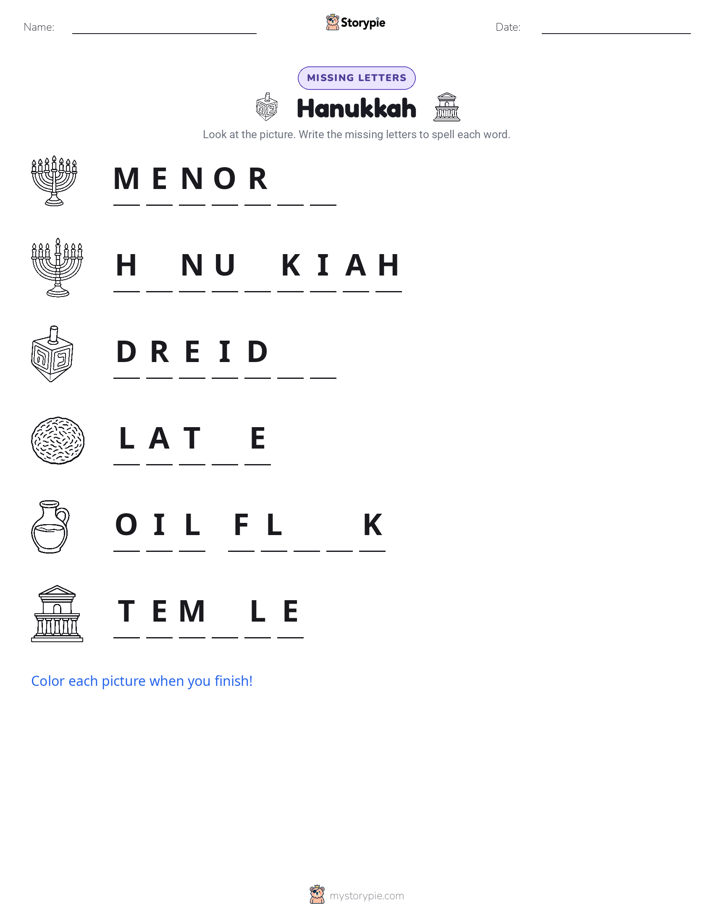
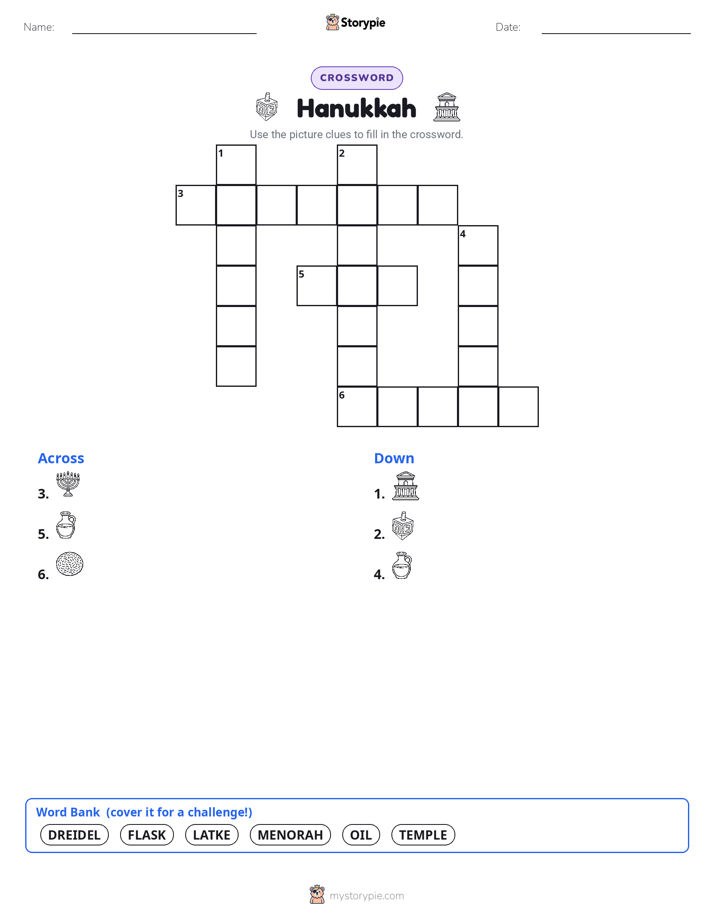
After a long and difficult struggle, the Maccabees were victorious. They drove the Seleucid forces out of Jerusalem and reclaimed their holy Temple. However, the Temple had been desecrated and needed to be cleansed and rededicated to God. A central part of this rededication was relighting the menorah, a sacred seven-branched lampstand meant to burn continuously. It was at this point, according to a traditional story recorded in the Talmud, a central text of Rabbinic Judaism, that a remarkable event occurred. The Maccabees searched for the specially prepared, pure olive oil required for the menorah but could find only a single small flask, just enough to last for one day. Despite the small quantity, they lit the lamp. Tradition holds that a miracle happened: the oil burned not for one day, but for eight full days. This was precisely the amount of time needed to press, prepare, and consecrate a new supply of pure oil. It is because of this story of the miracle of the oil that my observance lasts for eight days and eight nights.
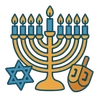
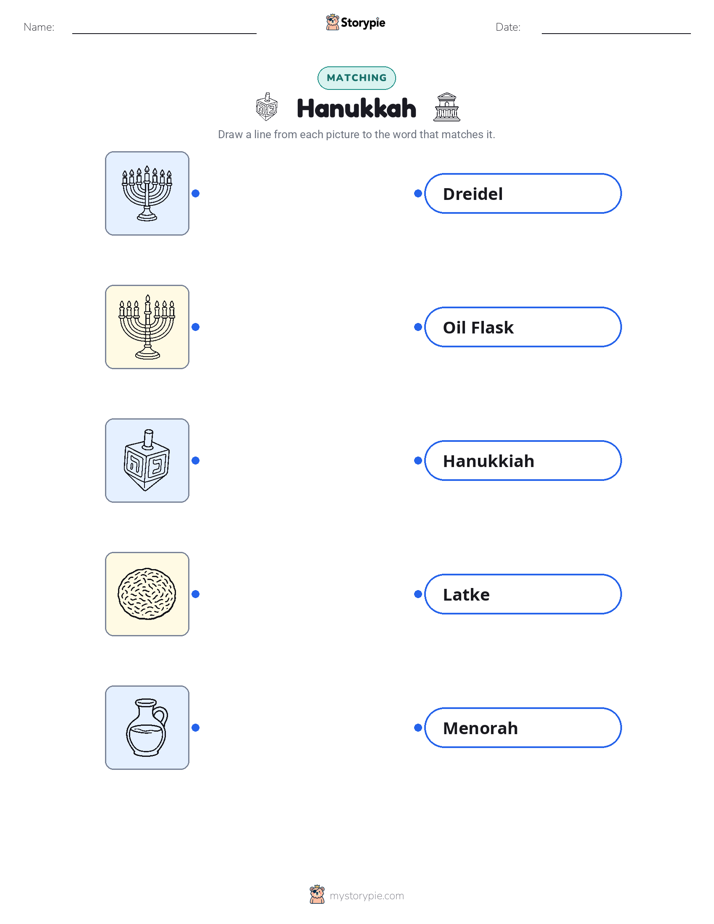
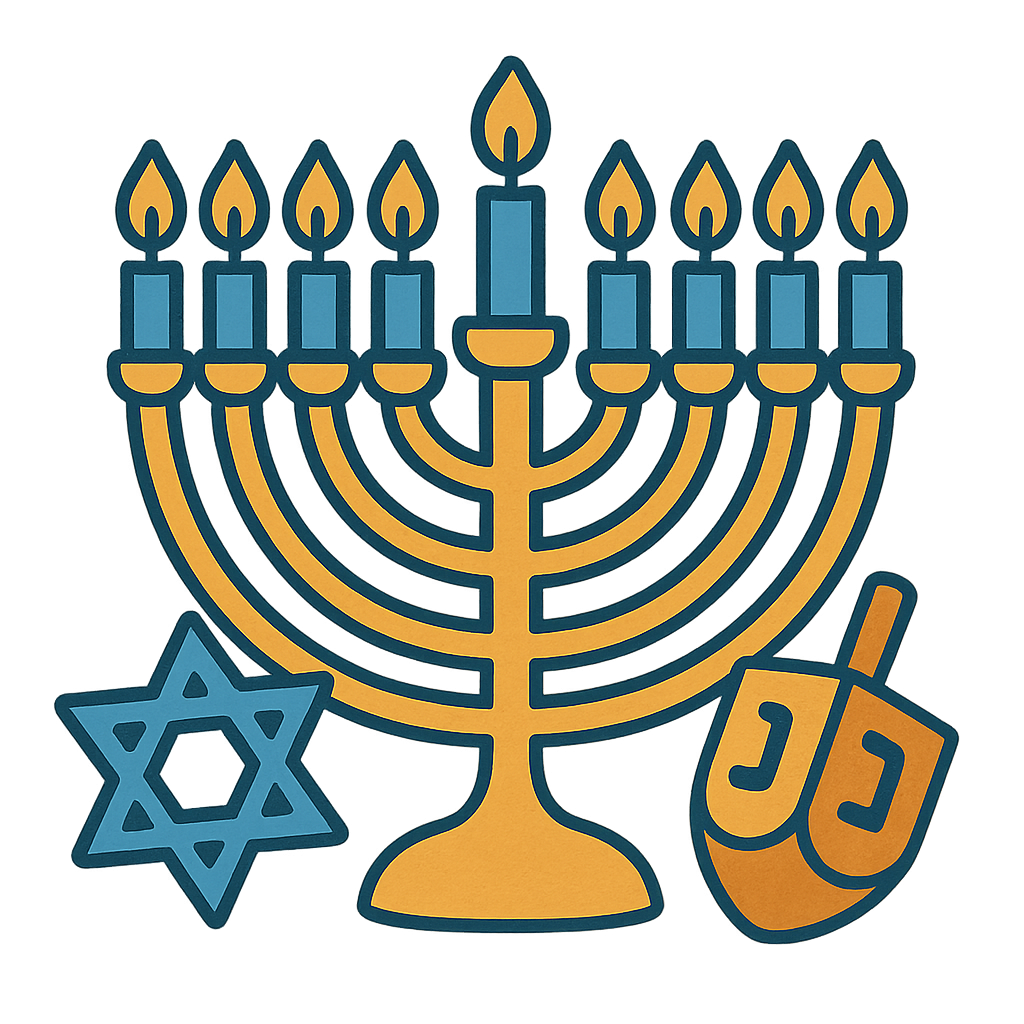
My most central and recognizable symbol is a special candelabrum called a hanukkiah. While it resembles the seven-branched menorah from the ancient Temple, the hanukkiah has nine branches. Eight of these branches hold candles that represent each of the eight nights of the miracle. The ninth branch, which is usually set apart either higher, lower, or in the center, holds a candle called the 'shamash.' The word 'shamash' means 'helper' or 'attendant' in Hebrew, and its role is to light the other eight candles. The lighting ceremony is a progressive one. On my first night, the shamash is lit, and it is then used to light just one other candle. On the second night, two candles are lit, and so on, until the eighth and final night, when the hanukkiah is fully ablaze with the light of all nine candles. This gradual increase of light is a powerful visual representation of the holiday's themes.
Many of my traditions are directly connected to the story of the oil. To remember and celebrate the miracle, it became customary for people to eat foods cooked or fried in oil. Two of the most popular and beloved of these foods are latkes and sufganiyot. Latkes are savory pancakes, typically made from grated potatoes, which are fried until they are golden and crispy. Sufganiyot are sweet, round donuts, often filled with jelly or custard and dusted with powdered sugar. Another cherished tradition, especially for children, is playing a game with a four-sided spinning top called a dreidel. Each of the dreidel's four sides is inscribed with a Hebrew letter: Nun, Gimel, Hey, and Shin. These letters form an acronym for the Hebrew phrase 'Nes Gadol Haya Sham,' which translates to 'A great miracle happened there.' The game itself is a fun way to engage with my history and remember the central events I commemorate.
Today, I am observed by Jewish communities all around the world. I am a time for families and friends to gather, to share in joyful meals, and to rededicate themselves to their faith, heritage, and the values of freedom and perseverance. A common practice is to place the lit hanukkiah in a prominent place in the home, such as a windowsill or doorway. This is done so that its light is visible to people passing by, publicly sharing the story of the holiday. In this way, my lights serve as a powerful and public symbol of Jewish identity and pride. My observance is a yearly reminder of the historical struggle for religious liberty, the triumph of light over darkness, hope over despair, and the enduring importance of standing up for what you believe in.
Wow facts
About
Hanukkah is a Jewish festival commemorating the rededication of the Second Temple in Jerusalem at the time of the Maccabean Revolt against the Seleucid Empire. It is also known as the Festival of Lights.
Take a Quiz
Question 1 of 5
In your own words, retell the main historical events that Hanukkah commemorates.
Want to do even more?
Go beyond exploring. Unlock tools that turn every story into real learning.

Storypie Plus for families
Full stories, quizzes, and printables. Nights and car rides, sorted.
- Unlimited audio stories
- Create Mode: your child stars in the story
- Offline downloads
- Printable worksheets & coloring pages

Why Storypie for Schools
Students engaged. Prep in seconds. Evenings back to you.
- Worksheets & Quizzes
- Classroom Management
- Formative Assessment
- Custom Curriculum & Lesson Plans
- 27 Languages

Why Storypie for Homeschool
Curriculum done. They'll ask for more. Hours back in your day.
- Worksheet Generator
- First-Person Audio Stories
- Built-in Comprehension Quizzes
- Custom Curriculum & Lesson Plans
- Print & Go Activities