English

Hanukkah
Hanukkah is a Jewish festival commemorating the rededication of the Second Temple in Jerusalem at the time of…
Reads at Grades 3–5 Listens at Grades 1–5
Print & create
Answer keys·No prep·Free with an account
28 worksheets · answer keys · full story · quiz · Ages 8-10 · CEFR B1
Plus adds 279,000+ more stories in 27 languages, audio for every one, and printables for all of them.
Just want Hanukkah?
Hello, I am Hanukkah. Many people know me as the Jewish Festival of Lights. My name is a Hebrew word that means “dedication,” and for eight nights each year, I commemorate a very important moment that happened more than 2,000 years ago. My story is one of courage, hope, and the rededication of the Holy Temple in Jerusalem. I honor the memory of a small group of Jewish heroes who are known as the Maccabees. They lived during a difficult time when they were not allowed to practice their religion freely. The Maccabees fought bravely to defend their beliefs and their way of life, and my observance remembers their struggle for religious freedom.
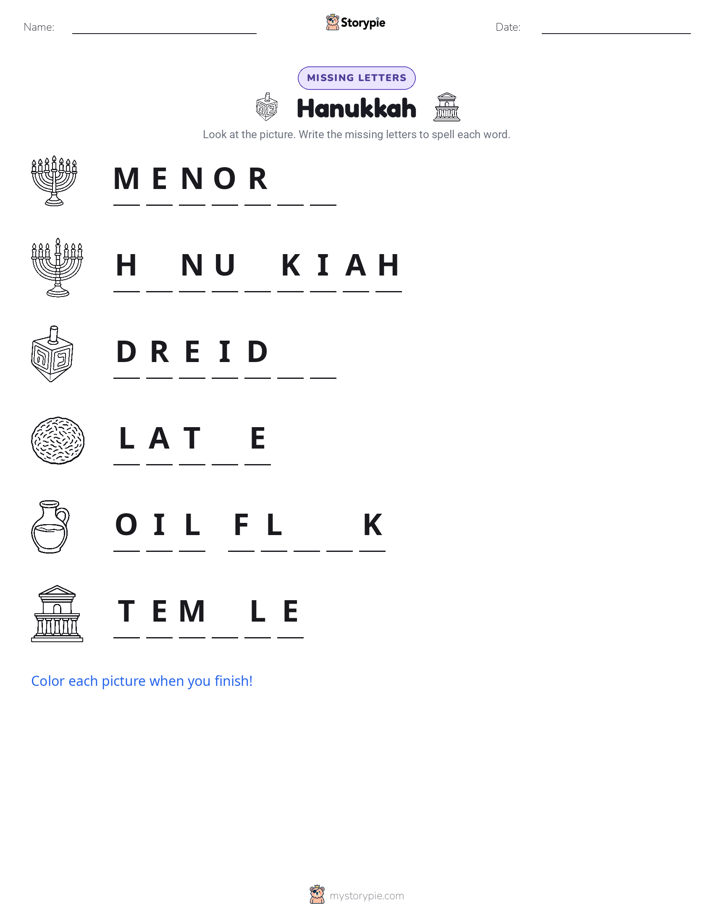
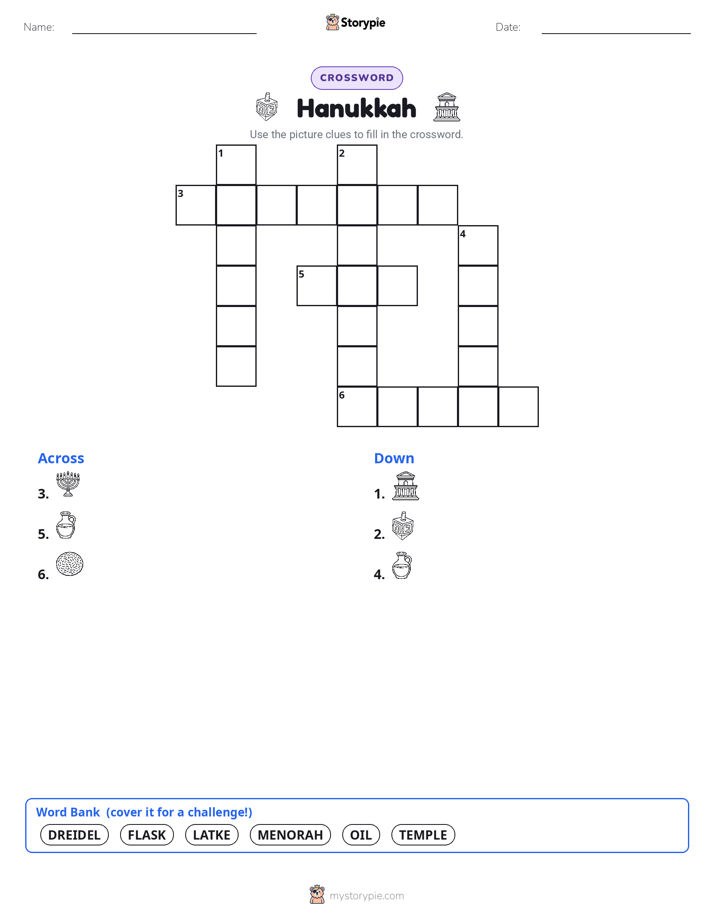
A central story people tell during my observance is about an event that many believe was a miracle. According to this tradition, after the Maccabees successfully reclaimed the Holy Temple, they wanted to light the Temple’s special lamp, a seven-branched menorah. Lighting this lamp was a vital part of rededicating the sacred space. But when they searched for oil, they found only a single small jar of pure olive oil, just enough to keep the lamp burning for one day. They needed more time to prepare new, pure oil. They lit the menorah with the small amount they had, and then something amazing happened. That single day’s worth of oil burned brightly not just for one night, but for eight full nights. This story of the oil is the reason my celebration lasts for eight days and nights.
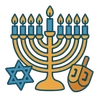
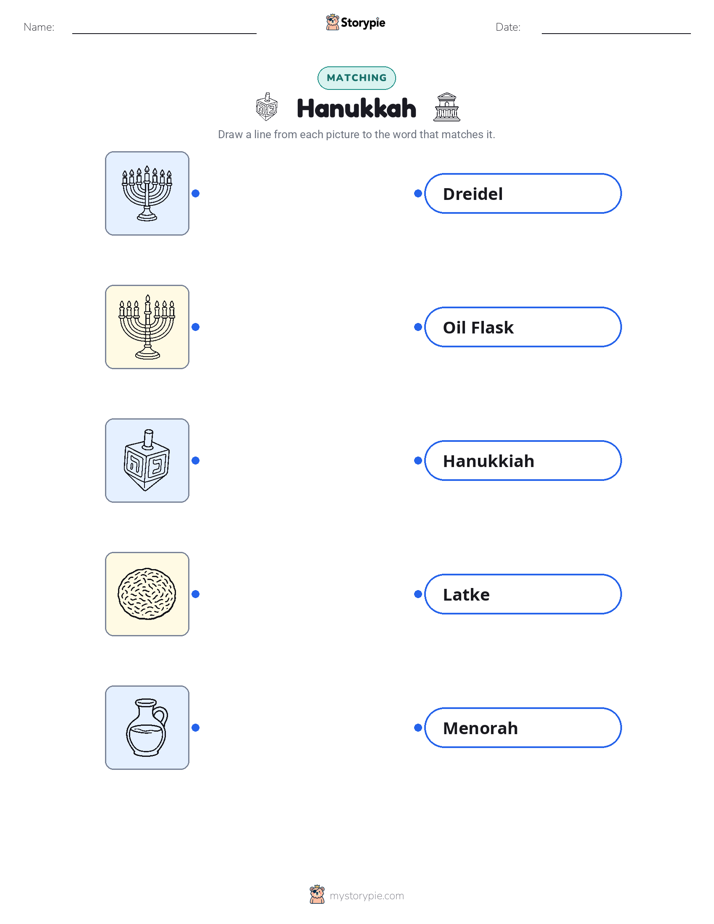
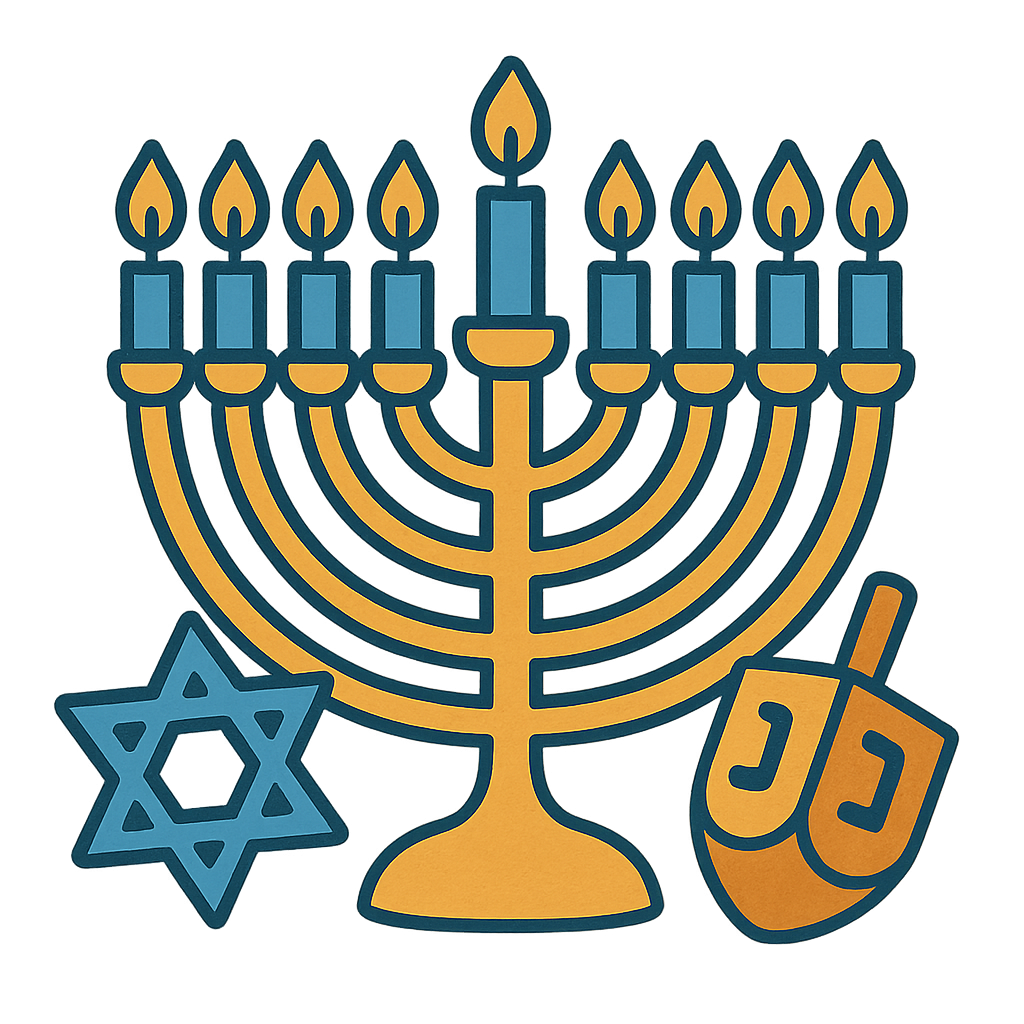
The most important and visible tradition during my eight nights is the lighting of a special candelabra. It is not the seven-branched menorah from the Temple story, but a nine-branched one called a hanukkiah. Each of the eight main candles represents one of the nights that the miraculous oil burned. The ninth candle stands apart, often a little higher or lower than the others. This candle is called the shamash, which means “helper” or “attendant.” It has the special job of lighting the other candles. On the first night, the shamash is used to light just one candle. On the second night, it lights two, and this continues each evening. As the nights go on, the light grows stronger, until the final night when the shamash lights all eight candles, and the hanukkiah glows with a full, beautiful light.
I Am Hanukkah, the Festival of Lights
Hello, I am Hanukkah. Many people know me as the Jewish Festival of Lights. My name is a Hebrew word that means “dedication,” and for eight nights each year, I commemorate a very important moment that happened more than 2,000 years ago. My story is one of courage, hope, and the rededication of the Holy Temple in Jerusalem. I honor the memory of a small group of Jewish heroes who are known as the Maccabees. They lived during a difficult time when they were not allowed to practice their religion freely. The Maccabees fought bravely to defend their beliefs and their way of life, and my observance remembers their struggle for religious freedom.
A central story people tell during my observance is about an event that many believe was a miracle. According to this tradition, after the Maccabees successfully reclaimed the Holy Temple, they wanted to light the Temple’s special lamp, a seven-branched menorah. Lighting this lamp was a vital part of rededicating the sacred space. But when they searched for oil, they found only a single small jar of pure olive oil, just enough to keep the lamp burning for one day. They needed more time to prepare new, pure oil. They lit the menorah with the small amount they had, and then something amazing happened. That single day’s worth of oil burned brightly not just for one night, but for eight full nights. This story of the oil is the reason my celebration lasts for eight days and nights.
The most important and visible tradition during my eight nights is the lighting of a special candelabra. It is not the seven-branched menorah from the Temple story, but a nine-branched one called a hanukkiah. Each of the eight main candles represents one of the nights that the miraculous oil burned. The ninth candle stands apart, often a little higher or lower than the others. This candle is called the shamash, which means “helper” or “attendant.” It has the special job of lighting the other candles. On the first night, the shamash is used to light just one candle. On the second night, it lights two, and this continues each evening. As the nights go on, the light grows stronger, until the final night when the shamash lights all eight candles, and the hanukkiah glows with a full, beautiful light.
Because the story of the oil is so central to my meaning, many of my traditional foods are cooked in oil. This is a delicious way for people to remember the miracle. Families and friends often gather to share special meals and treats. One of the most popular foods is the latke, a crispy pancake made from grated potatoes and onions, which is fried until golden brown. People often eat them with a spoonful of applesauce or sour cream. Another favorite treat, especially for those with a sweet tooth, is called sufganiyot. These are soft, round donuts that are fried and then filled with sweet jelly or custard and sometimes dusted with powdered sugar. Eating these oily, wonderful foods is a warm and tasty part of my observance.
My eight days are also a time for fun and games. A favorite game that has been played for generations uses a four-sided spinning top called a dreidel. Each of the dreidel’s four sides is marked with a different letter from the Hebrew alphabet: Nun, Gimel, Hey, and Shin. These letters are more than just decoration; they are an acronym for a Hebrew phrase, “Nes Gadol Haya Sham.” This phrase means “A great miracle happened there,” which refers to the miracle of the oil in Jerusalem. When players spin the dreidel, they might win or lose game pieces, which are often chocolate coins covered in gold or silver foil, known as gelt. The game is a playful and exciting way to keep the story of my origins alive.
Today, I am observed by Jewish people all around the world. I am a time for families to come together to remember their history, share traditions, and feel a sense of hope. While the ancient customs like lighting the hanukkiah, eating latkes, and playing dreidel continue, some modern customs have also become part of my celebration. For example, some families exchange gifts during my eight nights. Above all, I serve as a powerful reminder of important ideas. I stand for the importance of religious freedom and the right to hold onto one’s beliefs. My growing light each night symbolizes the story of light overcoming darkness, and hope triumphing over despair.
Wow facts
About
Hanukkah is a Jewish festival commemorating the rededication of the Second Temple in Jerusalem at the time of the Maccabean Revolt against the Seleucid Empire. It is also known as the Festival of Lights.
Take a Quiz
Question 1 of 5
The story says the word 'Hanukkah' means 'dedication' in Hebrew. What was rededicated that the holiday celebrates?
Want to do even more?
Go beyond exploring. Unlock tools that turn every story into real learning.

Storypie Plus for families
Full stories, quizzes, and printables. Nights and car rides, sorted.
- Unlimited audio stories
- Create Mode: your child stars in the story
- Offline downloads
- Printable worksheets & coloring pages

Why Storypie for Schools
Students engaged. Prep in seconds. Evenings back to you.
- Worksheets & Quizzes
- Classroom Management
- Formative Assessment
- Custom Curriculum & Lesson Plans
- 27 Languages

Why Storypie for Homeschool
Curriculum done. They'll ask for more. Hours back in your day.
- Worksheet Generator
- First-Person Audio Stories
- Built-in Comprehension Quizzes
- Custom Curriculum & Lesson Plans
- Print & Go Activities