English


Independence Day - Brazilian
Brazilian Independence Day, celebrated on September 7th…
Reads at Grades 3–5 Listens at Grades 1–5
Print & create
Answer keys·No prep·Free with an account
28 worksheets · answer keys · full story · quiz · Ages 8-10 · CEFR B1
Plus adds 279,000+ more stories in 27 languages, audio for every one, and printables for all of them.
Just want Independence Day - Brazilian?
I am Brazilian Independence Day, and I mark one of the most important moments in the history of Brazil. People observe me every year on September 7th to remember the day the country began its journey toward becoming its own nation. My story starts on that date in the year 1822, along the green banks of the Ipiranga River near the city of São Paulo. At that time, Brazil was a colony ruled by the distant kingdom of Portugal. A prince named Pedro, who was the son of the Portuguese king, was in Brazil representing his father. He faced a difficult choice: obey Portugal or listen to the Brazilian people who wanted to govern themselves. On that historic afternoon, he made his decision. He drew his sword and shouted, “Independência ou Morte!” which means “Independence or Death!” This powerful declaration is now famously known as the “Grito do Ipiranga,” or the “Cry of Ipiranga.”
Prince Pedro’s bold cry set in motion the creation of a new, independent country. His declaration was the final, decisive step that transformed Brazil from a Portuguese colony into a self-governing nation. The new country was called the Empire of Brazil. This path to independence was special. While many of Brazil's neighbors in North and South America fought long and bloody wars to break free from European rule, Brazil’s transition was relatively peaceful. There was no major war for independence. Shortly after his declaration at the Ipiranga River, Prince Pedro was officially crowned as the nation’s first ruler. He became known as Dom Pedro I, the first Emperor of Brazil, and he helped guide the country through its first years as a sovereign power.
A Cry for Freedom: The Story of Brazilian Independence Day
I am Brazilian Independence Day, and I mark one of the most important moments in the history of Brazil. People observe me every year on September 7th to remember the day the country began its journey toward becoming its own nation. My story starts on that date in the year 1822, along the green banks of the Ipiranga River near the city of São Paulo. At that time, Brazil was a colony ruled by the distant kingdom of Portugal. A prince named Pedro, who was the son of the Portuguese king, was in Brazil representing his father. He faced a difficult choice: obey Portugal or listen to the Brazilian people who wanted to govern themselves. On that historic afternoon, he made his decision. He drew his sword and shouted, “Independência ou Morte!” which means “Independence or Death!” This powerful declaration is now famously known as the “Grito do Ipiranga,” or the “Cry of Ipiranga.”
Prince Pedro’s bold cry set in motion the creation of a new, independent country. His declaration was the final, decisive step that transformed Brazil from a Portuguese colony into a self-governing nation. The new country was called the Empire of Brazil. This path to independence was special. While many of Brazil's neighbors in North and South America fought long and bloody wars to break free from European rule, Brazil’s transition was relatively peaceful. There was no major war for independence. Shortly after his declaration at the Ipiranga River, Prince Pedro was officially crowned as the nation’s first ruler. He became known as Dom Pedro I, the first Emperor of Brazil, and he helped guide the country through its first years as a sovereign power.
In the early years after 1822, my first observances were quite formal and serious. The main celebrations were official events, with a strong focus on military parades held in the capital city. These parades were more than just a show; they served an important purpose. By marching in organized formations with uniforms and music, the army and navy could display the strength, order, and unity of the new Empire of Brazil. It was a way to show the Brazilian people, and the rest of the world, that their country was strong and ready to defend its freedom. Over time, however, my celebrations began to change. They grew from these formal military displays into larger public festivities that included not just soldiers, but people from all walks of life, making me a day for everyone.
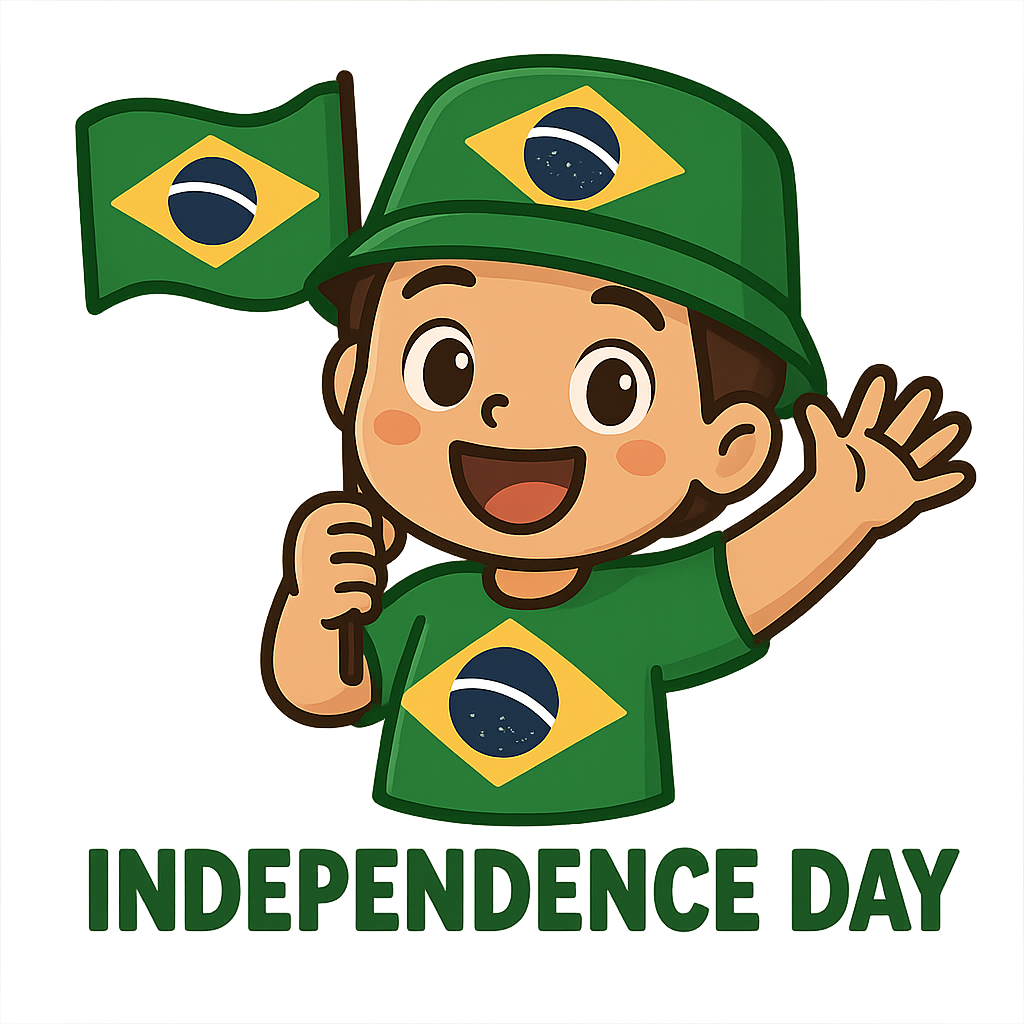
Today, I am a day for Brazilians to express their deep love and pride for their country. My official date of September 7th is so connected with national identity that I am also known by another name: “Dia da Pátria,” which translates to “Fatherland Day.” This name reflects the feeling of patriotism that fills the air. On this day, the national colors of Brazil—a vibrant green and a sunny yellow—are displayed everywhere. People dress in green and yellow clothing, wave Brazilian flags from their windows and cars, and decorate streets and public squares with banners and ribbons in these colors. This colorful display is a powerful visual symbol of national unity and a celebration of everything that makes Brazil and its culture unique.
My observance is a nationwide event, and I am a public holiday, which means that schools and most businesses close so that everyone has the chance to participate. The grandest and most formal event takes place in Brazil’s capital, Brasília. There, a large national military parade marches down a wide avenue, and it is traditionally attended by the President of Brazil and other government leaders. But the celebrations are not limited to the capital. All across the country, cities and towns host their own parades. These local events are filled with energy and community spirit, featuring marching bands, students from local schools, and members of various community groups. The streets come alive with music, cheering crowds, and a shared sense of celebration.
Two of my most important symbols are the Brazilian flag and the country’s national anthem, the “Hino Nacional Brasileiro.” The flag, with its bright green and yellow, is a constant presence throughout the day’s events. The national anthem is played and sung with great pride at official ceremonies, in schools leading up to the holiday, and at the start of parades. Hearing the powerful music and voices joining together is a moving experience for many. To add to the excitement, some cities also feature spectacular air shows performed by the Esquadrilha da Fumaça, the Brazilian Air Force’s aerobatic demonstration squadron. People gather to watch in awe as planes fly in precise formations, trailing smoke across the sky in a thrilling display of skill and patriotism that brings the day’s celebrations to a soaring conclusion.
Wow facts
About
Brazilian Independence Day, celebrated on September 7th, commemorates Brazil's declaration of independence from the United Kingdom of Portugal, Brazil and the Algarves in 1822.
Take a Quiz
Question 1 of 5
According to the story, what is another name for Brazilian Independence Day?
Want to do even more?
Go beyond exploring. Unlock tools that turn every story into real learning.

Storypie Plus for families
Full stories, quizzes, and printables. Nights and car rides, sorted.
- Unlimited audio stories
- Create Mode: your child stars in the story
- Offline downloads
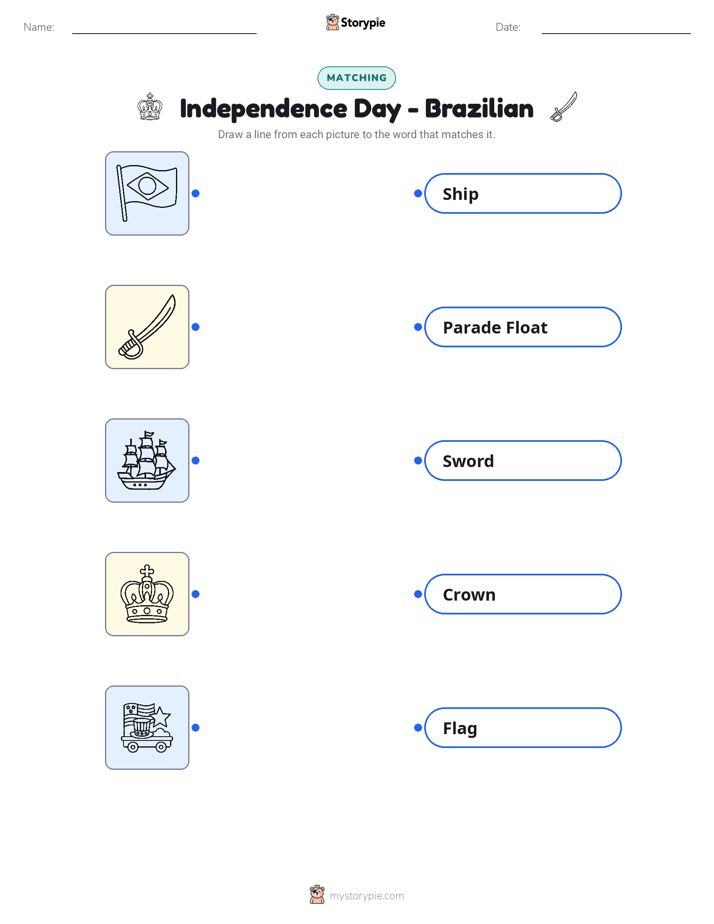
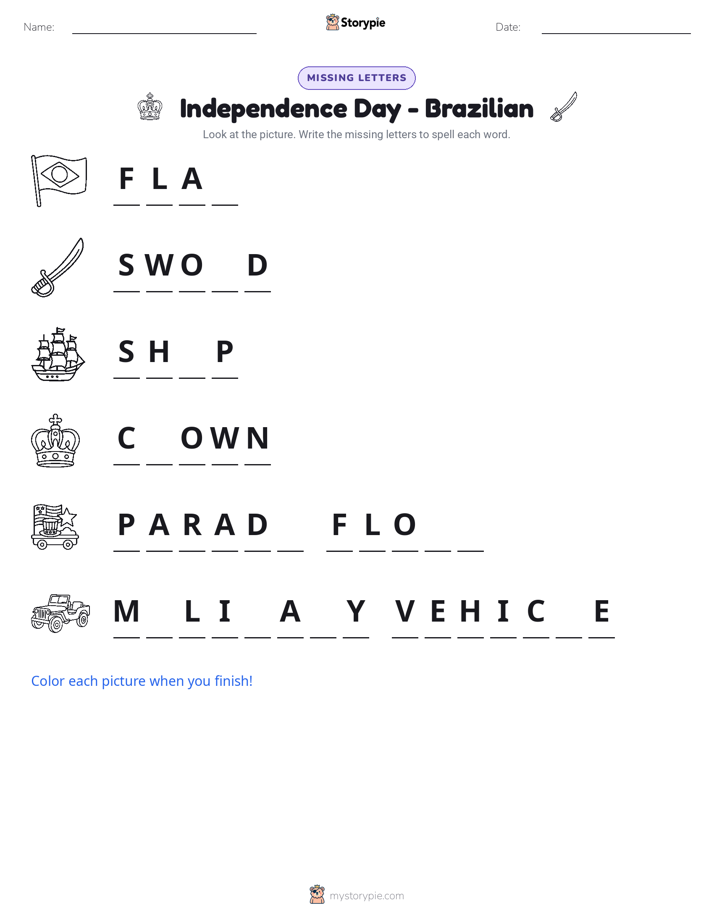
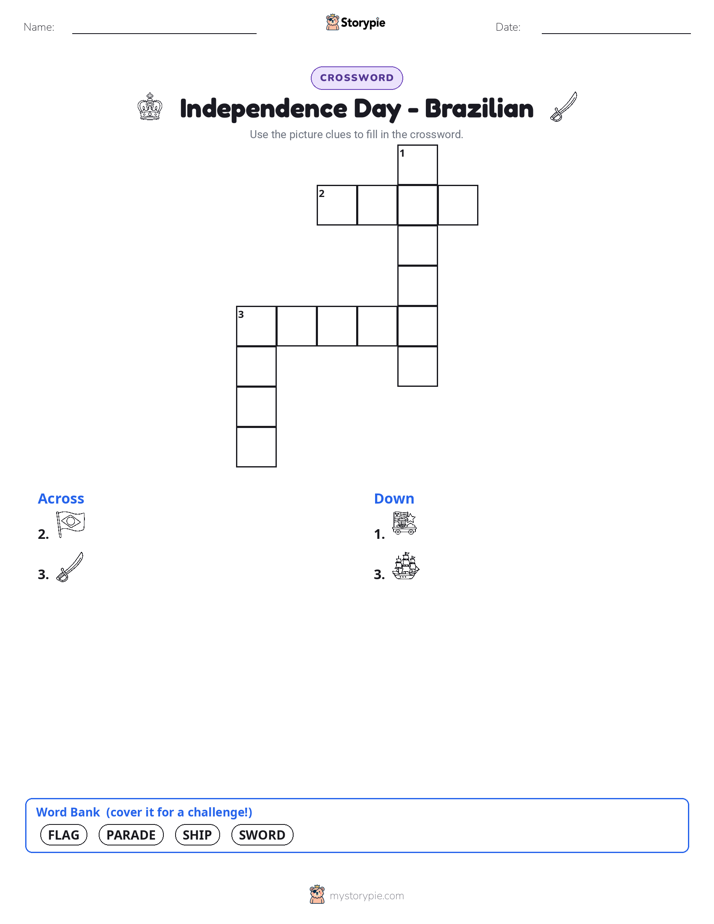
- Printable worksheets & coloring pages

Why Storypie for Schools
Students engaged. Prep in seconds. Evenings back to you.
- Worksheets & Quizzes
- Classroom Management
- Formative Assessment
- Custom Curriculum & Lesson Plans
- 27 Languages

Why Storypie for Homeschool
Curriculum done. They'll ask for more. Hours back in your day.
- Worksheet Generator
- First-Person Audio Stories
- Built-in Comprehension Quizzes
- Custom Curriculum & Lesson Plans
- Print & Go Activities